


A moroccan bath in Dubai is a multi-step Maghrebi cleansing ritual rooted in 12th-century North African hammam tradition. Sessions run 45 to 90 minutes and cost from AED 49 in neighbourhood salons to AED 1,500+ in five-star hotel spas. The ritual blends warm steam, savon beldi black soap, kessa-glove exfoliation, ghassoul clay masks, and an argan-oil finish.
What is a Moroccan bath?
A moroccan bath is a traditional cleansing and exfoliation ritual that originated in the Maghreb region of North Africa, covering modern Morocco, Algeria, Tunisia, and Libya. The Arabic word “hammam” means “spreader of warmth”, a reference to the steam-room core of the experience.
For centuries, public hammams served as community bathhouses where neighbours bathed, talked, and conducted pre-prayer ritual ablutions. Architectural records trace dedicated Maghrebi hammam buildings to the 12th century, often attached to mosques and shaped by Andalusian, Berber, and Roman bathing influences. Women’s hammam visits were a major social event, often the only acceptable venue outside the home for community gatherings, marriage discussions, and pre-wedding rituals.
Three product traditions define the Maghrebi version. Savon beldi was made from olive paste in family kitchens across rural Morocco. Ghassoul clay has been mined from the Atlas Mountains since the 8th century and was a luxury export to Roman Egypt. Argan oil was pressed by hand by Berber women in southwestern Morocco for both cooking and skincare. Each product survived because nothing replaced it: industrial soaps strip skin, mineral clays from elsewhere lack the same lipid profile, and synthetic oils oxidise faster.
Modern home plumbing reduced everyday reliance on the public hammam, but the ritual survived as a weekly or monthly cleansing tradition and migrated into wellness culture. In Dubai, the moroccan bath sits inside the broader spa landscape: a sensory-rich treatment that combines deep cleansing, exfoliation, and a quiet hour of pause. The directory’s salon listings include this ritual as a service across hundreds of venues, from neighbourhood salons to destination hotel hammams. Readers planning a wider wellness session often start with the massage in Dubai hub for the full treatment menu.
How a moroccan bath works
The traditional ritual moves through six stages over roughly 60 minutes, sometimes called a moroccan massage when paired with a finishing body massage. Sequence and product names vary slightly between Maghrebi regions, but the structure is consistent.
For a closer look at the four core stages, the products used at each one, and how skin tends to react in the days afterwards, see our guide to what a Moroccan bath is.
- Steam preparation (5 to 10 minutes). A warm, humid room softens skin and opens pores. Some Dubai venues use a tiled steam room; others a heated marble slab beneath a domed ceiling.
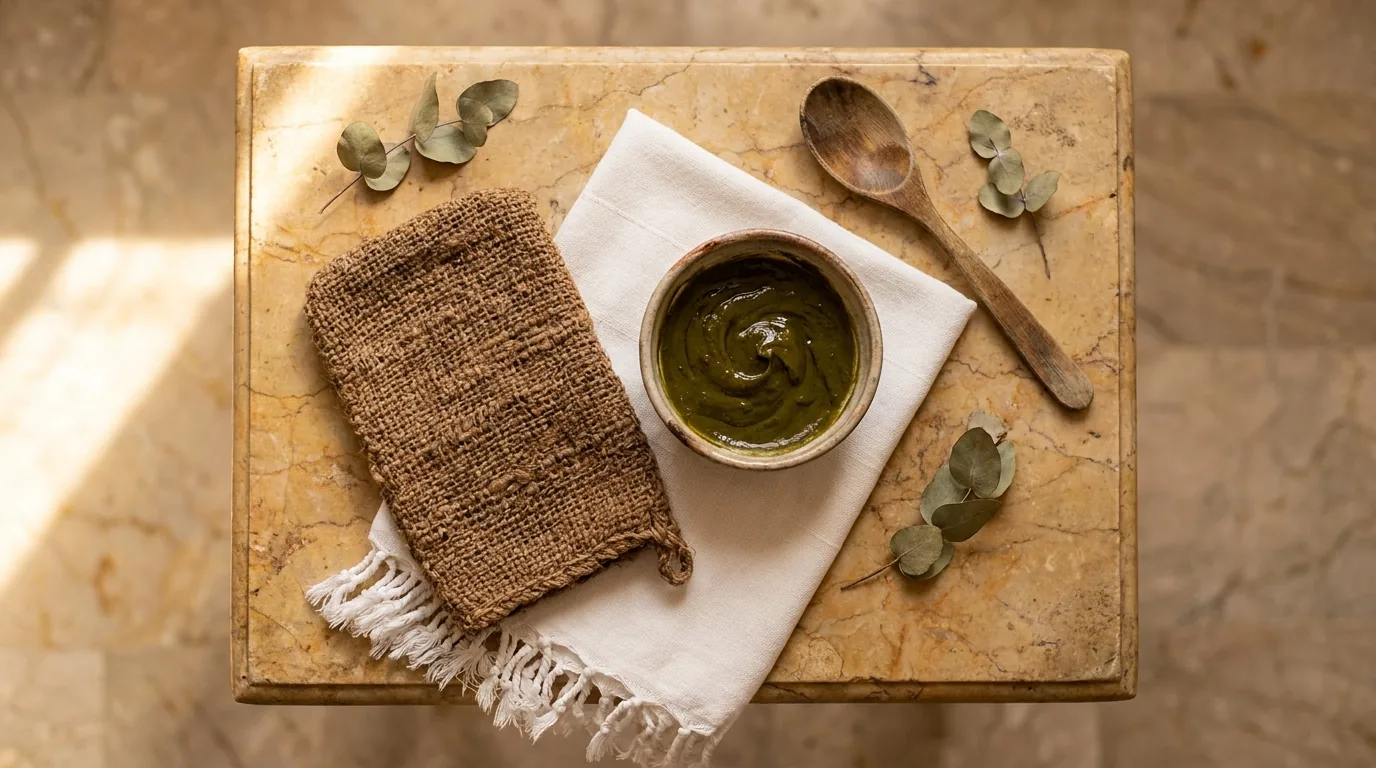
- Savon beldi application (10 to 15 minutes). The therapist applies savon beldi, a thick olive-paste black soap, head to toe. The soap is rich in vitamin E and antioxidants, and softens dead skin without scrubbing.
- Kessa exfoliation. A coarse-textured kessa glove sloughs away the loosened dead skin in long, firm strokes. This stage is the visual proof point of the ritual: visible skin peeling.
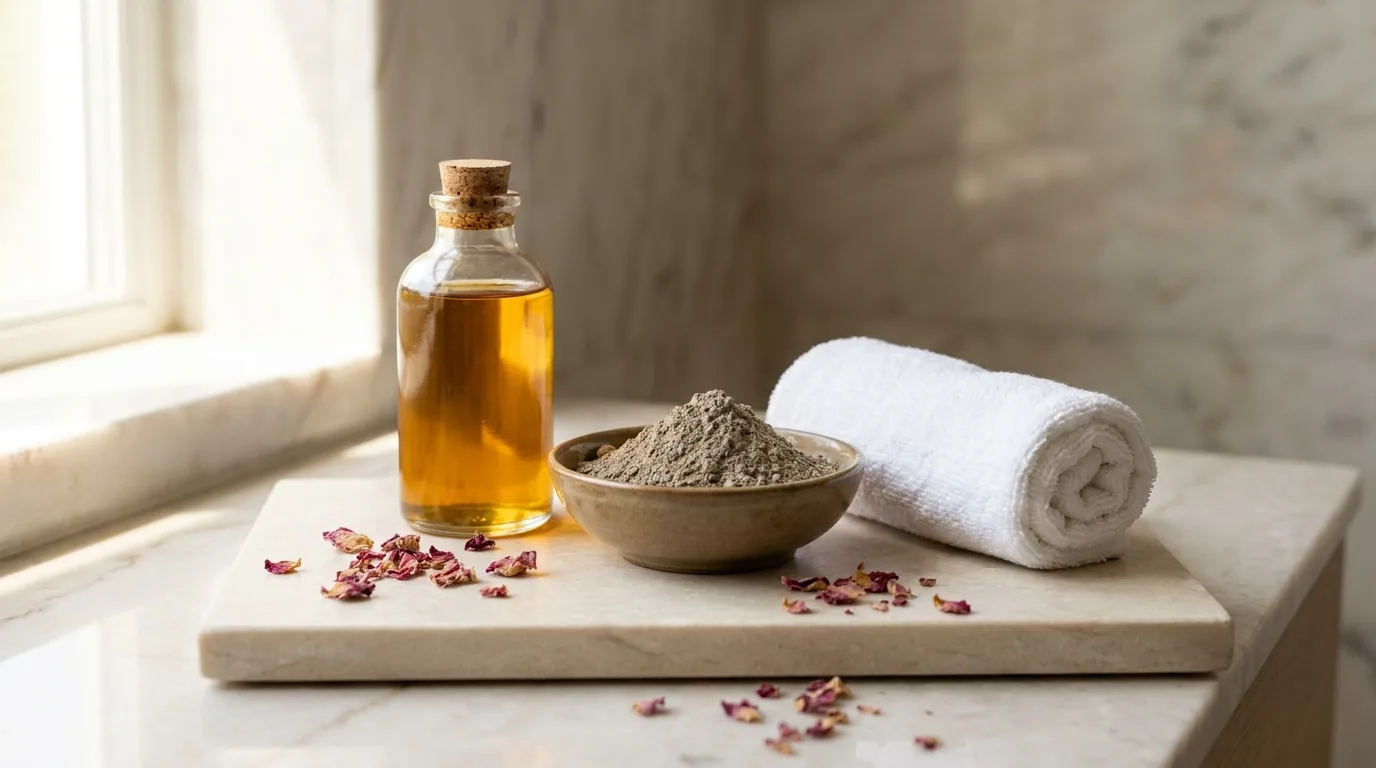
- Ghassoul clay mask (10 to 15 minutes). Ghassoul (also written rhassoul) is a mineral clay mined in Morocco’s Atlas Mountains. Applied to face and body, it absorbs oil and remineralises the skin.
- Warm water rinse. Multiple bowls of warm water rinse off clay, soap residue, and dead skin.
- Argan oil finish. A light layer of cold-pressed argan oil from southwestern Morocco seals in moisture. Some venues add a scalp or back massage as a closer.
Moroccan bath vs hammam vs Turkish bath
Search results often blur the three terms. They share the steam-bath ancestry, but each has a distinct ritual, ingredient set, and signature technique.
| Tradition | Origin and signature ingredients | Defining technique |
|---|---|---|
| Moroccan bath | Maghreb (Morocco, Algeria, Tunisia). Savon beldi, ghassoul clay, kessa glove, argan oil. | Heavy exfoliation with the kessa; clay mask remineralises. |
| Turkish (Ottoman) bath | Anatolia, expanded under the Ottoman Empire. Olive-oil soap foam, kese mitt, peshtemal cloth. | Cloud-foam massage on a heated marble platform (Gobek tasi). |
| Hammam (umbrella term) | Generic Arabic term for a steam bathhouse. Used loosely across both traditions in Dubai. | Steam, cleanse, exfoliate, rinse. Specifics depend on the venue. |
Practical takeaway: pick a moroccan bath when the goal is deep skin detox and visible exfoliation. Pick a Turkish bath when the goal is a slower, foam-heavy relaxation ritual. A hammam dubai booking can mean either tradition; check the menu for savon beldi and ghassoul to confirm a Maghrebi-style treatment. If the word itself is new to you, our explainer on what a hammam actually is covers the origins and the ritual. For a stretch-led alternative without steam or scrub, see our thai massage Dubai guide.

Popular Moroccan bath spas in Dubai
On the first floor of Dubai Festival City Mall, Heal Spa runs aromatherapy, deep tissue, hot stone and sports massage alongside couples massage, reflexology, a Moroccan bath and IPL hair removal. It's rated from reviews.Reviewers describe some of the best massages they've had in Dubai here, with the therapists praised for reading pressure correctly and adjusting through the session rather than working to a fixed routine. The space itself comes up as clean and calm, and the team is described as consistently friendly across a large number of reviews.Booking ahead is worth it, and outdoor and on-site services are available. The venue has gender-neutral toilets and wheelchair-accessible parking, entrance, seating and toilet facilities throughout.
Sweet Violet Beauty Salon LLC is a massage spa in Business Bay, at The Prism, rated from reviews. Treatments include deep tissue, Swedish, sports, hot stone and traditional Thai massage, aromatherapy massage, couples massage, therapeutic massage, reflexology, the Moroccan bath, plus threading, eyebrow threading, waxing and facials.Reviewers consistently describe the massage therapists as highly skilled, singling out deep tissue and sports massage for genuinely relieving tension rather than a generic rubdown. Several clients book the team for events and repeat visits, and the overall experience is described as relaxing and professional from start to finish.The salon offers on-site services and wheelchair-accessible parking. Appointments are recommended.
On the HC floor of the Grand Excelsior Hotel on Kuwait Street in Al Mankhool, Lavana Spa Bur Dubai offers Swedish massage, deep tissue massage, Moroccan bath and reflexology, rated from reviews. Swedish massage comes up repeatedly as a highlight, with reviewers describing sessions as deeply relaxing against a calm, soothing atmosphere throughout the spa. Front-desk staff are also praised for recommending the right treatment based on what a client is looking for, rather than defaulting to a standard package. The spa is wheelchair accessible, including parking, entrance and toilet, and appointments are recommended ahead of a visit, opening from 10am. Good for anyone in Al Mankhool after a proper unwind rather than a rushed treatment.
Al Rashaqa Spa is near Lamcy Plaza in Al Karama, rated from reviews for traditional Thai massage, Moroccan bath, hot stone massage, reflexology and aromatherapy treatments. Feedback on the spa is mixed. Some reviewers describe the space as clean with a good, professional massage, while others report a less consistent experience with staff on the day of their visit. Given that spread of feedback, confirming treatment details directly with the spa before booking is a sensible precaution. The venue operates 24 hours and offers on-site services, making it an option outside typical salon hours. Best booked in advance for a specific treatment, given the mixed feedback on consistency, and requesting the same therapist on a return visit is a reasonable way to get a result closer to what you expect.
Touch Life Spa sits inside TIME Oak Hotel & Suites in Barsha Heights, rated from reviews. Reviewers consistently describe a calm, clean and welcoming atmosphere, with attentive, professional staff who take time over every detail. Several guests single out the massage treatments and Turkish hammam for easing tension and back pain, and describe the whole visit as well organised and hygienic from start to finish. The treatment menu runs from deep tissue, hot stone, Swedish and Thai reflexology massage to aromatherapy, back, scalp and sports massage, alongside gel pedicures, manicures and yoga classes. The spa is wheelchair accessible throughout, with an accessible car park, entrance, seating and toilet, and appointments are recommended given its popularity in the Barsha Heights hotel district.
What a moroccan bath costs in Dubai
Pricing in Dubai spans a wide band. Neighbourhood salons in Deira, Karama, and Bur Dubai start near AED 49 to 150 for a basic 45-minute session. Mid-range mall and boutique spas sit between AED 150 and 600. Five-star hotel hammams in Palm Jumeirah and Downtown Dubai run AED 800 to 1,500+ for 90 to 120-minute rituals with hotel-spa add-ons. The price difference reflects three things: room and product quality, total session length, and whether a massage is bundled into the ritual.
Add-ons such as a clay face mask, scalp massage, or 30-minute body massage typically add AED 100 to 350 each. Couples suites at hotel spas carry a 30 to 50 percent premium over the single-occupancy session. Most moroccan bath dubai sessions for first-timers land in the mid-tier AED 150 to 600 band. For a price-led ranking and venue comparison, the dedicated moroccan bath directory filters listings by tier, area, and rating.
If your priority is the lowest possible price, our guide to cheap hammam prices in Dubai breaks down exactly what the AED 49 to AED 150 band includes.
Top Dubai areas for a moroccan bath
Moroccan bath availability concentrates in three clusters. Tourist-heavy beach corridors lean premium and hotel-driven. Historic Deira and Bur Dubai concentrate budget-tier neighbourhood salons with Moroccan and Egyptian therapists. Mall-anchored mid-range spas dominate Downtown and JLT. Many of the same venues are mixed-use: a budget neighbourhood moroccan spa often shares a building with a hair salon, while a premium moroccan massage dubai booking at a hotel hammam can extend into the same property’s wellness suite. Cross-bookings into beauty salons for facial or nail treatments on the same visit are common; many bookers pair the bath with a stop at one of the best nail salons in Dubai for a follow-on manicure. For the wider area picture across Jumeirah hammams, hair, and beauty venues, see our salons in Jumeirah guide.
What to expect at your appointment
Booking a moroccan bath in Dubai differs in a few ways from a global spa visit. Expect ladies-only and gents-only sessions as the default; only a handful of luxury hotel hammams offer mixed couples suites. Disposable underwear is provided. Any reputable venue holds a Department of Economy and Tourism (DET) trade licence and runs its therapists under Dubai Health Authority (DHA) health licensing; ask to see both before you book. Many spas pair the bath with an Arabic massage for a full ritual.
Most venues observe local modesty norms. Hijab-friendly options at women-only spas include private locker rooms, female-only therapists, and prayer-time-aware scheduling. During Ramadan, sessions usually pause one hour before iftar; many spas re-open with extended late-night hours after suhoor.
Tipping is not mandatory in Dubai but is appreciated; 10 to 15 percent of the service price is the common range when service is good. Most Dubai venues accept cash and card; cash tips are preferred.
Cultural authenticity markers
Many Dubai spas adapt the moroccan bath into a generic body scrub and rebrand it. Authentic versions hold to a few visible markers worth looking for before you book.
- Savon beldi on the menu, not just “black soap”. A real moroccan bath uses olive-paste savon beldi, which is dark green-brown and viscous, not the dry charcoal soap sold under the same English name.
- Ghassoul or rhassoul clay mask, not generic mud or kaolin. The clay should be Morocco-sourced and visibly grey-brown when wet.
- Kessa glove exfoliation. The mitt is rough, hand-woven, and used dry over the soaped skin, not a soft synthetic loofah.
- Argan oil finish from southwestern Morocco. Authentic oil is cold-pressed, with a faintly nutty smell.
- Therapist origin or training. Many specialist venues employ Moroccan or Maghreb-trained therapists; ask at booking. Adapted versions often use Asian or Eastern European therapists trained in a generic spa-scrub script.
- Process timing. A full traditional ritual is 60 minutes minimum. Anything under 30 minutes is a quick scrub, not a moroccan bath.
The directory reviews each massage spa against the same vetting criteria documented on how we rank salons, including authenticity signals. Reviews go through the editorial team before publication, following the editorial policies on independence and disclosure.
Ask the receptionist which products the spa uses before you confirm a booking. Authentic venues name savon beldi and ghassoul without prompting; adapted venues describe the treatment generically as a “body scrub”.
Aftercare and Dubai climate
Post-exfoliation skin is sensitive, and Dubai’s climate adds a few specific concerns the global guides skip. Anyone repeating a lighter version at home between salon visits should follow the same aftercare, and the guide to how to use Moroccan bath soap covers the order and the timings.
- Skip direct sun for 24 to 48 hours. UV exposure on freshly exfoliated skin causes uneven pigmentation, especially in summer when Dubai’s UV index averages 11+.
- Hydrate aggressively. Both indoor air-conditioning and outdoor humidity pull moisture from the skin barrier. A heavier moisturiser the first 48 hours helps.
- Avoid pool and beach for 24 hours. Chlorine and salt water sting freshly stripped skin and can trigger redness.
- Skip waxing or shaving 48 hours before and after. Combined exfoliation and hair removal damages the skin barrier.
- Use a Dubai-rated SPF 50+ sunscreen for the next week if any sun exposure is unavoidable.
Common mistakes and when to skip a moroccan bath
- Active eczema, psoriasis, or open wounds. The exfoliation is too aggressive on broken or inflamed skin.
- Recent sunburn. Wait until peeling has fully cleared, usually one to two weeks.
- Within 48 hours of waxing or laser hair removal. Wait at least two days each side.
- First trimester of pregnancy. The hot steam can affect blood pressure; a doctor’s clearance is the standard first step.
- Fasting during Ramadan. Avoid mid-day sessions when fasting; book post-iftar to stay hydrated.
- First-timers booking 30-minute “express” versions. The express format skips the steam preparation and clay mask; a 60-minute session shows the actual results.
For at-home alternatives where a therapist visits a private residence rather than a venue visit, see the dedicated home massage Dubai guide. Mobile moroccan bath setups exist but require a portable steam tent, which limits the depth of the steam preparation step.
Which skin types the ritual suits, and which conditions rule it out, is covered separately in the guide to whether a Moroccan bath is good for skin.


