

Eyelash extensions are safe for most people when a licensed technician applies them in a clean studio with the right adhesive. Problems come from the application, not the lashes themselves: a rushed set, harsh glue, or poor hygiene can trigger an allergic reaction, an eye infection, or thinning of your natural lashes. In Dubai, a properly run lash studio holds both a trade licence and a health licence, and a single set runs from around AED 200 to AED 600.
What eyelash extensions actually are
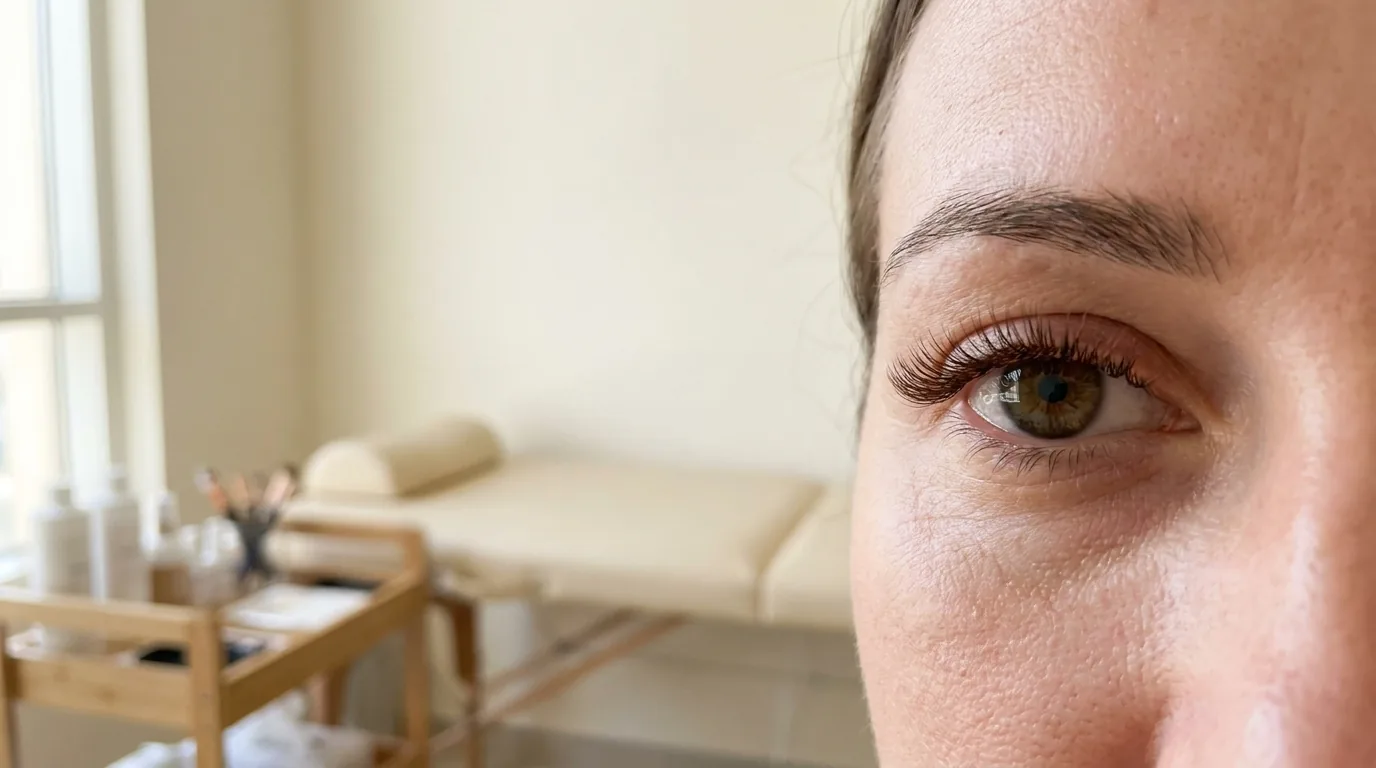
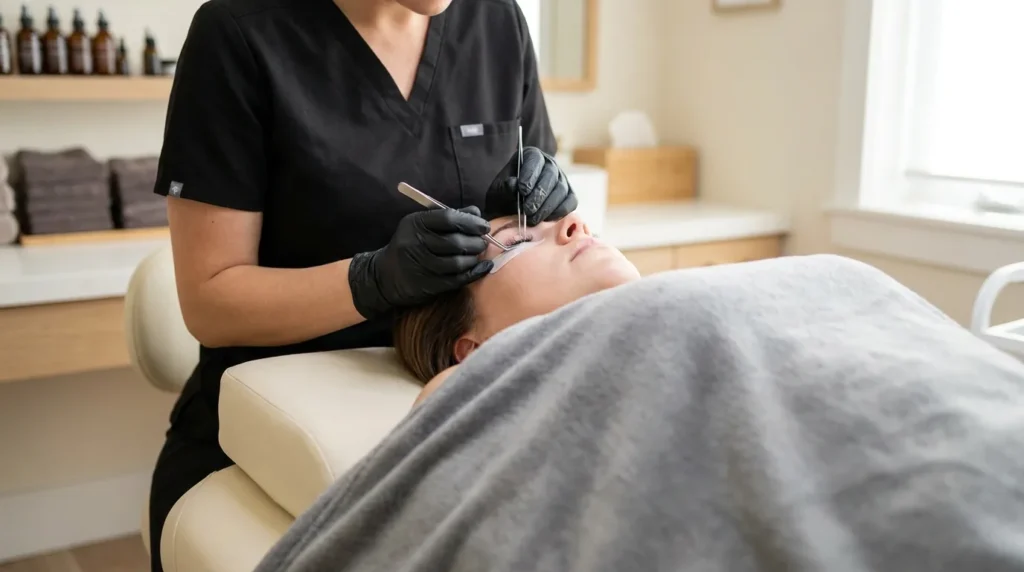
Eyelash extensions are single synthetic, silk, or mink fibres glued one at a time onto your own lashes. A trained technician isolates each natural lash and bonds one extension to it with a cyanoacrylate adhesive, the same chemical family used in most cosmetic glues. A full set takes 90 minutes to two hours and lasts the length of your natural lash growth cycle, usually six to eight weeks, with a refill every two to three weeks as lashes shed.
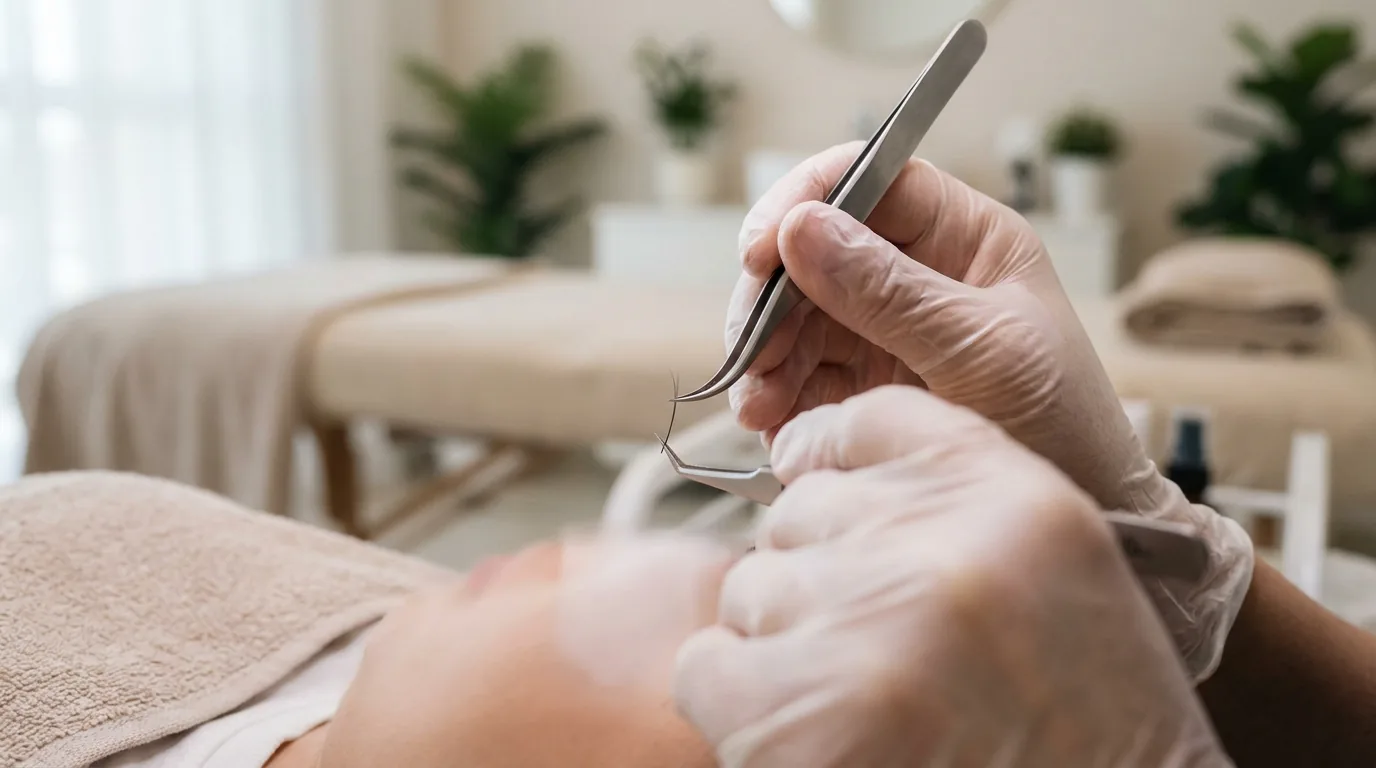
Done correctly, one extension sits on one healthy lash. That isolation is the whole safety story. When a technician glues several fibres to one lash, or uses extensions too long or too heavy, the weight drags on the follicle and that is where damage starts.
Are eyelash extensions safe for your eyes?
Yes, ophthalmologists agree the treatment can be safe when consumers take precautions. The American Academy of Ophthalmology says lash extensions are generally safe if applied properly, and most eye doctors only advise against them when you already have an active eye condition. The risks are real but largely avoidable.
The most common issue is an allergic reaction. The adhesive can cause contact dermatitis on the eyelid, with itching, redness, and swelling. Some glues have contained formaldehyde, a known irritant and allergen, which is why a patch test on the inner arm or behind the ear before a full set matters. Ask the studio which adhesive it uses and whether it is formaldehyde-free.
Other eye risks include infection and blepharitis, an inflammation of the eyelid that builds up when extensions trap bacteria and debris at the lash line. Bacteria near the lashes can also cause a stye. In rare cases the cornea is scratched during application or by a loose fibre. Strict hygiene, clean tools, and gentle daily cleansing prevent almost all of this. If your eye stays red, painful, or swollen after a set, see a doctor rather than waiting it out.
Do eyelash extensions ruin your lashes?
Properly applied extensions do not ruin your lashes. People search “do eyelash extensions ruin your lashes” and “do eyelash extensions damage your eyelashes” expecting a yes, but the honest answer is that the method does the harm, not the service. The myth comes from sets that go wrong.
Damage happens three ways. Extensions that are too long or too heavy pull on the follicle and cause traction alopecia, a gradual thinning of the natural lashes from constant tension. Glue applied to the skin instead of the lash, or several lashes stuck together, breaks the natural shedding cycle. And rough removal, or picking and rubbing at the lashes yourself, yanks healthy lashes out before they are ready to fall. A skilled technician avoids all three by matching the extension weight to your own lash strength and removing sets with a professional dissolver, never by pulling.
Who should avoid eyelash extensions
Lash extensions suit most people, but a few should skip them or check with a doctor first.
- Anyone with sensitive or chronically dry eyes, since extensions can worsen irritation.
- Contact lens wearers, who should remove lenses during application and tell the technician.
- Anyone with an active eye infection, blepharitis, or a recent eye procedure.
- People with a history of allergy to cosmetic adhesives or to a previous lash set.
- Anyone unsure during pregnancy: extensions are applied externally and are generally considered low risk, but lying flat for two hours and the glue fumes can be uncomfortable, so clear it with your healthcare provider.
How extensions hold up in Dubai’s climate
Dubai’s heat and humidity work against lash adhesive. Cyanoacrylate cures with moisture, so high summer humidity can make a fresh set bond too fast and feel stiff, while heavy sweat at the gym or on the beach loosens extensions early. Move from that heat into strong air conditioning all day and the dry, cool air can leave eyes feeling gritty under a full set.
The fix is aftercare built for the climate. Keep a new set completely dry for the first 24 to 48 hours while the glue fully cures. After that, avoid direct steam rooms, saunas, and hammam sessions, which are popular here and soften adhesive fast. Rinse off sweat and sunscreen gently, pat dry, and use lubricating drops if the air conditioning dries your eyes. These habits do more for retention in Dubai than any product.
How Dubai regulates lash technicians
Dubai treats lash work as a licensed activity, which is your first safety filter. A legitimate studio holds a trade licence from the Department of Economy and Tourism (DET) for the business, and the salon and its technicians fall under Dubai Health Authority (DHA) health and hygiene rules for personal-care services. The DHA framework covers sterilisation, single-use disposables, and practitioner standards that directly reduce infection risk.
Booking a licensed venue is the simplest way to avoid the worst outcomes. salonsindubai.ae lists 1,080 Dubai salons offering eyelash extensions, and our directory only carries licensed providers. You can filter the full eyelash extensions list to compare ratings and areas before you book.
Browse all 3 Eyelash Salons providers on our directory.
The lash and brow studios below are listed by directory rating and review volume, not by who pays. Each holds a Dubai licence and clears our review and rating floor. Use them as a starting point, then run the vetting checklist before you commit.

Popular lash and brow studios in Dubai
Sabrina Lashes is an eyelash salon at Beach Park Plaza in Jumeirah 2, specialising in eyelash extensions, lash lifts and tinting alongside acrylic nails, hair extensions, hair smoothing and waxing. It is rated from reviews.Reviewers consistently praise how natural and long lasting the lash results are, with several long term clients reporting sets that hold their shape for close to a month with minimal fallout. The salon is described as clean and professional, and clients say they feel comfortable throughout each appointment, from the initial consultation through to the finished set.On site services are available, and appointments are recommended given the technical nature of lash work. The car park is wheelchair accessible, and a toilet is available on the premises.
New Florida Hair & Beauty Center LLC is on Sheikh Rashid Road in Al Karama, inside Office Land Building, specialising in acrylic nails, eyelash extensions and tinting, lash lifts, hair extensions, hair smoothing and waxing. It is rated from reviews.Nail work is the clear standout in reviews, with several clients, including cabin crew who put their hands through daily wear, saying their nails hold up far longer here than at other salons they have tried. Reviewers also describe the technicians as attentive and the salon as a place they keep returning to and recommending to colleagues.The salon has a toilet and wheelchair-accessible car park and entrance. Appointments are recommended given how often clients return.
How to vet a lash studio so a set stays safe
The studio you choose decides whether eyelash extensions are safe for you. Run through these checks before booking.
- Confirm the licence. A real studio displays its DET trade licence and operates under DHA hygiene rules. No licence, no booking.
- Ask for a patch test. A first-time client should get a small adhesive test 24 to 48 hours ahead to catch an allergic reaction early.
- Check the adhesive. Ask whether the glue is formaldehyde-free and how it is stored. Fresh, sealed adhesive performs better and irritates less.
- Watch the hygiene. Sealed disposable tools, washed hands, fresh under-eye pads, and a clean bed each client are non-negotiable.
- Confirm isolation. The technician should apply one extension per natural lash, never clusters glued across several lashes.
- Read recent reviews. Look for comments on comfort, retention, and irritation, not just before-and-after photos.
An ophthalmologist-friendly studio will happily answer all six. Hesitation on any of them is your signal to walk. You can cross-check a venue against our salon ranking method and the standards our editorial team applies.
Safer alternatives to eyelash extensions
If extensions are not right for your eyes or routine, gentler options give a similar lift without daily mascara.
- Lash lift: a perm that curls your own lashes for six to eight weeks, with no fibres or weight. See the lash lift service for what it involves.
- Lash tint: a semi-permanent dye that darkens natural lashes so they read fuller bare. Compare eyelash tinting providers.
- Lash serum: conditioning serums can improve the look of your own lashes; prescription options such as bimatoprost (Latisse) need a doctor.
- A good mascara: the lowest-risk route, removed each night so nothing builds up at the lash line.
A lash lift or tint suits anyone who reacts to adhesive, while extensions still win for length and density. Browse vetted lash and beauty venues across the eyelash salons category, the wider salon directory, or the aesthetic clinics that offer lash services alongside skin treatments.