


Is microblading safe? For most healthy adults, yes, when a licensed, well trained artist works in a sterile studio. The treatment is a cosmetic tattoo, so it carries real risks: infection, allergic reaction to the pigment, scarring, and brows you may dislike. In Dubai, the artist and the venue both need a licence, and a correction later means costly laser sessions.
This guide is general information, not medical advice. Microblading is a semi-permanent cosmetic tattoo regulated in Dubai. If you are pregnant, take blood thinners or Accutane, or have a skin or immune condition, consult a DHA-licensed clinic about your suitability before booking.
Is microblading safe? The short answer
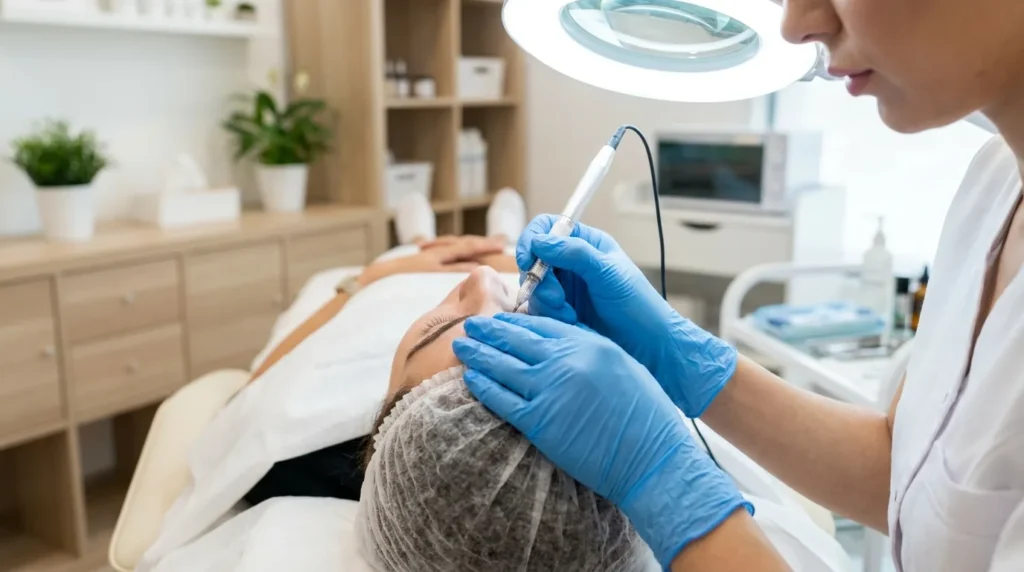
Microblading deposits pigment under the skin with a handheld blade to mimic individual brow hairs. Because it breaks the skin barrier, safety rests almost entirely on two things: who holds the blade and how clean the room is. A certified artist using sterile, single-use tools in a licensed studio keeps the risk low. The same procedure from an unlicensed home operator with reused tools is where infections and botched brows come from.
So the honest answer is that the method is safe when the conditions are right, and risky when they are not. The rest of this guide covers what can go wrong, whether it hurts, whether it harms your natural brows, and how to check that an artist in Dubai is the safe kind.
The permanent makeup and aesthetic studios below are listed by directory rating and review volume, not by who pays. Each holds a Dubai licence and clears our rating and review floor. Treat them as a starting point, then run the vetting checklist further down before you book.

Popular permanent makeup and aesthetic studios in Dubai
Luerur Aesthetic Clinic is a skin care and aesthetic clinic in Al Barsha, on 39th Street behind Saudi German Hospital. It is rated from reviews.Reviewers describe a doctor who explains options clearly and only recommends a procedure when it is genuinely needed, with specific praise for natural looking results after a filler dissolving treatment and for a targeted acne programme that visibly improved skin. As with any aesthetic or medical treatment, outcomes and experiences can vary between visits, so a thorough consultation to set expectations before booking is worth doing.The clinic offers a broad range of treatments, from Botox injections, dermal fillers, chemical peels and skin rejuvenation to laser hair removal, microdermabrasion, PRP therapy, FUE hair transplant and surgical procedures such as rhinoplasty, liposuction and tummy tuck. The venue has on-site appointments, gender-neutral toilets and wheelchair-accessible parking, entrance and seating.
In Al Habtoor Business Tower in Dubai Marina, Cosmesurge Clinic offers botox injections, dermal fillers, body contouring, chemical peels, laser hair removal, rhinoplasty, liposuction and FUE hair transplant among other cosmetic and dermatology treatments. It is rated from reviews.Reviewers consistently describe the doctors as attentive and compassionate, noting that treatment recommendations are conservative rather than pushed, and several return year after year for ongoing skin care. The clinic itself is noted for a modern, welcoming atmosphere with views over the marina.The clinic has on-site services with a wheelchair-accessible entrance, car park, seating and toilet, plus gender-neutral toilets. It suits Dubai Marina residents and visitors researching cosmetic treatments, laser hair removal or dermatology consultations, with a consultation typically recommended before committing to any treatment plan.
Novomed - Aesthetica is an aesthetic and plastic surgery clinic in Umm Suqeim 3, rated from reviews. The clinic's range spans injectables such as Botox and dermal fillers, body contouring and surgical procedures including liposuction, tummy tucks, breast augmentation and rhinoplasty, skin treatments such as chemical peels and laser resurfacing, hair transplants and tattoo removal. Many reviewers describe a highly professional, attentive consultation experience and results that met or exceeded expectations, with the clinic's aesthetic doctors singled out for precision and a natural-looking approach. A small number of reviews raise concerns about the number of sessions needed for tattoo removal and about cost, so it is worth agreeing the full treatment plan and pricing in detail before starting a course of sessions. The clinic has a wheelchair-accessible car park and entrance.
Enfield Royal Clinic is an aesthetic and cosmetic surgery clinic on Al Wasl Road in Al Manara, offering treatments including Botox, dermal fillers, chemical peels, laser hair removal, rhinoplasty, liposuction, arm lifts, tummy tucks, body contouring, breast augmentation and FUE hair transplants, and is rated from reviews.Reviewers consistently describe a professional, welcoming environment, with the clinical team praised for explaining procedures clearly, answering questions in detail and putting patients at ease before and during treatment. Laser and skin treatments in particular draw repeat mentions of strong results and attentive aftercare, and several visitors say they returned for a second or third session based on their first experience.The clinic offers on-site services along with gender-neutral toilets and wheelchair-accessible parking, entrance, seating and toilet facilities. It suits patients seeking a fuller consultation before committing to a cosmetic, dermatology or laser procedure.
Dr. Kayle Aesthetic Clinic is a plastic surgery and skin care clinic in Al Manara, offering procedures including breast augmentation, liposuction, rhinoplasty, tummy tuck, arm lift and eyelid surgery, alongside non-surgical treatments such as Botox injections, dermal fillers, chemical peels, facial treatments and laser hair removal. Rated from reviews.Reviewers describe doctors who take time to listen carefully, investigate the underlying cause of a concern rather than treating symptoms alone, and explain the reasoning behind a recommended treatment. Several report noticeable improvement after a course of sessions and describe feeling genuinely supported throughout their care.On-site services are available, and the clinic has a wheelchair-accessible car park and entrance, making it straightforward to reach for consultations and follow-up visits alike.
If you would rather browse the full set yourself, salonsindubai.ae lists 55 Dubai venues offering microblading, and the directory carries licensed providers only.
Browse all 1 Permanent Make-Up Salons providers on our directory.
What can go wrong: microblading risks and side effects
Most people heal without trouble, but the risks are worth knowing before you commit to a tattoo on your face. The table sums up the main ones and how a good studio lowers each.
| Risk | Why it happens | How a safe studio lowers it |
|---|---|---|
| Infection | The blade breaks the skin, so bacteria can enter during or after the session | Sterile single-use blades, clean hands, sealed pigment, clear aftercare |
| Allergic reaction | The body reacts to a pigment; colour additives in tattoo inks are not FDA approved for injection | A patch test before the full session to catch sensitivity early |
| Scarring | The blade cuts too deep into the skin | A trained hand that works at the correct shallow depth |
| Granulomas | Small clusters of inflamed tissue form around the pigment, a documented reaction | Tested pigments and correct technique reduce the chance |
| Misshapen or wrong-colour brows | An inexperienced artist maps a poor shape or picks the wrong shade | A portfolio of healed results and a shape mapped before any cutting |
The serious short-term sign to watch for is infection. Prolonged swelling, redness, crusting, or oozing after the session means something is wrong, and you should see a doctor quickly. The hardest problem to fix is a bad result, because removal is not instant. It needs several picosecond laser sessions that cost money and take months, so getting it right the first time matters more here than with most beauty treatments.
Does microblading hurt?
Does microblading hurt? Most clients describe it as discomfort rather than real pain. The artist applies a numbing cream before and often during the session, which dulls the sensation to scratching or light pressure as the blade passes over the brow. Pain tolerance varies, and the skin can feel more tender near the end of a two to three hour appointment.
The days after are usually more annoying than sore. The brows scab, flake, and itch as they heal over about a week to ten days, and picking at them raises the infection risk and can pull pigment out unevenly. If sharp pain, throbbing, or heat sets in rather than mild tenderness, that points to a problem and is worth a doctor’s look.
Does microblading damage your eyebrows?
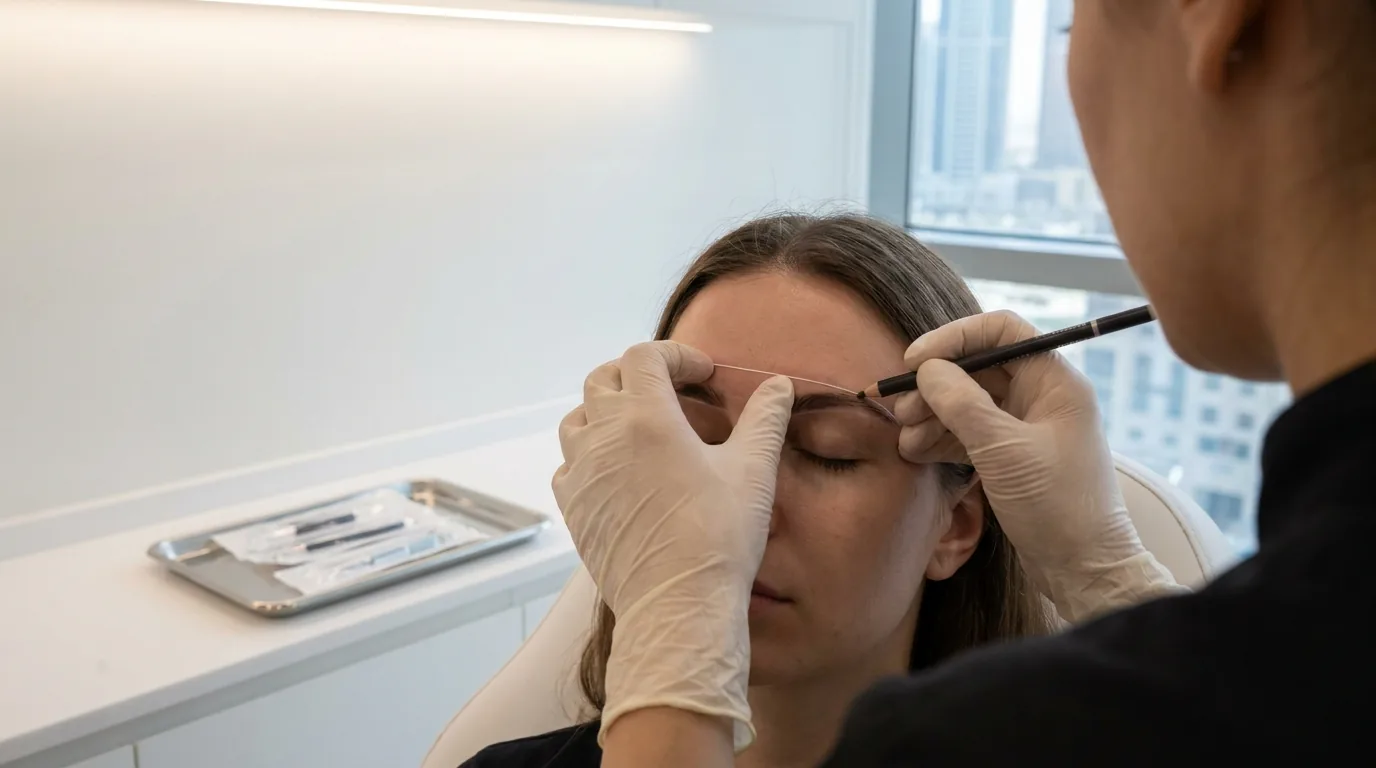
Does microblading damage your eyebrows? Done correctly, it does not harm the natural hair underneath. The blade works in the upper layers of skin and deposits pigment beside the follicles rather than destroying them, so your own brow hairs keep growing as before. People who notice thinner brows afterward have usually had a heavy-handed session, repeated touch-ups too often, or an infection that disturbed the follicles.
The real long-term commitment is the shape, not the hair. The pigment fades, but the brow design you choose is hard to reverse quickly, so a shape that suits a current trend can feel dated later. That is why a careful consultation and a conservative shape protect you more than any aftercare product.
What microblading looks like after years
Microblading is semi-permanent, not permanent. Done well, it lasts up to a year, after which an annual touch-up keeps it looking fresh. Skip the touch-ups and the pigment fades and disappears over roughly three years. Sun exposure speeds that up and can shift the colour, with healed pigment sometimes turning orange, blue, or pink as it ages.
A few practical notes for the years ahead. Retinol, glycolic acid, and chemical peels near the brow lighten the pigment faster, so keep them off the area. If you later plan brow botox or filler nearby, space it from your microblading appointment and tell both providers. And because the pigment sits in the skin, mention it before any MRI, as some inks can react.
Who should avoid microblading
Microblading suits most healthy adults, but several groups should skip it or get a doctor’s clearance first. A responsible artist will turn you away or ask for medical sign-off if any of these apply.
- Anyone under 18, even with parental consent.
- Pregnant or breastfeeding women, because of hormonal changes and infection caution.
- Anyone with a history of keloid scarring, since the skin trauma can trigger raised scars.
- People with an autoimmune condition, lupus, uncontrolled diabetes, or a compromised immune system.
- Anyone on blood thinners, or who finished a course of Accutane within the past year.
- People with active eczema, psoriasis, rashes, or skin infection on the brow area.
This is not the full list, and it is exactly the kind of detail to raise at consultation. When in doubt, a quick check with a DHA-licensed clinic settles whether microblading is safe for your situation.
How Dubai licenses microblading
Dubai treats microblading as a licensed activity, which is your first and strongest safety filter. A legitimate studio holds a trade licence from the Department of Economy and Tourism (DET) to operate the business, and the venue and its technicians fall under Dubai Health Authority (DHA) health and hygiene rules for personal-care and semi-permanent cosmetic services. That DHA framework covers sterilisation, single-use disposables, and practitioner standards, the controls that directly cut infection risk.
Booking a licensed venue is the simplest way to avoid the worst outcomes. A studio that cannot show its licence, or that works from an unregulated home setup, is a clear signal to walk away. Our directory carries licensed providers only, so filtering the microblading listings or the wider permanent makeup salons is a safe place to start.
How to check a microblading artist is safe
The artist you choose decides whether microblading is safe for you. Run through these checks before you book.
- Confirm the licence. A real studio shows its DET trade licence and works under DHA hygiene rules. No licence, no booking.
- Ask for a patch test. A first-time client should get a small pigment test 24 to 48 hours ahead to catch an allergic reaction before the full session.
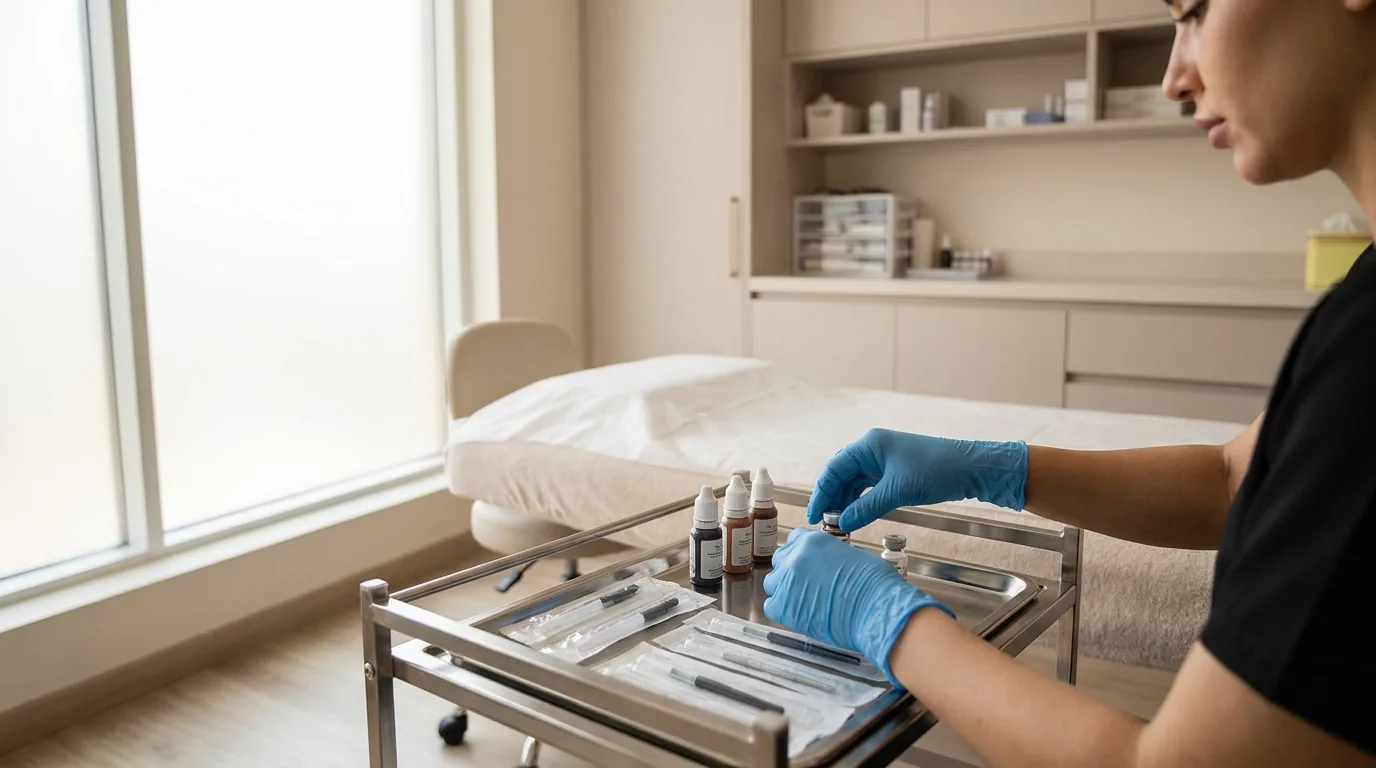
- Check the tools. Blades must be sterile, single-use, and opened in front of you. Reused tools are the fastest route to infection.
- Review healed photos. Ask for the artist’s own before-and-after of work healed at least a month, not just fresh results or social media shots.
- Ask about the pigment. A professional names the pigment brand and stores it sealed. Vague answers are a warning sign.
- Read recent reviews. Look for comments on hygiene, healing, and shape, then cross-check the venue against our salon ranking method and the standards our editorial team applies.
A confident artist answers all six without hesitation. Pushback on any of them is your cue to keep looking among the licensed aesthetic clinics in the directory.
Safer or gentler alternatives to microblading
If a tattoo on your face feels like too much, or you fall into a group that should avoid it, gentler brow options give fuller-looking results without breaking the skin.
- Brow lamination: a setting treatment that brushes your own hairs up and full for weeks, with no pigment or needle. See the eyebrow lamination guide for what it involves.
- Brow tinting: a semi-permanent dye that darkens your natural brows so they read denser. Compare eyebrow tinting providers.
- Threading and shaping: a clean, precise shape with no chemicals or pigment, easy to maintain. Browse eyebrow threading salons.
- Brow makeup: pencils, powders, and gels build fullness day to day and wash off, so there is no long-term commitment.
Microshading, a softer powder-fill version of cosmetic brow tattooing, is another route for sensitive skin, though it carries the same tattoo-based cautions as microblading.


