


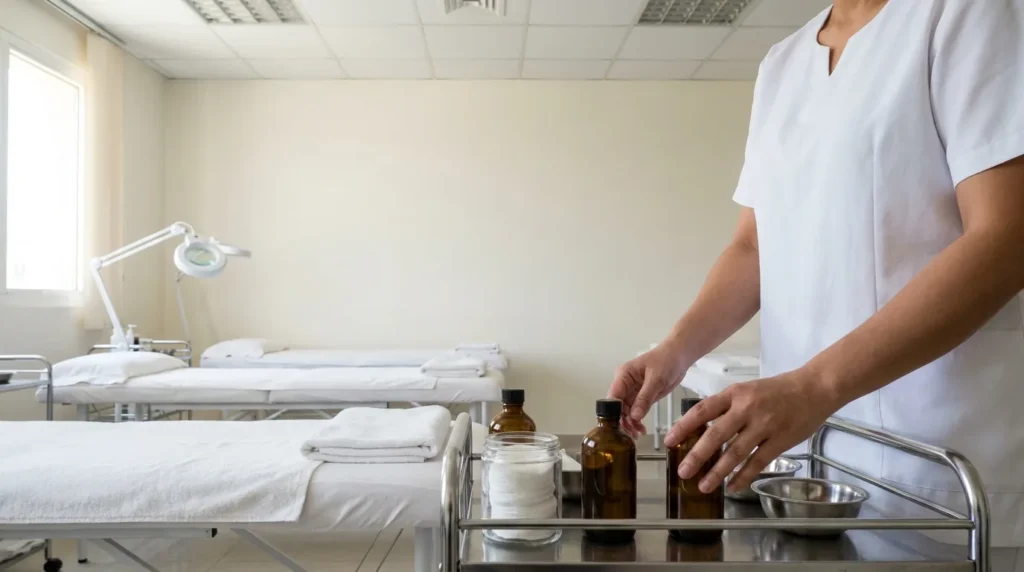
Beauty therapy courses in Dubai run from about AED 5,500 for a short essentials course to AED 36,000 for a full one year diploma. The fee tracks contact hours and the awarding body behind the certificate. Only some routes end in a Dubai Health Authority licence, and that is the part which decides where a graduate can legally work.
Beauty courses in Dubai are sold on headline price, and the headline is the least useful number on the page. Three comparisons settle the choice before any deposit: fee against teaching hours, the qualification each route awards, and the licence at the end.
What beauty therapy courses in Dubai cost
Published fees for beauty courses in Dubai cluster into four bands. Beauty therapy courses occupy the top two. Short courses cover salon essentials, certificate programmes add the standard salon service list, diplomas add skin anatomy and electrotherapy, and licence preparation programmes are built around the DHA assessment.
| Course type | Typical published fee and length |
|---|---|
| Beauty essentials short course (skin, brows and nails) | AED 5,500 to AED 9,000, about 90 hours or six weeks |
| Beautician certificate (adds threading, waxing and basic massage) | AED 9,000 to AED 12,500, six weeks to three months |
| Beauty therapy diploma | AED 10,000 to AED 28,000, three to eight months |
| One year diploma with DHA licence preparation | AED 15,000 to AED 36,000, eight to twelve months |
These are fees Dubai institutes published for beauty therapy courses during 2026, and they move with intake dates and payment terms. Treat the bands as a planning range. Ask any beauty school Dubai students recommend for a written breakdown, including exam and registration fees, which sit outside the headline number at most institutes.
What the fee buys is hours, not weeks
Two beauty therapy courses at the same price can differ by a factor of ten in teaching time. A short essentials course at AED 5,500 across 90 hours works out near AED 61 an hour. A 1,200 hour diploma at AED 10,000 works out near AED 8. Measured per hour taught, the cheap course is frequently the expensive one.
Three questions settle it. How many contact hours in total. How many of those are practical hours on live models. How many students share one trainer during practical sessions. A beauty therapy academy that will not answer all three in writing has told you something useful.
Beautician or beauty therapist, and why the difference decides the licence
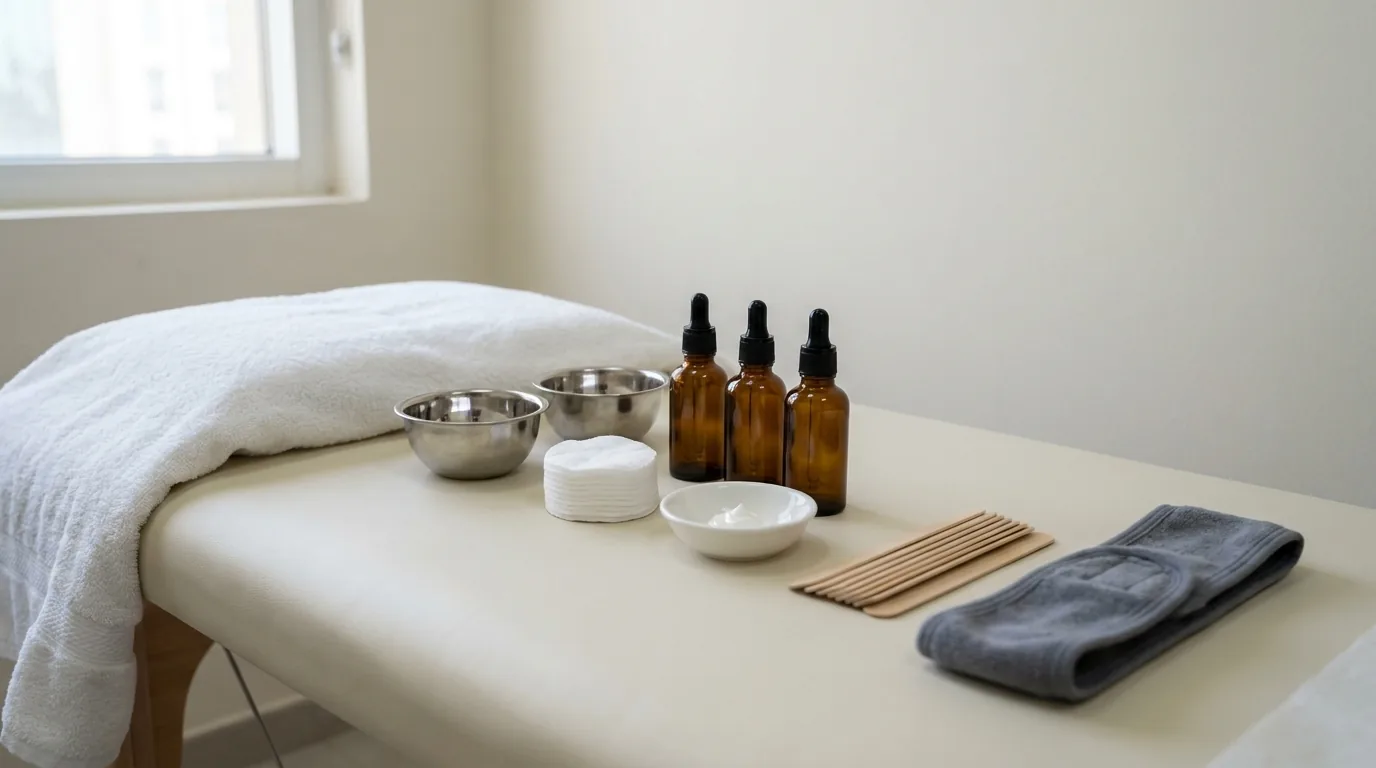
The two titles are used loosely in job ads and mean different things to regulators. A beautician works on cosmetic grooming: facials, waxing, threading, manicures, makeup. A beauty therapist is trained in skin anatomy and physiology as well, and performs machine and electrotherapy work such as microdermabrasion, high frequency and peels.
DHA classifies a beauty therapist as an allied healthcare professional. That classification is why clinic level work carries a licensing requirement which ordinary skin care salon roles do not, and why one course is often marketed both as a diploma and as licence preparation.
Beauty therapy courses follow the same split. Certificate programmes stay inside facial treatment basics and grooming services. Diplomas add body massage, which is how graduates also move into massage and spa roles, plus the machine work a salon certificate never covers.
Which awarding body sits behind the certificate
A certificate is only as portable as the organisation awarding it. Four routes appear repeatedly across beauty therapy courses in Dubai, and one of them is an in-house document with no external validation.
| Awarding body | What it is, and whether it is recognised outside the UAE |
|---|---|
| CIBTAC | UK awarding organisation regulated by Ofqual, running an accredited centre register of more than 160 centres worldwide. Recognised internationally. |
| CIDESCO | Swiss based international beauty therapy standard, awarded through approved schools. Recognised internationally. |
| ITEC | UK vocational awarding body for beauty, holistic and sports therapies. Recognised internationally. |
| In-house certificate | Issued by the institute under its own name, with no external awarding body attached. Rarely carries weight with another employer. |
A CIBTAC course Dubai employers recognise names the awarding body on the certificate itself. CIDESCO Dubai centres work the same way. Ask which body awards the qualification, then verify the school against that body’s own register rather than the school’s marketing page.
How to become a beauty therapist in Dubai
Beauty therapy courses are step one of a longer sequence, and skipping a step usually means repeating it later at your own cost.
- Complete a diploma level programme at an institute holding a KHDA training permit, typically six to twelve months.
- Log practical hours on live models. Employers and assessors both ask what was practised, not only what was studied.
- Register on the DHA Sheryan portal and open a professional licence application under the beauty therapist category.
- Send certificates for primary source verification through DataFlow, which confirms them with the issuing institution directly.
- Sit the Prometric computer based assessment for that category.
- Line up an employer. A DHA professional licence is activated against a licensed facility, so the job and the licence tend to arrive together.
Documentation and experience thresholds change without much notice, so confirm the current requirements on the DHA Sheryan portal before enrolling anywhere. Institutes quote the process from memory and it drifts.
Where each qualification lets you work
Dubai runs two licensing tracks and they answer different questions. The venue track: the Department of Economy and Tourism issues the trade licence a salon needs to trade, and Dubai Municipality sets the health and hygiene rules for the premises. The practitioner track: the Dubai Health Authority licenses the person performing clinical and machine based treatments, and the facility hosting them.
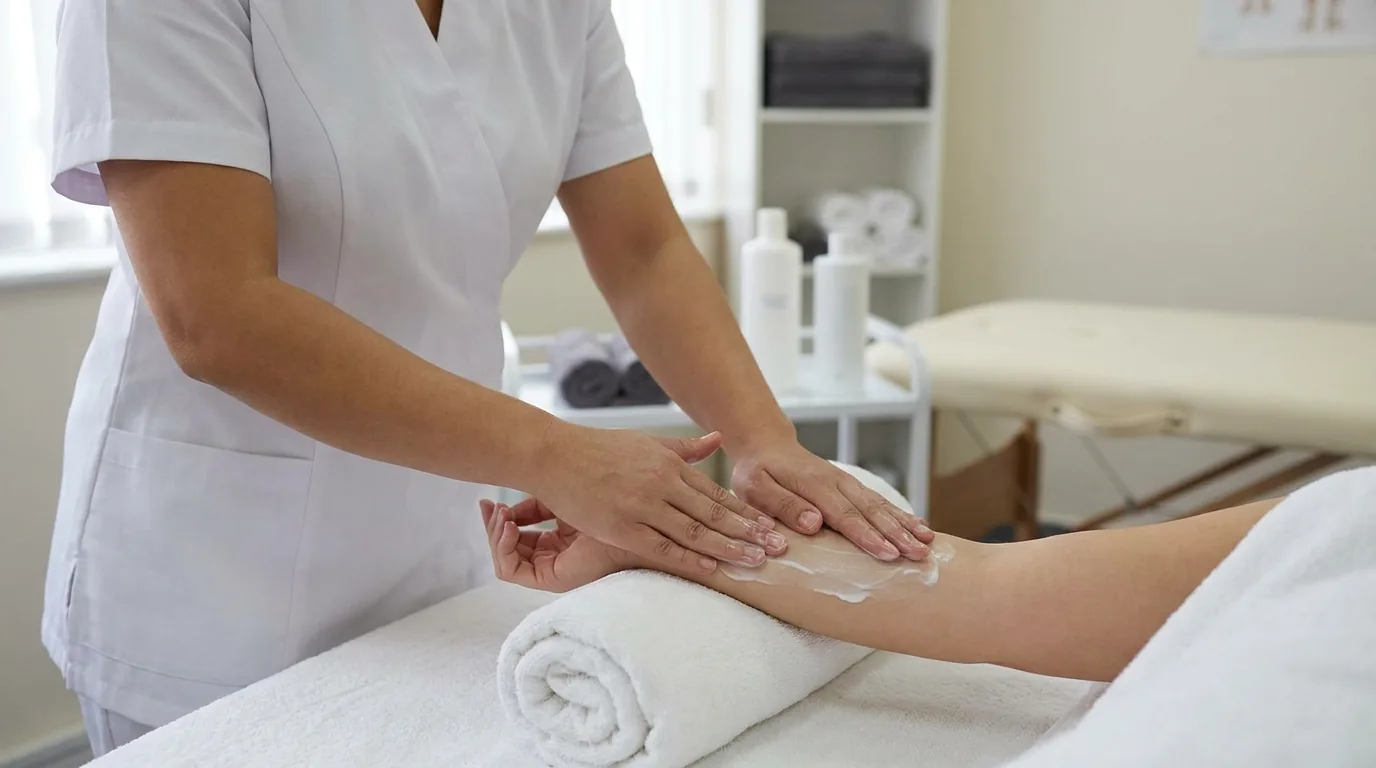
Beauty training Dubai employers accept for grooming work inside a DET licensed salon is usually certificate level. A DHA licence is what opens roles in aesthetic clinics and medical spas, and in laser hair removal rooms where the device itself is regulated. Beauty therapy courses that stop at certificate level keep a graduate inside the salon market.
Anyone planning to open their own place later needs the trade licence route as well, set out in the guide to buying a beauty salon in Dubai.
Browse all 57 Skin Care Salons providers on our directory.
What beauty therapists earn in Dubai
Reported pay varies widely because the title covers both salon floor work and clinic roles. Indeed put the average beauty therapist base salary in Dubai at AED 72,310 a year in August 2026, drawn from 176 reported salaries, while live vacancies on the same site advertise AED 3,000 to AED 8,500 a month depending on the role and the licence. Commission on treatments and retail is common and often explains the spread.
Pay tracks what a therapist is licensed to perform. Machine and clinical treatments bill at higher rates than grooming services, a gap visible in the Dubai beauty salon price list. That gap is the practical argument for the longer diploma.
How to check a beauty school before you pay
Four checks separate credible beauty therapy courses from expensive workshops, and all four take under ten minutes. Every beauty school Dubai students shortlist should survive them.
- KHDA permit. Private training institutes in Dubai operate under a permit from the Knowledge and Human Development Authority. Ask for it, then check the legal name on the permit matches the beauty therapy academy taking the payment.
- Awarding body register. A CIBTAC course Dubai schools advertise should be traceable to the CIBTAC register of accredited UAE centres, which listed 13 centres in August 2026, several of them in Dubai. CIDESCO Dubai schools are verified the same way, through the awarding body rather than the school.
- Hours in writing. Total hours, practical hours and the student to trainer ratio, on paper, before any payment.
- What the certificate says. The document should name the awarding body and the qualification level alongside the institute.
Two worked examples of check two. Riva Institute of Aesthetics appears on the CIBTAC register of UAE centres, so its CIBTAC claim is verifiable in one click. ISAS Beauty Academy does not appear on that register, and lists CIDESCO and KHDA approval in its own materials instead. Neither fact ranks one school above the other. They tell you which awarding body to check with, which is the whole point of the exercise.
A beauty and wellness course sold through social media with none of the above is a workshop. Pricing a workshop against a diploma is the most expensive mistake in this market.
Course choices that cost students money
- Comparing beauty therapy courses on fee alone. Ninety hours and 1,200 hours are different products at any price.
- Assuming any beauty and wellness course leads to a DHA licence. The licence depends on the assessment, the verification and the course matching the category requirements.
- Paying the full fee up front. Staged payment against completed modules is normal at established institutes.
- Ignoring the language of instruction. Practical assessments get hard when the trainer teaches in a second language.
- Choosing beauty training Dubai employers have never heard of. Ask two or three salons which certificates they hire on before enrolling.
Each item on that list is settled by one question asked in writing before money changes hands.
Where beauty therapy graduates work in Dubai
Graduates of beauty therapy courses in Dubai mostly start on a salon floor rather than in a clinic. The directory covers 1,325 beauty salons in Dubai, which is the employer market a new certificate competes in, alongside hotel spas and aesthetic clinics. Salon roles concentrate in residential districts with steady footfall rather than in the tourist areas.
Beauty therapy courses are sold by separately licensed training institutes, so course providers sit outside the scope of this directory. What it does cover is the employer market: the beauty salons in Dubai a graduate applies to once the certificate is signed.
Browse all 1,325 Beauty Salons providers on our directory.


