



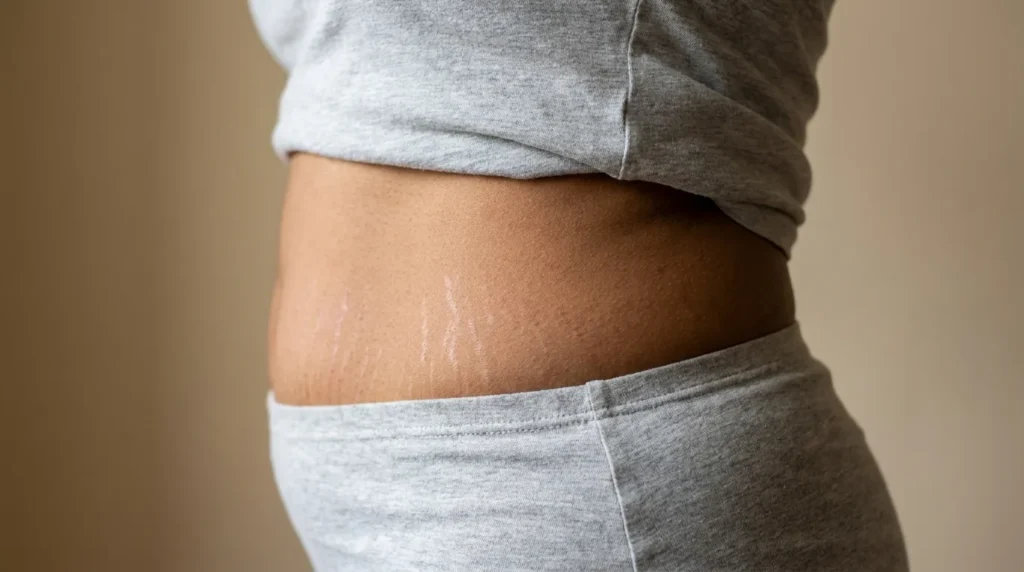
Types of stretch marks carry two labels at once: a colour stage and a cause. Striae rubra are new red or purple marks, striae alba are the faded white or silver stage, and cause labels such as striae atrophicans name what stretched the skin. Reading both labels tells you how old a mark is and what to expect next.
The types of stretch marks are two labels, read together
Almost every guide presents one flat list that mixes Latin colour words with Latin cause words, which is why readers finish the page unsure which one applies to them. The clearer way to hold it: every mark carries a colour label and a cause label at once.A pink line on a pregnant belly sits in the red stage and carries the pregnancy cause label. Eighteen months later the same line has moved to the pale stage, and the cause label has not changed.
The umbrella term for the whole group is striae distensae, which translates roughly as stretch lines. Clinicians also shorten it to skin striae in notes and consultation letters. The mechanism underneath is the same in every case: the dermis is pulled faster than it can produce collagen and elastin, the fibres tear, and the repair fills the gap with scar tissue that reflects light differently from the skin around it.
| Axis | Label | What it describes |
|---|---|---|
| Colour stage | Striae rubra | New. Red, pink or purple, sometimes slightly raised and itchy. |
| Colour stage | Striae alba | Mature. White, silver or pale, usually a little sunken. |
| Colour stage | Striae nigra, striae caerulea | Dark brown to black, or blue to slate grey. Seen mostly on deeper skin tones. |
| Cause | Striae gravidarum | Pregnancy. |
| Cause | Striae atrophicans | Thinned skin, often from long steroid use or a condition such as Cushing’s syndrome. |
| Cause | Striae distensae | The umbrella label for marks from rapid stretching of any kind. |
Read the table down the Axis column rather than across it, and the confusion clears: nobody carries a colour label instead of a cause label, they carry one of each.
Striae rubra: the red, pink and purple stage
Striae rubra, sometimes written with the Latin plural ending, is the name for a mark in its first months. The colour is not pigment. It comes from blood vessels sitting closer to the surface than usual, because the dermis above them has thinned where the fibres gave way. That is why red stretch marks often look brighter after a hot shower or a gym session, and duller first thing in the morning.
Two other signs travel with this stage. The American Academy of Dermatology describes marks at this point as slightly raised and sometimes itchy, and plenty of people register the itch before they register a line. The itch signals skin under mechanical strain rather than anything going wrong.
This stage also carries the practical point that most treatment guides bury. While the vessels are still active, the tissue is still remodelling, and published reviews consistently find better response to treatment at this point than later. That is the reasoning behind clinics steering early marks toward gentler options such as a topical retinoid or a course of microneedling before anything more aggressive is discussed.
Striae alba: the white, silver and grey stage
Striae alba is the mature form. The vessels calm down, the redness drains away, and what remains is a strip of scar tissue with less pigment than the skin around it. On lighter skin that reads as white or silver. On medium and deeper skin it more often reads as pale grey, ash or a dull sand colour against the surrounding tone.
Texture changes too. As the scar contracts, white stretch marks tend to sit slightly below the surface, so they catch shadow in raking light and can look creased or wrinkled. Old marks frequently become more visible with age, not less, because the surrounding skin loses elasticity while the scar does not change. Options aimed at this stage, such as fractional laser skin resurfacing, work on texture and tone rather than on colour, since there is no longer a red component to settle.
New versus old stretch marks: three checks you can run at home
The most common question about stretch marks colour stages has no picture that reliably answers it, because the same stage looks different on every skin tone. Three physical checks work better than a photo comparison, and none of them needs equipment.
- Press it. Colour that comes from blood vessels lightens under gentle finger pressure and floods back when you let go. Colour that comes from scar tissue does not move. A mark that pales under the finger is still in the rubra stage whatever shade it looks in the mirror.
- Feel across it, not along it. Run a fingertip at right angles to the line. A newer mark sits level or a fraction raised. A mature one usually drops into a shallow groove you can feel before you can see.
- Notice the itch. Itching and tightness cluster around the forming stage and settle as the mark matures. A line that has stopped itching has generally stopped changing quickly.
These checks date a mark. They say nothing about what caused it, and they are not a diagnosis. Anything that is spreading fast, appearing without an obvious trigger, or arriving alongside other skin or weight changes belongs in front of a licensed clinician rather than a search bar.
The press test is most useful in the first year. After that both stages behave the same under pressure, and texture becomes the more reliable signal.
The cause labels: pregnancy, steroids and everything else
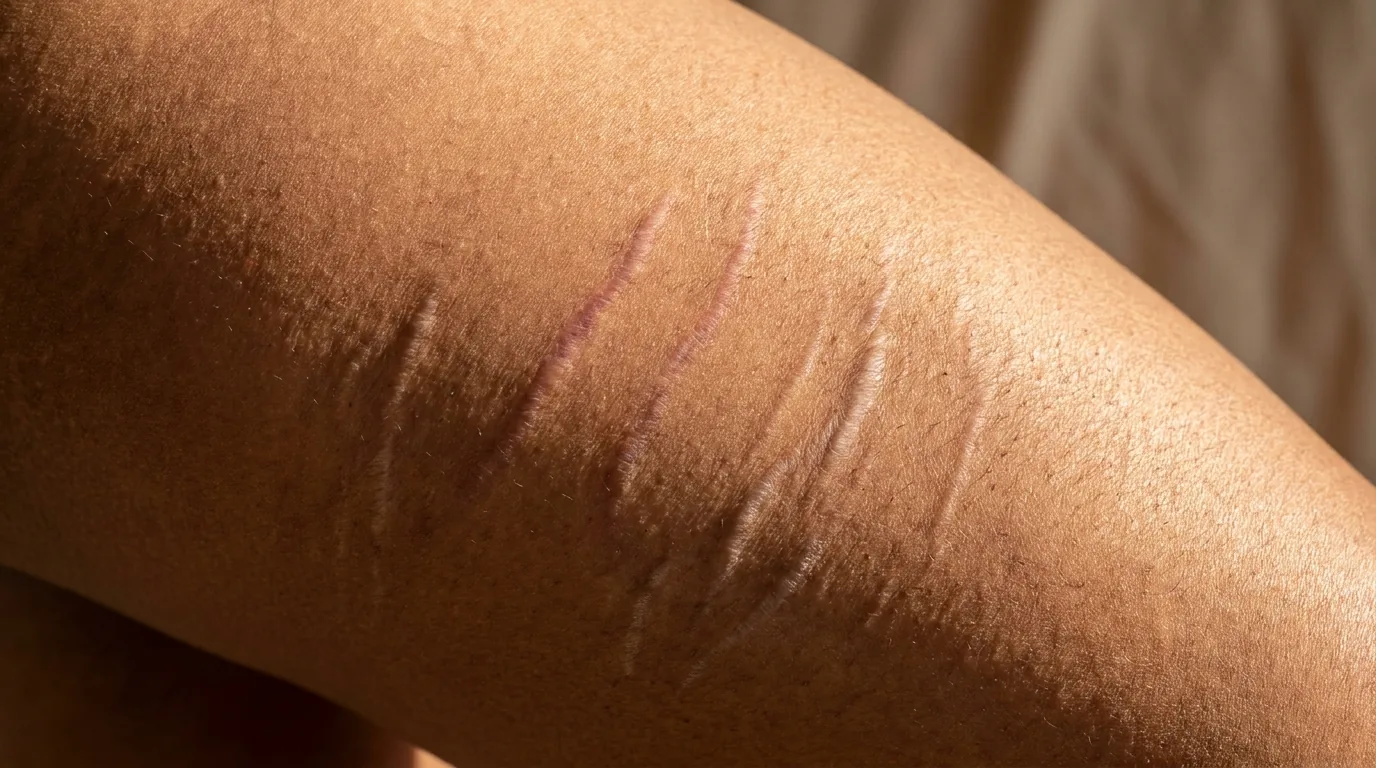
Cause labels answer a different question: what pulled the skin. They do not describe how a mark looks today.
Striae gravidarum is the pregnancy form. Marks usually surface in the second and third trimesters across the lower abdomen, breasts, hips and thighs, and they follow the same ageing path as any other mark: red or dark first, pale later. Worth separating from linea nigra, the vertical brown line that appears down the centre of the abdomen in pregnancy. That is pigmentation, not a scar, it is not a stretch mark, and it usually fades on its own after birth.
Striae atrophicans describes marks on skin that has been thinned from the inside, most often by long term topical or oral corticosteroids, or by a hormonal condition such as Cushing’s syndrome. The tell is distribution: these turn up in places under no real mechanical strain, and that pattern is a reason to raise it with a doctor rather than a beauty therapist.
Striae distensae is the catch-all for everything driven by ordinary rapid stretching: a puberty growth spurt, weight gain or loss, or muscle put on quickly through training. Most marks on most people sit here.
What do stretch marks look like on brown and deep skin tones?
The standard red-to-white description was written for light skin, and it misleads a large share of Dubai’s population. On Fitzpatrick types IV to VI, a new mark is more likely to read purple, deep brown or near black than red, and a mature one is more likely to read grey, ash or hypopigmented than white. The two labels that cover this are striae nigra for the dark brown to black form and striae caerulea for the blue to slate version.
The practical consequence is that a reader with deeper skin who is looking for red stretch marks may decide they do not have new marks at all, and miss the window where marks respond best. Run the press test instead of matching a colour swatch. It is also why treatment decisions on deeper skin get made more cautiously: several devices that suit lighter skin carry a real risk of leaving a pigment change behind, which is the same caution that governs hyperpigmentation treatment generally.
Where each type shows up on the body
Location is the other clue people use, and it is a reasonable one, because the trigger decides where the skin gets pulled hardest.
| Trigger | Where marks usually appear | Label most often used |
|---|---|---|
| Pregnancy | Lower abdomen, breasts, hips, thighs | Striae gravidarum |
| Rapid weight gain | Abdomen, hips, outer thighs, upper arms | Striae distensae |
| Puberty growth spurt | Outer thighs, lower back, calves, breasts | Striae distensae |
| Muscle gain from training | Shoulders, chest, upper arms | Striae distensae |
| Long term steroid use | Widespread, including low strain areas | Striae atrophicans |
The distinction people most often ask about, gaining against losing weight, is largely a false one: the marks form while the skin is being stretched, then become easier to see once the volume underneath drops away.
Which stretch marks are permanent?
All of them. Every stretch mark is a dermal scar, and a scar does not leave. What changes is how visible it is: the red settles, the contrast drops, and a mark that dominated the skin at six months can be hard to find at three years without anyone doing anything to it.
That distinction matters when reading treatment claims. Nothing available returns skin to an unmarked state, and the NHS puts it plainly: marks usually fade over time but may not disappear completely. What clinical work realistically buys is a reduction in colour, depth and texture, with the strongest results on marks caught in the rubra stage. Anyone weighing that up will find the method by method breakdown in the guide to stretch marks treatment in Dubai more useful than another before and after gallery.
Where to get skin striae assessed in Dubai
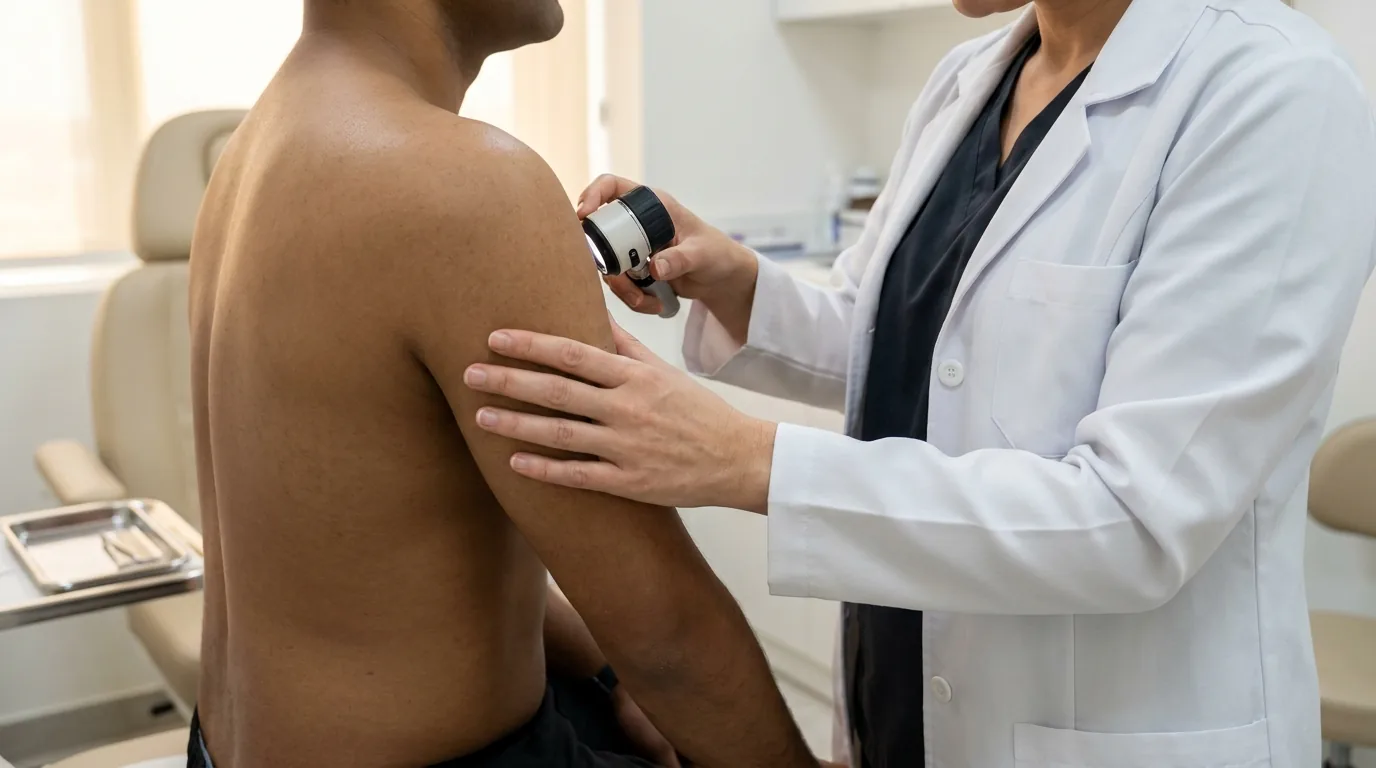
Identifying a mark at home is enough for most people, since most marks need nothing done to them. An in person look earns its fee when marks appear without a clear trigger, spread quickly, or when someone wants a realistic read on what treatment would achieve before paying for a course.
Two licences matter in the UAE and they are not interchangeable. Any salon or clinic trading in Dubai holds a Department of Economy and Tourism (DET) trade licence, which covers the business but says nothing about clinical scope. Assessment or treatment of a skin condition additionally requires Dubai Health Authority (DHA) licensing, held by both the facility and the individual practitioner. A venue offering a device-based stretch mark treatment without DHA clinical licensing is working outside its permission, and the licence is a fair thing to ask to see. The directory currently lists 17 aesthetic clinics alongside its skin specialists and aesthetic salons categories, and the ranking methodology explains how entries are ordered.

Popular skin and aesthetic clinics in Dubai
Luerur Aesthetic Clinic is a skin care and aesthetic clinic in Al Barsha, on 39th Street behind Saudi German Hospital. It is rated from reviews.Reviewers describe a doctor who explains options clearly and only recommends a procedure when it is genuinely needed, with specific praise for natural looking results after a filler dissolving treatment and for a targeted acne programme that visibly improved skin. As with any aesthetic or medical treatment, outcomes and experiences can vary between visits, so a thorough consultation to set expectations before booking is worth doing.The clinic offers a broad range of treatments, from Botox injections, dermal fillers, chemical peels and skin rejuvenation to laser hair removal, microdermabrasion, PRP therapy, FUE hair transplant and surgical procedures such as rhinoplasty, liposuction and tummy tuck. The venue has on-site appointments, gender-neutral toilets and wheelchair-accessible parking, entrance and seating.
In Al Habtoor Business Tower in Dubai Marina, Cosmesurge Clinic offers botox injections, dermal fillers, body contouring, chemical peels, laser hair removal, rhinoplasty, liposuction and FUE hair transplant among other cosmetic and dermatology treatments. It is rated from reviews.Reviewers consistently describe the doctors as attentive and compassionate, noting that treatment recommendations are conservative rather than pushed, and several return year after year for ongoing skin care. The clinic itself is noted for a modern, welcoming atmosphere with views over the marina.The clinic has on-site services with a wheelchair-accessible entrance, car park, seating and toilet, plus gender-neutral toilets. It suits Dubai Marina residents and visitors researching cosmetic treatments, laser hair removal or dermatology consultations, with a consultation typically recommended before committing to any treatment plan.
Glow Aesthetics Dermatology Clinic is in Al Attar Business Centre in Al Barsha, offering botox injections, dermal fillers, chemical peels, microneedling, laser and IPL hair removal, skin tightening, scar treatment and pigmentation treatment. It is rated from reviews.Reviewers consistently praise the honesty of the medical guidance, noting that the team recommends only what is genuinely needed rather than upselling treatments. The clinic is described as professional and welcoming from arrival, with several highlighting fair pricing relative to the standard of care.The clinic has on-site services with a wheelchair-accessible entrance, car park and toilet. It suits patients across Dubai researching skin treatments, anti-aging facials or laser hair removal, with a consultation recommended to discuss the right treatment plan.
Derma 247 Laser Clinic is a skin and laser clinic in Nadd Al Hamar, rated from reviews. Treatments cover laser and IPL hair removal, botox injections, dermal fillers, chemical peels, pigmentation treatment, skin rejuvenation and tattoo removal.Reviewers consistently mention feeling well informed before and during laser sessions, with practitioners who explain each step in plain terms and check in throughout rather than rushing through the appointment. That attentiveness comes up often enough to be a genuine pattern rather than a one-off.The clinic runs by appointment, with on-site services and a fully wheelchair-accessible setup including gender-neutral toilets. It suits anyone after laser or aesthetic treatments who wants a clinical, unhurried approach rather than a quick in-and-out visit.
Novomed - Aesthetica is an aesthetic and plastic surgery clinic in Umm Suqeim 3, rated from reviews. The clinic's range spans injectables such as Botox and dermal fillers, body contouring and surgical procedures including liposuction, tummy tucks, breast augmentation and rhinoplasty, skin treatments such as chemical peels and laser resurfacing, hair transplants and tattoo removal. Many reviewers describe a highly professional, attentive consultation experience and results that met or exceeded expectations, with the clinic's aesthetic doctors singled out for precision and a natural-looking approach. A small number of reviews raise concerns about the number of sessions needed for tattoo removal and about cost, so it is worth agreeing the full treatment plan and pricing in detail before starting a course of sessions. The clinic has a wheelchair-accessible car park and entrance.
One thing worth doing before that appointment: run the press test and note which lines still lighten under the finger. Those are the ones where a conversation about texture and tone work, a chemical peel or something more targeted, has the most to work with. The pale ones set a different expectation entirely. Knowing which is which before walking in is what keeps a consultation from turning into a sales pitch.
Browse all 17 Aesthetic Salons providers on our directory.


