



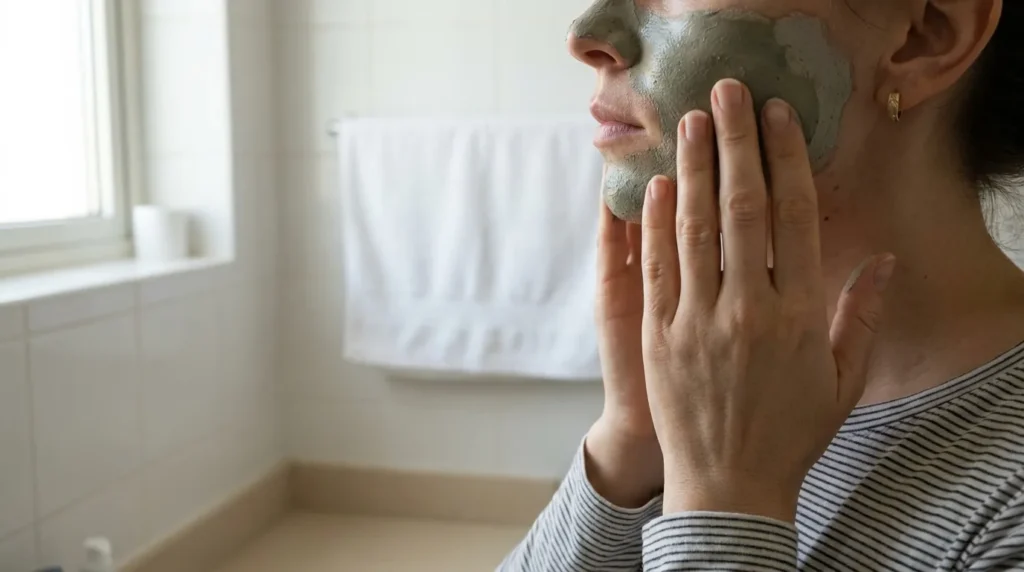
How to do facial at home comes down to seven steps: cleanse twice, exfoliate gently, steam, mask, tone, treat with a serum, then moisturise and massage. Budget 40 to 60 minutes and AED 150 to AED 400 for a starter kit that lasts months. Skip extractions and strong peels, because those belong in a salon.
What a facial at home can and cannot do
A facial at home is a structured skincare session with a fixed order of steps. Done well, it clears surface build-up, softens dead skin, hydrates, and leaves the face calmer and brighter for a few days. It costs a fraction of a salon visit.
What it cannot do is replace what a trained therapist does with steam, magnification, and proper extraction technique. It will not resurface scarring, shift stubborn pigmentation, or clear cystic acne. Those need professional tools and, in some cases, a doctor.
Set the expectation before you start. Learning how to do facial at home is maintenance between appointments, not a replacement for them. Our guide to the best facial in Dubai covers what the professional version adds.
The products that actually matter
Most guides on how to do facial at home read like a shopping list. You need six things, and you likely own four already.
- An oil-based cleanser and a gel or cream cleanser. The oil lifts sunscreen and makeup, the second wash cleans the skin itself. This is the double cleanse, and it is the step people skip most.
- One exfoliant. Either a chemical exfoliant with glycolic acid or lactic acid, or a fine physical scrub. Never both in the same session.
- A mask matched to your skin. Clay for congestion, a hydrating gel or sheet mask for dryness.
- A toner. Optional, and useful for rebalancing skin after cleansing.
- One serum. Hyaluronic acid for hydration, vitamin C for brightness, niacinamide for redness and oil control.
- A moisturiser, an eye cream, and sunscreen for the morning after.
| Skin type | Mask to use | Serum to follow with |
|---|---|---|
| Oily or congested | Clay or charcoal, 10 minutes | Niacinamide |
| Dry or flaky | Cream or sheet mask, 15 minutes | Hyaluronic acid |
| Dull or uneven | Gentle enzyme or gel mask | Vitamin C |
| Sensitive or reactive | Plain hydrating gel, 10 minutes | Hyaluronic acid only |
One mask and one serum per session is enough. Layering four actives is how people give themselves a reaction.
How to do facial at home, step by step
Set aside 45 minutes. Tie your hair back, wash your hands, and lay everything out before you start.
- Double cleanse. Massage an oil-based cleanser over dry skin for 60 seconds to break down sunscreen and makeup. Rinse with lukewarm water, then follow with a gel or cream cleanser.
- Exfoliate gently. Apply your chemical exfoliant and leave it for the time on the label, or use a fine scrub with light circular pressure for 30 seconds. Stay away from the eye area.
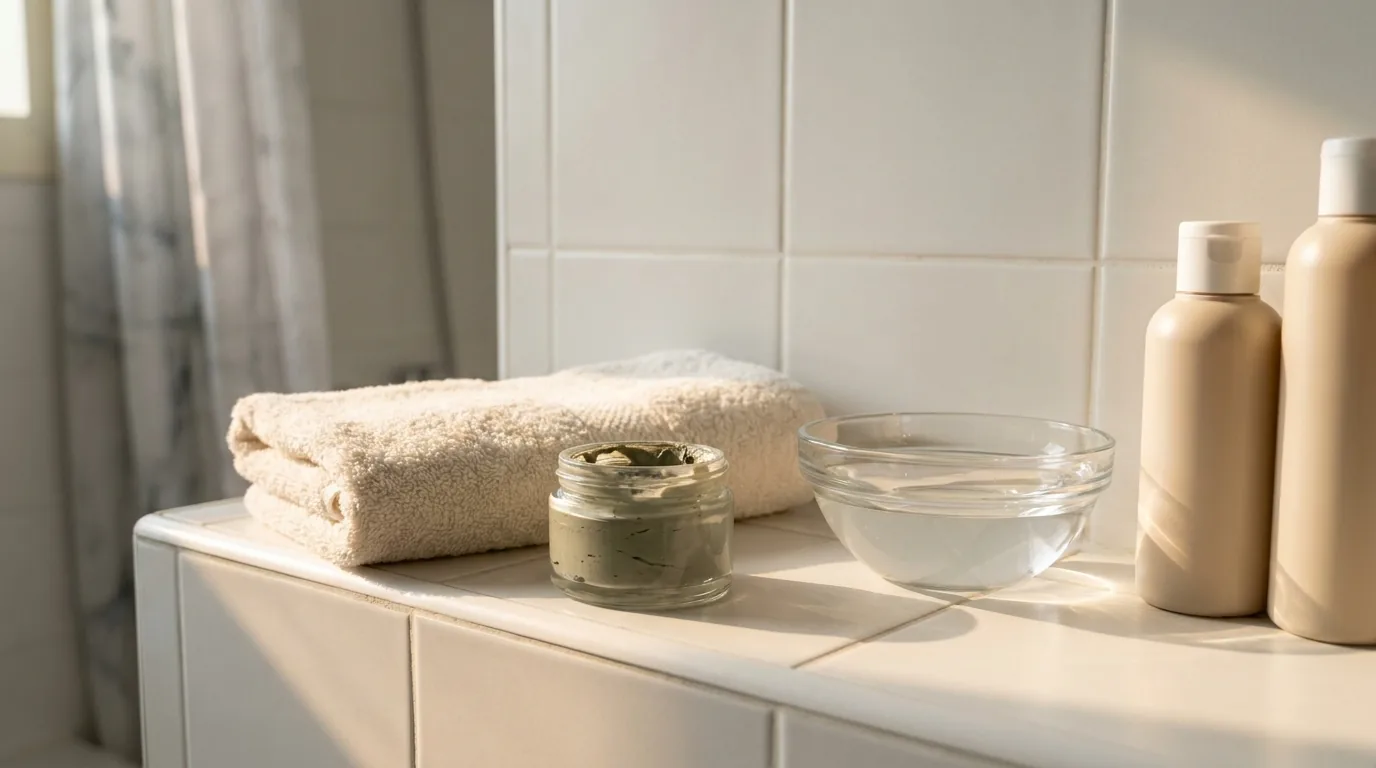
- Steam for five to ten minutes. Use a facial steamer, or soak a clean towel in warm water and drape it over your face. Warm, never hot.
- Mask. Apply a thin, even layer and leave it on for 10 to 15 minutes. Remove it with a warm damp cloth rather than scrubbing it off.
- Tone. Sweep a toner across the face on a cotton pad, or press it in with clean palms.
- Treat. Apply your serum to slightly damp skin, then an eye cream.
- Moisturise and massage. Warm your moisturiser or a few drops of facial oil between your palms, then finish with three to five minutes of massage.
That is how to do facial at home from start to finish. Wear sunscreen the next morning without exception, because freshly exfoliated skin burns faster.
Steam before or after exfoliating?
Published guides contradict each other here. Some run cleanse, then exfoliate, then steam. Others steam first. Both orders appear in guides from large beauty brands.
The answer depends on which exfoliant you use. A physical scrub works better after steam, because warmth softens the surface and you need less pressure to shift dead skin. A chemical exfoliant works better before steam, or with the steam skipped entirely, because heat increases how much acid the skin absorbs and raises the risk of stinging and redness.
One rule to remember when learning how to do facial at home: acids first or no steam, scrubs after steam. Sensitive skin should skip steaming altogether.
How to do facial massage at home
Facial massage is the step people rush, and it does the most for how skin looks immediately afterwards. It moves fluid, eases jaw and brow tension, and gives a short-term de-puffing effect around the eyes and cheekbones.
Learning how to do facial massage at home takes one session to get comfortable with. Work on slippery skin, always with oil or a rich moisturiser, and always move upward and outward.
- Start at the centre of the forehead and sweep outward to the temples, three passes.
- Use light pressure under the eyes, from the inner corner outward. The area drains and bruises easily.
- Sweep from the nose along the cheekbone toward the ear, then down the side of the neck, following the lymphatic drainage path.
- Pinch along the jawline from chin to ear with thumb and forefinger.
- Finish with slow strokes down the neck toward the collarbone.
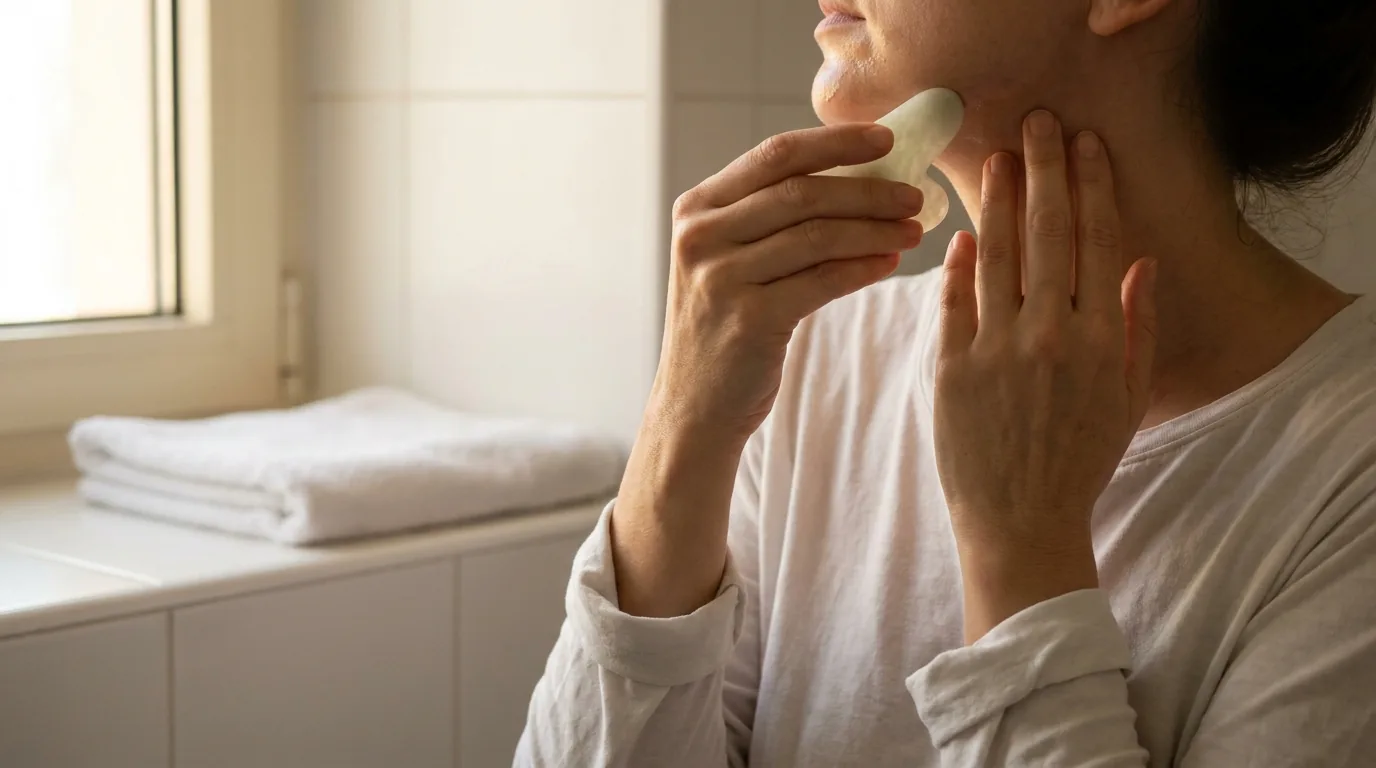
A gua sha tool or facial roller adds glide and spreads pressure evenly, though clean hands work as well. Five minutes is plenty.
How to achieve facial symmetry: what massage can and cannot change
Search how to achieve facial symmetry and you will find facial massage, face yoga, and taping sold as the answer. The honest version is narrower, and worth knowing before you spend money.
Nearly every face is asymmetric. That is the norm. Massage and lymphatic work reduce puffiness that makes one side look heavier, particularly after a salty meal, a bad night, or long-haul travel. The change is fluid moving, and it lasts hours.
What massage cannot change is bone structure, jaw position, or muscle bulk. Genuine structural asymmetry, or an asymmetry that appears suddenly, is a clinical question rather than a skincare one. In Dubai that means a DHA-licensed clinician, not a beauty therapist. Anyone promising permanent symmetry from a home routine is selling something, and our editorial team applies that standard to every claim on this site.
What to skip at home: extractions, strong peels and kitchen masks
Three things separate a good home facial from a bad one, and all three are things you leave out.
Extractions. Squeezing blackheads with fingers or a metal loop pushes debris deeper, ruptures the follicle wall, and leaves marks. On deeper skin tones, and the UAE population skews that way, the result is often post-inflammatory hyperpigmentation: a dark mark that outlasts the original spot by months. Proper blackhead removal is done under magnification by someone trained for it.
Strong peels. High-percentage acid kits sold online are formulated for professional use. Applied without training they cause burns and lasting pigment change. A chemical peel in a licensed venue is done at a controlled strength with a neutraliser on hand.
Kitchen masks. Lemon juice, baking soda, and toothpaste fill home remedy content. Lemon juice is acidic enough to cause a phototoxic reaction in strong sun, which matters a great deal here. Baking soda strips the skin barrier. Neither belongs on a face.
Dubai’s water, heat and air conditioning change what your skin needs
Most guides on this topic are written for temperate climates. The Gulf changes three variables at once.
Hard water. Dubai’s supply is largely desalinated and carries a high mineral load. Minerals bind with cleanser and leave a fine film, which is why skin can feel tight and look dull after washing. A second cleanse or a soft cloth removes it, and bottled or distilled water is worth using for the steaming step. Many skin care salons in Dubai filter their water for the same reason.
Air conditioning. Indoor humidity in a Dubai apartment often sits far below outdoor levels, and skin loses water faster. Hyaluronic acid needs moisture in the air to work with, so apply it to damp skin and seal it with moisturiser straight away.
Sun. The UV index here runs high for most of the year. Exfoliation removes the skin’s top defensive layer, so a home facial without sunscreen the following morning trades a short-term glow for pigmentation. Run your session in the evening and apply sunscreen at breakfast.
How often should you do a facial at home?
Once you know how to do facial at home, frequency is the next question. Every seven to ten days for normal or oily skin. Every two weeks for dry or sensitive skin. More often than that and the exfoliation step starts working against you.
The signal to slow down is a compromised barrier: skin that stings on application, looks red after cleansing, or feels tight all day. If that happens, drop the exfoliant and the mask for two weeks and run cleanse, serum, moisturiser only. Browse the full directory when you would rather have someone assess it in person.
When a professional facial is worth the money
Knowing how to do facial at home changes the maths, and it is closer than people assume. A home kit runs AED 150 to AED 400 and lasts three to six months. A facial in Dubai costs AED 150 to AED 1,800 per session, depending on the venue tier and whether a device is involved.
| What you want done | At home | Professional |
|---|---|---|
| Weekly maintenance and hydration | AED 150 to AED 400 per kit | Not necessary |
| Deep cleanse with extractions | Not advised | AED 250 to AED 500 |
| Device treatments and LED | Not available | AED 400 to AED 1,800 |
| Pigmentation or acne scarring | Not possible | Clinical assessment first |
Book a session when you need extractions, when a device is involved, or when something on your skin has changed and you want it looked at. Everything else is maintenance you can handle yourself. Dubai venues carry a DET trade licence to operate, and any clinic offering medical skin treatments also holds a DHA health licence. Check both before booking. Our directory lists salons offering facial treatments alongside general beauty salons that handle basic facials at the lower end of that range.

Popular facial and skin salons in Dubai
Skin Camouflage beauty therapists, fully licensed by the Dubai Health Authority, specialize in advanced skin treatments. Inkless Stretch Marks Removal effectively minimizes stretch marks without invasive procedures. Our Scalp Micropigmentation (Hair Tattoo) restores the look of fuller hair with precision pigmentation. The BB Glow Treatment achieves smooth, radiant skin that lasts.
Nova Clinic The Palm is a skin care clinic in Palm Jumeirah Mall by Dubai Retail, on the Palm Jumeirah, rated from reviews. Reviewers consistently describe a modern, extremely clean clinic where therapists explain each step of a facial treatment and leave skin feeling clean, fresh and glowing. Several also mention attentive, professional consultations that left them noticeably more comfortable and satisfied with their results. Treatments include acne treatment, anti-aging facials, body contouring, Botox injections, chemical peel, deep cleansing facial, dermal fillers, hair treatment, IPL and laser hair removal, microneedling, pigmentation treatment, PRP therapy, skin rejuvenation, skin tightening and tattoo removal. Appointments are recommended, and the clinic is wheelchair accessible with parking, entrance and toilet facilities on site at Nakheel Mall.
Glow Aesthetics Dermatology Clinic is in Al Attar Business Centre in Al Barsha, offering botox injections, dermal fillers, chemical peels, microneedling, laser and IPL hair removal, skin tightening, scar treatment and pigmentation treatment. It is rated from reviews.Reviewers consistently praise the honesty of the medical guidance, noting that the team recommends only what is genuinely needed rather than upselling treatments. The clinic is described as professional and welcoming from arrival, with several highlighting fair pricing relative to the standard of care.The clinic has on-site services with a wheelchair-accessible entrance, car park and toilet. It suits patients across Dubai researching skin treatments, anti-aging facials or laser hair removal, with a consultation recommended to discuss the right treatment plan.
Derma 247 Laser Clinic is a skin and laser clinic in Nadd Al Hamar, rated from reviews. Treatments cover laser and IPL hair removal, botox injections, dermal fillers, chemical peels, pigmentation treatment, skin rejuvenation and tattoo removal.Reviewers consistently mention feeling well informed before and during laser sessions, with practitioners who explain each step in plain terms and check in throughout rather than rushing through the appointment. That attentiveness comes up often enough to be a genuine pattern rather than a one-off.The clinic runs by appointment, with on-site services and a fully wheelchair-accessible setup including gender-neutral toilets. It suits anyone after laser or aesthetic treatments who wants a clinical, unhurried approach rather than a quick in-and-out visit.
Avoria Aesthetic Clinic is a skin care and medical aesthetics clinic in Al Barsha, rated from reviews. Treatments include Botox and dermal fillers, chemical peels, microneedling, laser hair removal, pigmentation and acne treatment, tattoo removal, electrolysis, lip blush and eyebrow microblading, plus body contouring and hair transplant procedures. Reviewers consistently describe a modern, spotless clinic with a calming atmosphere, and praise the team for explaining each treatment thoroughly before starting and taking time to listen to concerns. Laser hair removal sessions are described as comfortable and effective, and reviewers mention good results from HydraFacial treatments too, with outcomes generally meeting or exceeding expectations. Free underground parking is available, and the clinic has a wheelchair-accessible car park, entrance and toilet, all within the Deyaar Building unit that houses the clinic.
Browse all 56 Skin Care Salons providers on our directory.


