


PRP treatment Dubai pricing runs AED 499 to AED 4,000 per session, with most clinics charging AED 1,200 to AED 1,800 for a single platelet-rich plasma session and AED 1,500 to AED 7,500 for a course of three to six. PRP treatment in Dubai is a DHA-licensed medical procedure that uses your own blood to stimulate hair regrowth and skin repair.
What is PRP treatment?
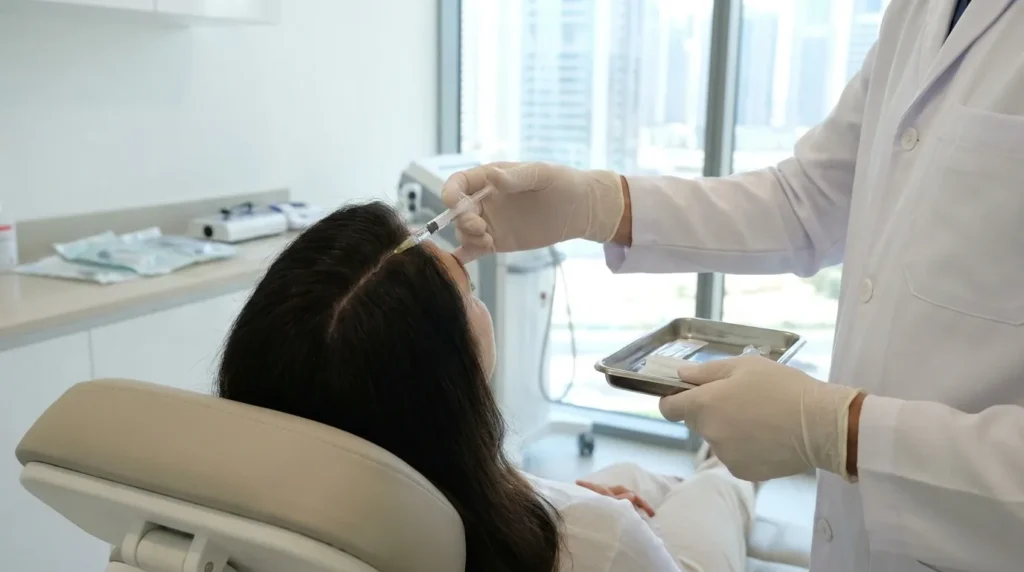
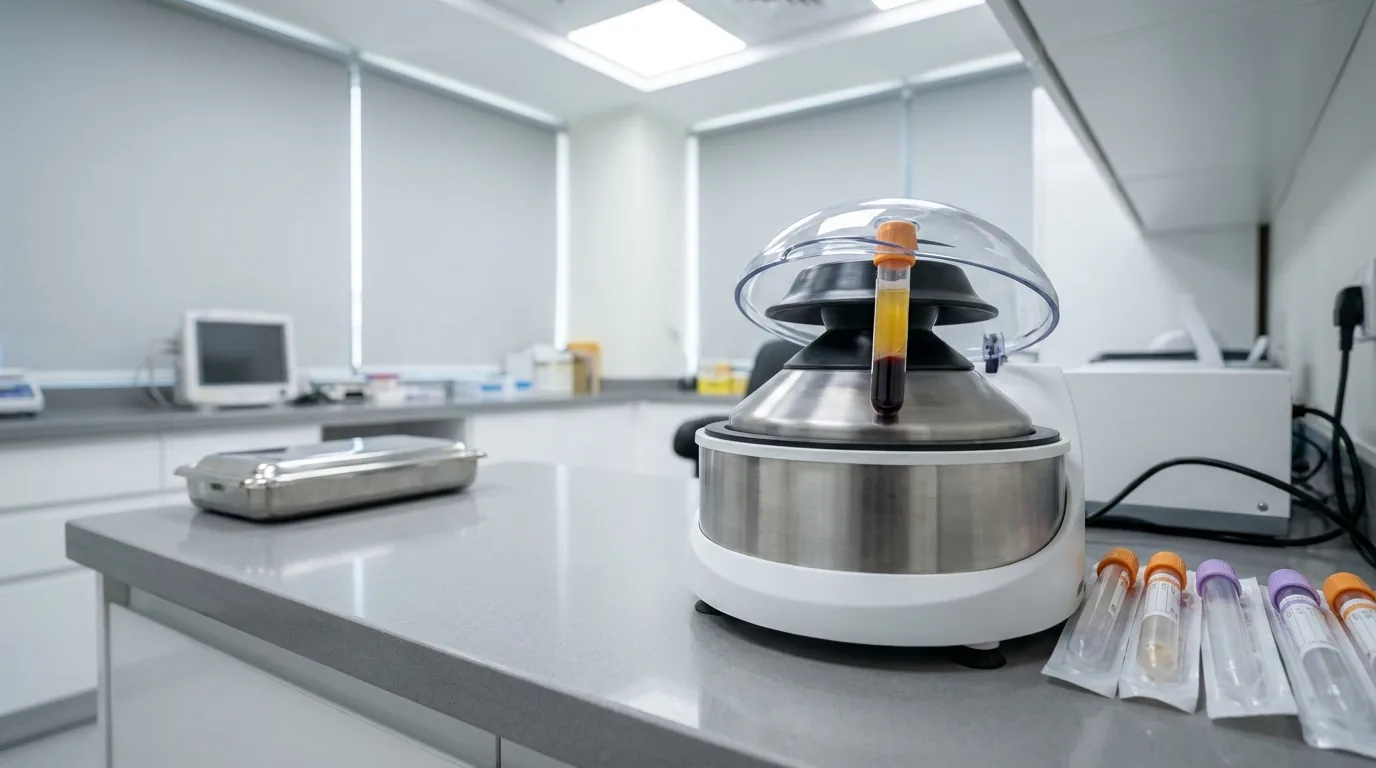
PRP stands for platelet-rich plasma. A clinician draws a small sample of your blood, spins it in a centrifuge to concentrate the platelets, then injects the resulting plasma into your scalp or skin. Because the plasma comes from your own body, it is autologous, so the rejection risk that comes with donor material does not apply.
Platelets carry growth factors and signalling proteins. When concentrated and placed into tissue, those growth factors trigger repair and regeneration. For hair, the plasma is injected into the scalp to wake up weakened follicles. For skin, it is injected or microneedled into the face to prompt collagen production.
PRP is not a transplant and it is not a filler. It moves nothing and adds no synthetic material. It works by concentrating what your blood already carries and delivering it where you need repair. In Dubai it is delivered by dermatologists and aesthetic doctors rather than salon staff.
What PRP treats in Dubai
Two uses dominate Dubai aesthetic clinics: hair loss and skin rejuvenation. Many of the same clinics also offer related work such as skin tightening and treatments delivered by skin specialists. A smaller share of orthopaedic and sports-medicine clinics use PRP for joint and tendon injuries, which sits outside the aesthetic scope of this guide.
- Hair loss: PRP hair treatment Dubai clinics most often use it for androgenic alopecia, the hereditary thinning also called male pattern baldness. The plasma increases blood flow to the hair follicles and delivers growth factors that reduce shedding and thicken existing strands. Anyone considering PRP for hair loss Dubai providers will confirm it needs live follicles to work, so it suits early-to-moderate thinning rather than fully bald areas.
- Skin rejuvenation: the PRP facial Dubai clinics call the vampire facial uses your plasma to stimulate collagen and elastin. They use it to soften fine lines, improve tone and texture, fade acne scarring, and reduce dark circles under the eyes.
- Combined hair and face packages: several Dubai clinics bundle scalp and facial PRP into one visit or one multi-session course, sometimes alongside skin rejuvenation add-ons.
The directory currently lists 101 providers offering PRP therapy across Dubai.
How PRP works: the three-step process
Every reputable PRP session follows the same three stages, whether the target is your scalp or your face.
- Blood draw: the clinician collects a small blood sample from your arm into a sterile collection tube, the same way a routine blood test is taken.
- Centrifuge: the sample spins at high speed in a centrifuge, which separates the blood and isolates the platelet-rich plasma from red cells and other components.
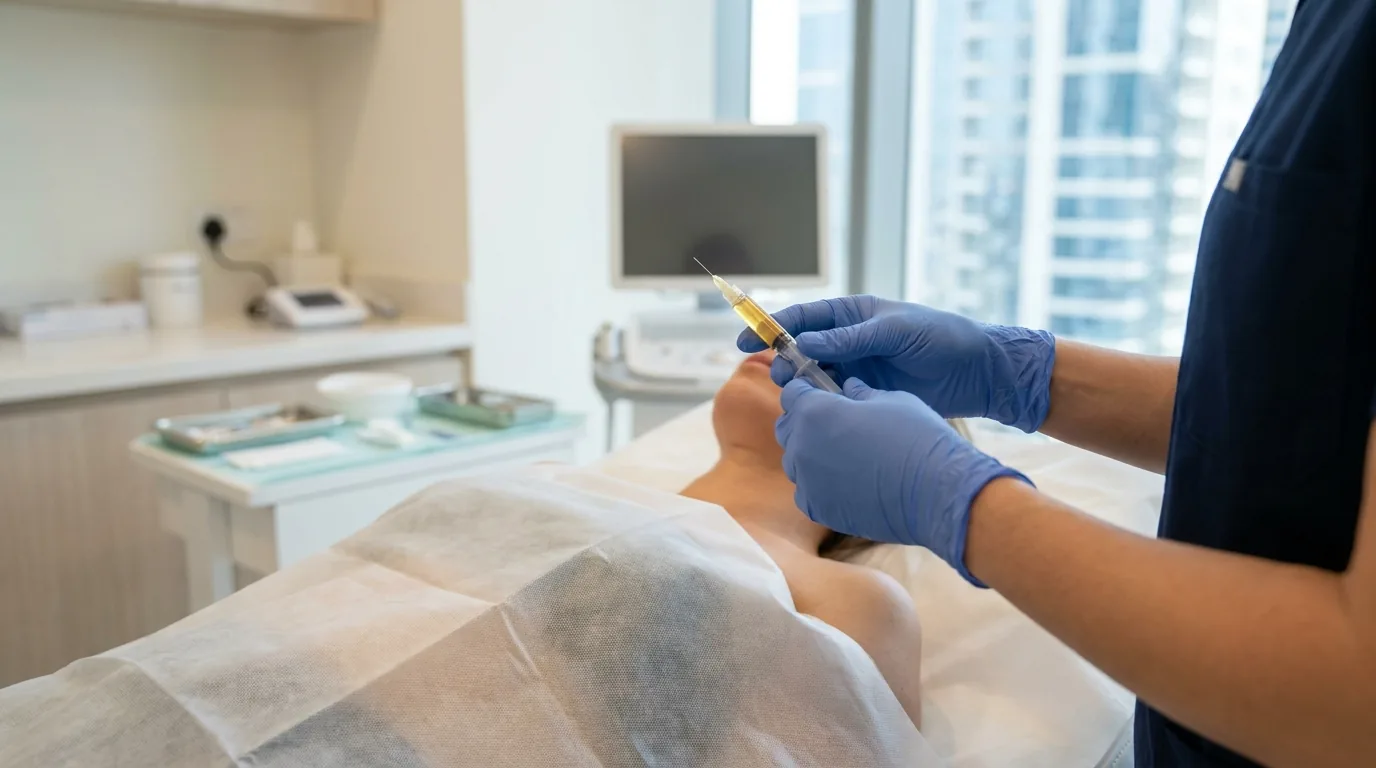
- Injection: the concentrated plasma is injected into the treatment zone, the scalp for hair or the dermis for skin. Some skin protocols apply the plasma through microneedling instead of direct injection.
A full session takes 30 to 60 minutes including the blood draw and preparation. There is no general anaesthetic; clinics use a topical numbing cream or a cold pack to manage discomfort.
Is PRP treatment safe and legal in Dubai?
PRP is legal in Dubai and widely offered, but it is a medical procedure, not a salon service. It must be performed by a doctor licensed by the Dubai Health Authority, working inside a clinic that holds a DHA health licence. The same venue also needs a DET trade licence to operate as a business. A beauty salon without a DHA health licence cannot legally inject PRP. Every provider in our Dubai directory is checked for the right licensing before listing.
Because PRP uses your own blood and adds no synthetic substance, side effects are usually limited to mild swelling, redness, or tenderness at the injection sites for a day or two. The main risks come from poor technique or unsterile handling, which is exactly why the DHA licensing rule matters. Always confirm the practitioner is a DHA-licensed doctor before booking.
On the religious question that comes up locally: PRP uses the patient’s own blood, processed and returned to the same body. Many scholars view treatments using a person’s own blood as permissible, though rulings vary and anyone with a specific concern should consult a trusted religious authority. Clinics in the UAE treat PRP as a standard, regulated aesthetic and medical service.
Before any PRP session, ask to see the treating doctor’s DHA licence and confirm the clinic holds a DHA health licence, not just a salon trade licence. PRP is a medical injection and belongs in a licensed clinic.
What PRP treatment costs in Dubai
PRP treatment Dubai price points are rarely published online because most clinics quote after a consultation. Based on directory listings and clinic spot-checks, a single session runs AED 499 to AED 4,000 depending on the clinic tier, the treatment area, and whether the protocol adds microneedling or extra growth-factor concentration. Most hair-loss courses are sold as a package of three to six sessions.
Browse all budget-tier providers on our directory.
The listings below are PRP providers in the directory that meet the rating and review thresholds, ranked automatically. Each clinic should hold a DHA health licence for medical injectables.

Popular PRP clinics in Dubai
Luerur Aesthetic Clinic is a skin care and aesthetic clinic in Al Barsha, on 39th Street behind Saudi German Hospital. It is rated from reviews.Reviewers describe a doctor who explains options clearly and only recommends a procedure when it is genuinely needed, with specific praise for natural looking results after a filler dissolving treatment and for a targeted acne programme that visibly improved skin. As with any aesthetic or medical treatment, outcomes and experiences can vary between visits, so a thorough consultation to set expectations before booking is worth doing.The clinic offers a broad range of treatments, from Botox injections, dermal fillers, chemical peels and skin rejuvenation to laser hair removal, microdermabrasion, PRP therapy, FUE hair transplant and surgical procedures such as rhinoplasty, liposuction and tummy tuck. The venue has on-site appointments, gender-neutral toilets and wheelchair-accessible parking, entrance and seating.
In Al Habtoor Business Tower in Dubai Marina, Cosmesurge Clinic offers botox injections, dermal fillers, body contouring, chemical peels, laser hair removal, rhinoplasty, liposuction and FUE hair transplant among other cosmetic and dermatology treatments. It is rated from reviews.Reviewers consistently describe the doctors as attentive and compassionate, noting that treatment recommendations are conservative rather than pushed, and several return year after year for ongoing skin care. The clinic itself is noted for a modern, welcoming atmosphere with views over the marina.The clinic has on-site services with a wheelchair-accessible entrance, car park, seating and toilet, plus gender-neutral toilets. It suits Dubai Marina residents and visitors researching cosmetic treatments, laser hair removal or dermatology consultations, with a consultation typically recommended before committing to any treatment plan.
Glow Aesthetics Dermatology Clinic is in Al Attar Business Centre in Al Barsha, offering botox injections, dermal fillers, chemical peels, microneedling, laser and IPL hair removal, skin tightening, scar treatment and pigmentation treatment. It is rated from reviews.Reviewers consistently praise the honesty of the medical guidance, noting that the team recommends only what is genuinely needed rather than upselling treatments. The clinic is described as professional and welcoming from arrival, with several highlighting fair pricing relative to the standard of care.The clinic has on-site services with a wheelchair-accessible entrance, car park and toilet. It suits patients across Dubai researching skin treatments, anti-aging facials or laser hair removal, with a consultation recommended to discuss the right treatment plan.
Derma 247 Laser Clinic is a skin and laser clinic in Nadd Al Hamar, rated from reviews. Treatments cover laser and IPL hair removal, botox injections, dermal fillers, chemical peels, pigmentation treatment, skin rejuvenation and tattoo removal.Reviewers consistently mention feeling well informed before and during laser sessions, with practitioners who explain each step in plain terms and check in throughout rather than rushing through the appointment. That attentiveness comes up often enough to be a genuine pattern rather than a one-off.The clinic runs by appointment, with on-site services and a fully wheelchair-accessible setup including gender-neutral toilets. It suits anyone after laser or aesthetic treatments who wants a clinical, unhurried approach rather than a quick in-and-out visit.
IV Wellness Lounge is on Marble Walk in Zaa'beel Second, DIFC, rated from reviews. Alongside its IV therapy sessions, the lounge offers detox programmes, lymphatic drainage, massage therapy, meditation sessions, yoga classes, anti-aging facials, chemical peel, dermal fillers, botox injections and laser hair removal.IV therapy is what reviewers talk about most, describing sessions as gentle and comfortable with a noticeable lift in energy afterward. The space itself gets repeated praise too, called calming, clean and beautifully designed rather than clinical, and reviewers consistently describe the staff as attentive and quick to explain what each session involves. The on-site cafe also gets a mention for a good drink after a session.With on-site services and a wheelchair-accessible car park and entrance, the lounge suits a considered wellness visit in DIFC.
Top Dubai areas for PRP treatment
Demand for PRP treatment Dubai wide clusters where the aesthetic-medicine market is densest: along the Jumeirah and Al Wasl corridor, around Dubai Marina and JLT, and in the Downtown and Business Bay clinic towers. Older inland districts carry fewer DHA-licensed clinics, so budget-tier PRP treatment in Dubai options are thinner there than for salon services.
What to expect at a PRP appointment
Your first visit starts with a consultation. The doctor reviews your medical history, checks the cause of your hair loss or skin concern, and confirms whether PRP suits you. Hereditary thinning with live follicles responds best; fully bald areas do not.
On treatment day, arrive hydrated, since that makes the blood draw easier. The clinician numbs the area, draws your blood, spins it, and injects the plasma across the treatment zone in a grid of small injections. Expect mild stinging and pressure rather than sharp pain.
Afterwards you can return to normal activity the same day. Clinics advise avoiding strenuous exercise, direct sun, and swimming for 24 to 48 hours, which matters in Dubai’s heat and chlorinated pools. Avoid washing the treated scalp for the rest of the day.
How long PRP results last
PRP is a course, not a one-off. For hair, most patients see improvement in density and volume from around three months, with maintenance sessions roughly every three to six months to hold the result. Results depend on the individual; some respond strongly and others modestly.
For skin, collagen builds gradually, so the glow and texture change appear over weeks and continue improving across a multi-session course. Maintenance every six to twelve months is common. PRP works best alongside good general care: nutrition, sleep, and any medical treatment your doctor recommends for the underlying cause. You can compare every listed PRP therapy provider in one place before booking.
PRP versus the alternatives
PRP sits between doing nothing and surgery. Knowing where it fits helps you spend wisely.
| Option | Best for | How it differs from PRP |
|---|---|---|
| Hair transplant (FUE/FUT) | Permanent restoration of bald areas | Surgically moves follicles to thinning zones; PRP only stimulates existing follicles and cannot regrow hair where none remain. |
| Mesotherapy | Delivering vitamins and drugs to the scalp | Injects a manufactured cocktail; PRP injects your own concentrated platelets with no added compounds. |
| Microneedling alone | Skin texture and light scarring | Creates micro-channels to trigger repair; PRP adds your own growth factors into those channels for a stronger effect. |
| Dermal fillers and botox | Instant volume and line-filling | Adds synthetic hyaluronic acid for an immediate result; PRP stimulates your own collagen gradually. |
Many clinics combine PRP with microneedling for skin or with a transplant for hair, since the methods complement each other. The same venues usually sell an IV drip menu, which is a separate purchase with a separate evidence base.
How to choose a PRP clinic in Dubai
Finding the best PRP treatment Dubai has on offer depends on the doctor and the protocol, not the marketing. Use these checks before you book.
- Confirm the DHA licence. The treating practitioner must be a DHA-licensed doctor and the venue must hold a DHA health licence. This is non-negotiable for any injectable.
- Ask about the centrifuge and kit. A clinic should use a dedicated PRP system and single-use sterile tubes. Reusing kit or vague answers are red flags.
- Check recent reviews. Look for reviews from the last twelve months that mention PRP specifically, not just general clinic service. Our ranking method weighs review recency and volume the same way.
- Get the protocol in writing. Number of sessions, interval, what each session includes, and whether microneedling or extra concentration is added.
- Insist on a real consultation. A clinic that books you for injections without assessing whether PRP suits your case is selling, not treating.
Common mistakes to avoid
- Booking PRP at a beauty salon that lacks a DHA health licence.
- Expecting one session to fix hair loss; PRP needs a course and maintenance.
- Choosing on price alone and skipping the doctor’s credentials.
- Assuming PRP can regrow hair on fully bald skin where no follicles remain.
- Comparing a single-session price against another clinic’s package price without checking what each includes.
- Skipping the consultation and self-diagnosing the cause of your hair loss.


