


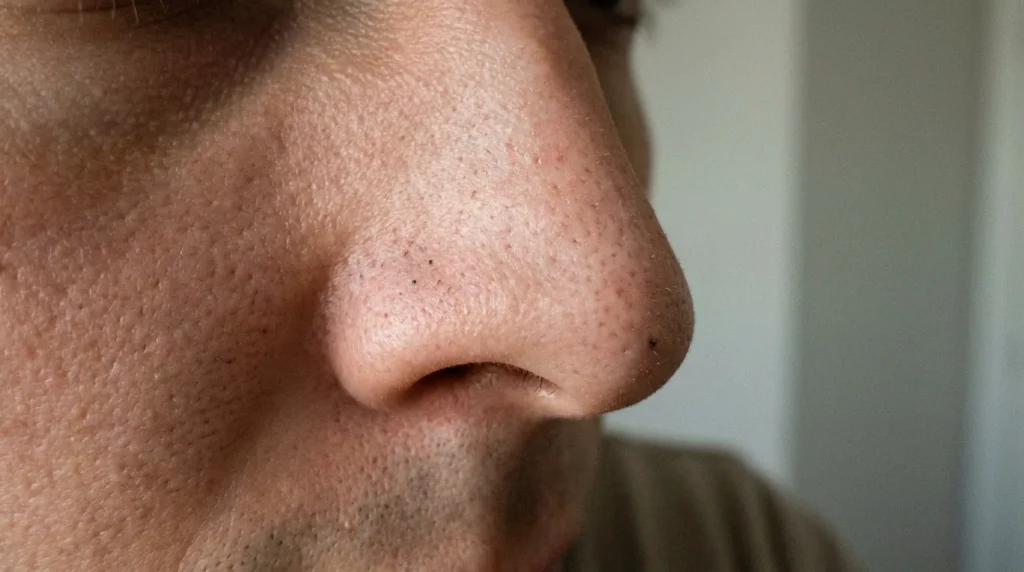
Blackheads are small, dark plugs that form when a pore fills with oil and dead skin and stays open at the surface. They are the mildest, most common form of acne, and the dark colour comes from oxidation, not trapped dirt. Most people get them on the nose, chin and forehead at some point in their lives.
What are blackheads?
Blackheads explained simply: a blackhead is an open comedone, a hair follicle whose opening has clogged with a mix of sebum and dead skin cells and then stayed open to the air. Dermatologists group them with whiteheads under comedonal acne, the non-inflamed type that does not usually hurt or swell. Because the pore stays open, the trapped material is exposed at the surface and darkens.
Almost everyone deals with them. Researchers estimate they affect nearly everyone at some stage, and that 10 to 20 percent of adults still get them well past their teens. They are not a sign of poor hygiene, and you cannot catch them from another person.
What is inside a blackhead?
The plug inside one is mostly your own skin’s material, not external grime. It contains three main things:
- Sebum: the oily lubricant your sebaceous gland makes to keep skin and hair soft.
- Keratin and dead skin cells: a protein and the worn-out cells your skin sheds, which bind with the oil into a soft plug.
- Bacteria: small amounts of the skin’s normal acne bacteria (Cutibacterium acnes, long known as Propionibacterium acnes) can sit in the mix.
That is why squeezing one releases a soft, waxy thread rather than anything solid. The “dirt” look is a trick of the light off the clogged follicle.
Why do blackheads turn black?
The colour is the part most people get wrong. A blackhead does not turn dark because dirt fell into the pore. It darkens because the pore is open, and the sebum and skin pigment inside react with air. Melanin in the plug oxidises on contact with oxygen and shifts to a dark brown or black, much the way a sliced apple browns when it sits out.
This is the single difference that separates the two basic comedones, as the Cleveland Clinic explains. When the pore stays sealed under a thin layer of skin, the contents never meet the air, stay pale, and you see a whitehead instead. Open the same plug to the surface and oxidation turns it dark. No scrubbing removes the colour, because the colour is a chemical change, not surface grime.
How a blackhead forms, step by step
Every blackhead follows the same short sequence inside a single pore:
- Oil production rises. The sebaceous gland at the base of a hair follicle steps up sebum output, often pushed by hormones such as androgens.
- Dead cells build up. Skin that does not shed cleanly leaves dead skin cells around the follicle opening.
- A plug forms. Excess oil and those cells bind into a soft plug, helped along by extra keratin. This clogged follicle is the comedone.
- The pore stays open. With the opening still exposed, the plug meets the air, oxidises, and the visible blackhead appears.
Understanding that order explains why treatment targets oil and cell turnover rather than “cleaning out dirt”.
Blackheads vs whiteheads vs sebaceous filaments
Three things on the nose and chin look similar and get confused constantly. Telling them apart decides what actually helps.
| Feature | Blackhead | Whitehead | Sebaceous filament |
|---|---|---|---|
| What it is | Open clogged pore (open comedone) | Closed clogged pore (closed comedone) | Normal oil-channel lining a pore |
| Colour | Dark, from oxidation | White or skin-toned bump | Grey or tan, uniform dots |
| Is it acne? | Yes, mild acne | Yes, mild acne | No, a normal feature |
| Should you extract it? | Best done by a professional | Leave it; treat with actives | Leave it; it refills naturally |
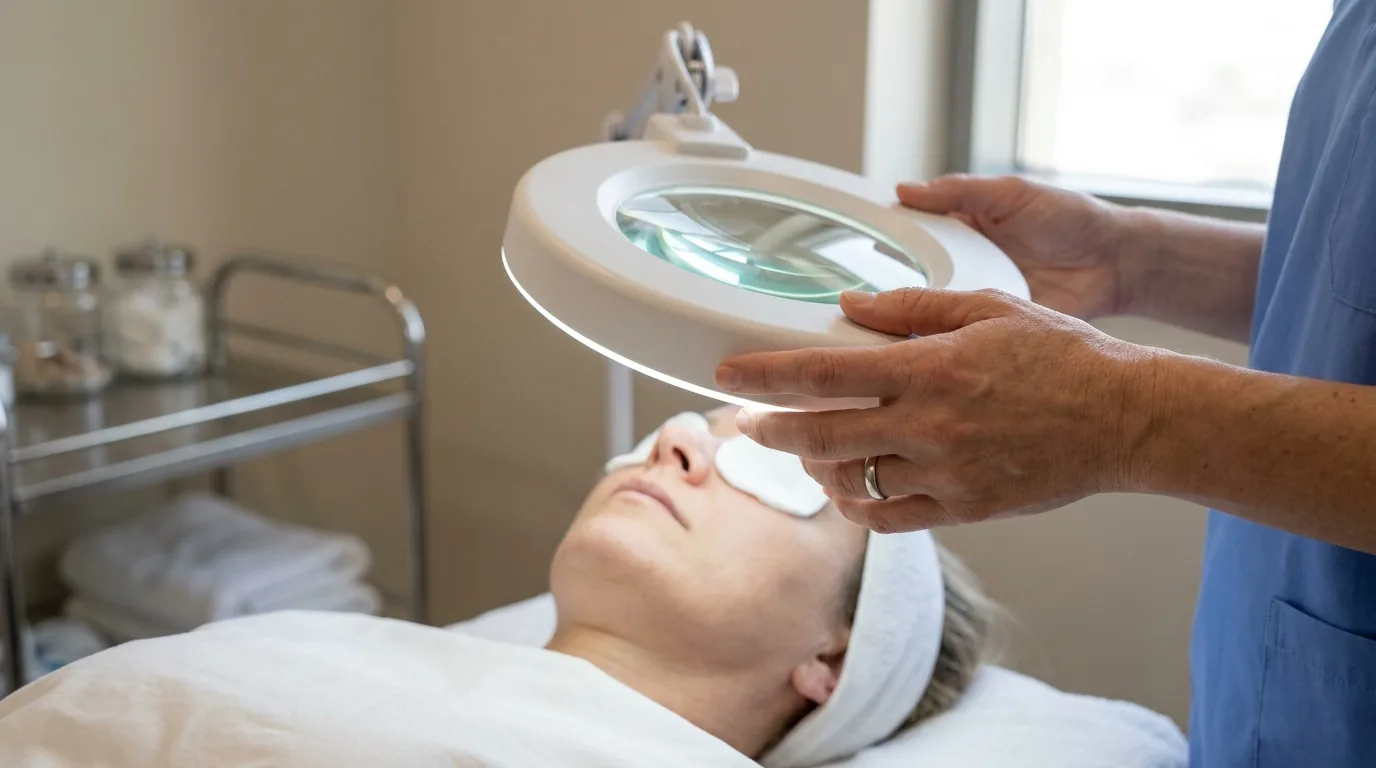
Sebaceous filaments matter most here: the small, even grey dots dotting most noses are not blackheads at all. They are how a healthy pore channels oil, they come back within days of any squeezing, and chasing them does more harm than leaving them alone.
Where blackheads appear, and why
Blackheads cluster wherever oil glands are busiest. On the face that means the T-zone: the nose, chin and centre of the forehead, and sometimes the cheeks. Oil glands sit all over the body, so they also turn up on the back, chest, shoulders, neck, and occasionally the ears.
The pattern follows gland density and how easily a spot traps oil. The nose has both large, active glands and deep pores, which is why it collects the most visible ones and why nose blackheads are the most searched-for kind.
What makes blackheads worse
Several everyday factors push more oil into pores or slow how skin sheds:
- Hormones: puberty, menstrual cycles and some medications raise androgen levels and oil output.
- Excess oil and slow cell turnover: oily skin types clog more readily when dead cells linger.
- Comedogenic products: heavy creams, oils and some makeup block pores. Choosing non-comedogenic formulas lowers the risk.
- Friction and pressure: phones, hands and tight straps rubbing the skin can aggravate follicles.
Dubai adds its own pressure. Long hot, humid stretches keep skin oilier, and the heavy sunscreen and longer wear most residents need traps sweat and oil against the skin through the day. Layering a rich SPF over a heavy moisturiser, then sweating into it outdoors, is a reliable way to clog pores faster, so lighter non-comedogenic textures tend to suit the climate better.
Are blackheads bad, and should you squeeze them?
Blackheads are harmless to your physical health. They do not scar on their own and they often settle with age. Their real cost is cosmetic and emotional, and persistent breakouts can genuinely affect confidence and mood.
Squeezing is where the damage starts. Pressing a blackhead with your nails often fails to clear the whole plug, can push it deeper, and can introduce more oil or bacteria into the opening. The pore can enlarge, the spot can become an inflamed pimple, and forcing it can cause scarring that outlasts the blackhead by months. A deep, embedded blackhead in particular should be left to a professional with the right tool.
How blackheads are treated and removed safely
Most blackheads respond to consistent skincare rather than picking. The ingredients with the best evidence work by clearing oil and speeding up how skin sheds:
- Salicylic acid: an oil-soluble acid that gets into the pore and dissolves the plug; the usual first step.
- Benzoyl peroxide: targets acne bacteria and helps with mixed breakouts.
- Retinoids (vitamin A): tretinoin, adapalene and similar keep follicles from re-clogging and speed cell turnover.
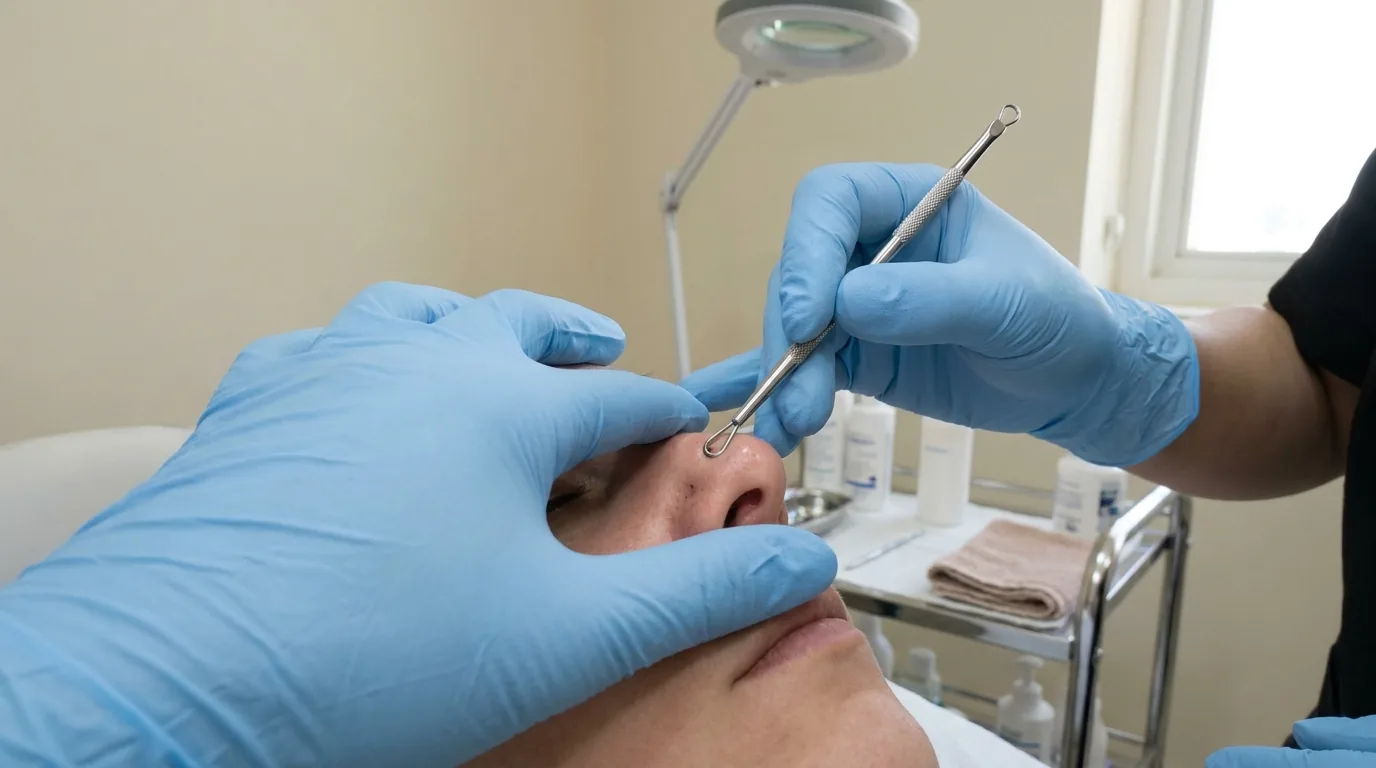
When products are not enough, in-clinic options go further. A professional can perform manual extraction with a comedo extractor, or recommend exfoliation, a deep-cleansing facial, a chemical peel, microdermabrasion, or light and laser treatments that reduce oil. For stubborn or widespread cases, a dermatologist may prescribe stronger retinoids or add acne treatment aimed at the whole picture. Our guides on how we vet and rank salons and the skin and facial salons in Dubai directory cover where these are offered.
Where to have blackheads removed in Dubai
For a deep or recurring blackhead, a trained facialist or dermatologist removes it under sterile conditions and far less risk than DIY. Dubai has a deep bench of facial spas and skin clinics that offer extractions and pore-focused facials, alongside the wider list of verified salons in Dubai.

Popular facial and skin clinics in Dubai
Skin Camouflage beauty therapists, fully licensed by the Dubai Health Authority, specialize in advanced skin treatments. Inkless Stretch Marks Removal effectively minimizes stretch marks without invasive procedures. Our Scalp Micropigmentation (Hair Tattoo) restores the look of fuller hair with precision pigmentation. The BB Glow Treatment achieves smooth, radiant skin that lasts.
Nova Clinic The Palm is a skin care clinic in Palm Jumeirah Mall by Dubai Retail, on the Palm Jumeirah, rated from reviews. Reviewers consistently describe a modern, extremely clean clinic where therapists explain each step of a facial treatment and leave skin feeling clean, fresh and glowing. Several also mention attentive, professional consultations that left them noticeably more comfortable and satisfied with their results. Treatments include acne treatment, anti-aging facials, body contouring, Botox injections, chemical peel, deep cleansing facial, dermal fillers, hair treatment, IPL and laser hair removal, microneedling, pigmentation treatment, PRP therapy, skin rejuvenation, skin tightening and tattoo removal. Appointments are recommended, and the clinic is wheelchair accessible with parking, entrance and toilet facilities on site at Nakheel Mall.
Glow Aesthetics Dermatology Clinic is in Al Attar Business Centre in Al Barsha, offering botox injections, dermal fillers, chemical peels, microneedling, laser and IPL hair removal, skin tightening, scar treatment and pigmentation treatment. It is rated from reviews.Reviewers consistently praise the honesty of the medical guidance, noting that the team recommends only what is genuinely needed rather than upselling treatments. The clinic is described as professional and welcoming from arrival, with several highlighting fair pricing relative to the standard of care.The clinic has on-site services with a wheelchair-accessible entrance, car park and toilet. It suits patients across Dubai researching skin treatments, anti-aging facials or laser hair removal, with a consultation recommended to discuss the right treatment plan.
Derma 247 Laser Clinic is a skin and laser clinic in Nadd Al Hamar, rated from reviews. Treatments cover laser and IPL hair removal, botox injections, dermal fillers, chemical peels, pigmentation treatment, skin rejuvenation and tattoo removal.Reviewers consistently mention feeling well informed before and during laser sessions, with practitioners who explain each step in plain terms and check in throughout rather than rushing through the appointment. That attentiveness comes up often enough to be a genuine pattern rather than a one-off.The clinic runs by appointment, with on-site services and a fully wheelchair-accessible setup including gender-neutral toilets. It suits anyone after laser or aesthetic treatments who wants a clinical, unhurried approach rather than a quick in-and-out visit.
Avoria Aesthetic Clinic is a skin care and medical aesthetics clinic in Al Barsha, rated from reviews. Treatments include Botox and dermal fillers, chemical peels, microneedling, laser hair removal, pigmentation and acne treatment, tattoo removal, electrolysis, lip blush and eyebrow microblading, plus body contouring and hair transplant procedures. Reviewers consistently describe a modern, spotless clinic with a calming atmosphere, and praise the team for explaining each treatment thoroughly before starting and taking time to listen to concerns. Laser hair removal sessions are described as comfortable and effective, and reviewers mention good results from HydraFacial treatments too, with outcomes generally meeting or exceeding expectations. Free underground parking is available, and the clinic has a wheelchair-accessible car park, entrance and toilet, all within the Deyaar Building unit that houses the clinic.
Before you book any clinic that performs extractions or peels, confirm it is licensed. A legitimate venue holds a DET trade licence to operate and, for any treatment that touches the skin clinically, a DHA health licence covering the clinic and its practitioners. Ask to see both, check recent reviews, and confirm tools are single-use or properly sterilised.
Browse all 56 Skin Care Salons providers on our directory.


