



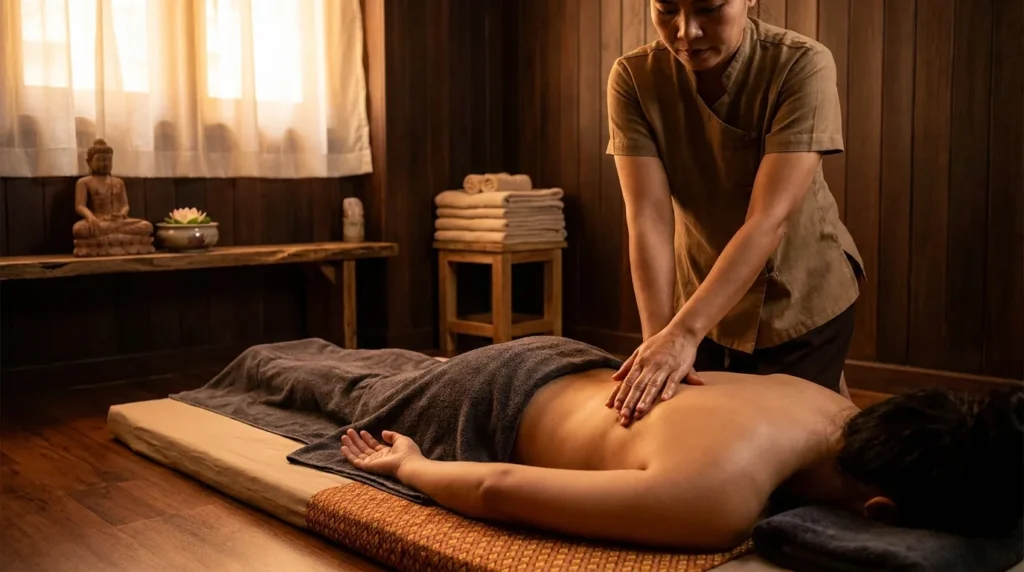
A thai massage in Dubai is a traditional Nuad Thai bodywork session that blends acupressure on sen energy lines, assisted yoga stretches, and rhythmic compressions, performed on a floor mat or treatment table. Sessions run 60 to 120 minutes. Pricing spans AED 150 to 500 at neighbourhood Thai parlors and AED 400 to 900 at premium hotel spas. Authentic providers train under the Thai Ministry of Public Health, Wat Pho, ITM, or Sunshine School lineages. If you would rather book the full venue experience, see our guide to Thai spas in Dubai.
What is thai massage?
Thai massage, known in Thailand as Nuad Thai or Nuad Boran, is a 2,500-year-old bodywork tradition that combines acupressure, assisted stretching, and energy-line work into a single continuous session. UNESCO inscribed Nuad Thai on its Representative List of the Intangible Cultural Heritage of Humanity in 2019, recognising the practice’s depth and cultural significance.
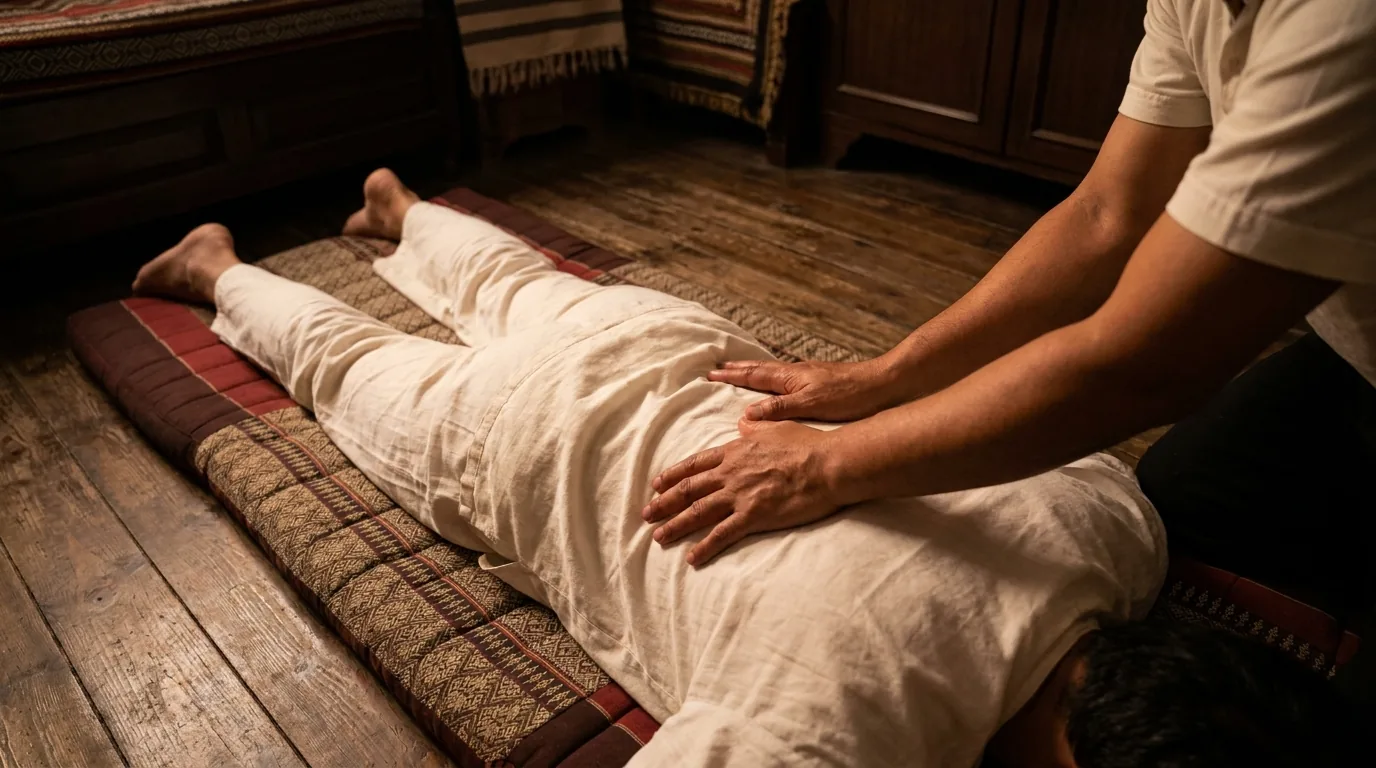
The technique is anchored in the concept of sen lines: 72,000 invisible energy channels running through the body, with 10 primary sen receiving the most therapist attention. A practitioner applies thumb, palm, elbow, knee, and foot pressure along these lines, then leads the client through yoga-derived stretches. The format is fully clothed, oil-free, and performed on a padded floor mat in the traditional setup.
In Dubai, the thai massage dubai market splits across two clear venue types. Dedicated Thai parlors cluster in Karama, Satwa, Bur Dubai, Deira, and parts of JLT, often staffed by therapists trained in Thailand. Premium Thai spas inside hotels on Palm Jumeirah and Jumeirah Beach Road offer hybrid Thai oil massage and Thai herbal massage formats on treatment tables. The directory currently lists 48 Thai therapists and 313 providers offering traditional Thai massage across these clusters.
How thai massage works: the sen-line method
A traditional Nuad Thai session follows a fixed sequence developed at Wat Pho Temple in Bangkok, the founding school of the tradition. Sessions in Dubai run 60 to 120 minutes and follow this core flow. Readers who want to try the sequence themselves can follow the step by step guide to how to do Thai massage.
- Wai khru and intention (1 to 2 minutes). The therapist offers a brief meditative pause, a customary gesture of respect rooted in Buddhist teacher traditions. Many Dubai therapists keep this private; some skip it on shorter sessions.
- Foot and leg work (15 to 20 minutes). Thumb pressure on the inside-foot sen line, then palm pressure up the legs. The therapist often uses body weight rather than muscle force.
- Abdominal and chest opening (5 to 10 minutes). Gentle palm circles on the abdomen and rib cage to release breath restriction. Skipped on first trimester pregnancy and on clients with recent abdominal surgery.
- Arm, hand, and shoulder work (10 to 15 minutes). Sen-line pressure on the arms, then thumb work on the palm and finger pulls. Often the moment when clients first notice the depth of the technique.
- Back and spine pressure (15 to 20 minutes). Palm and elbow pressure along the spinal sen lines, working the long muscles either side of the spine. Practitioners trained in Wat Pho or ITM lineages will adjust depth carefully here.
- Assisted yoga stretches (10 to 20 minutes). Cobra stretch, spinal twist, hamstring lengthening, hip openers. The therapist supports the client into each position so the body relaxes rather than working to hold the pose.
- Head, face, and closing (5 to 10 minutes). Scalp pressure points and a quiet final pause. Many Dubai therapists finish with a brief cup of herbal tea.
The whole sequence is non-oil. Treatment tables and oil are reserved for Thai oil massage, a separate hybrid format that borrows the energy-line concept and adds Swedish-style oil application.
Thai massage styles available in Dubai
Six recognisable Thai bodywork styles run across Dubai venues. Each suits a different goal and pressure preference, and many of the same venues also list regional alternatives such as Arabic massage in Dubai on the same menu. Knowing the style names helps when booking, since menu wording varies widely between Thai-owned parlors and hotel spas.
| Style | Format and signature feature | Best for |
|---|---|---|
| Traditional Thai (Nuad Thai) | Floor mat, loose clothing, no oil. Acupressure plus assisted yoga stretches. 60 to 120 minutes. | Chronic stiffness, sedentary tension, mobility work |
| Thai oil massage | Treatment table with oil. Sen-line pressure plus Swedish-style gliding strokes. | First-time clients, oil-based relaxation |
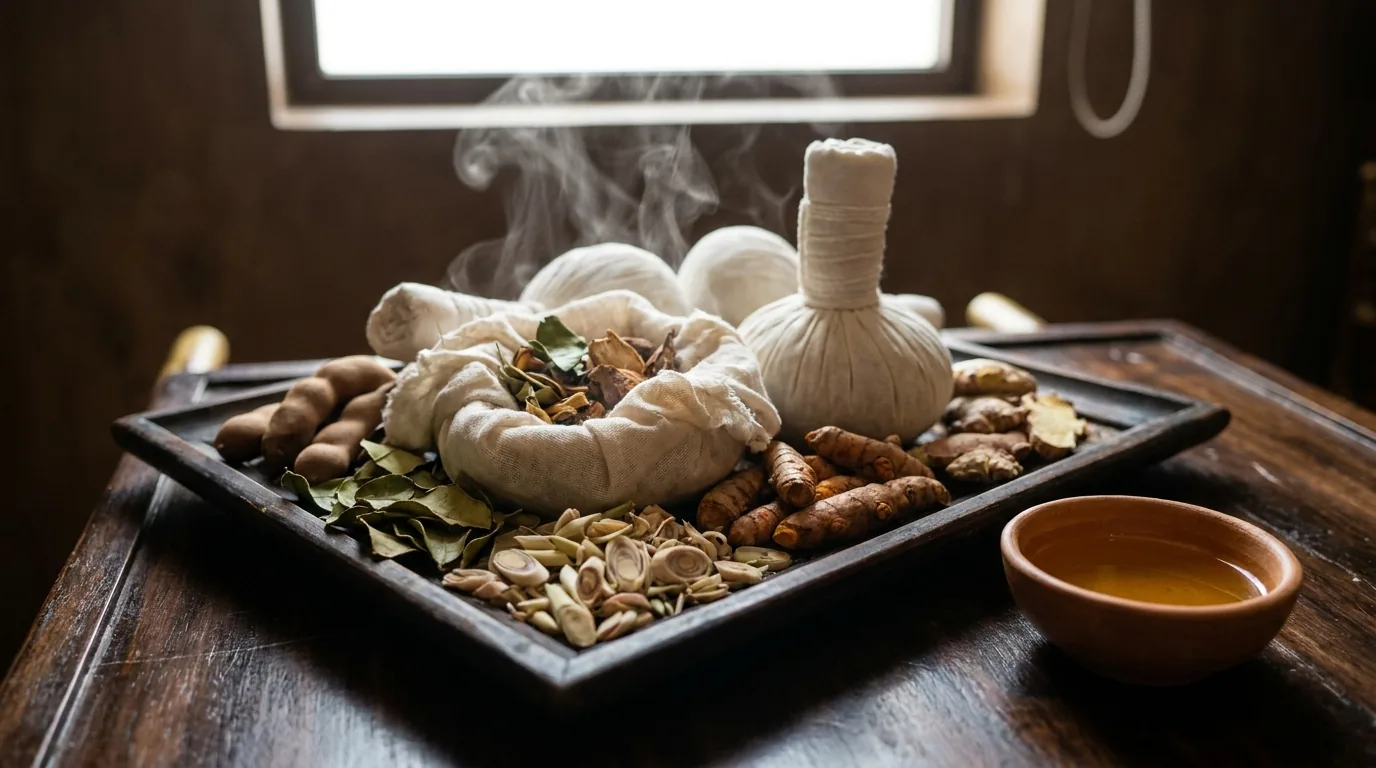
| Thai herbal massage | Heated herbal compress (lemongrass, kaffir lime, turmeric, ginger, tamarind) glided across pressure points. | Cooler-month warming, circulation, joint stiffness |
| Deep tissue Thai | Traditional Thai with sustained elbow, knee, and foot pressure on chronic tension points. | Athletes, post-training recovery, deep tension |
| Thai foot reflexology | Pressure work on feet and lower legs using thumbs and a wooden stick. Foot soak first. | Standing-fatigue, circulation, quick session |
| Royal Thai (Rajasamnak) | Gentler Nuad Thai variant. Therapist uses only thumbs and palms. | Elderly, sensitive clients, first session |
Practical takeaway: if the goal is deep stretching and mobility, book Traditional Thai. If oil and a soft introduction are preferred, book a thai oil massage. Cooler months in Dubai (November through February) are the natural window for a thai herbal massage with a warm compress.
What thai massage costs in Dubai
Pricing for a thai massage in Dubai sits in a wide AED 150 to 900 band. Authentic neighbourhood Thai parlors in Karama, Satwa, Deira, and Bur Dubai price 60-minute sessions at AED 150 to 250. Mid-tier spas in Business Bay, Barsha, and JLT charge AED 250 to 500 for 60 to 90 minutes. Premium Thai spas inside Palm Jumeirah and Jumeirah hotels run AED 500 to 900 for 90-minute rituals with hotel-spa add-ons.
Three factors drive the price spread: therapist training (Thai-trained vs locally-trained), session length (60, 90, or 120 minutes), and venue category (neighbourhood parlor vs hotel spa). Add-ons such as a herbal compress upgrade, scalp finish, or oil application typically add AED 50 to 200 each. Couples bookings at hotel spas usually carry a 30 to 50 percent premium over a single-occupancy session. Browse 313 verified traditional Thai providers in the traditional thai massage directory, ranked by tier, area, and rating.
Top Dubai areas for thai massage
Thai massage availability concentrates in four clusters. Older neighbourhoods (Karama, Satwa, Bur Dubai, Deira) hold the strongest concentration of Thai-owned parlors with Thai-trained therapists. Business Bay and Sheikh Zayed Road carry a mid-tier mix of multi-style spas where thai massage is one option on a broader menu. Palm Jumeirah and Jumeirah host premium hotel spas offering hybrid Thai formats. Barsha Heights, JLT, and Dubai Marina sit in the mid-band with strong neighbourhood spas. Many providers also offer treatments at home; readers wanting a therapist visit instead of a venue visit should see the dedicated home massage Dubai guide, which covers mobile setup options.
Across these clusters the directory lists 48 Thai therapists. Cross-bookings into nearby massage spas for complementary treatments on the same visit are common, and readers comparing Thai venues against budget tier alternatives should also see the foot massage parlors directory for shorter reflexology-focused sessions.

Popular thai massage spas in Dubai
Al Rashaqa Spa is near Lamcy Plaza in Al Karama, rated from reviews for traditional Thai massage, Moroccan bath, hot stone massage, reflexology and aromatherapy treatments. Feedback on the spa is mixed. Some reviewers describe the space as clean with a good, professional massage, while others report a less consistent experience with staff on the day of their visit. Given that spread of feedback, confirming treatment details directly with the spa before booking is a sensible precaution. The venue operates 24 hours and offers on-site services, making it an option outside typical salon hours. Best booked in advance for a specific treatment, given the mixed feedback on consistency, and requesting the same therapist on a return visit is a reasonable way to get a result closer to what you expect.
Anna Massage Spa is in Silver Tower in Business Bay and is open 24 hours, rated from reviews. Reviewers consistently describe the therapists as attentive and skilled, with several saying they left feeling rejuvenated and planning to return.Couples massage comes up as a popular choice for a relaxing visit together, and reviewers repeatedly mention the clean, calm facilities and thoughtful details like pressure, pace and ambience. The spa's menu includes Thai oil and traditional Thai massage, deep tissue, Swedish, hot stone, reflexology, aromatherapy, back and hand massage, Moroccan bath and therapeutic massage.On-site services are available with wheelchair-accessible parking and entrance, useful given the round-the-clock hours.
On 4B Street in Riggat Al Buteen, Deira, Healing Power Foot Spa is a Thai massage therapist rated from reviews.Reviewers consistently praise the quality of the massage therapy, describing therapists as skilled at judging pressure and technique for the specific treatment given, whether a full body massage or a shorter foot session. The foot massage is specifically mentioned as good value for the time spent, and the spa is described as relaxing and calm, well suited to unwinding after a long day on your feet. With only one couples' room available, reviewers note it is worth checking ahead if visiting as a pair, though waiting times have generally been short even without a booking.Services include Thai oil massage, Thai reflexology, deep tissue massage, hot stone massage, hand massage and Moroccan bath. The spa has wheelchair accessible parking and entrance.
Taiy Pradit Physical Medicine & Rehabilitation Center is on the first floor of Aswaaq Mall in Umm Suqeim 3, rated from reviews. Reviewers repeatedly describe therapists as skilled and genuinely attentive to pain and tension, with several long-term clients crediting the centre with lasting relief from back and neck pain after just a few sessions. Many single out the hot stone and traditional Thai massage as particularly effective, and describe the clinic as clean, comfortable and welcoming. Services include anti-aging facials, aromatherapy and aromatherapy massage, back massage, body scrub, couples massage, deep tissue massage, hot stone massage, lymphatic drainage, reflexology, sports massage, Swedish massage, Thai oil massage, therapeutic massage and traditional Thai massage. The centre combines massage therapy with physical rehabilitation, and has a wheelchair-accessible car park, entrance and toilet.
For a wider venue comparison ranked by area and tier, browse the dedicated thai massage therapists directory.
What to expect at a thai massage appointment
Booking a thai massage in Dubai differs from a Western spa visit in a few specific ways. Most Thai parlors and hotel spas split into ladies-only and gents-only sessions; only a small number of luxury hotel hammams and resort spas operate mixed-couples rooms.
Wear loose-fitting clothing for traditional Nuad Thai. Many parlors provide pyjama-style loose cotton sets; bring soft shorts and a T-shirt as backup. Thai oil massage requires undressing to underwear under a sheet, as the format uses oil. Most Dubai venues observe local modesty norms: female-only therapists at women-only spas, private locker rooms, and prayer-time-aware scheduling.
During Ramadan, sessions usually pause one hour before iftar. Many spas re-open with extended late-night hours after suhoor. Tipping is not mandatory in Dubai but is appreciated; 10 to 15 percent of the service price is the common range for good service. Most venues accept cash and card; cash tips are preferred by therapists.
How to verify authentic thai massage providers
Many Dubai spas advertise Thai massage as one of several menu options, but the depth of training varies sharply. Authentic providers hold to a few visible markers worth checking before booking.
- Therapist origin and training. Authentic parlors employ therapists trained in Thailand under Wat Pho, ITM, or Sunshine School lineages, or certified by the Thai Ministry of Public Health. Ask at booking; venues with Thai-trained staff will say so directly.
- Floor-mat format for traditional Thai. A real Nuad Thai session is performed on a padded floor mat, not a treatment table. Table-only venues are offering Thai oil massage by default, not traditional Nuad Thai.
- Loose clothing provided. Authentic Thai parlors stock pyjama-style cotton sets. Venues that ask you to undress for what they call “Thai” are running a Thai oil massage or a hybrid.
- Sen-line vocabulary. An authentic therapist will reference sen lines, energy work, and assisted stretches. A generic spa script focuses on relaxation only, with no mention of the technique’s structure.
- Session length minimum 60 minutes. A full traditional Nuad Thai needs at least 60 minutes. A 30-minute “Thai” version is a back-and-shoulder shortcut, not the full ritual.
- DHA licensing. All Dubai spas must hold a Dubai Health Authority licence and a Department of Economy and Tourism trade licence; the directory verifies both before listing a provider.
The directory reviews each massage spa against the same vetting criteria documented on how we rank salons, including therapist-origin signals. Reviews go through the editorial team before publication.
Ask the receptionist whether the therapist is Thai-trained before booking. Authentic Thai parlors name Wat Pho, ITM, Sunshine School, or the Thai Ministry of Public Health certification without prompting. Generic spas describe the treatment as relaxation only.
Aftercare and Dubai climate notes
Thai massage applies sustained pressure, deep stretches, and circulation work. Post-session care matters more in Dubai’s climate than in cooler regions.
- Hydrate aggressively. Pressure work and stretching mobilise tissue fluid. Dry indoor air-conditioning and outdoor humidity both deplete the body further. Aim for two litres of water in the 12 hours after a session.
- Avoid heavy meals two hours before and after. The abdominal pressure and inverted stretches feel uncomfortable on a full stomach.
- Expect mild soreness for 24 to 48 hours. Especially after deep tissue Thai or first-time Nuad Thai. The muscle fibres are responding to pressure they may not have received before; this is normal, not injury.
- Skip direct sun and pool for a few hours. Heat sensitivity often runs higher post-session, and chlorine on warm tissue can worsen any minor skin irritation from the pressure work.
- Pair with sauna or steam on the same visit. Many Dubai venues bundle the option. Heat after pressure work amplifies the circulation benefit.
- Time your sessions by season. Cooler months (November through February) are the natural window for thai herbal massage and warm-compress treatments. Summer favours lighter Thai oil massage formats with cool eye masks.
Common mistakes and when to skip thai massage
- Active back injury, slipped disc, or recent spinal surgery. The spine pressure and assisted twists are too aggressive on acute injury. Get clearance from a doctor first.
- First trimester pregnancy. The abdominal work and certain stretches are skipped. Many Dubai venues offer prenatal Thai variants from the second trimester onwards.
- Uncontrolled hypertension or recent cardiac events. The deep pressure can push blood pressure higher transiently. Doctor clearance is the standard first step.
- Recent surgery, fracture, or osteoporosis. Assisted stretches load the joints; bone density and healing tissue are concerns.
- Booking “Thai” at a venue with no Thai-trained therapist. The session will feel like generic acupressure, not Nuad Thai. The technique signature gets lost without lineage training.
- 30-minute express versions. A real Thai massage cannot fit into 30 minutes. The express format skips the assisted stretches and most sen-line work.
- Heavy alcohol within six hours of the session. Reduces water balance, amplifies post-session soreness, and dulls the body’s feedback during the deep pressure work.
For readers also exploring other specialty bodywork formats, the dedicated moroccan bath Dubai guide covers the Maghrebi steam and exfoliation tradition. Travellers who prefer a herbal compress variant can compare options at the thai herbal massage directory. Each has a distinct purpose and they pair well as alternating treatments through the year.


