


When readers ask me how to wash hair after hair transplant surgery, the honest answer starts with timing. Most clinics schedule the first gentle wash about 48 hours in, using a softening lotion, cupped lukewarm water and shampoo lathered in the palm, never a shower head on the grafts.
This guide is general information, not medical advice. A hair transplant is a regulated cosmetic-medical procedure in Dubai: follow the written protocol your surgeon gave you, and consult a DHA-licensed clinic about your recovery, suitability and risks.
When you can wash your hair after a hair transplant
Readers who have just flown home from a transplant almost always ask the same thing: when can I wash my hair after hair transplant surgery without ruining it. The honest answer is that the date belongs to your surgeon, not to a blog.
That said, the clinical protocols converge on a narrow window for when to wash hair after hair transplant surgery. The recipient area is washed for the first time somewhere between 24 and 72 hours, with 48 hours the most common instruction across the guidance reviewed for this piece. Some clinics do that first wash themselves so you can watch the technique before trying it alone.
The reason for the delay is mechanical. Each follicular unit moved during an FUE procedure sits in a shallow incision held by fibrin and early clotting, not by anything you would call an anchor. Water arriving with force in that window can shift a graft out of its slot. Water arriving gently cannot.
Waiting too long carries its own cost. Blood and serum dry into crusts around each graft, and a crust left to harden for a week grips the hair shaft. When it finally lifts, it can take the follicle with it. Washing on schedule keeps the crusts soft enough to release on their own.
How to wash hair after hair transplant, step by step
The routine below is the pattern shared across the clinical sources reviewed for this guide. Where your surgeon’s written protocol differs, the surgeon wins every time.
- Soften first. Apply the lotion, foam or oil your clinic supplied across the recipient area. Leave it to sit for the stated time, usually 15 to 45 minutes. This is the step people skip, and skipping it is why crusts turn stubborn.
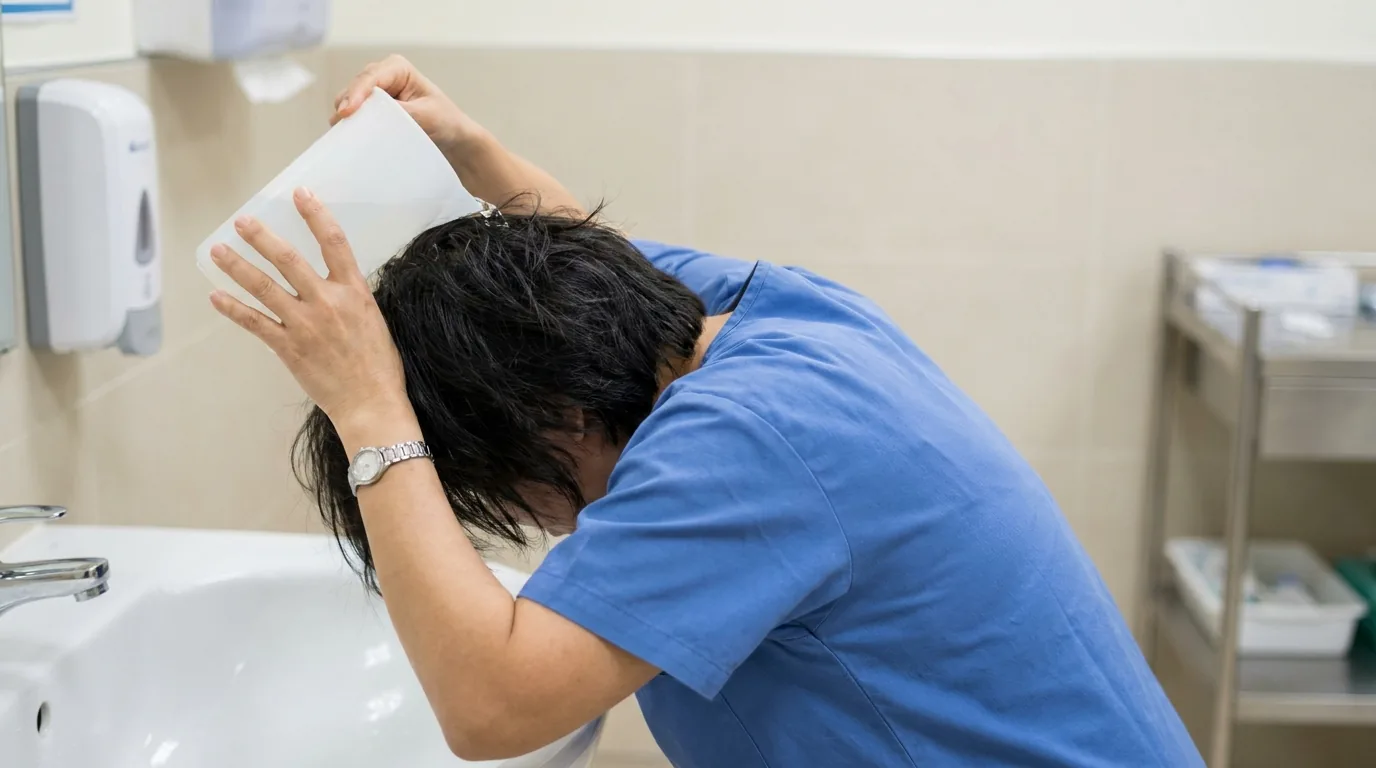
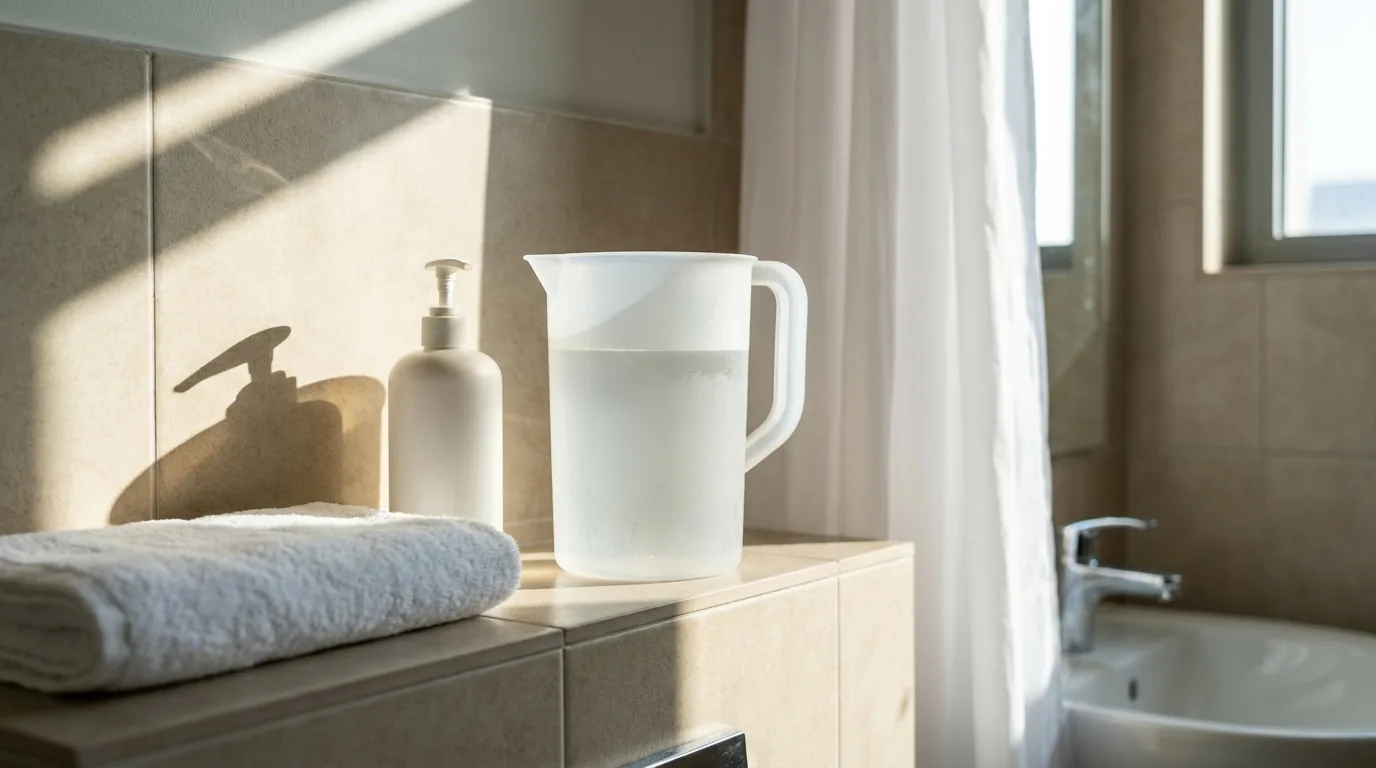
- Rinse with a cup. Fill a jug or cup with lukewarm water and pour it over the scalp from a low height. Never point a shower head at the grafts. Water pressure is the single variable that dislodges follicles in the first fortnight.
- Lather in the palm. Work the shampoo into foam in your hands first, then lay that foam onto the recipient area. Do not rub, scrub or circle your fingers over new grafts.
- Wash the donor area normally. The donor area at the back and sides is a healing wound, not a graft bed, so gentle fingertip pressure is fine there from the first wash. Keeping it clean lowers infection risk.
- Rinse the same way. More cupped water, poured slowly, until no foam remains.
- Pat, never rub. Press a clean towel against the scalp or let it air dry. Skip the hair dryer entirely for the first two weeks, and keep it on cool after that.
Two weeks is the usual horizon for this careful version of how to wash hair after hair transplant surgery. From roughly day 10 to day 14 most protocols allow normal washing, light finger pressure and a return to the shower. Clinics offering hair transplants in Dubai typically confirm that transition at a follow-up review rather than by calendar alone.
Which shampoo to use, and what to keep off the scalp
Searches for the best shampoo after hair transplant surgery usually expect a brand name. The clinical answer is a category, not a product: a mild, fragrance-free, sulfate-light shampoo, often a baby shampoo, used until your clinic clears you for your normal bottle.
The bottle you use to wash hair after hair transplant surgery matters less than what it leaves out. Strong detergents strip the film protecting a healing scalp. Menthol and high-alcohol formulas sting broken skin. Dry shampoo has no place here at all, because it deposits powder around grafts you are not allowed to scrub.
Anything medicated deserves a specific conversation. Ketoconazole shampoos, exfoliating scalp acids and in-salon scalp treatments all belong to the recovered scalp, not the healing one. The same goes for minoxidil, which several surgeons restart at a set point rather than immediately.
Styling products come back last. Gel, wax, hairspray and dry texturising sprays sit on the surface and then need scrubbing off, which is the one action the first fortnight forbids.
How often to wash hair after hair transplant
Most protocols ask for a daily wash from the first one onward, which surprises people who assume less contact means less risk. The logic runs the other way. Daily gentle washing keeps crusts soft and clears the sebum and sweat that would otherwise sit around each graft.
How often to wash hair after hair transplant surgery therefore has a simple default: once a day, every day, through the crusting phase. Some clinics ask for twice daily in the first week when a patient sweats heavily or works outdoors. Both instructions are common and neither is wrong.
Frequency is not the same as force. A daily wash with cupped water and palm-lathered foam is gentler than one aggressive wash on day five.
When to wash hair after hair transplant, day one to month one
Recovery is easier to follow as a schedule than as a set of rules. The table below combines the timelines published by the clinics reviewed for this guide, including the milestones readers search for by name.
| Window | What washing looks like | Watch for |
|---|---|---|
| Day 0 to 2 | No washing. Saline spray only if supplied. | Swelling across the forehead is normal |
| Day 2 to 3 | First wash: lotion, cupped water, palm foam, pat dry | Pink recipient area, light crusting |
| Day 3 to 7 | Daily gentle wash, same technique | Crusts forming and softening |
| Day 7 to 10 | Hair transplant wash after 7 days stays gentle; crusts start clearing | Crusts should lift on their own |
| Day 10 to 14 | How to wash transplanted hair after 10 days: light finger pressure returns, shower allowed by most clinics | Any crust still stuck at day 14 |
| Week 3 to 4 | Normal washing and normal shampoo, once cleared | Shedding of transplanted hairs, which is expected |
The one milestone worth flagging is the shedding phase around weeks two to six. Transplanted hairs fall out while the follicle stays in place and regrows later. People often blame their washing technique for it, and the timing of the two events makes that easy to believe.
What Dubai’s tap water and pool season change
Every guide on how to wash hair after hair transplant surgery that ranks on page one was written for a temperate climate. Living here changes four variables, and none of them appear in a Turkish or American protocol.
Lukewarm is not what comes out of the tap. Rooftop and outdoor tanks sit in 45-degree air through the summer, so the cold line can run genuinely hot from June to September. Fill a jug and let it stand until it is properly tepid before it touches your scalp.
Sweat needs rinsing, not washing. A short cupped-water rinse after a hot commute is fine and does not count as a second shampoo. Salt drying on a healing scalp is an irritant.
Pools and the sea wait. Chlorine and salt water both belong to the cleared-and-healed scalp. Most surgeons put swimming a full month out, sometimes longer, and a Dubai winter makes that restriction land at exactly the wrong time of year.
Dust and air conditioning both dry the scalp. Shamal dust settles on everything, and air conditioning pulls moisture out of the skin all day. Both push people toward scrubbing, which is the reflex to resist.
Why the first washes do not belong in a salon
This is the gap I see most often, and it comes from a reasonable instinct: a fresh transplant feels like a job for someone with trained hands.
A hair transplant is surgery, and its post-operative care is medical work. In Dubai that means two separate permissions. Every commercial venue holds a trade licence from the Department of Economy and Tourism, which allows it to trade. Anything clinical needs a separate health licence from the Dubai Health Authority, covering both the facility and the practitioner inside it. A hair salon holds the first and, in the ordinary case, not the second.
The practical translation is short. The safest place to wash hair after hair transplant surgery in the first fortnight is your clinic, or your own bathroom following its written protocol. A barber, a stylist or a home service should not touch a healing recipient area, however gentle they promise to be. Once the scalp is fully healed and your surgeon has cleared you, normal salon life resumes.
Readers who had the procedure abroad, which is a large share of transplants among Dubai residents, need a local clinic for follow-up review rather than a salon. Our guide to taking care after a hair transplant covers the wider recovery, and the directory below lists the venues carrying a hair transplant category.

Popular hair transplant clinics in Dubai
Vinci Hair Clinic Dubai is a hair transplant clinic in Saba Tower 1, Jumeirah Lake Towers, rated from reviews.Patients consistently describe the FUE and FUT hair transplant process as well managed, with a medical team that explains each step and stays available for questions throughout recovery. PRP therapy follow up sessions and visible growth and density in the months after surgery come up often, along with praise for the pre and post operation support.The clinic also offers pigmentation treatment, liposuction and breast augmentation. Its car park, entrance and toilet are wheelchair accessible, and appointments are recommended.
Yalla Hair Salon specialises in hair replacement and extensions, based at the Movenpick Hotel Apartments on 44th Street in Al Mamzar, Deira. The team works with hair systems, non-surgical hair replacement, clip-in and full extensions, scalp treatment and colour. It is rated from reviews.Reviewers consistently praise how closely the stylists listen to what a client actually wants, and how natural the finished result looks and feels afterwards. Several mention a clean, comfortable salon and appreciate product recommendations suited to their hair type rather than a generic upsell.The salon offers on-site services, gender-neutral toilets and wheelchair-accessible parking. It suits anyone looking for hair replacement or extension work handled with real attention to detail and a proper consultation first.
Tunio Aesthetics Hair Transplant Clinic is a hair transplant and aesthetics clinic in Dubai Healthcare City, rated from reviews. The clinic offers FUE and FUT hair transplant procedures alongside PRP therapy and general skin treatments. Feedback on results has been mixed. While the clinic is established and offers a formal consultation and planning process before any procedure, at least one detailed account describes a result that fell short of what was discussed at consultation. Given that a hair transplant outcome depends heavily on individual planning and technique, it is worth having a thorough, specific consultation and setting clear expectations before committing. On-site services and wheelchair accessible facilities are available. Anyone considering a procedure here should discuss expected results and the planned approach in detail beforehand.
Helia Clinic is a hair transplant and cosmetic clinic in Jumeirah 1, providing FUE and FUT hair transplants alongside eyebrow transplants, pigmentation treatment and PRP therapy. It is rated from reviews.Care from consultation through to aftercare is the theme reviewers return to most, with several praising natural looking eyebrow transplant results tailored to the individual's face shape. The clinic is described as clean and calming, with the medical team noted for explaining each step clearly and keeping the procedure comfortable throughout.The clinic has toilet facilities and full wheelchair access including parking and entrance. A relevant option for anyone researching hair or eyebrow transplant procedures who wants a clear explanation of the process and realistic expectations before committing.
Modern Hair Studio offers advanced hair fixing in the UAE, with proven non-surgical hair replacement solutions designed for natural results and long lasting comfort. With more than 18 years of experience and studios across the GCC and India, its specialists help men and women regain confidence through customised hair systems matched to their face, lifestyle and personal style.
Listings on the hair transplant directory are ranked by rating and review volume, and the criteria are set out by the editorial team. Ask any clinic to show its DHA facility licence and the treating practitioner’s licence before booking a review.
Mistakes that cost grafts
Almost every graft lost in the first fortnight traces back to one of the errors below. These are the failure modes clinics see most often in patients who wash hair after hair transplant surgery at home.
- Aiming the shower head at the scalp. The most common cause of dislodged grafts in the first week, and the easiest to avoid.
- Picking at scabs. A crust removed early takes the graft with it. Softening and patience remove it safely.
- Skipping the softening step. Shampoo alone will not lift hardened crusts, so people compensate with pressure.
- Towel rubbing. The friction of a normal dry is enough to shift a two-day-old graft.
- Waiting a week to start. Delayed first washes make everything after them harder.
- Treating a FUT donor strip like the recipient area. The donor site needs cleaning, not protection from water.
- Restarting the gym early. Sweat, heat and head-down positions all work against a healing scalp.
Frequently asked questions
Browse all 5 Hair Transplant Salons providers on our directory.


