



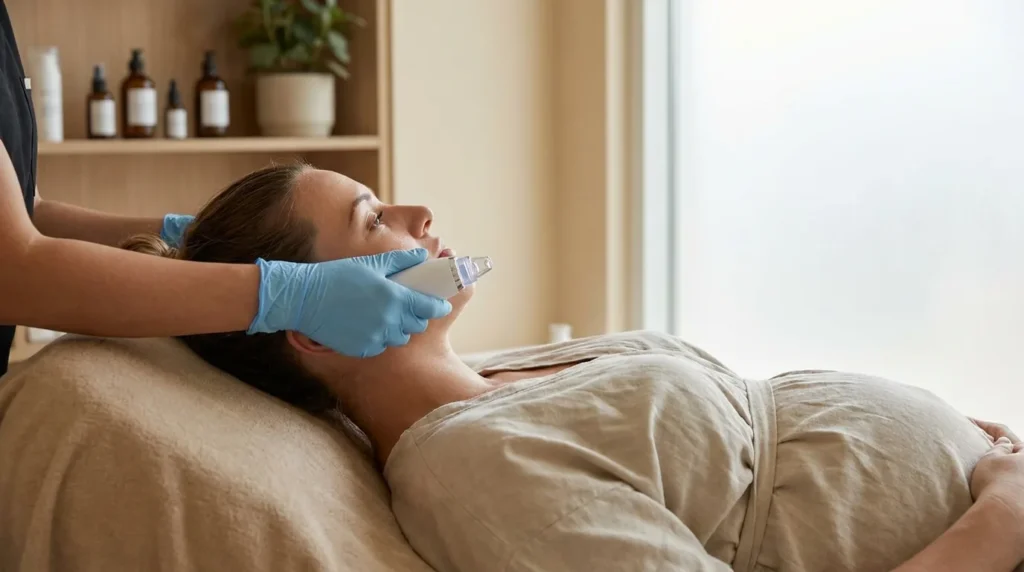
Is a HydraFacial safe for pregnancy? For most women, yes, with a few changes to the serums used. The treatment cleans and hydrates the skin mechanically, without needles, heat, or lasers. The care is in the actives: a Dubai clinic should skip salicylic acid and retinoids and confirm your stage before starting.
This guide is general information, not medical advice. Skin and pregnancy needs differ for every person. Talk to your obstetrician or a DHA-licensed clinician about your own pregnancy before booking any facial treatment.
Is HydraFacial safe during pregnancy?
A standard HydraFacial uses gentle suction to cleanse, exfoliate, extract debris from pores, and move hydrating serums into the surface of the skin. None of those mechanical steps reach the baby. There are no injections, no heat, and no laser energy, which is why estheticians treat it as one of the lower-risk facial options for expectant mothers.
The question that matters is not the machine. It is what goes into the serums. A few common actives are best paused while you are pregnant, and a good clinic swaps them out before anything touches your face. So the honest answer to whether a HydraFacial is safe for pregnancy is yes for most people, once the protocol is adjusted and your provider knows you are expecting. People search both ways, “is HydraFacial safe during pregnancy” and “is HydraFacial safe for pregnancy,” and the answer is the same either way: yes, with a modified protocol.
One caveat worth stating plainly: research on cosmetic treatments in pregnancy is thin, because studies are not run on pregnant women for ethical reasons. Clinics work from caution, not from large trials. That is the right instinct, and it is why “tell your provider first” runs through every reputable answer.
Why pregnancy changes your skin in the first place
Pregnancy hormones shift fast. Higher estrogen and progesterone push many women into more oil production, which clogs pores and triggers breakouts even if you have never been acne-prone. Others see melasma, the brown patches that surface on the forehead, cheeks, and upper lip when pigment cells become more active. Dryness, dullness, and new sensitivity are common too.
This is exactly the window where a clean, hydrating facial feels useful. It clears congestion and adds moisture without the stronger actives that pregnancy rules out at home and in the clinic. The catch is that the strongest skin fixers, like retinoids and high-strength peels, are the ones you have to set aside for now.
What changes in a pregnancy-safe HydraFacial
The structure of the treatment stays the same. A clinic still cleanses, exfoliates, extracts, and hydrates with vortex suction. What changes is the ingredient list at the exfoliation and booster steps.
The exfoliating step in a regular session often leans on salicylic acid, a beta-hydroxy acid that cuts through oil inside pores. For a pregnant client, a careful clinic lowers the strength or swaps it for a gentler alpha-hydroxy acid such as glycolic acid or lactic acid, or uses physical exfoliation instead. Booster serums that carry retinoids or skin-brightening agents are dropped. Hydration stays front and centre: hyaluronic acid, peptides, niacinamide, and vitamin C are the workhorses, and none of them raise the usual pregnancy flags.
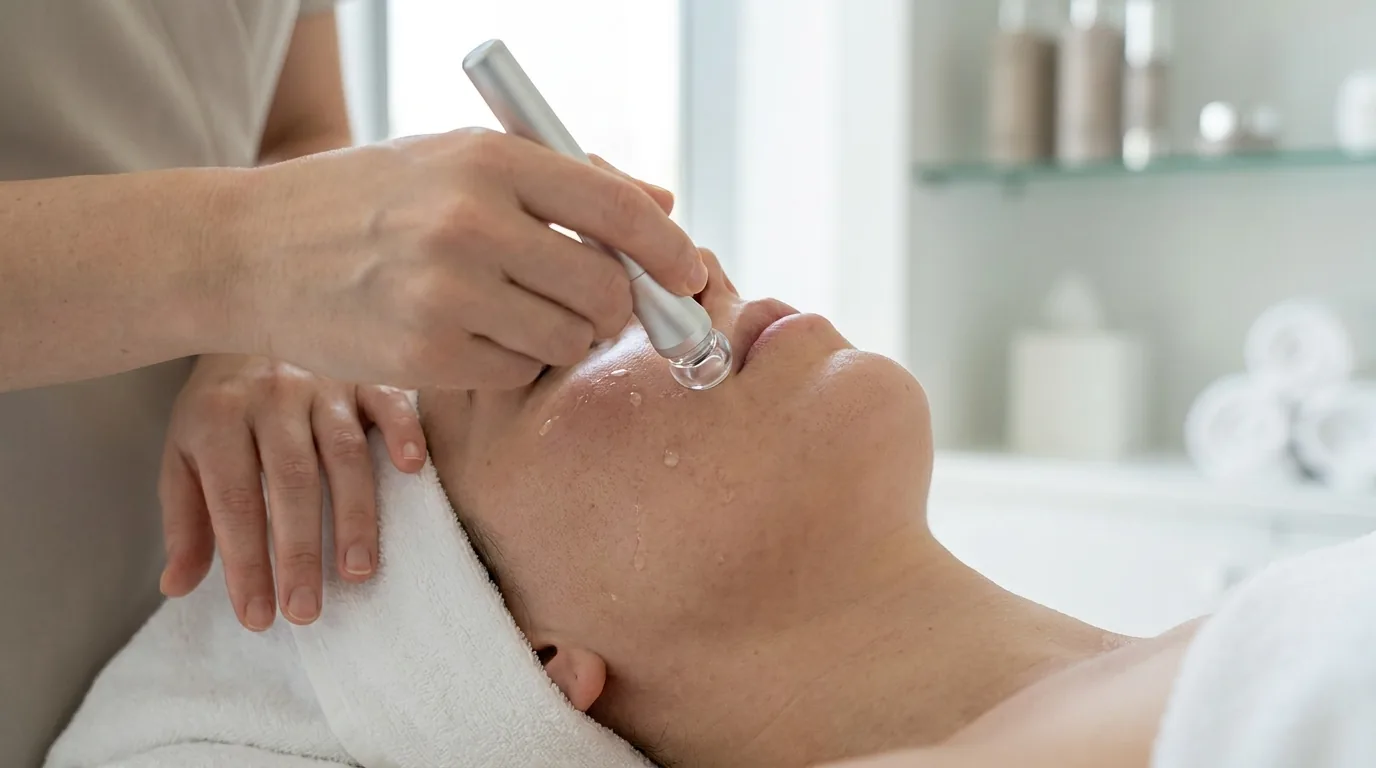
If a clinic cannot tell you what is in each serum, that is your signal to ask more questions or choose somewhere else. The value of a HydraFacial during pregnancy lives entirely in the clinic knowing what to leave out.
Which ingredients to skip, and which are fine
Most of the safety conversation comes down to a short list of actives. The table below sorts the common ones into skip and keep, with the reason for each.
| Ingredient | During pregnancy | Why |
|---|---|---|
| Salicylic acid (BHA), high strength | Skip or reduce | Low-concentration topical use is generally considered acceptable, but most clinics swap it out as a precaution. |
| Retinoids (Retin-A, retinol) | Skip | Oral retinoids are known to harm a developing baby; topical ones are advised against to stay safe. |
| Hydroquinone | Skip | A skin-brightening agent with high skin absorption, so it is usually avoided while pregnant. |
| Glycolic acid, lactic acid (AHA) | Keep (gentle strength) | Effective surface exfoliants that are widely treated as safe for topical use. |
| Hyaluronic acid | Keep | A hydrator your skin already makes; topical use has no whole-body effect. |
| Niacinamide, vitamin C, peptides | Keep | Gentle, hydrating, and brightening without the pregnancy cautions of stronger actives. |
The salicylic acid line deserves a note. The American College of Obstetricians and Gynecologists has indicated that topical salicylic acid in limited amounts is generally acceptable in pregnancy, because so little passes through the skin compared with an oral dose. Even so, “acceptable” is not “necessary,” and a clinic that substitutes it loses nothing in results while removing a variable. That is the standard most careful Dubai providers follow.
Who should not get a HydraFacial while pregnant
Pregnancy aside, a HydraFacial is not for every skin state. Skip it, or wait and ask a clinician, if you have any of the following:
- An active skin infection, cold sore outbreak, or open wounds on the treatment area
- Severe or cystic acne, which can flare with extraction
- Active eczema, psoriasis, or rosacea on the face
- A recent chemical peel, laser, or other resurfacing treatment
- A high-risk pregnancy or pregnancy complications, where your obstetrician should weigh in first
If you are unsure where your skin sits, a short consultation settles it. A reputable clinic would rather reschedule than treat skin that is inflamed or broken.
Does the trimester matter?
There is no fixed trimester ban on a HydraFacial, because the treatment is non-invasive and does not need you to lie flat for long. Comfort and skin behaviour do shift across the three stages, though, so the timing is worth a thought.
- First trimester: Many women prefer to wait until the 12-week mark before any elective treatment, purely out of caution. There is no evidence a gentle facial causes harm early on, but a lot of clinics will still confirm with you.
- Second trimester: Often the easiest window. Hormonal skin changes have usually set in, so a clean, hydrating session is most useful here, and lying back is still comfortable.
- Third trimester: Still fine for most, with the chair reclined rather than flat. Lying fully on your back for long can feel uncomfortable late in pregnancy, so tell your therapist and they will adjust your position.
Is a HydraFacial safe while breastfeeding?
Yes, and the list of cautions is usually shorter than during pregnancy. The same logic holds: the mechanical treatment is not the concern, the actives are. Tell your provider you are breastfeeding so they can keep retinoids and hydroquinone out of the serums. Hydrating ingredients such as hyaluronic acid, niacinamide, and vitamin C remain fine.
What a HydraFacial will not fix during pregnancy
It helps to set expectations. A HydraFacial works at the surface. It clears congestion, lifts dead skin, and floods the skin with moisture, so it is genuinely good for pregnancy dryness and mild breakouts. It is not a treatment for melasma, deep acne scarring, or stubborn hyperpigmentation, all of which sit in deeper layers and need stronger options that pregnancy rules out anyway.
If pregnancy melasma is your main worry, a gentle home routine with pregnancy-safe brightening ingredients plus daily sunscreen does more than any single facial. Dubai sun is strong year round, so broad-spectrum SPF is the highest-value habit during pregnancy. Many cases of pregnancy melasma fade on their own after delivery, and stronger pigmentation and resurfacing treatments can wait until you are cleared postpartum.
Whatever facial you book in Dubai, pair it with daily broad-spectrum sunscreen. Strong year-round sun is the biggest driver of pregnancy melasma, and a clean facial cannot outrun an unprotected face.
Where to find a pregnancy-safe HydraFacial in Dubai
The safe version of this treatment depends entirely on the clinic, so the venue matters more than the brand name on the machine. In Dubai, look for a clinic that holds both a DET trade licence (the Department of Economy and Tourism business licence every legal venue carries) and the relevant DHA health licensing through the Dubai Health Authority for skin treatments and the staff performing them. Those two licences are the baseline for somewhere allowed to treat your skin.
You can browse facial and skin clinics across the city on our directory and then call ahead to confirm they adjust the protocol for pregnancy. 126 facial treatment providers are listed in Dubai, alongside dedicated skin clinics, so there is plenty of choice once you know what to ask for.
Browse all 126 Facial Treatments providers on our directory.
For background on the treatment itself, our full guide to a HydraFacial in Dubai covers how it works, what it costs, and what to expect. From there you can compare facial treatments and skin care salons by area and rating.
How to choose a clinic for a pregnancy facial
A few checks separate a clinic that handles pregnant clients well from one that treats everyone the same.
- Licensing first. Confirm the DET trade licence and DHA health licensing before anything else. Our notes on how we rank salons explain what verified status means on the directory.
- They ask before you tell. A good clinic puts pregnancy status on the intake form and confirms it verbally. If nobody asks, that is a flag.
- They can name what they leave out. Ask which actives they remove for pregnancy. “We skip salicylic acid and any retinoids” is the answer you want.
- Trained staff, not just a device. The person treating you should understand pregnancy contraindications, not only how to run the machine.
- No pressure on add-ons. Brightening or anti-aging boosters that lean on retinoids or hydroquinone should be off the table, not upsold.
If a melasma flare is what pushed you to book, read our take on pigmentation treatment options too, and plan the stronger ones for after delivery. A simple hydrating facial is often the better fit while pregnant, and stronger resurfacing such as a chemical peel is one of the things best paused until you are cleared. A gentle brightening facial is a calmer way to support tone in the meantime.


