


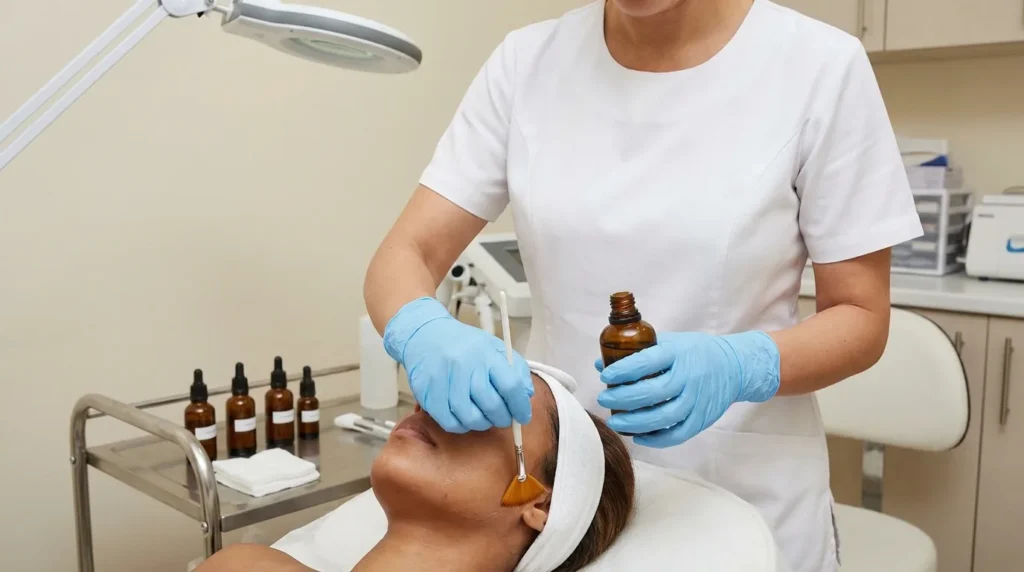
Which chemical peel is best for hyperpigmentation depends on two things: what caused the pigment, and how much melanin your skin already carries. For most Dubai residents, a superficial glycolic, mandelic or salicylic peel run over four to six sessions is the safer answer. Stronger TCA peels suit fewer people than most guides suggest.
This guide is general information, not medical advice. A chemical peel is a regulated cosmetic-medical treatment in Dubai: consult a DHA-licensed clinic about your suitability and risks before booking.
Which chemical peel is best for hyperpigmentation?
There is no single winner. Chemical peel selection runs on two axes, and most guides only cover one of them. The first axis is the cause of the pigment, and the second is your Fitzpatrick skin type, the scale clinicians use to describe how much melanin skin holds and how readily it darkens after injury.
That second axis matters more in Dubai than in the cities most peel content is written for. A large share of residents sit at Fitzpatrick types IV to VI, where an over-aggressive peel does not fade pigment: it triggers more. Skin responds to the controlled injury by producing melanin, and the patch you treated comes back darker. Clinics working with pigmentation treatment in this market tend to start gentler and build up.
So the practical answer for most readers is a superficial peel repeated in a course, chosen by pigment type, rather than one strong session.
Match the peel to the cause of your pigment
Three causes account for nearly all facial hyperpigmentation, and each responds to a different acid. Getting this wrong is the most common reason a course of peels produces no visible change.
Post-inflammatory hyperpigmentation. Flat brown or grey marks left behind after acne, ingrown hairs, waxing burns or eczema. A chemical peel for PIH usually works best with salicylic acid, which is oil-soluble and clears the follicle at the same time. Mandelic acid is the alternative when skin is sensitive or the marks sit on deeper skin tones.
Melasma. Symmetrical patches across the cheeks, upper lip and forehead, driven by hormones and sun. It is the hardest of the three, it relapses, and it is the one where aggressive treatment backfires most often. A dedicated melasma treatment plan pairs low-strength peels with daily topicals rather than relying on peels alone.
Sun-induced spots. Discrete brown spots on cheeks, hands and chest from cumulative UV. These respond fastest, often to glycolic acid, and they are also the easiest to prevent from returning. Readers weighing peels against lasers and topicals will find the wider comparison in the guide to hyperpigmentation treatment in Dubai.
The six peel acids compared
Superficial chemical peels use a single acid or a blend at a strength that works only on the outer layer of skin. Medium peels reach the upper dermis and carry real downtime. The table below covers the six acids Dubai clinics use most for pigment.
| Acid | Best for | Depth | Deeper skin tones |
|---|---|---|---|
| Mandelic acid | PIH and melasma on Fitzpatrick IV to VI | Superficial | First choice, largest molecule so it penetrates slowly |
| Lactic acid | Dry or sensitive skin, a first peel | Superficial | Well tolerated, also hydrating |
| Glycolic acid | Sun spots, dullness, uneven tone | Superficial | Suitable at lower concentrations |
| Salicylic acid | Acne-linked PIH, oily and congested skin | Superficial | Generally safe, clears follicles |
| Jessner solution | Mixed, stubborn pigment | Superficial to medium | Use with caution and priming |
| TCA | Deep sun damage, resistant patches | Medium | Highest PIH risk, clinic only |
Two others appear on Dubai menus and are worth recognising. Kojic acid is usually blended into a peel rather than used alone, and it works by slowing melanin production instead of only removing surface cells. Vitamin C peels are the mildest option on the list and function more as brightening maintenance than correction.
Best peel for hyperpigmentation on dark skin
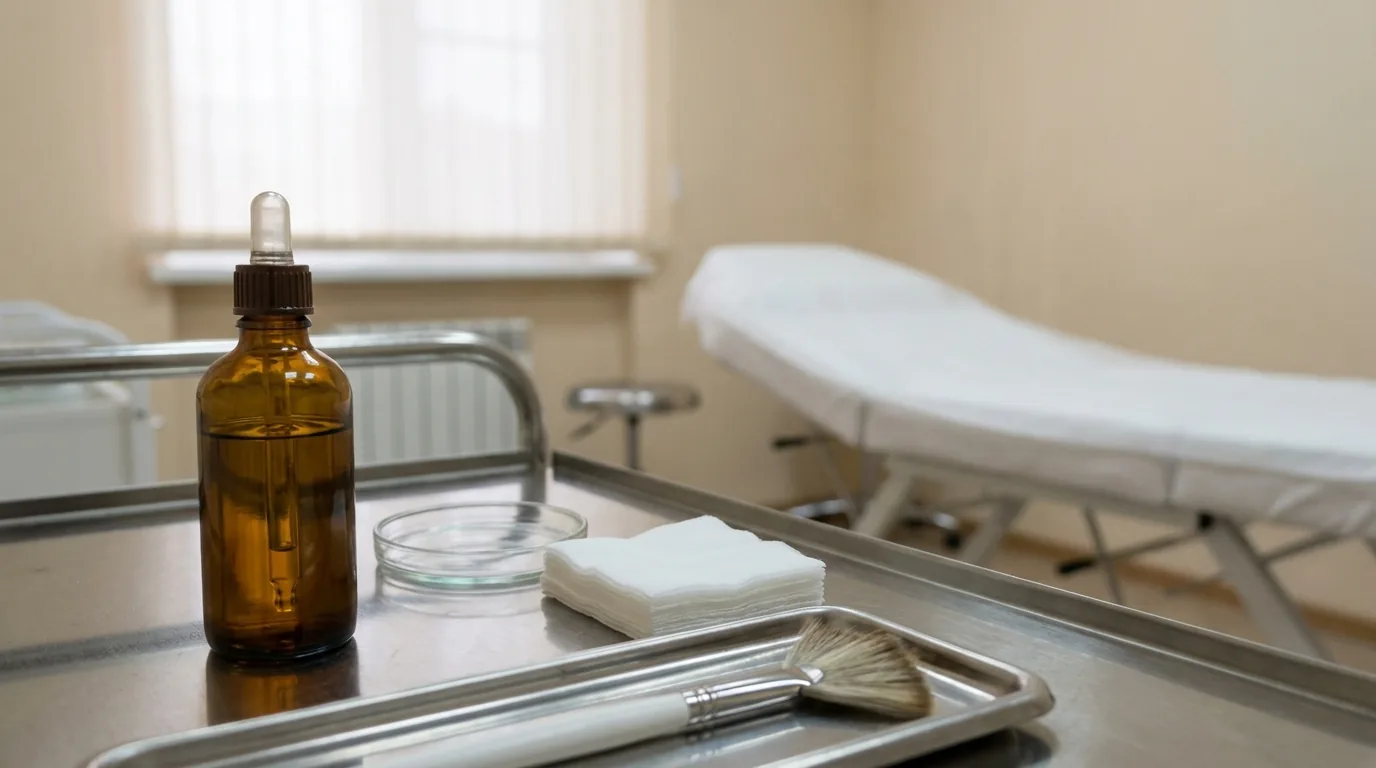
This is where the standard internet answer goes wrong, and the gap matters most for readers in this region. Much of the top-ranking advice recommends a TCA peel for hyperpigmentation, which is reasonable for lighter skin with sun damage and risky for the skin types most common across the Gulf and South Asia.
Published dermatology work on melasma in dark skin points the other way. A review of peel protocols in darker phototypes found glycolic acid peels performed best on safety and efficacy together, with lactic acid a low-cost alternative and salicylic-mandelic blends well tolerated. The best peel for hyperpigmentation on dark skin is therefore usually a low-strength AHA course, not a single deep treatment.
Three precautions carry most of the risk reduction on deeper skin tones:
- Prime the skin. Two to four weeks of a topical such as hydroquinone or tretinoin before the first session, on clinician instruction, lowers the chance of rebound pigment.
- Patch test. A test area behind the ear or along the jaw shows how skin reacts before anything reaches the face.
- Start low, go slow. A mandelic acid peel at 20 to 30 percent, stepped up only if skin tolerates it, beats jumping to the strongest option available.
Peel depth and who can legally perform it in Dubai
In the UAE, depth is a legal question as much as a comfort one. It sets who may apply the acid, and that is the part almost no international guide covers.
Every venue needs a trade licence from the Department of Economy and Tourism to operate at all. On top of that, health-side treatments require Dubai Health Authority licensing: the facility holds a DHA health facility licence, and the individual performing the treatment holds a DHA professional licence appropriate to the procedure. Superficial cosmetic peels are widely offered in licensed skin care salons. Medium and deep peels belong in a DHA-licensed clinic with a physician or a licensed practitioner on site.
Two practical checks are worth making before booking: ask which acid and what concentration will be used, and ask to see the DHA licence of the person treating you rather than the venue’s alone. A salon that answers the first question vaguely usually cannot answer the second. Registered skin specialists list their credentials without being asked.
Does chemical peel remove hyperpigmentation permanently?
No. A chemical peel removes pigmented cells that already exist, and it does nothing to stop the melanocytes underneath from making more. Whether the pigment returns depends entirely on whether the trigger is still active.
Sun-induced spots stay away for a year or longer with daily broad-spectrum sunscreen and shade discipline. Melasma is the opposite case and relapses in the majority of patients within a year, which is why clinicians treat it as a managed condition rather than a cure. PIH generally stays cleared once the underlying acne or irritation is under control.
How many sessions you need and when results show
A superficial chemical peel course runs four to six sessions spaced two to four weeks apart. Most people notice brighter, more even skin after the first session, but that early change is surface exfoliation rather than pigment correction. Real fading of the patch itself typically appears from session three onward.
Medium-depth peels work in one to three sessions and ask for five to ten days of visible peeling in return. Booking one before a wedding or a work trip is a mistake people make repeatedly.
What a chemical peel course costs in Dubai
Chemical peel pricing follows depth and setting far more than brand. A salon superficial peel and a clinic superficial peel using the same acid can differ by several hundred dirhams because the clinic carries medical overhead.
| Peel type | Per session | Typical full course |
|---|---|---|
| Superficial (lactic, mandelic, low-strength glycolic) | AED 350 to 999 | AED 1,400 to 6,000 |
| Stronger AHA or BHA, Jessner solution | AED 500 to 1,500 | AED 1,000 to 6,000 |
| TCA, medium depth | AED 600 to 1,500 | AED 600 to 4,500 |
| Branded in-clinic pigment protocol | AED 1,500 to 3,500 | Single kit plus home care |
Budget for the home care as well, because prescription topicals and a high-factor sunscreen add roughly AED 200 to 500 a month and skipping them is the fastest way to waste the course. Packages booked as a block are usually cheaper per session than paying each visit.
Where to get a chemical peel in Dubai
salonsindubai.ae lists 105 venues offering chemical peels across the city, from salon-based superficial treatments to clinic-run medical peels. Filter by area and read recent reviews before committing to a course, since technique varies more between practitioners than between venues.
Browse all 105 Chemical Peel providers on our directory.

Popular skin and aesthetic clinics in Dubai
Luerur Aesthetic Clinic is a skin care and aesthetic clinic in Al Barsha, on 39th Street behind Saudi German Hospital. It is rated from reviews.Reviewers describe a doctor who explains options clearly and only recommends a procedure when it is genuinely needed, with specific praise for natural looking results after a filler dissolving treatment and for a targeted acne programme that visibly improved skin. As with any aesthetic or medical treatment, outcomes and experiences can vary between visits, so a thorough consultation to set expectations before booking is worth doing.The clinic offers a broad range of treatments, from Botox injections, dermal fillers, chemical peels and skin rejuvenation to laser hair removal, microdermabrasion, PRP therapy, FUE hair transplant and surgical procedures such as rhinoplasty, liposuction and tummy tuck. The venue has on-site appointments, gender-neutral toilets and wheelchair-accessible parking, entrance and seating.
In Al Habtoor Business Tower in Dubai Marina, Cosmesurge Clinic offers botox injections, dermal fillers, body contouring, chemical peels, laser hair removal, rhinoplasty, liposuction and FUE hair transplant among other cosmetic and dermatology treatments. It is rated from reviews.Reviewers consistently describe the doctors as attentive and compassionate, noting that treatment recommendations are conservative rather than pushed, and several return year after year for ongoing skin care. The clinic itself is noted for a modern, welcoming atmosphere with views over the marina.The clinic has on-site services with a wheelchair-accessible entrance, car park, seating and toilet, plus gender-neutral toilets. It suits Dubai Marina residents and visitors researching cosmetic treatments, laser hair removal or dermatology consultations, with a consultation typically recommended before committing to any treatment plan.
Glow Aesthetics Dermatology Clinic is in Al Attar Business Centre in Al Barsha, offering botox injections, dermal fillers, chemical peels, microneedling, laser and IPL hair removal, skin tightening, scar treatment and pigmentation treatment. It is rated from reviews.Reviewers consistently praise the honesty of the medical guidance, noting that the team recommends only what is genuinely needed rather than upselling treatments. The clinic is described as professional and welcoming from arrival, with several highlighting fair pricing relative to the standard of care.The clinic has on-site services with a wheelchair-accessible entrance, car park and toilet. It suits patients across Dubai researching skin treatments, anti-aging facials or laser hair removal, with a consultation recommended to discuss the right treatment plan.
Derma 247 Laser Clinic is a skin and laser clinic in Nadd Al Hamar, rated from reviews. Treatments cover laser and IPL hair removal, botox injections, dermal fillers, chemical peels, pigmentation treatment, skin rejuvenation and tattoo removal.Reviewers consistently mention feeling well informed before and during laser sessions, with practitioners who explain each step in plain terms and check in throughout rather than rushing through the appointment. That attentiveness comes up often enough to be a genuine pattern rather than a one-off.The clinic runs by appointment, with on-site services and a fully wheelchair-accessible setup including gender-neutral toilets. It suits anyone after laser or aesthetic treatments who wants a clinical, unhurried approach rather than a quick in-and-out visit.
IV Wellness Lounge is on Marble Walk in Zaa'beel Second, DIFC, rated from reviews. Alongside its IV therapy sessions, the lounge offers detox programmes, lymphatic drainage, massage therapy, meditation sessions, yoga classes, anti-aging facials, chemical peel, dermal fillers, botox injections and laser hair removal.IV therapy is what reviewers talk about most, describing sessions as gentle and comfortable with a noticeable lift in energy afterward. The space itself gets repeated praise too, called calming, clean and beautifully designed rather than clinical, and reviewers consistently describe the staff as attentive and quick to explain what each session involves. The on-site cafe also gets a mention for a good drink after a session.With on-site services and a wheelchair-accessible car park and entrance, the lounge suits a considered wellness visit in DIFC.
The listing above ranks skin and aesthetic venues by rating and review volume, not by payment. Confirm that the specific peel you want is on the menu when you call, because service lists differ between branches. The criteria behind the ordering are set out in how we rank salons, and broader aesthetic salons coverage sits alongside it.
Timing and aftercare for Dubai’s sun
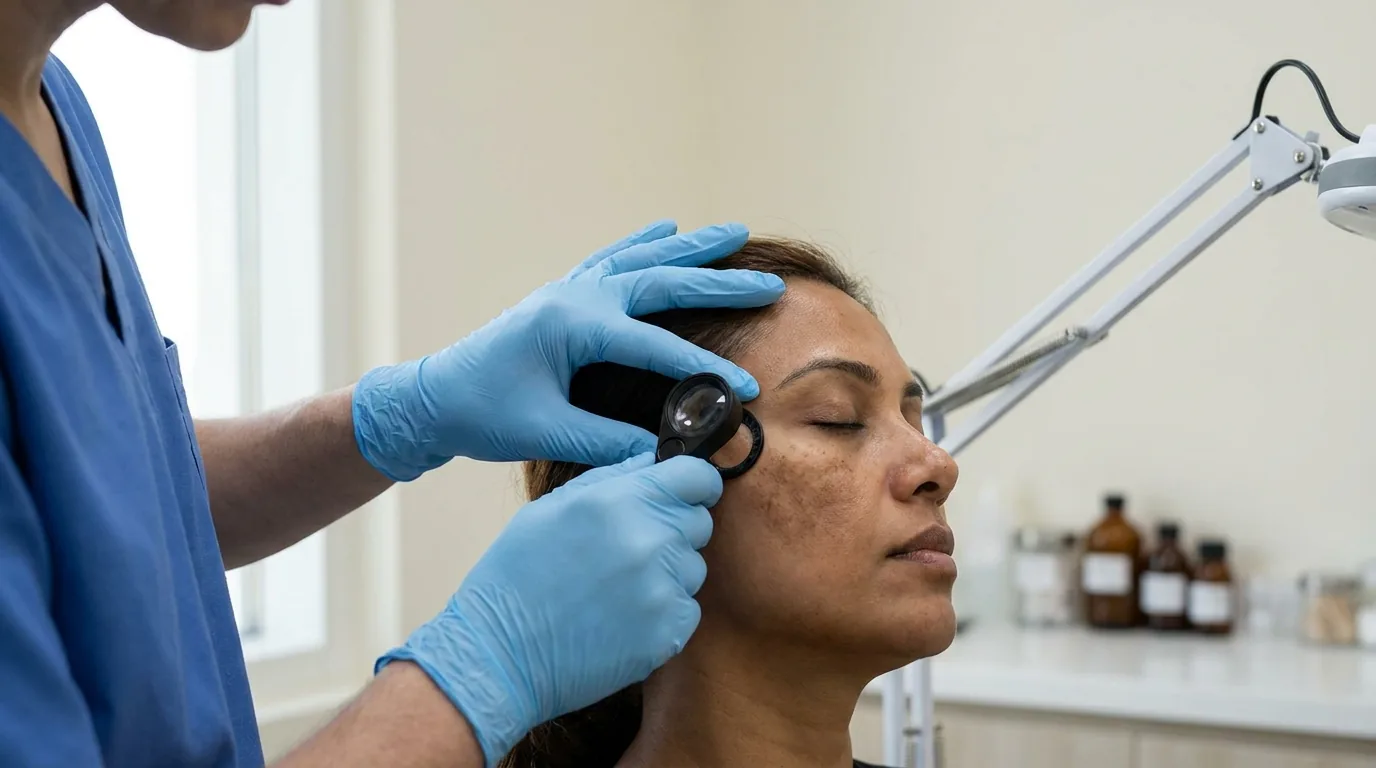
Dubai’s UV index sits at extreme levels through most of the summer, and freshly peeled skin has lost the layer that normally absorbs some of that load. Sun exposure on treated skin is listed among the main drivers of peel complications by clinical references. Treating pigment in July and then spending weekends outdoors undoes the work faster than it can be done.
The sensible window for a full course is November through March. If a course has to run in summer, keep exposure genuinely low rather than nominally low. Other cosmetic and clinical treatments follow the same seasonal logic.
- Broad-spectrum SPF 50, reapplied every two hours outdoors, from the day of treatment onward.
- No retinoids, scrubs or acids at home for the first week after each session.
- Do not pick or pull flaking skin, which is how PIH gets created in the first place.
- Skip the pool, the beach and hot yoga for five to seven days.
- Keep the barrier supported with a plain moisturiser rather than an active one.
Mistakes that make pigmentation worse
- Choosing depth over suitability. Asking for the strongest peel available is the single most reliable way to end up darker than you started.
- Treating melasma like sun damage. The two look similar and behave completely differently.
- Stacking treatments. A peel one week and a facial the next overloads the barrier. Space anything else, including a hydrafacial, at least two weeks apart.
- Stopping sunscreen once the spots fade. The pigment cells are still there and still reactive.
- Buying a strong chemical peel online. Home use of medium-depth acids causes scarring and chemical burns, and no licensed practitioner recommends it.


