


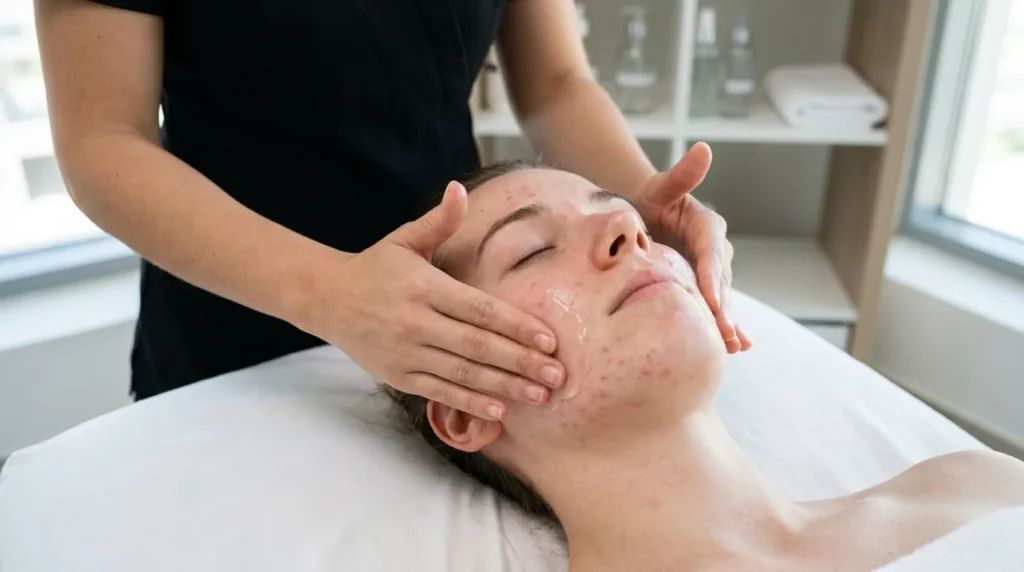
Facials can genuinely help mild to moderate acne, but they work as a supporting treatment, not a cure. A well-chosen acne facial clears congestion, calms inflammation, and slows new breakouts. Deep cystic acne and persistent breakouts still need a dermatologist. In Dubai a single session runs roughly AED 150 to AED 700, with device-led options like HydraFacial and peels higher, and results build over a course, not one visit.
Do facials actually help acne?
Yes, for the right kind of acne and the right kind of facial. A good facial for acne prone skin does three useful things. It removes the congestion that feeds blackheads and whiteheads. It calms the redness and swelling around active spots. It slows the cycle of clogged pores so fewer breakouts form next time.
The honest limit matters as much as the benefit. A facial reaches the surface and the upper pore. It does not change the hormones, bacteria load, or oil production that drive stubborn acne at a deeper level. So when people ask does facial reduce acne, the accurate answer is that it reduces it and improves how skin looks and feels, yet it rarely clears severe acne on its own. Treat it as one part of a routine, paired with daily home care and, when needed, medical treatment.
This is why a quick salon facial and a clinical acne facial give such different results. The salon version focuses on glow and relaxation. The acne version uses deep pore cleansing, exfoliation, targeted extractions, and anti-bacterial or anti-inflammatory masks. The method, not the marketing, decides whether it helps.
Which facials work for which type of acne
The single most useful question is which facial matches your acne grade, because there is no single best facial for acne that suits everyone. The wrong match wastes money and can irritate skin. The table below maps common acne types to the acne facial treatment that suits them.
| Acne type | What it looks like | Facial that suits it |
|---|---|---|
| Mild (comedones) | Blackheads, whiteheads, small clogged bumps | Deep cleansing facial with steam, gentle exfoliation, manual extractions |
| Moderate (papules, pustules) | Red, raised, sometimes tender spots | Deep cleansing facial with anti-bacterial actives, or a light chemical peel |
| Hormonal or inflamed | Monthly flare-ups along the jaw and chin | LED light therapy facial, oxygen facial, minimal extraction |
| Severe (cysts, nodules) | Deep, painful lumps under the skin | See a dermatologist first; facials are a later add-on |
A few treatments come up again and again for acne-prone skin in Dubai. Each one earns its place for a different reason.
- Deep cleansing facial: the workhorse for congested skin. Steam softens pores, then an esthetician exfoliates and performs careful extractions to clear blackheads and surface buildup. It is the deep cleansing facial most often booked for everyday breakouts.
- Chemical peel: light acids like salicylic acid, glycolic acid, or lactic acid exfoliate deeper, speed skin turnover, and help fade marks left by old breakouts. A salon chemical peel for acne is gentler than a clinical one and still useful for moderate skin.
- LED light therapy: blue light targets acne-causing bacteria, red light eases inflammation. Gentle, no downtime, useful for hormonal and inflamed skin.
- Oxygen facial: soothes irritated, post-breakout skin with a calming infusion. A recovery treatment more than a deep clean.
- HydraFacial: a multi-step device facial that cleanses, exfoliates, and runs painless extractions in one session, and our HydraFacial in Dubai guide covers it in depth. A HydraFacial for acne suits mild to moderate congestion.
What a facial can and cannot do for acne
Set expectations before you book, because most disappointment comes from the wrong ones. The split below is the realistic version professionals will give you.
What a facial does well. It clears existing congestion, so the skin looks clearer within days. It reduces the inflammation around current spots. It softens the look of recent marks over a course of sessions. It keeps oily, congestion-prone skin in better balance when repeated every four to six weeks. For mild and moderate acne, a steady course often produces a visible, lasting improvement.
What a facial cannot do. It will not cure acne, because acne is driven by hormones, excess sebum, and bacteria that a surface treatment cannot reach. It will not flatten deep cystic lesions, which need medical care. It will not fix old, indented acne scars, which respond only to resurfacing procedures. And a single facial before an event is more likely to leave skin briefly red than camera-ready, so plan a course rather than a one-off.
Read facials as maintenance and support. A regular facial treatment keeps pores clear and skin calm, while the daily routine and any prescribed medication do the heavy lifting.
Facials or a dermatologist: which acne needs which
Knowing when to escalate saves both money and skin. Use a simple rule. If breakouts are mild, on the surface, and mostly comedonal, a course of acne facials is a sensible first step. If acne is deep, painful, scarring, or has not improved after a few months of consistent care, book a dermatologist instead of another facial.
A dermatologist can prescribe what a facial cannot offer: topical retinoids, benzoyl peroxide, oral antibiotics, hormonal treatment, or a dedicated acne treatment plan. Many people in Dubai run both tracks at once, a medical plan for control plus periodic facials for congestion and comfort. That combination usually beats either one alone. The esthetician and the dermatologist solve different parts of the same problem.
What an acne facial costs in Dubai
Price tracks the treatment depth, the products, and the venue. Entry-level deep cleansing facials sit at the budget end, device-led treatments like HydraFacial and peels sit higher, and clinic settings in premium districts carry the top prices. The tiers below show the typical spread.
| Tier | Typical price | Duration | Room | Products | Staff experience | Best for |
|---|---|---|---|---|---|---|
| Budget | AED 150 to 300 | 30 to 45 min | Shared or standard treatment room | Salon-standard cleansers and masks | Beauty therapist | Routine upkeep, a quick refresh, hydrating or basic cleansing facials |
| Mid | AED 300 to 700 | 60 to 75 min | Private treatment room | Targeted serums, professional skincare lines | Trained esthetician | Customised facials, brightening, entry-level HydraFacial, LED add-ons |
| Premium | AED 700 to 1,500+ | 75 to 120 min | Private clinic or facial-bar suite | Medical-grade and device-led serums | Senior esthetician or DHA-licensed clinician | Signature HydraFacial, advanced anti-aging facials, clinical chemical peels |
Browse all 14 budget-tier Skin Care Salons providers on our directory.
Two cost notes specific to acne. First, acne facials usually run as a course, so factor in four to six sessions, not one. Second, a higher price does not guarantee a better result for acne; the skill of the esthetician and the right treatment for your grade matter more than the address.
The facial and skin venues below rank on rating, review volume, and verified directory standing, following our ranking method. They cover the full spread of acne-friendly facials, from deep cleansing to peels and device treatments. Use them as a starting shortlist, or browse the full Dubai salon directory, then confirm the venue handles acne-prone skin before booking.

Popular facial and skin clinics in Dubai
Skin Camouflage beauty therapists, fully licensed by the Dubai Health Authority, specialize in advanced skin treatments. Inkless Stretch Marks Removal effectively minimizes stretch marks without invasive procedures. Our Scalp Micropigmentation (Hair Tattoo) restores the look of fuller hair with precision pigmentation. The BB Glow Treatment achieves smooth, radiant skin that lasts.
Nova Clinic The Palm is a skin care clinic in Palm Jumeirah Mall by Dubai Retail, on the Palm Jumeirah, rated from reviews. Reviewers consistently describe a modern, extremely clean clinic where therapists explain each step of a facial treatment and leave skin feeling clean, fresh and glowing. Several also mention attentive, professional consultations that left them noticeably more comfortable and satisfied with their results. Treatments include acne treatment, anti-aging facials, body contouring, Botox injections, chemical peel, deep cleansing facial, dermal fillers, hair treatment, IPL and laser hair removal, microneedling, pigmentation treatment, PRP therapy, skin rejuvenation, skin tightening and tattoo removal. Appointments are recommended, and the clinic is wheelchair accessible with parking, entrance and toilet facilities on site at Nakheel Mall.
Glow Aesthetics Dermatology Clinic is in Al Attar Business Centre in Al Barsha, offering botox injections, dermal fillers, chemical peels, microneedling, laser and IPL hair removal, skin tightening, scar treatment and pigmentation treatment. It is rated from reviews.Reviewers consistently praise the honesty of the medical guidance, noting that the team recommends only what is genuinely needed rather than upselling treatments. The clinic is described as professional and welcoming from arrival, with several highlighting fair pricing relative to the standard of care.The clinic has on-site services with a wheelchair-accessible entrance, car park and toilet. It suits patients across Dubai researching skin treatments, anti-aging facials or laser hair removal, with a consultation recommended to discuss the right treatment plan.
Derma 247 Laser Clinic is a skin and laser clinic in Nadd Al Hamar, rated from reviews. Treatments cover laser and IPL hair removal, botox injections, dermal fillers, chemical peels, pigmentation treatment, skin rejuvenation and tattoo removal.Reviewers consistently mention feeling well informed before and during laser sessions, with practitioners who explain each step in plain terms and check in throughout rather than rushing through the appointment. That attentiveness comes up often enough to be a genuine pattern rather than a one-off.The clinic runs by appointment, with on-site services and a fully wheelchair-accessible setup including gender-neutral toilets. It suits anyone after laser or aesthetic treatments who wants a clinical, unhurried approach rather than a quick in-and-out visit.
Avoria Aesthetic Clinic is a skin care and medical aesthetics clinic in Al Barsha, rated from reviews. Treatments include Botox and dermal fillers, chemical peels, microneedling, laser hair removal, pigmentation and acne treatment, tattoo removal, electrolysis, lip blush and eyebrow microblading, plus body contouring and hair transplant procedures. Reviewers consistently describe a modern, spotless clinic with a calming atmosphere, and praise the team for explaining each treatment thoroughly before starting and taking time to listen to concerns. Laser hair removal sessions are described as comfortable and effective, and reviewers mention good results from HydraFacial treatments too, with outcomes generally meeting or exceeding expectations. Free underground parking is available, and the clinic has a wheelchair-accessible car park, entrance and toilet, all within the Deyaar Building unit that houses the clinic.
What to expect at an acne facial
A first acne facial is a structured, calm process rather than a deep clinical procedure. Knowing the steps helps you judge whether the venue is doing it properly.
- Consultation: the esthetician checks your acne type, asks about products and medication, and adjusts the plan to your skin.
- Cleanse and exfoliate: a thorough cleanse, then light exfoliation to lift dead skin and prepare the pores.
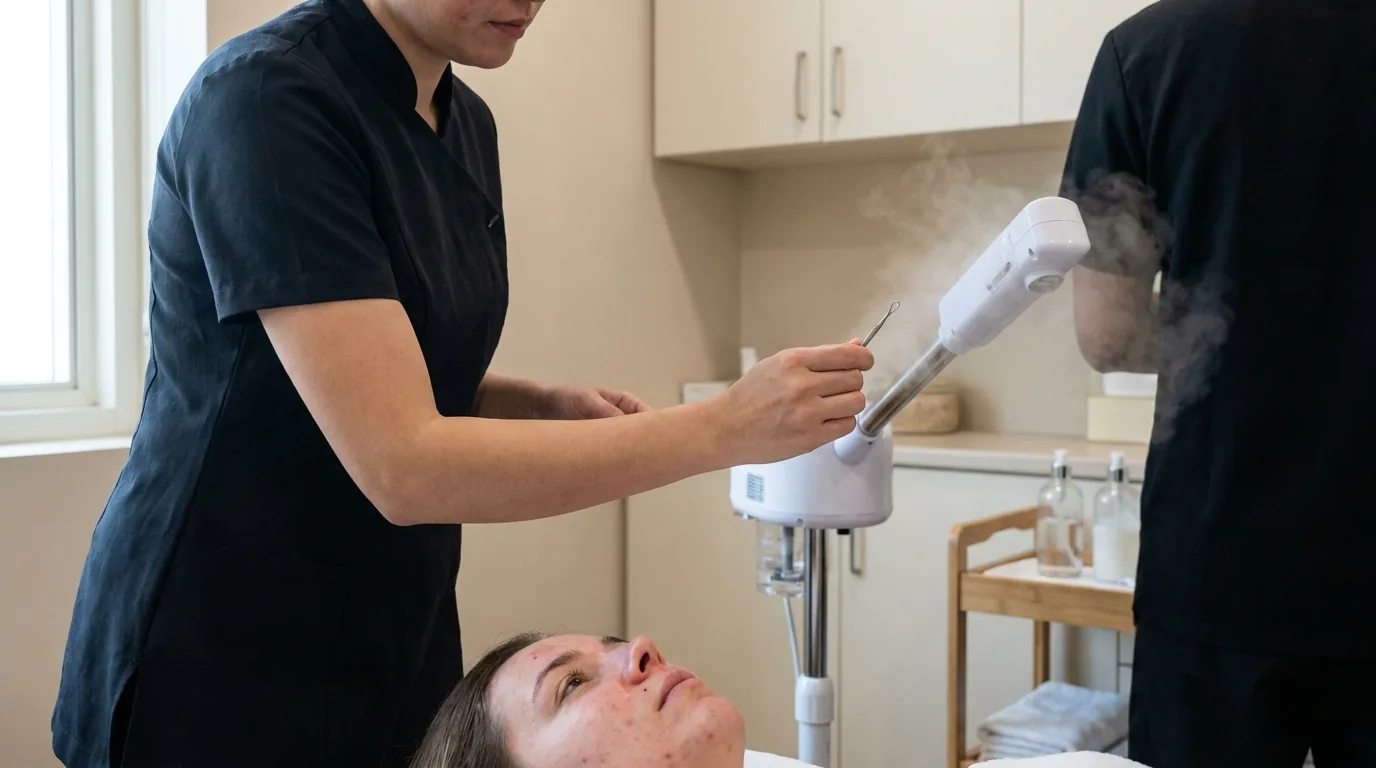
- Steam and extractions: steam softens congestion, then careful manual extractions clear blackheads and whiteheads without forcing inflamed spots.
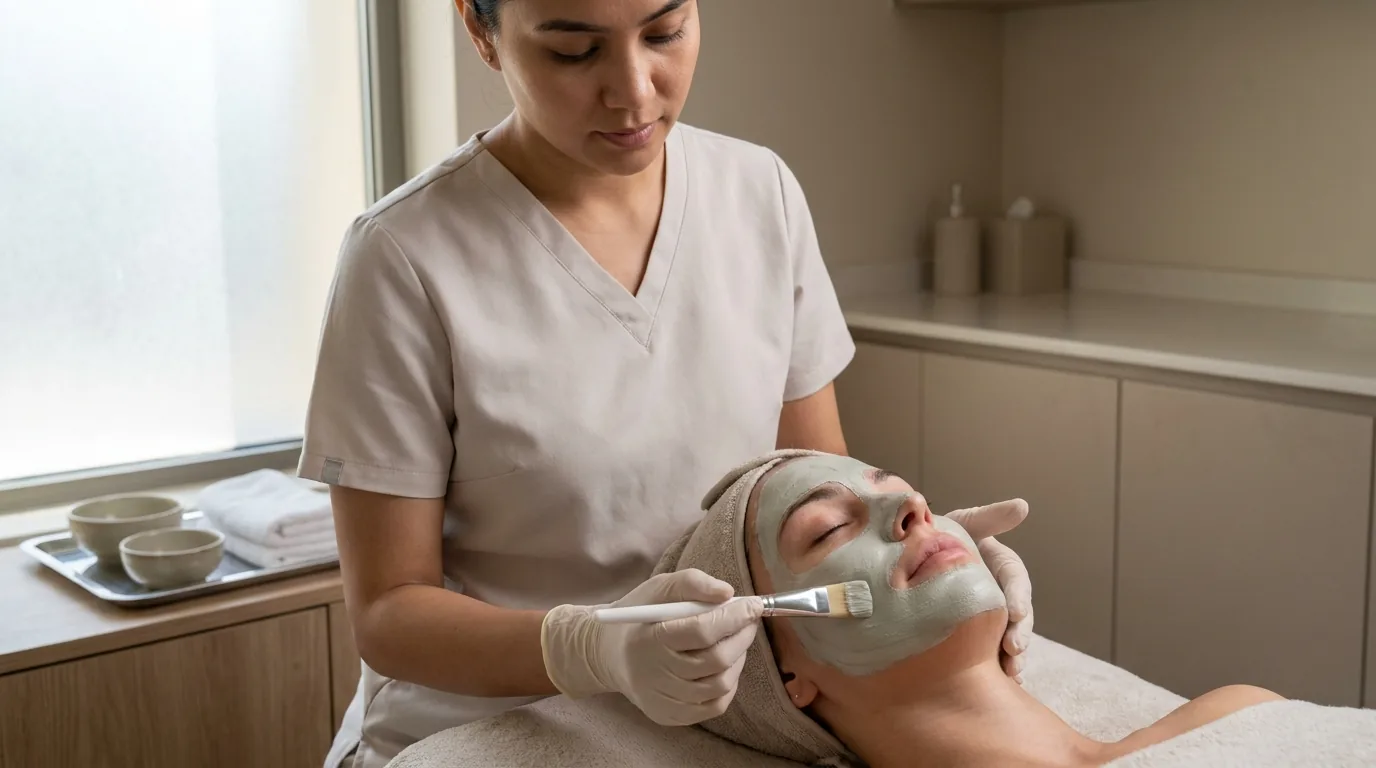
- Treat and calm: an anti-bacterial or anti-inflammatory mask, often with actives like sulfur or niacinamide, settles the skin.
- Protect: a light, non-comedogenic moisturiser and sunscreen, which matters in Dubai’s strong sun.
Aftercare carries Dubai-specific notes. Skip the gym, sauna, and hammam for a day, since heat and sweat irritate freshly treated skin. Avoid direct sun and reapply sunscreen, because exfoliated skin burns faster. Expect a little redness for a few hours. A short course every four to six weeks gives better results than occasional one-off visits.
When facials make acne worse
A facial can backfire when it is the wrong treatment or done badly. The common failures are worth knowing before you sit in the chair.
- Aggressive extraction on inflamed acne: squeezing papules, pustules, cysts, or nodules spreads bacteria and can cause scarring. A skilled esthetician leaves inflamed spots alone.
- Harsh products on sensitive skin: over-exfoliation or strong actives strip the barrier and trigger more breakouts. Acne-prone skin needs targeted, not heavy-handed, treatment.
- Poor hygiene: unsterile tools or unwashed hands introduce bacteria. Ask how tools are cleaned and confirm fresh gloves.
- Comedogenic products: pore-clogging creams undo the work. A good acne facial uses non-comedogenic products throughout.
One normal reaction is often mistaken for a bad outcome. Purging is a short-lived rise in small breakouts as exfoliation speeds skin turnover, and it settles within a week or two. A true reaction brings new spots in untreated areas, lasting redness, or irritation, and that is the signal to stop and reassess the treatment.
How to choose a facial clinic for acne in Dubai
The venue decides whether a facial helps or harms. Run this checklist before booking an acne facial in Dubai.
- Confirm it is licensed. A legitimate venue holds a Department of Economy and Tourism (DET) trade licence to operate and a Dubai Health Authority (DHA) health licence for skin treatments. Both should be displayed or available on request.
- Check acne-specific experience. Ask how often the esthetician treats acne-prone skin and which facials they recommend for your grade.
- Ask about products. Confirm they use non-comedogenic, acne-safe products and can name the actives, such as salicylic acid or tea tree.
- Ask about extractions. A good answer is careful, manual, and selective, never forcing inflamed spots.
- Read recent reviews. Look for consistent feedback on hygiene, results for acne, and esthetician skill within the last year. Comparing rated skin care salons in Dubai is the fastest way to filter.
A clinic that answers these clearly is far more likely to leave your skin calmer, not angrier. When acne is severe or scarring, choose a venue with a DHA-licensed dermatologist on site so you can step up to medical treatment without starting over elsewhere.


