


Does hydrafacial remove acne scars? Not the deep, pitted ones. A HydraFacial smooths surface texture and fades post-acne dark spots, but true atrophic scars (icepick, boxcar, rolling) sit too deep in the skin for it to reach. For raised texture and stubborn marks, expect a clinic to point you toward microneedling, lasers, or peels instead. Most Dubai sessions run AED 150 to AED 1,500 or more.
This guide is general information, not medical advice. Acne scarring is a skin condition with several distinct types, and the right approach depends on your skin: consult a DHA-licensed clinic or dermatologist about your suitability before booking any treatment.
What a HydraFacial actually is
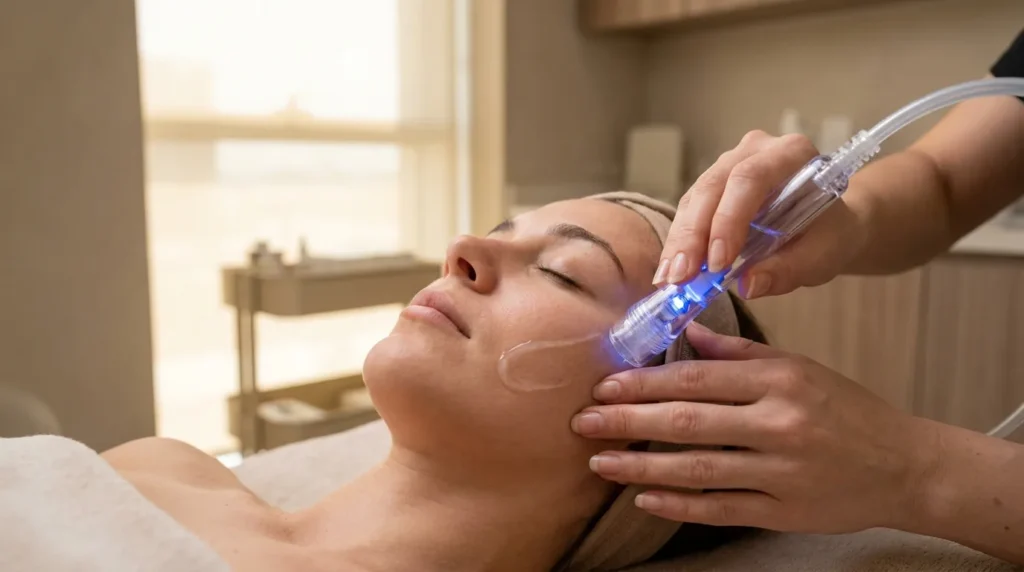
A HydraFacial is a non-invasive facial that cleanses, exfoliates, extracts, and hydrates skin in one session using a handheld wand. The wand pairs gentle suction with a spiral tip that delivers serums while it works. It is often described as a more controlled, less abrasive cousin of microdermabrasion.
A standard treatment runs through four stages. Cleansing lifts surface oil and makeup. A mild glycolic acid and salicylic acid blend loosens dead cells and pore debris. Suction-based extraction clears blackheads and congestion. A finishing serum step floods the skin with hyaluronic acid, antioxidants, and peptides. The whole appointment usually takes 30 to 60 minutes with no downtime, which is why people book it before events.
That four-step process explains both its strengths and its limits. Everything happens at the skin surface and just inside the pores. Nothing in the treatment remodels tissue below that layer, which is the part that matters for the question of acne scars.
Acne marks versus acne scars: the distinction that decides the answer
The honest answer to does hydrafacial remove acne scars on face depends entirely on what you are actually looking at in the mirror. Two very different things get called “scars” in everyday language, and only one of them responds to a facial.
Post-acne marks are flat discolouration left after a breakout heals. Brown or grey spots are post-inflammatory hyperpigmentation (PIH). Pink or red marks are post-inflammatory erythema (PIE). The skin surface is smooth; only the colour is off. These fade on their own over months, and treatments that speed cell turnover can shorten that timeline.
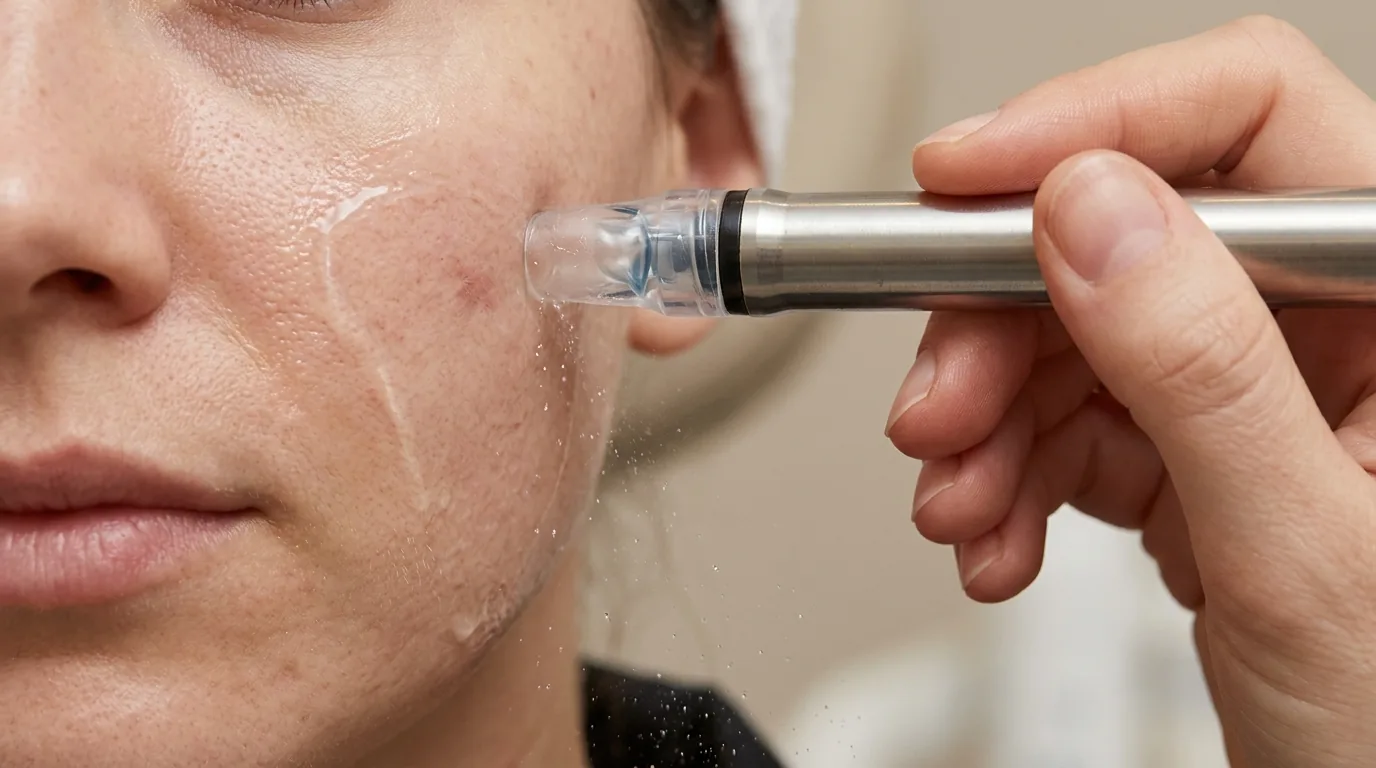
True acne scars are textural changes in the skin structure itself. Atrophic scars are indents: icepick (narrow and deep), boxcar (wider with sharp edges), and rolling (shallow, wave-like dips). A smaller number of people get raised hypertrophic or keloid scars. These are permanent changes to the collagen layer, not surface colour.
| What you see | What it is | Does a HydraFacial help? |
|---|---|---|
| Brown or grey flat spots | Post-inflammatory hyperpigmentation | Partially: can speed fading over a series |
| Pink or red flat marks | Post-inflammatory erythema | Partially: hydration and turnover help |
| Small indents and pits | Atrophic scars (icepick, boxcar, rolling) | No: too deep for a surface facial |
| Raised, firm bumps | Hypertrophic or keloid scars | No: needs clinical treatment |
Run your fingertip over the area with your eyes closed. If it feels smooth, you are likely dealing with marks, and a facial can play a supporting role. If you can feel dips or ridges, those are scars, and you need a treatment that works deeper.
What a HydraFacial can genuinely do for acne-affected skin
Set against true scars, a HydraFacial underdelivers. Set against marks, congestion, and dullness, it pulls real weight. Here is where a hydrafacial for acne scars earns its place for acne-prone skin, as long as the target is marks rather than deep texture.
- Fading post-acne marks. The exfoliation and acid step nudge cell turnover, which is the mechanism that fades PIH and PIE faster than waiting alone. Results build across a series, not in one visit.
- Clearing congestion. Suction extraction pulls out blackheads and whiteheads that feed breakouts, so fewer new marks form in the first place.
- Smoothing surface texture. Removing dead-cell buildup makes skin feel softer and look more even, which can make shallow marks read as less obvious under light.
- Balancing oil and hydration. The serum step restores moisture, and well-hydrated skin tends to overproduce less oil, a common breakout trigger.
A peer-reviewed study found that a series of six HydraFacial clarifying treatments improved overall skin appearance in people with active acne. The signal is consistent across the research and the clinics that offer it: this is a maintenance and clarity treatment, strong on marks and texture, not a scar-removal procedure.
What actually removes deep acne scars
If your concern is genuine indented scarring, a HydraFacial is the wrong tool, and a good Dubai clinic will tell you so before taking your money. Deeper scars need treatments that trigger collagen remodelling below the surface. These sit a tier above a facial in intensity, cost, and downtime.
- Microneedling (often with radiofrequency). Fine needles create controlled micro-injuries that prompt new collagen, the leading approach across most scar types. Radiofrequency microneedling adds heat for deeper remodelling.
- Fractional laser resurfacing. Laser columns resurface and rebuild skin, effective for atrophic scars across a course of sessions.
- Medical chemical peels. Stronger than the mild acids in a facial, deeper peels remove damaged layers to even out shallow scarring.
- Subcision and fillers. For tethered rolling scars, a clinician releases the fibrous bands or adds volume to lift the indent.
Many people get the best result from a combination: a deeper modality such as microneedling or laser skin resurfacing for the scar structure, with HydraFacials in between to keep the skin clear and bright. The facial supports the plan; it does not replace the clinical work.
Does a HydraFacial fade dark spots and blackheads?
This is where expectations and reality line up well. On the question of does hydrafacial fade dark spots, the answer is a qualified yes: the cell turnover from regular sessions helps post-acne pigmentation lift faster, especially paired with daily sunscreen and a pigment-focused routine. It is supportive, not a standalone fix for stubborn pigmentation, where a clinic might suggest a dedicated pigmentation treatment or brightening facial.
On does hydrafacial remove blackheads, the answer is a clearer yes. The suction-extraction step is built for exactly this: it lifts blackheads and whiteheads out of congested pores in real time. That extraction is one of the most visible same-day results people notice, and it overlaps with what a deep cleansing facial targets. Keeping pores clear is also how the treatment helps prevent the breakouts that leave marks behind.
What to expect at a HydraFacial appointment in Dubai
Booking a HydraFacial in Dubai is straightforward, and knowing the flow helps you judge whether a venue is doing it properly. A thorough provider starts with a short skin assessment rather than going straight to the wand.
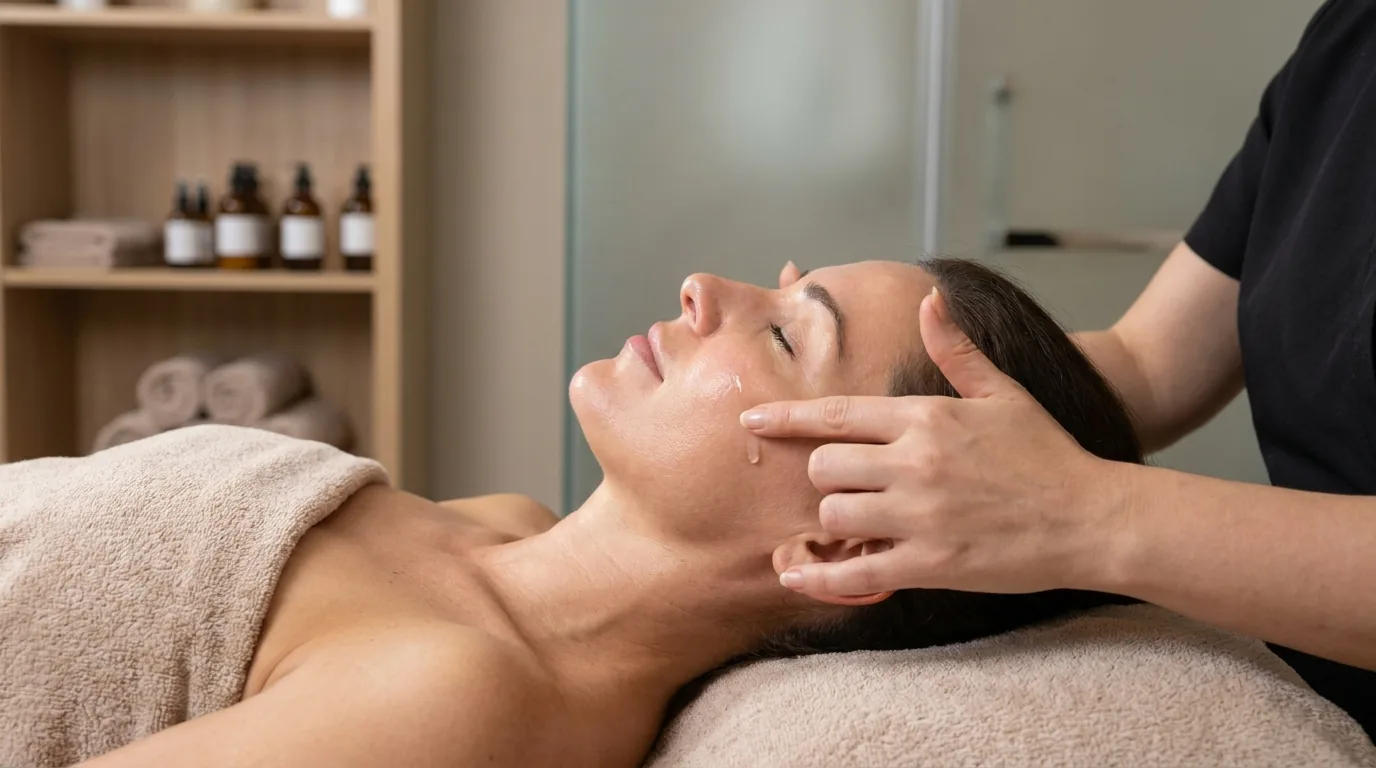
The session itself is comfortable, often compared to a light massage with a cool, wet sensation. Expect the four stages described earlier, with the therapist sometimes adding a targeted booster serum for your concern. You walk out with brighter, cleaner skin and can usually apply makeup the same day. There is no peeling or recovery window.
For acne marks, one session gives a glow, but visible fading needs a series, typically spaced four to six weeks apart. Ask the clinic to set honest expectations up front. A provider who promises to “erase your acne scars” in one facial is overselling, and that is a signal to look elsewhere. Plenty of skin care salons across the city offer the treatment, so you can be selective.
The venues below are facial and skin clinics across Dubai that offer HydraFacial and related skin treatments, ranked by rating and review volume. Use them as a starting point, then confirm the specific treatment plan for your skin during a consultation.

Popular facial and skin clinics in Dubai
Skin Camouflage beauty therapists, fully licensed by the Dubai Health Authority, specialize in advanced skin treatments. Inkless Stretch Marks Removal effectively minimizes stretch marks without invasive procedures. Our Scalp Micropigmentation (Hair Tattoo) restores the look of fuller hair with precision pigmentation. The BB Glow Treatment achieves smooth, radiant skin that lasts.
Nova Clinic The Palm is a skin care clinic in Palm Jumeirah Mall by Dubai Retail, on the Palm Jumeirah, rated from reviews. Reviewers consistently describe a modern, extremely clean clinic where therapists explain each step of a facial treatment and leave skin feeling clean, fresh and glowing. Several also mention attentive, professional consultations that left them noticeably more comfortable and satisfied with their results. Treatments include acne treatment, anti-aging facials, body contouring, Botox injections, chemical peel, deep cleansing facial, dermal fillers, hair treatment, IPL and laser hair removal, microneedling, pigmentation treatment, PRP therapy, skin rejuvenation, skin tightening and tattoo removal. Appointments are recommended, and the clinic is wheelchair accessible with parking, entrance and toilet facilities on site at Nakheel Mall.
Glow Aesthetics Dermatology Clinic is in Al Attar Business Centre in Al Barsha, offering botox injections, dermal fillers, chemical peels, microneedling, laser and IPL hair removal, skin tightening, scar treatment and pigmentation treatment. It is rated from reviews.Reviewers consistently praise the honesty of the medical guidance, noting that the team recommends only what is genuinely needed rather than upselling treatments. The clinic is described as professional and welcoming from arrival, with several highlighting fair pricing relative to the standard of care.The clinic has on-site services with a wheelchair-accessible entrance, car park and toilet. It suits patients across Dubai researching skin treatments, anti-aging facials or laser hair removal, with a consultation recommended to discuss the right treatment plan.
Derma 247 Laser Clinic is a skin and laser clinic in Nadd Al Hamar, rated from reviews. Treatments cover laser and IPL hair removal, botox injections, dermal fillers, chemical peels, pigmentation treatment, skin rejuvenation and tattoo removal.Reviewers consistently mention feeling well informed before and during laser sessions, with practitioners who explain each step in plain terms and check in throughout rather than rushing through the appointment. That attentiveness comes up often enough to be a genuine pattern rather than a one-off.The clinic runs by appointment, with on-site services and a fully wheelchair-accessible setup including gender-neutral toilets. It suits anyone after laser or aesthetic treatments who wants a clinical, unhurried approach rather than a quick in-and-out visit.
Avoria Aesthetic Clinic is a skin care and medical aesthetics clinic in Al Barsha, rated from reviews. Treatments include Botox and dermal fillers, chemical peels, microneedling, laser hair removal, pigmentation and acne treatment, tattoo removal, electrolysis, lip blush and eyebrow microblading, plus body contouring and hair transplant procedures. Reviewers consistently describe a modern, spotless clinic with a calming atmosphere, and praise the team for explaining each treatment thoroughly before starting and taking time to listen to concerns. Laser hair removal sessions are described as comfortable and effective, and reviewers mention good results from HydraFacial treatments too, with outcomes generally meeting or exceeding expectations. Free underground parking is available, and the clinic has a wheelchair-accessible car park, entrance and toilet, all within the Deyaar Building unit that houses the clinic.
Browse all 56 Skin Care Salons providers on our directory.
Is a HydraFacial regulated in Dubai?
Yes. Any venue offering skin treatments in Dubai operates under two licensing layers, and checking them is the simplest way to protect yourself. A salon or spa needs a trade licence from the Department of Economy and Tourism (DET) to operate as a business at all.
Where a treatment is clinical or performed in a medical setting, the venue and its practitioners fall under the Dubai Health Authority (DHA), which licenses clinics and the professionals who work in them. A HydraFacial in a basic salon is treated as a cosmetic facial; the same broad family of skin work in a medical spa or clinic carries DHA oversight. When you move from a facial toward deeper scar treatments like microneedling or laser, DHA licensing of the clinic and the operator becomes the standard to check. Across skin specialists and facial spas in the city, a licensed venue should be able to show its credentials without hesitation. Our directory only lists licensed providers, and you can read how we vet them on our salon ranking methodology page.
Aftercare for Dubai’s climate
Aftercare is short but matters more here than in cooler climates, because Dubai sun and humidity work directly against the result you paid for. The treatment leaves skin freshly exfoliated and briefly more sun-sensitive.
- Wear broad-spectrum SPF 50 every day without exception. Fresh sun exposure is the fastest way to darken post-acne marks and undo the fading you are after.
- Skip direct sun, saunas, and hammams for 24 to 48 hours while the skin settles.
- Hold off on retinoids and strong acids for a couple of days to avoid irritation on freshly treated skin.
- Keep skin hydrated; air-conditioning is drying, and dehydrated skin produces more oil.
- Avoid heavy, pore-clogging makeup for the first day to let pores stay clear.
For acne-prone skin specifically, pairing each session with a consistent home routine and a dedicated acne treatment plan does more for long-term clarity than any single facial. Across Dubai, salonsindubai.ae lists 96 verified providers offering acne-focused care.
How to choose where to get a HydraFacial in Dubai
Because the treatment is offered everywhere from neighbourhood salons to medical clinics, the choice comes down to matching the venue to your actual goal. Use this quick framework.
- Be honest about marks versus scars. For marks and maintenance, a reputable salon facial is fine. For true scarring, start at a clinic that offers deeper modalities, not a facial-only spot.
- Check the licence. Confirm the DET trade licence, and for any clinical treatment, confirm DHA licensing of the venue and operator.
- Read recent reviews. Look for consistent feedback on skin results and hygiene, not just ambience.
- Listen to the consultation. A provider who sets realistic expectations and recommends the right treatment, even if it is not the one you asked for, is the one to trust.
Common mistakes to avoid
- Expecting a single facial to erase indented scars. It will not, and no honest provider will claim it does.
- Confusing flat dark spots with textural scars, then booking the wrong treatment for the wrong problem.
- Skipping sunscreen afterward and letting Dubai sun darken the very marks you are treating.
- Picking a venue on price alone without checking its licence or reviews.
- Doing one session and quitting; marks need a spaced series to show real fading.


