



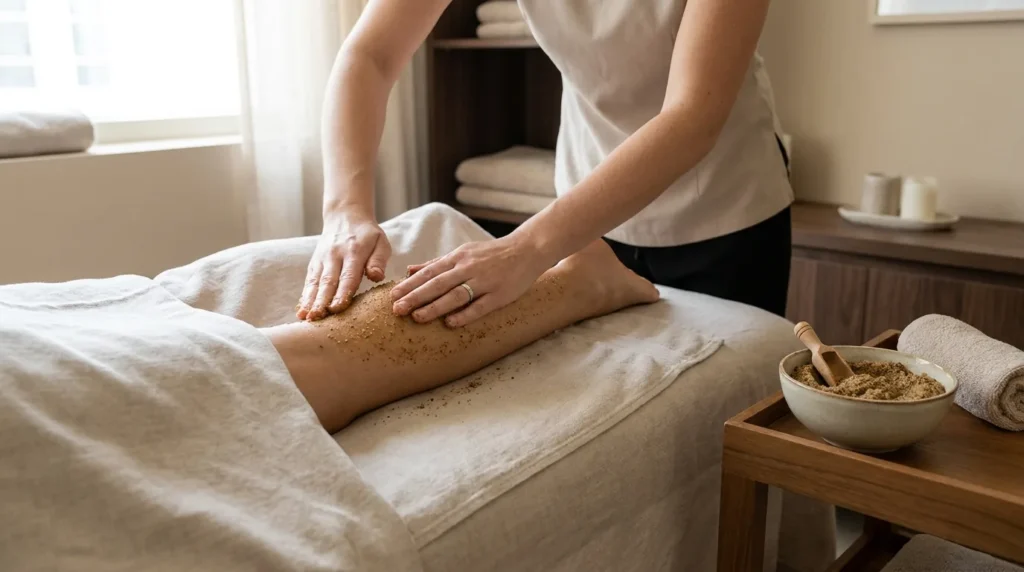
An exfoliating scrub is a grainy skincare product that lifts away dead skin cells to leave the surface smoother and brighter. In Dubai a standard professional body scrub runs from about AED 120 at a neighbourhood spa to AED 900 at a hotel spa, while a full hammam or Korean ritual reaches AED 1,500 and up. Used once or twice a week, the right scrub keeps skin soft against the city’s air-conditioned dryness and strong sun.
What is an exfoliating scrub?
An exfoliating scrub is a product with small abrasive particles suspended in an oil, cream, or gel base. You massage it over damp skin, the grains slough off dead skin cells, and you rinse it away. The result is a softer, more even surface that absorbs moisturiser better. For the full method, see our guide on how to use a body scrub.
This is physical exfoliation: the grains do the work by friction. It differs from chemical exfoliation, where acids like glycolic acid (an AHA) or salicylic acid (a BHA) dissolve the bonds between dead cells with no scrubbing. A sugar scrub and a salt scrub are both physical exfoliants, and a body scrub is the most common version booked at a spa. A face acid serum is a chemical one. Many people use both on different days.
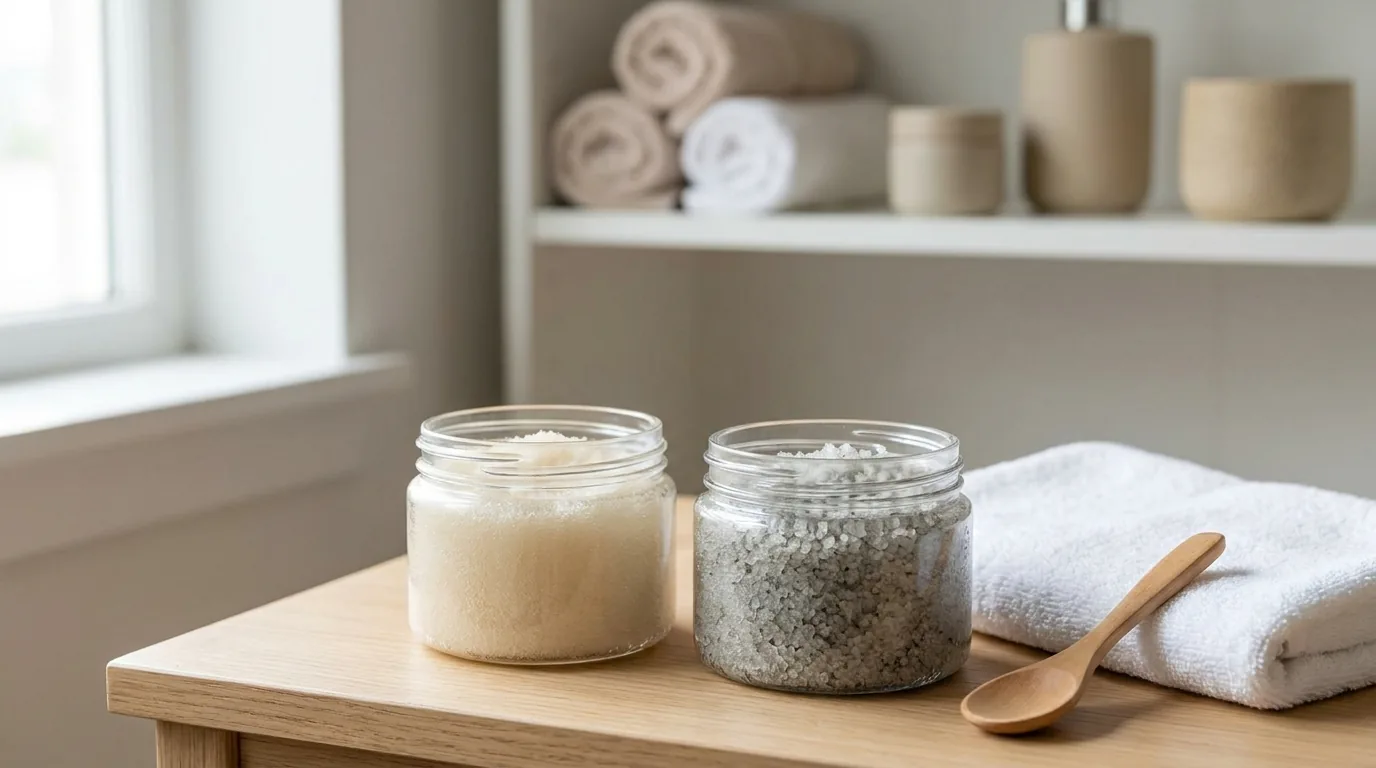
Most scrubs split into two camps by grain. A sugar scrub uses fine, rounded crystals that dissolve as you work them in, so it stays gentle. A salt scrub uses coarser sea salt that gives a deeper polish and suits tougher areas like elbows, knees, and heels. The base oil matters too: a richer oil leaves more of a moisturised finish.
How an exfoliating scrub works
Skin renews itself on a cycle of roughly a month. Old cells build up on the surface and make skin look dull, feel rough, and trap product on top instead of letting it sink in. A scrub clears that layer so fresh skin shows through, the same idea behind a salon exfoliation treatment. The steps below are how a session runs, at home or in a Dubai spa.
- Warm the skin: a shower or a warm towel softens the surface and opens things up so the scrub glides.
- Apply to damp skin: the grains spread without dragging and the base oil coats evenly.
- Work in circles: light pressure in small circular motions, with extra attention on rough spots like elbows, knees, and heels.
- Rinse fully: warm water clears every grain so nothing sits and irritates.
- Lock in moisture: a lotion, body oil, or cream on still-damp skin holds the softness.
What an exfoliating scrub does for your skin
The headline benefit is texture: removing dead skin cells leaves skin smoother to the touch and brighter to the eye. There is a knock-on effect too. Cleared skin lets serums, oils, and self-tanner absorb evenly instead of patching over flakes.
A scrub also helps with two common Dubai complaints. It loosens the buildup behind keratosis pilaris, the rough little bumps on upper arms and thighs, and it reduces ingrown hairs by clearing the dead skin that traps a regrowing hair. Massaging the scrub in stimulates the skin and many people find the few minutes genuinely relaxing.
What a scrub does not do is replace your cleanser or treat a skin condition. If you have eczema, active acne, sunburn, or broken skin, skip the scrub and speak to a dermatologist first.

Popular skin and facial care venues in Dubai
Skin Camouflage beauty therapists, fully licensed by the Dubai Health Authority, specialize in advanced skin treatments. Inkless Stretch Marks Removal effectively minimizes stretch marks without invasive procedures. Our Scalp Micropigmentation (Hair Tattoo) restores the look of fuller hair with precision pigmentation. The BB Glow Treatment achieves smooth, radiant skin that lasts.
Nova Clinic The Palm is a skin care clinic in Palm Jumeirah Mall by Dubai Retail, on the Palm Jumeirah, rated from reviews. Reviewers consistently describe a modern, extremely clean clinic where therapists explain each step of a facial treatment and leave skin feeling clean, fresh and glowing. Several also mention attentive, professional consultations that left them noticeably more comfortable and satisfied with their results. Treatments include acne treatment, anti-aging facials, body contouring, Botox injections, chemical peel, deep cleansing facial, dermal fillers, hair treatment, IPL and laser hair removal, microneedling, pigmentation treatment, PRP therapy, skin rejuvenation, skin tightening and tattoo removal. Appointments are recommended, and the clinic is wheelchair accessible with parking, entrance and toilet facilities on site at Nakheel Mall.
Glow Aesthetics Dermatology Clinic is in Al Attar Business Centre in Al Barsha, offering botox injections, dermal fillers, chemical peels, microneedling, laser and IPL hair removal, skin tightening, scar treatment and pigmentation treatment. It is rated from reviews.Reviewers consistently praise the honesty of the medical guidance, noting that the team recommends only what is genuinely needed rather than upselling treatments. The clinic is described as professional and welcoming from arrival, with several highlighting fair pricing relative to the standard of care.The clinic has on-site services with a wheelchair-accessible entrance, car park and toilet. It suits patients across Dubai researching skin treatments, anti-aging facials or laser hair removal, with a consultation recommended to discuss the right treatment plan.
Derma 247 Laser Clinic is a skin and laser clinic in Nadd Al Hamar, rated from reviews. Treatments cover laser and IPL hair removal, botox injections, dermal fillers, chemical peels, pigmentation treatment, skin rejuvenation and tattoo removal.Reviewers consistently mention feeling well informed before and during laser sessions, with practitioners who explain each step in plain terms and check in throughout rather than rushing through the appointment. That attentiveness comes up often enough to be a genuine pattern rather than a one-off.The clinic runs by appointment, with on-site services and a fully wheelchair-accessible setup including gender-neutral toilets. It suits anyone after laser or aesthetic treatments who wants a clinical, unhurried approach rather than a quick in-and-out visit.
Avoria Aesthetic Clinic is a skin care and medical aesthetics clinic in Al Barsha, rated from reviews. Treatments include Botox and dermal fillers, chemical peels, microneedling, laser hair removal, pigmentation and acne treatment, tattoo removal, electrolysis, lip blush and eyebrow microblading, plus body contouring and hair transplant procedures. Reviewers consistently describe a modern, spotless clinic with a calming atmosphere, and praise the team for explaining each treatment thoroughly before starting and taking time to listen to concerns. Laser hair removal sessions are described as comfortable and effective, and reviewers mention good results from HydraFacial treatments too, with outcomes generally meeting or exceeding expectations. Free underground parking is available, and the clinic has a wheelchair-accessible car park, entrance and toilet, all within the Deyaar Building unit that houses the clinic.
What an exfoliating scrub costs in Dubai
A standard professional body scrub in Dubai starts near AED 120 for a quick 30-minute polish and reaches about AED 900 at a hotel spa. A long hammam or Korean ritual sits above that, running to AED 1,500 and up. The tiers below show what each price band buys.
| Tier | Typical price | Duration | Room | Products | Staff experience | Best for |
|---|---|---|---|---|---|---|
| Budget | AED 120 to AED 250 | 30 to 45 min | Shared or simple treatment room | Sugar or sea-salt scrub with a basic carrier oil | Trained spa therapist | A quick polish before an event or a first try |
| Mid | AED 250 to AED 450 | 45 to 60 min | Private room, often with a rain shower | Branded salt or sugar scrub, sometimes with a Moroccan black-soap step | Experienced therapist | A regular monthly treatment with a fuller ritual |
| Premium | AED 450 to AED 900 and up | 60 to 90 min | Hotel or destination spa suite, private hammam | Hammam, Korean or signature rituals with mask and wrap add-ons | Senior therapist | A full hammam or Korean scrub experience, or couples bookings |
Browse all 14 budget-tier Skin Care Salons providers on our directory.
What to expect at a body scrub appointment
You undress to your comfort level and lie on a heated treatment table, draped with a towel. The therapist works the scrub over your body in sections, using firm circular strokes and pressing harder on elbows, knees, and heels. A typical session runs 30 to 60 minutes.
The scrub is then rinsed off, often under a rain shower or with warm water at the table, and finished with a moisturising lotion or oil. Skin can look slightly pink straight after, which settles within an hour. A full body scrub covers you from shoulders to feet; some spas also offer a partial polish for less time and money. Booking notes specific to Dubai: weekend mornings and the evenings before a big event fill fast, ladies-only rooms are common, and many spas sell a body scrub massage package that pairs the polish with a relaxing massage, including home massage bookings, or a Moroccan bath.
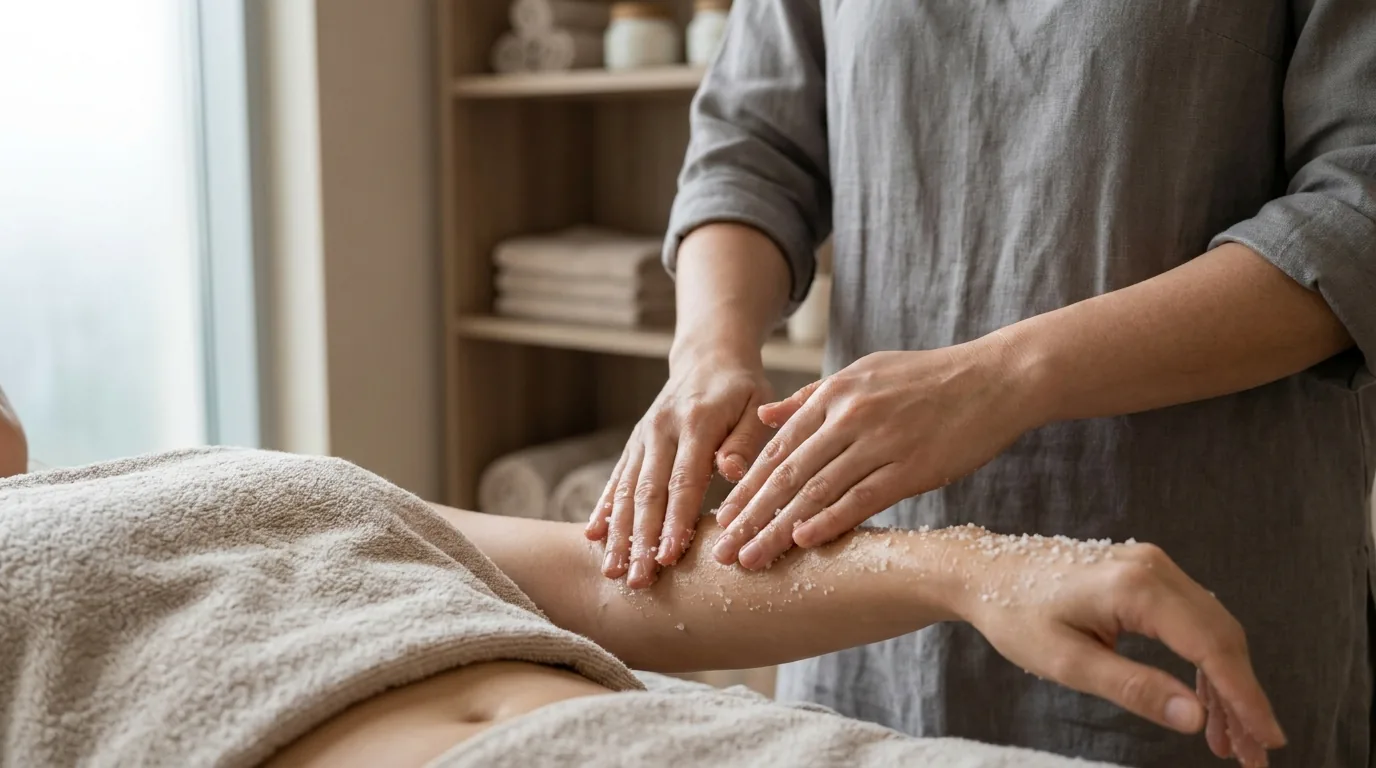
Types of exfoliating scrub you can book in Dubai
Dubai spas carry the global scrub menu plus regional rituals. The most common options:
- Sugar scrub: fine, dissolving grains for a gentle weekly polish; the friendliest choice for sensitive skin.
- Salt scrub: coarse sea salt for a deeper buff on rough areas; richer and more vigorous than the sugar version.
- Moroccan scrub: the hammam ritual, steam followed by black beldi soap and a firm kessa-glove scrub that lifts a visible layer of dead skin. A Moroccan body scrub is booked as a Moroccan bath or Turkish hammam, and a hammam body scrub is the most thorough exfoliation on most Dubai spa menus.
- Korean body scrub: the seshin method, a long soak then an intensive exfoliating mitt; thorough and popular at Korean spas in the city. It sits alongside the Turkish hammam as the deepest exfoliation on the menu.
- Chocolate scrub: a cocoa-based scrub marketed for scent and a moisturising finish; the body scrub dubai chocolate option is a treat rather than a deep exfoliation.
- Hand scrub: a small add-on that smooths dry hands, often tacked onto a manicure.
Can you use a body scrub on your face?
No, not a standard one. Facial skin is thinner and more delicate than body skin, so the coarse grains in a body or salt scrub can scratch it and trigger irritation. Use a dedicated face scrub with finer grains, or a gentle chemical exfoliant, on your face. That gentler exfoliant is the step that slots into a full facial at home, between the cleanse and the mask.
The reverse is fine: a face scrub is gentle enough for the body, it will just feel mild and you will get through it quickly on larger areas. The short version is that a body scrub on the face risks micro-tears, while a face scrub on the body is safe but underpowered.
How often should you use an exfoliating scrub?
Once or twice a week suits most people. Body skin tolerates a salt or sugar polish one to two times weekly; the face needs less, usually one to two times a week with a gentle face scrub. Daily scrubbing is too much for nearly everyone and leads to over-exfoliation: tight, stinging, red, or unusually shiny skin that has lost its protective barrier. If you see those signs, stop and let skin recover.
Skin type adjusts the dial. Sensitive or dry skin should scrub once a week or less and stick to fine sugar grains. Oilier or tougher skin can handle twice a week. Dubai’s climate is a real factor: constant air conditioning dries skin out, the sun is strong, and pool chlorine and desert dust add up, so most residents land on a gentle once-a-week rhythm with heavy moisturising after.
A few areas need care. Avoid scrubbing the scalp with a body scrub, which is not designed for hair or the scalp; use a dedicated scalp scrub instead. Never scrub broken, sunburnt, or freshly waxed skin, and leave at least 24 hours between exfoliating and any hair removal.
A Moroccan bath is a much stronger version of the same idea, and the guide to whether a Moroccan bath is good for skin sets the safe interval by skin type.
Where to get an exfoliating scrub in Dubai
Body scrubs sit on the menu at day spas, hotel spas, hammams, facial spas, and skin care salons across the city. The table shows the areas with the most skin and facial venues listed, the dominant price tier in each, and a typical range.
| Neighborhood | Providers | Dominant tier | Typical AED range |
|---|---|---|---|
| Al Bada'a | 5 | Mid | AED 180 to AED 450 |
| Business Bay | 4 | Mid | AED 200 to AED 500 |
| Jumeirah 1 | 4 | Premium | AED 250 to AED 700 |
| Mirdif | 4 | Budget | AED 140 to AED 350 |
| Al Wasl | 3 | Premium | AED 250 to AED 700 |
| Jumeirah 2 | 3 | Premium | AED 250 to AED 750 |
| Jumeirah 3 | 3 | Premium | AED 250 to AED 750 |
Home-service therapists also cover most residential areas if you prefer a scrub at home. Browse all Dubai salons and spas by area, or filter the directory by tier, to find one near you.
Browse all 22 premium-tier Skin Care Salons providers on our directory.
How to choose a scrub and a salon
Match the grain to your skin first: fine sugar for sensitive or dry skin, coarse salt for a deeper polish on tough areas. Then judge the venue.
- Check the licence: a legitimate Dubai spa holds a DET trade licence, and any venue offering health or wellness treatments should also be covered under DHA rules. Both should be on display or available on request.
- Read recent reviews: look for comments on hygiene, therapist skill, and whether the scrub felt thorough rather than rushed, dated within the last few months. The directory only lists licensed venues, and our ranking method explains how we order them.
- Ask what scrub they use: a good spa will name the product and adjust the grain for your skin; a vague answer is a flag.
- Confirm the room and aftercare: a private room, a proper rinse, and a moisturising finish are standard at mid-tier and above.
- Match the tier to the occasion: a budget polish is fine before a beach day; a hammam or Korean ritual is worth the premium for a full reset.
Aftercare for Dubai’s climate
Freshly exfoliated skin is more exposed, so the day after a scrub matters more here than in a milder climate.
For a closer look, see our guide to Forehead Acne in Dubai: Your Complete 2026 Skin Guide. · Which Facial Is Best for Men? Let the Concern Pick the Treatment
- Moisturise heavily for two to three days; air conditioning pulls moisture out fast.
- Wear sunscreen, as new skin is more sensitive to Dubai’s strong sun.
- Skip the pool and the sea for 24 hours; chlorine and salt water sting fresh skin.
- Do not exfoliate again until the next scheduled session, even if skin feels great.
- Avoid hot saunas or steam rooms straight after a deep salt scrub if your skin felt sensitive.


