



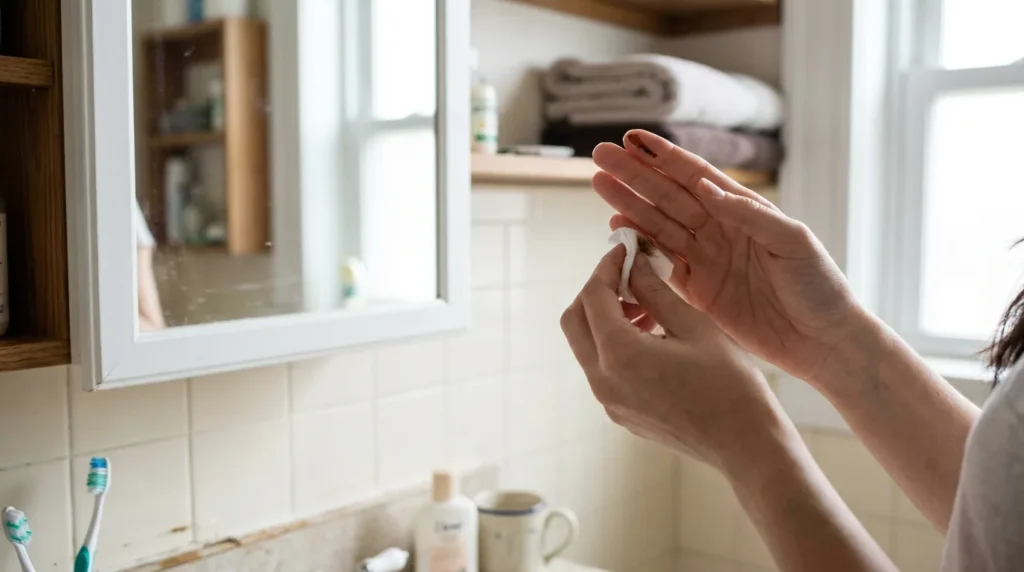
To remove hair color from skin, start with the gentlest fix: rub a little olive oil or petroleum jelly into the stain, leave it for a minute, then wash it away with warm water and soap. Act fast, because fresh dye lifts far more easily than a stain that has been left to set overnight, and even an untreated mark usually fades within a week as your skin renews itself.
Why hair color stains your skin
To understand how to remove hair color from skin, it helps to know why it sticks. Hair dye is built to bind. The pigment, and in permanent formulas the compound para-phenylenediamine (PPD), latches onto keratin, the protein in the top layer of your skin just as it does in your hair. That is why a smear on your hairline or fingers can outlast several washes.
Because the stain sits on dead surface cells, it has a natural expiry date, and as those cells shed over roughly one to two weeks the colour goes with them. The methods below speed that process up by dissolving the pigment or gently lifting the stained surface layer, so you are not stuck waiting a week with a dyed ear.
PPD is also the most common trigger for an allergic skin reaction to dye, which is why the distinction matters before you try to remove hair color from skin. A faint stain is cosmetic and harmless, but redness, swelling, itching, or a rash is something different, and it needs the separate care covered further down.
The fastest safe way to remove hair color from skin
Speed beats strength. The fastest way to remove hair color from skin is to wipe dye off the moment it lands, before it sets. Keep a damp cloth within reach while you colour and dab any drips straight away.
If the stain has already set, work from gentle to strong and stop as soon as it lifts:
- Warm water and soap. A flannel, warm water, and a gentle facial or hand soap shifts a surprising amount on its own.
- An oil. Olive oil, coconut oil, or baby oil dissolves semi and temporary pigment without scrubbing. Best for the face.
- A mild abrasive. An exfoliating scrub, baking soda paste, or whitening toothpaste lifts a stubborn surface stain.
- A solvent, last. Rubbing alcohol or, only on hands, nail polish remover. Effective but drying, so use sparingly.
This ladder matters most for sensitive or melanin-rich skin, where harsh scrubbing can leave its own dark mark. The team behind the salonsindubai.ae hair salons directory hears this often from readers who reached for acetone first and irritated the skin more than the dye did.
How to remove hair color from skin by area
How you remove hair color from skin depends on where the stain is. Skin on the face is thin and close to the eyes, so it needs gentler treatment than the back of a hand. Use this as a quick map.
| Where the stain is | Start with | Step up to | Avoid |
|---|---|---|---|
| Face and hairline | Olive oil or makeup remover | Whitening toothpaste, dabbed and rinsed | Acetone, alcohol near the eyes |
| Hands and fingers | Soap, then baking soda with dish soap | Nail polish remover on a cotton pad | Long acetone soaks on dry skin |
| Scalp and ears | Oil on a cotton pad | Micellar water, gentle wipe | Scrubbing broken or shaved skin |
| Nails and cuticles | Baking soda paste | A nail buffer, light pressure | Filing into the cuticle |
Whatever the zone, one rule holds when you remove hair color from skin: if it starts to sting or redden, stop and switch to oil. Stained skin fades on its own, while damaged skin takes longer and can mark.
Household methods that work, and how to use each
Every method below uses something you likely already own. Each one removes hair color from skin a little differently, so patch a small spot first if your skin reacts easily.
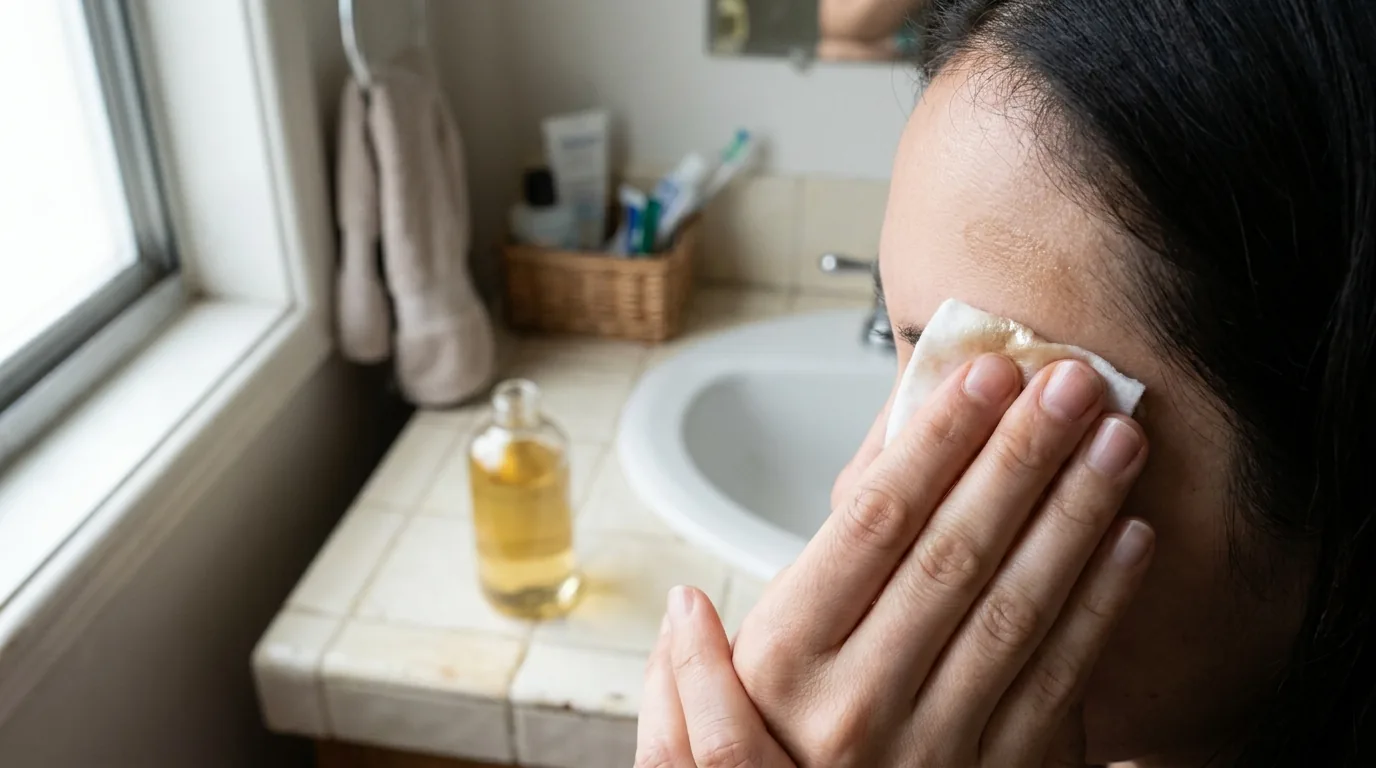
Olive or coconut oil. Massage a few drops into the stain, wait 60 seconds, wipe with a cotton pad, then wash off. The kindest option for the face and around the eyes.
Makeup remover or micellar water. The same product that lifts long-wear foundation lifts fresh dye. Soak a pad, hold it on the stain for a few seconds, then sweep. Good for delicate skin.
Baking soda with dish soap. Mix a teaspoon of baking soda with a few drops of dish soap into a paste. Rub in small circles, then rinse. Mildly abrasive, so keep it to hands and away from the face.
Whitening toothpaste. A pea-sized amount rubbed gently for 30 seconds works on a set stain. The mild grit does the lifting. Rinse well and moisturise after.
Rubbing alcohol. Dab onto a cotton pad and wipe. It dissolves pigment quickly but strips skin oils, so follow with a moisturiser and never use it near the eyes.
Nail polish remover. Reserve acetone for hands and fingers only. One quick wipe, then wash immediately. It is the strongest household option and the harshest, so it is a last resort, not a first reach.
What hairdressers use to get hair dye off skin
Salons rarely scrub. A good colourist applies a barrier balm along the hairline before they start, so most dye never touches skin in the first place. For the bits that do, they use a dedicated colour-stain remover, a wipe or cream made to lift dye without solvents.
You can buy the same wipes, but for the odd home stain the household methods above do the job. If you colour your own hair often, a small pot of professional stain remover is worth it. To see how the pros approach colour work end to end, browse Dubai hair coloring specialists or read our guide to the best hair salon in Dubai.
How to remove color from hair if the dye went wrong
This is a different job from cleaning skin, and it is worth saying plainly: removing color from hair means stripping pigment out of the strands, not off the skin around them. If your shade came out wrong, here are the safer routes before you reach for bleach.
- Clarifying shampoo. A few washes with an anti-residue clarifying shampoo fades semi-permanent and temporary colour fastest, with the least damage.
- Vitamin C paste. Crushed vitamin C tablets mixed with shampoo can lift fresh semi-permanent dye. Gentler than bleach, though results vary.
- A dedicated colour remover. Shop-bought removers shrink the dye molecules so they rinse out. They suit oxidative box dye better than direct dyes.
- A colourist. For permanent colour, a dark-to-light correction, or anything you care about, a professional colour correction is safer than home bleaching. A balayage or colour-correction specialist can lift evenly without frying your hair.
Whatever you try, deep condition afterwards. Stripping colour is hard on hair, so pair it with a hair treatment or a smoothing service like keratin treatment to rebuild what the process takes out.
Mistakes to avoid
- Scrubbing raw, broken, or freshly shaved skin. You trade a stain for irritation.
- Using acetone or alcohol near the eyes or on the eyelids.
- Reaching for the strongest solvent first. Start gentle; most stains never need acetone.
- Hard scrubbing on sensitive or deeper skin tones, which can leave a darker mark than the dye.
- Skipping moisturiser and sun protection after an abrasive method on already stressed skin.
How to prevent hair color stains next time
Prevention is far easier than having to remove hair color from skin after the fact, and hand-painted techniques such as balayage hair color keep most of the dye away from your hairline in the first place. Before your next colour, take five minutes to set up properly.
- Smooth a thin line of petroleum jelly, Vaseline, or a thick balm along your hairline, ears, and neck. Dye wipes off the barrier instead of staining skin.
- Wear the gloves that come in the kit, and replace them if they tear.
- Keep a damp cloth beside you and wipe drips the second they land.
- Tie back long hair and work in good light so you spot stray colour early.
Dubai aftercare: skin, sun, and water
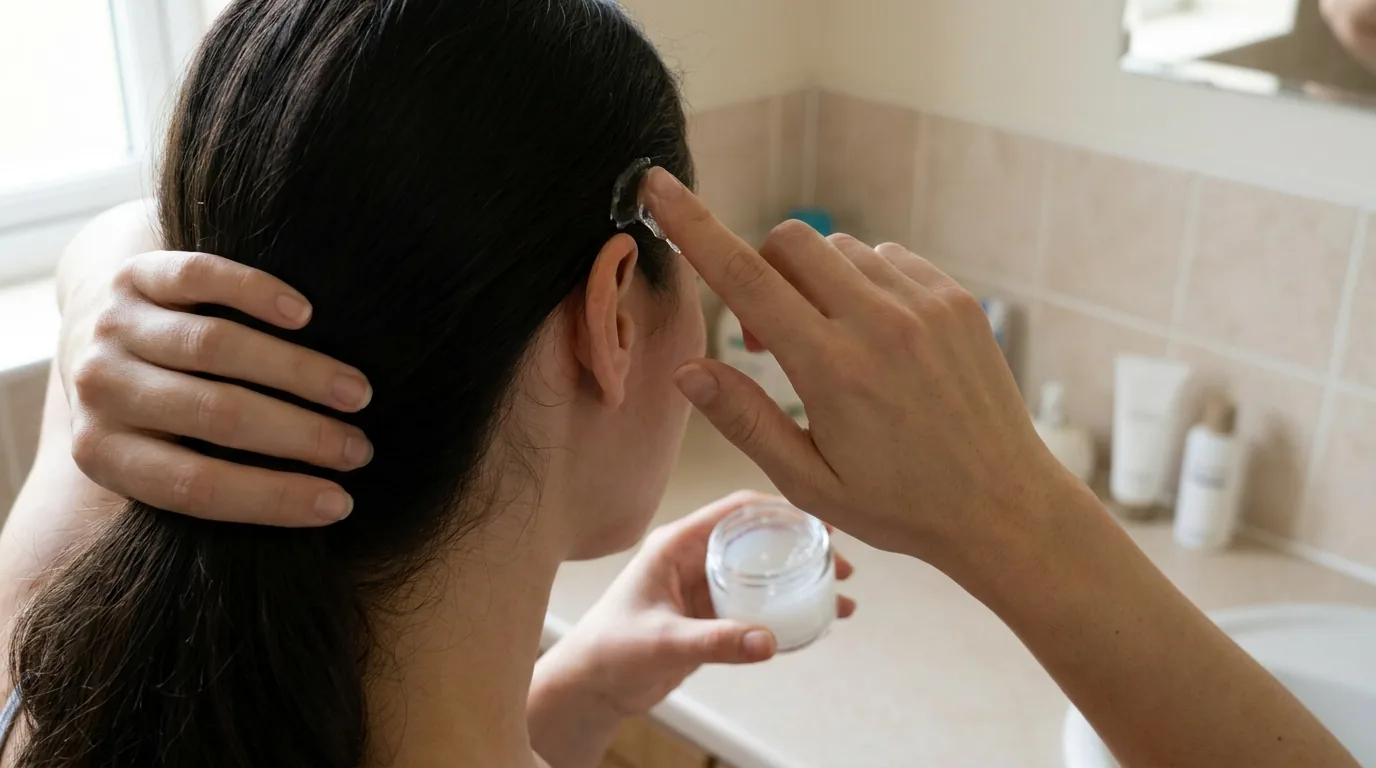
Two local factors change the aftercare here, and the first is the sun. Abrasive removal with scrubs, baking soda, or toothpaste leaves the skin barrier briefly weaker, and because Dubai UV is strong year round you should apply a moisturiser and an SPF before you head out, especially on the face.
The second factor is the water. Dubai’s hard water can leave skin feeling tight after repeated washing, so it is worth going easy on the number of wash-and-scrub cycles in any one sitting. Lift what you can in two or three gentle passes, then let normal skin turnover handle the faint remainder over the next few days.
When to see a professional
DIY ends where a skin reaction begins. A stain is cosmetic. Redness, swelling, blistering, intense itching, or a spreading rash after colouring points to an allergic reaction to PPD or another ingredient, and that is a medical matter, not a scrubbing one. Stop, rinse with cool water, and see a doctor or dermatologist.
In Dubai, medical and aesthetic skin procedures are regulated by the Dubai Health Authority (DHA). A salon holds a DET trade licence to operate, while medical or treatment-grade skin work is carried out by a DHA licensed clinic, so a clinic is the right place for a reaction or a treatment-grade concern. For an adverse reaction, a DHA-licensed clinician should assess it, not a salon.
If the issue is simply a colour you want fixed or applied properly, that is salon territory. Browse all 167 Dubai hair salons to get your colour done or corrected by a professional, and use our ranking method and the full salon directory to compare them.
Browse all 167 Hair Salons providers on our directory.


