


To stop hair fall, you first find the cause, then match it to a proven fix. Most shedding traces back to genetics, stress, a nutrient gap, tight styling, or a scalp issue. In Dubai, a dermatologist or trichologist consultation runs roughly AED 250 to AED 600, and pinpointing the trigger early gives you the best chance of keeping the hair you have.
This guide is general information, not medical advice. Some options below, including minoxidil, finasteride, and platelet-rich plasma, are medical treatments. Ask a DHA-licensed clinic or dermatologist about what suits your scalp and health before starting any of them.
Why is your hair falling out?
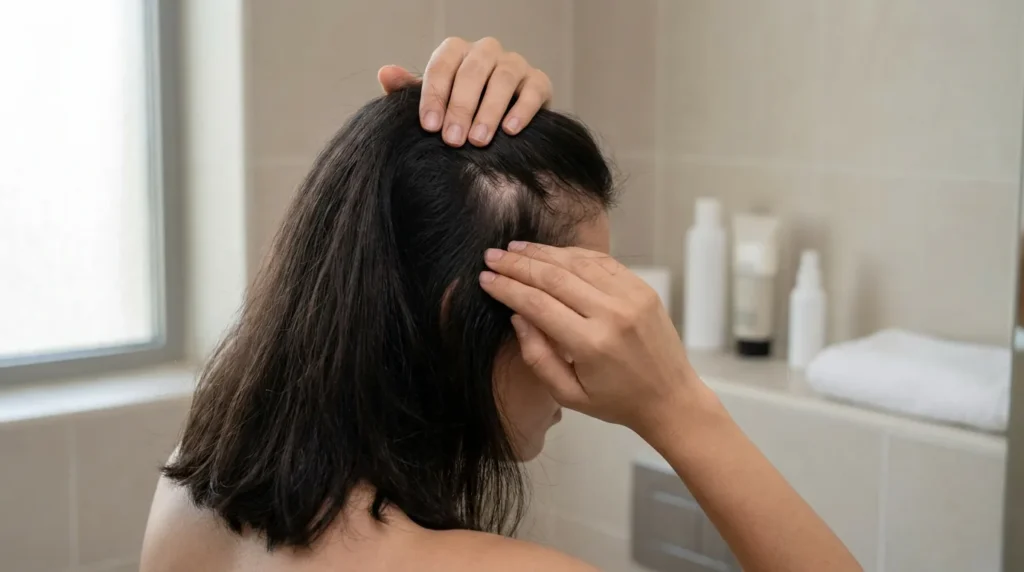
Healthy scalps shed up to 100 hairs a day, and those strands grow back through the normal hair follicle cycle. Hair fall becomes a problem when more strands drop out and fewer return, week after week. The fix depends entirely on which of these is driving it.
The most common causes are:
- Androgenetic alopecia. Hereditary pattern loss, driven by sensitivity to DHT (a hormone made from androgens). It causes a receding hairline or crown thinning in men, and diffuse thinning across the top in women. It is the single most common type.
- Telogen effluvium. Sudden, heavy shedding two to three months after a shock to the body: surgery, illness, crash dieting, childbirth, or severe stress. It is usually temporary once the trigger passes.
- Traction alopecia. Caused by tight ponytails, buns, braids, and extensions that pull on the roots. Left unchecked it can become permanent.
- Alopecia areata. An autoimmune condition that drops hair in small round patches on the scalp or body.
- Nutrient gaps. Low iron, low vitamin D, low zinc, or too little protein all push hair into the shedding phase.
- Hormones and thyroid. Pregnancy, menopause, polycystic ovary syndrome, and thyroid disease all shift the growth cycle.
Use the table below to read your own pattern. It pairs each common cause with the first move that actually helps.
| If your hair fall looks like this | Likely cause | First fix |
|---|---|---|
| Gradual thinning at the crown or a receding hairline | Androgenetic alopecia | Topical minoxidil; see a dermatologist about finasteride or PRP |
| Heavy shedding 2 to 3 months after stress, illness, or a birth | Telogen effluvium | Treat the trigger, protect nutrition, wait for regrowth |
| Thinning along the hairline or where hair is pulled tight | Traction alopecia | Stop tight styles immediately; loosen everyday wear |
| Sudden round bald patches | Alopecia areata | See a dermatologist; this needs medical treatment |
| Diffuse thinning plus fatigue or brittle nails | Iron, vitamin D, or thyroid issue | Ask for a blood test before buying supplements |
The takeaway: there is no single answer to how to stop hair fall, because the right move changes with the cause. Match yours first.
Is it the Dubai water? What actually drives hair fall here
Almost every expat in Dubai has the same conversation: the brush fills up, the pillow collects strands, and the water gets the blame. The honest answer is more layered. Dermatologists in Dubai are clear that water alone rarely causes pattern hair loss; hormones, deficiencies, and genetics do most of the work. If the tap water were truly the culprit, everyone in the city would be losing hair at the same rate, which they are not.
The local environment can still make shedding worse on top of an existing cause. A few factors are worth managing if you want to reduce hair fall while you sort out the root issue:
- Hard water. Dubai tap water can carry minerals like calcium and magnesium that leave a residue on the scalp, making strands feel drier and more brittle. A simple shower filter or a clarifying wash once a week helps.
- Heat and sun. Strong UV dries the hair shaft the same way it burns skin. A hat or a hair sunblock spray on long days outside protects the strand.
- Pool chlorine. Frequent swimming strips moisture and weakens hair. Rinse before and after, and use a swimmer’s clarifying treatment; a cap alone is not enough.
- The move itself. Relocating brings diet changes, water changes, and stress, which together can trigger temporary shedding that settles once life stabilises.
So fixing the water can reduce breakage and dryness, but it will not reverse genetic or hormonal loss on its own. Treat the environment as one input, not the whole story.
How to stop hair fall immediately: what you can do this week
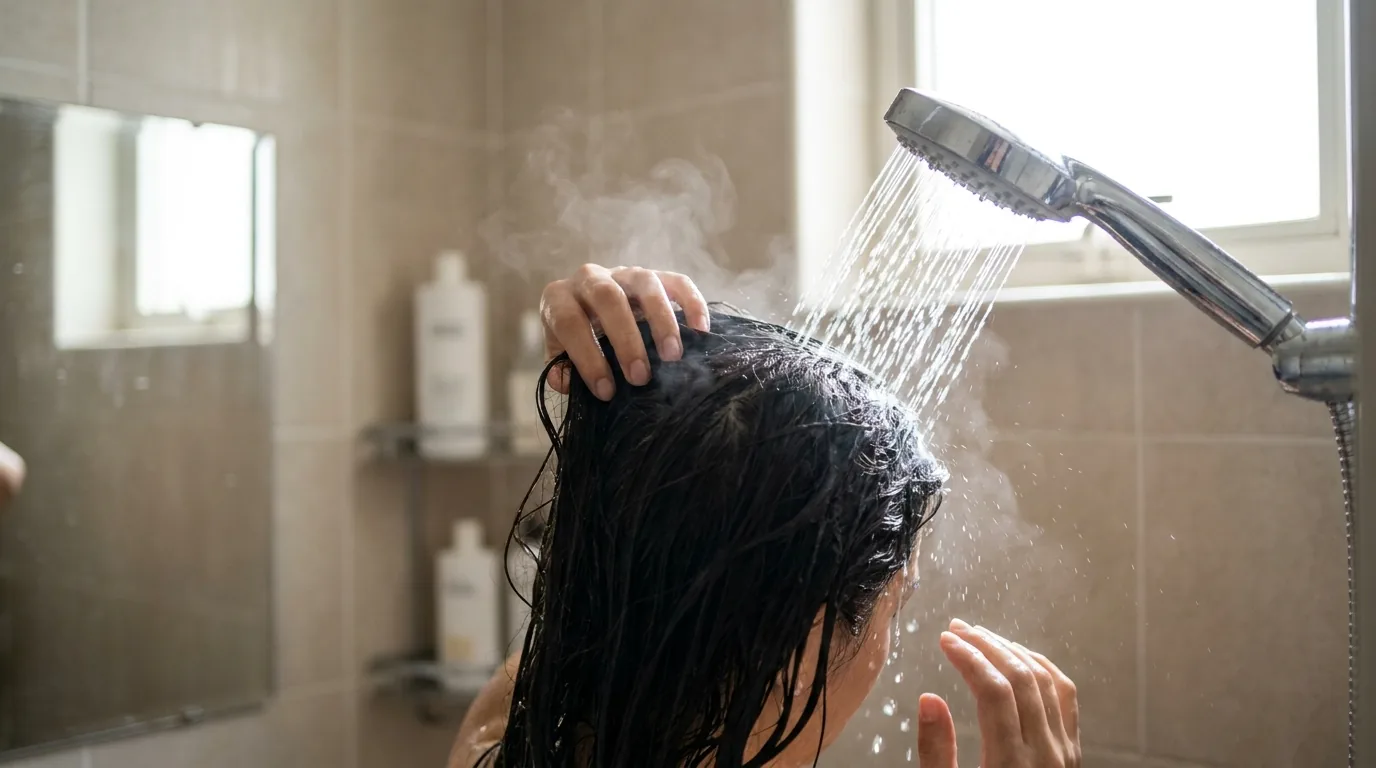
You cannot regrow hair overnight, but you can stop adding to the problem right now. These steps remove the most common avoidable triggers and protect the fragile strands you still have, which is the fastest part of how to stop hair fall immediately at home.
- Loosen everything. Swap tight ponytails, buns, and braids for loose styles. Pulling is the one cause you can fix the same day.
- Be gentle when wet. Wet hair is at its most fragile. Use a wide-tooth comb, pat dry with a microfibre towel, and never rub or yank.
- Drop the heat. Park the straightener and curling iron, and blow-dry on the lowest setting or let hair air-dry.
- Use a gentle shampoo and always condition. A mild shampoo plus a moisturising conditioner cuts breakage and split ends.
- Eat for your hair. Get enough protein, iron, and zinc. Eating too few calories is itself a known trigger for shedding.
- Manage the stress and sleep. High stress pushes hair into the shedding phase, so anything that lowers it genuinely helps.
None of this regrows a hairline, but it stops everyday damage fast and buys time while a longer plan takes effect.
Proven treatments that reduce hair fall
When habit changes are not enough, evidence-backed treatments do the heavy lifting. If you are asking how to reduce hair fall that has not budged with routine fixes, this is the stage where clinical options come in. The right one depends on your diagnosis, so a clinic visit comes first. Below are the options dermatologists actually use, roughly in order of how invasive they are.
Minoxidil. An over-the-counter topical foam or liquid (Rogaine is the best-known brand) used by both men and women. It is usually the first treatment for thinning hair and needs consistent daily use to keep working.
Finasteride. A prescription oral tablet that blocks DHT, approved for male pattern baldness. It is not safe during pregnancy and is prescribed by a doctor after assessment.
Platelet-rich plasma (PRP). An in-clinic treatment where your own blood is drawn, the plasma is separated, and it is injected into the scalp to help slow loss and support regrowth. It is delivered as a course, not a one-off.
Hair transplant. The most involved option: a surgeon moves follicles from a dense area to the thinning zone under local anaesthetic. It suits established pattern loss rather than early shedding. Our hair transplant in Dubai guide covers how it works and what it costs.
Supplements, with caution. Biotin, iron, and vitamin D help only if you are genuinely deficient. The American Academy of Dermatology warns that too much of certain nutrients, including selenium and vitamins A and E, can actually worsen hair loss. Get a blood test before buying anything.
Costs vary widely by clinic and tier in Dubai. The table gives realistic ranges so you can budget before you book.
| Treatment | Typical Dubai cost (AED) | Best for |
|---|---|---|
| Dermatologist or trichologist consultation | 250 to 600 | Diagnosis before anything else |
| Minoxidil (monthly) | 80 to 200 | Early thinning, both sexes |
| PRP (per session) | 800 to 2,000 | Slowing loss, supporting regrowth |
| Hair transplant (full procedure) | 7,000 to 25,000+ | Established pattern baldness |
Treat these as starting points and confirm prices on consultation; package deals and the number of sessions change the total.
How to prevent hair fall long term
Once shedding settles, the goal shifts to keeping it that way. Knowing how to prevent hair fall is mostly about removing slow, repeated damage rather than chasing miracle products. Build these into a routine you can hold:
- Eat a balanced diet with steady protein, iron, and healthy fats; omega-rich foods like salmon, eggs, and nuts support the strand.
- Keep heat styling and chemical processing to special occasions, and let a salon that examines your scalp handle any colour or straightening.
- Stay with loose styles day to day so the roots are never under constant tension.
- If you smoke, stop. Smoking drives inflammation that can worsen loss.
- Protect against sun and chlorine, and keep the scalp clean and balanced rather than over-washed.
For deeper conditioning between salon visits, a weekly hair mask keeps the strand supple and less prone to breakage. The aim is consistency: learning how to control hair fall is about small habits repeated over months, not a single fix.
A professional scalp treatment can also reset an oily, flaky, or congested scalp, and a healthy scalp is the foundation every other step builds on. If product buildup or dandruff is part of your picture, our guide to choosing a dandruff shampoo pairs well with this routine.
When to see a dermatologist or trichologist in Dubai
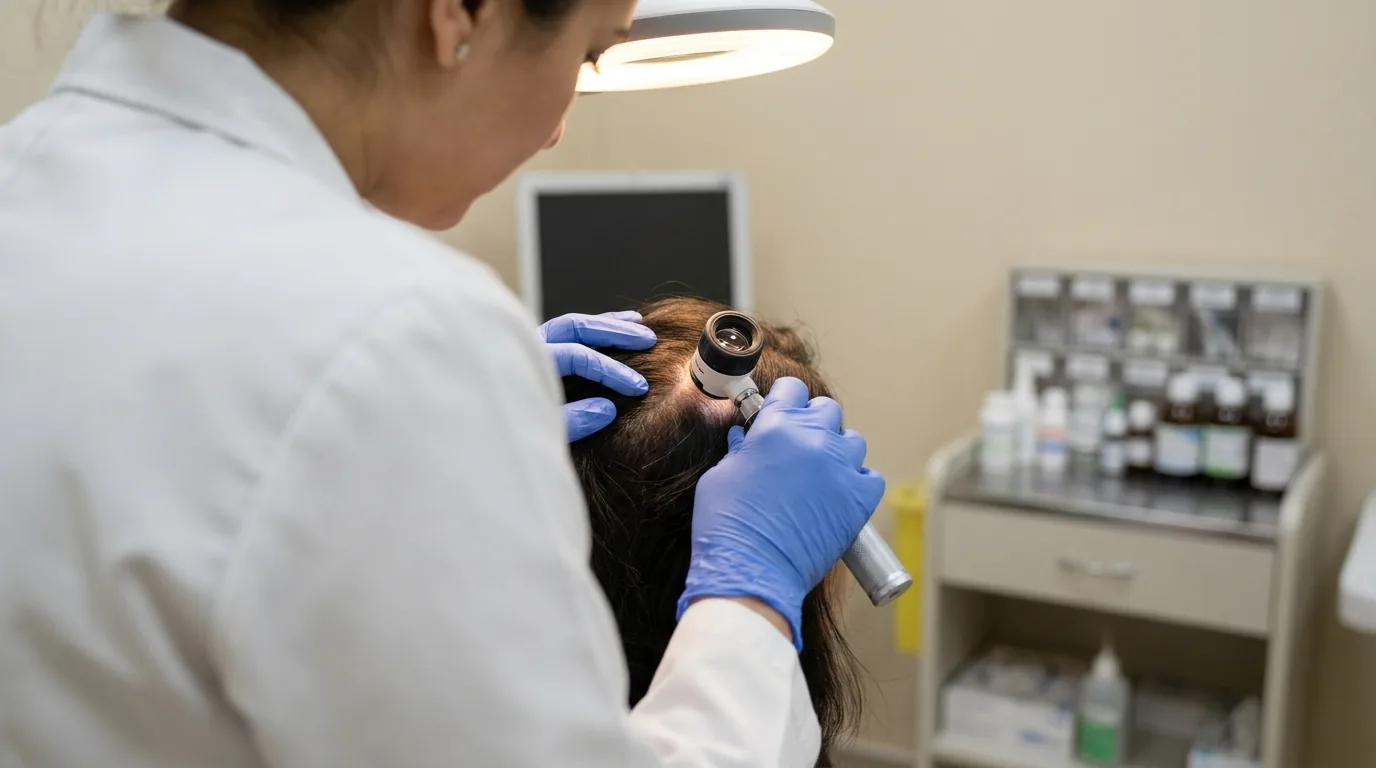
Some hair fall needs a professional eye, not another product. Book an appointment if you notice sudden patchy loss, a rapidly receding hairline, handfuls coming out, scalp burning or itching, or shedding alongside fatigue and other symptoms. The sooner the cause is found, the better your odds of a result.
In Dubai, hair loss is treated by DHA-licensed dermatologists and clinics. A dermatologist diagnoses the type, may order blood tests for iron and thyroid function, examines the scalp, and builds a treatment plan. A trichologist focuses specifically on hair and scalp health and often works alongside medical care. Any clinic offering injectable or prescription treatment should hold a DHA health licence, and the business itself a DET (Dubai Economy and Tourism) trade licence; both are fair to ask about before you book.
If your needs are more about scalp care, conditioning, or a professional hair treatment than a medical diagnosis, a salon is the right starting point. You can browse hair and scalp care providers across Dubai in the directory and filter by area. For the full vetting framework we apply, see how we rank salons, and our wider Dubai salon directory covers every service if you need something beyond hair.
Browse all 167 Hair Salons providers on our directory.
The directory currently lists 167 hair salons in Dubai, a useful starting point for routine scalp and hair care while a clinic handles diagnosis and any medical treatment.
Common mistakes that make hair fall worse
- Loading up on supplements blindly. Without a deficiency, extra biotin or vitamins do little, and an overdose of some can worsen shedding.
- Blaming the water and stopping there. A filter helps dryness, but it will not touch a hormonal or genetic cause.
- Waiting too long. Pattern loss responds best early; months of “let’s see” shrink the follicles further.
- Over-washing or harsh scrubbing. Stripping the scalp daily and rubbing wet hair both add breakage.
- Tight styles as a daily habit. Constant tension on the roots quietly causes traction alopecia.
- Chasing one product as a cure. No single shampoo stops genetic loss; a cause-matched plan does.


