



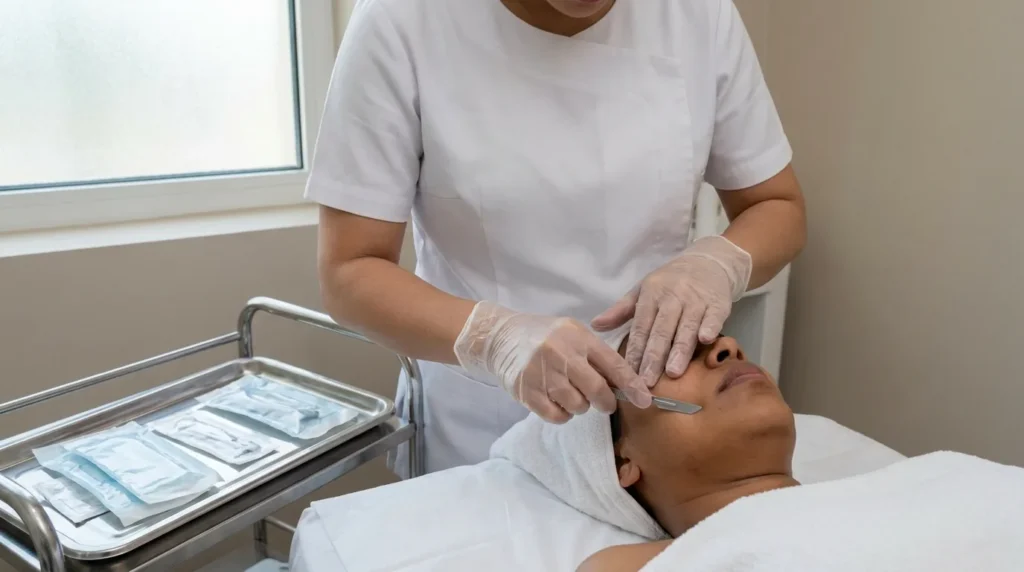
48 hours is the honest dividing line. Redness that fades inside it is routine, and redness that outlasts it needs a doctor. For most healthy skin dermaplaning is safe, at AED 75 to AED 500 a session in Dubai. The question worth asking is narrower: is dermaplaning safe for your skin, today, in the hands of whoever holds the blade.
This guide is general information, not medical advice. Dermaplaning is a regulated cosmetic-medical treatment in Dubai: consult a DHA-licensed clinic about your suitability and risks before booking.
What actually goes wrong, and how often
The blade lifts dead cells and peach fuzz off the surface without cutting living tissue. That is why most dermaplaning side effects are mild, arrive within hours, and settle without treatment. A shorter list of complications genuinely needs a doctor, and telling the two groups apart is most of the answer. This guide covers risk only: what the treatment achieves, how long each effect lasts, and how often to book are separate questions with their own answers.
| What can happen | How common | How long it lasts | When to see a doctor |
|---|---|---|---|
| Redness and warmth | Common | 2 to 24 hours | Still there after 48 hours |
| A small nick from the blade | Common with an unsteady hand | Heals in a few days | Bleeding that will not stop |
| Tightness and flaking | Common | 1 to 3 days | Skin cracks or weeps |
| Breakouts | Occasional | 3 to 7 days | Spots spread and turn painful |
| Infection | Rare | Days to weeks | Swelling, pus or fever |
| Dark marks after healing | Rare, and higher on deeper tones | Weeks to months | Any mark still visible at six weeks |
| Scarring | Very rare | Permanent | Any raised or dented mark |
Read the table by column and a pattern shows up: everything in the common group fades on its own, while everything in the rare group begins with skin that got broken, which is why the blade and the hand behind it matter more than the treatment itself. The same logic governs most manual facial treatments that work on the surface layer.
The dermaplaning risks that send people to a doctor almost never come from a routine pass on intact skin. They come from a pass over a spot, a cold sore, a sunburn or an eczema patch, where the blade opens something that was already compromised.
Is dermaplaning safe at home, or only in a clinic?
Both can be safe, but they fail in different ways, and the failure modes are worth understanding before you buy a facial razor off a pharmacy shelf.
A clinic pass uses a sterile surgical scalpel blade held at a shallow angle against skin the practitioner has already assessed, and that assessment is the part most people underrate. A trained esthetician will spot the active breakout, the retinoid thinning or the flaking sunburn you had stopped noticing, and will postpone the session. Dubai’s skin care salons and clinics also work under licensing rules that give you somewhere to go if something goes wrong.
At home, the tool is duller by design. Facial razors sold for peach fuzz barely reach past the dead layer, so a single pass does less and risks less. The catch is repetition. Nobody is checking your skin between rounds, the blade gets reused past the point it should, and a shallow tool used impatiently still strips the barrier. That is where at home dermaplaning goes wrong, not in any one pass.
The blade is the safety variable nobody checks
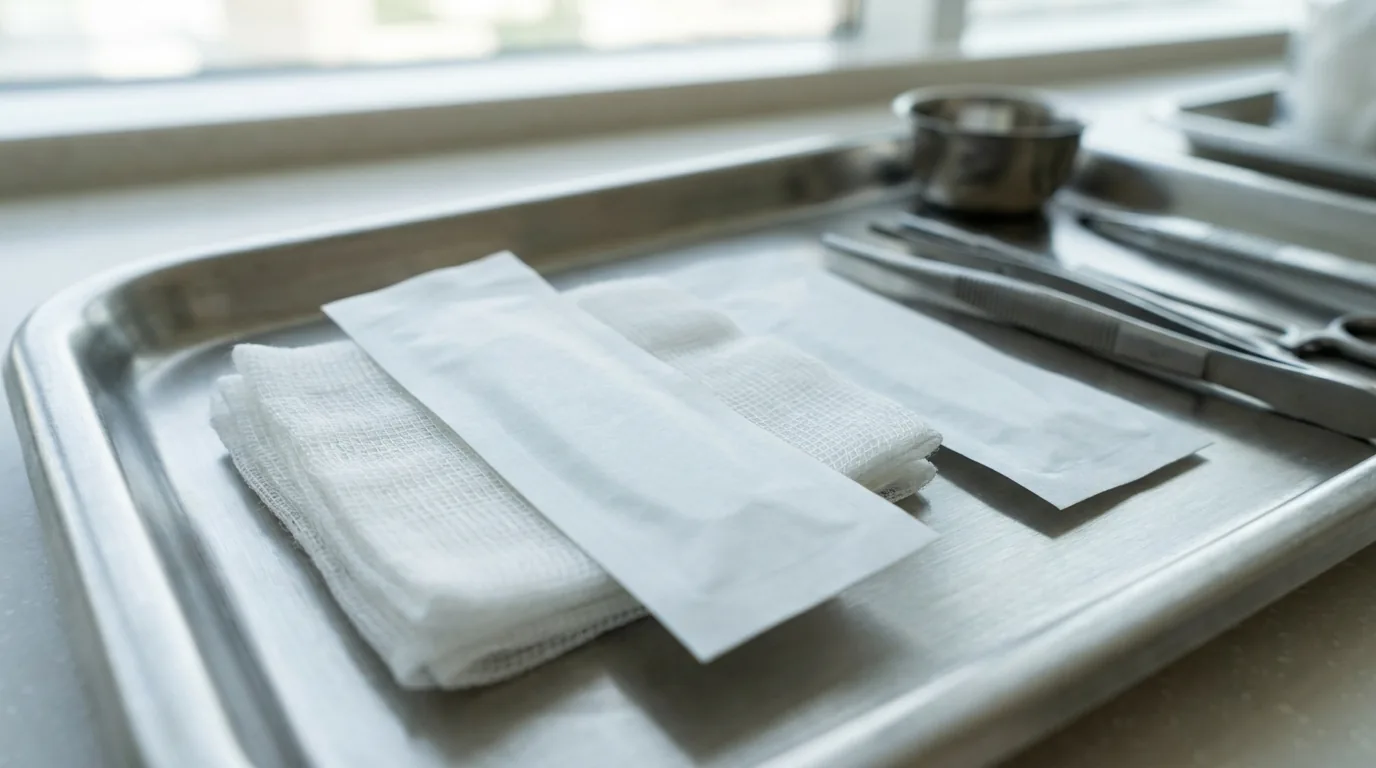
Ask about the blade and you learn more about a venue than any before and after photo will tell you. A sterile single use blade opened in front of you carries close to zero infection risk. A blade reused across clients carries a real one, and there is no way to tell by looking.
Three questions cover it. Is the blade single use? Is it opened from a sealed pack at the start of your session? What happens to it afterwards? Any venue doing this properly answers all three without hesitating, because the answers are the same every time.
Blade sharpness matters as much as sterility. A dull edge drags rather than glides, which forces additional pressure and repeated passes over the same patch. That is how a treatment meant to skim the surface turns into irritation that lasts days.
Skin conditions that change the answer
Dermaplaning is a manual exfoliation. Anything that has already thinned, inflamed or broken the skin turns a harmless pass into a problem.
Is dermaplaning safe for sensitive skin?
Usually, with a longer gap between sessions and a lighter hand. Sensitive skin has less barrier reserve, so it takes longer to rebuild lipids after each pass. Dermatologists generally suggest treating tightness, stinging or lingering redness as the signal to extend the interval rather than push through it.
Is dermaplaning safe for rosacea?
Not during a flare. Rosacea skin already runs reactive and visibly flushed, and a blade over inflamed tissue tends to make it worse rather than smoother. Between flares some people tolerate it under supervision, which is a conversation for a clinician who can see your skin, not a decision to make from an article.
Eczema, psoriasis and cold sores
All three are a stop, because eczema and psoriasis plaques are broken or thickened skin and a blade over either can spread the flare or open it. An active cold sore is a live viral lesion, and dragging a blade across the area risks moving it. Wait until the skin has completely settled.
Active acne
This is the sharpest line in the whole guide, because a blade travelling over an inflamed spot can open it and carry bacteria across the rest of the face in a single pass. Clinics work around active breakouts or reschedule. If you have inflammatory or cystic acne, this is a treatment to postpone, and acne treatment options are a better first step.
Is dermaplaning safe for dark skin?
Yes, and the answer comes with a caveat almost no international guide mentions. Deeper skin tones produce more pigment in response to injury, so any irritation that turns into inflammation carries a higher chance of leaving a dark mark behind. Dermatologists call it post inflammatory hyperpigmentation.
The treatment itself does not cause it. Trauma does. A blade that nicks, a pass repeated over the same patch, or a session on skin that was already inflamed all raise the odds, and the mark can outlast the irritation by months. For anyone in Dubai with Middle Eastern, South Asian, African or Southeast Asian skin, that changes what careful looks like. Fewer passes, no pressure, and no session at all on skin that is currently reacting. Clinics that handle pigmentation treatment tend to be the ones most alert to this.
Medications and treatments that make it unsafe
Two categories change the calculation: anything that thins the skin, and anything that has recently resurfaced it.
| What you are using or had | Why it matters | Usual guidance |
|---|---|---|
| Isotretinoin (oral acne medication) | Thins skin and slows healing considerably | Clinics normally decline until well after the course ends |
| Prescription retinoids or strong acids | Speeds shedding, so the surface is already thinner | Pause a few days either side of a session |
| Recent chemical peel, laser or microdermabrasion | The barrier is still rebuilding | Leave a gap of roughly two weeks each way |
| Sunburn or recent heavy sun | Skin is inflamed and fragile | Wait until it has fully settled |
| Keloid or raised scar history | Any break in skin can trigger one | Raise it with a clinician first |
None of these are permanent bars, only timing problems, and a practitioner who asks about them before picking up a blade is doing the job properly. Anyone spacing dermaplaning around a chemical peel should plan the calendar with the clinic rather than guess.
What a Dubai licence actually protects you from
Two licences sit behind any venue offering this treatment, and they do different jobs. Every business in Dubai needs a DET trade licence from the Department of Economy and Tourism simply to trade. A facility offering the treatment on the clinical side needs a DHA licence from the Dubai Health Authority, covering both the premises and the individual practitioner performing it.
The practical value of both is accountability, because a licensed practitioner has verified training and sits inside a complaints process you can actually use. Asking to see both is normal and nobody legitimate will be offended by it. The criteria behind this directory’s own vetting are set out in how we rank salons, and 56 skin care venues are listed across the city.

Popular facial and skin clinics in Dubai
Skin Camouflage beauty therapists, fully licensed by the Dubai Health Authority, specialize in advanced skin treatments. Inkless Stretch Marks Removal effectively minimizes stretch marks without invasive procedures. Our Scalp Micropigmentation (Hair Tattoo) restores the look of fuller hair with precision pigmentation. The BB Glow Treatment achieves smooth, radiant skin that lasts.
Nova Clinic The Palm is a skin care clinic in Palm Jumeirah Mall by Dubai Retail, on the Palm Jumeirah, rated from reviews. Reviewers consistently describe a modern, extremely clean clinic where therapists explain each step of a facial treatment and leave skin feeling clean, fresh and glowing. Several also mention attentive, professional consultations that left them noticeably more comfortable and satisfied with their results. Treatments include acne treatment, anti-aging facials, body contouring, Botox injections, chemical peel, deep cleansing facial, dermal fillers, hair treatment, IPL and laser hair removal, microneedling, pigmentation treatment, PRP therapy, skin rejuvenation, skin tightening and tattoo removal. Appointments are recommended, and the clinic is wheelchair accessible with parking, entrance and toilet facilities on site at Nakheel Mall.
Glow Aesthetics Dermatology Clinic is in Al Attar Business Centre in Al Barsha, offering botox injections, dermal fillers, chemical peels, microneedling, laser and IPL hair removal, skin tightening, scar treatment and pigmentation treatment. It is rated from reviews.Reviewers consistently praise the honesty of the medical guidance, noting that the team recommends only what is genuinely needed rather than upselling treatments. The clinic is described as professional and welcoming from arrival, with several highlighting fair pricing relative to the standard of care.The clinic has on-site services with a wheelchair-accessible entrance, car park and toilet. It suits patients across Dubai researching skin treatments, anti-aging facials or laser hair removal, with a consultation recommended to discuss the right treatment plan.
Derma 247 Laser Clinic is a skin and laser clinic in Nadd Al Hamar, rated from reviews. Treatments cover laser and IPL hair removal, botox injections, dermal fillers, chemical peels, pigmentation treatment, skin rejuvenation and tattoo removal.Reviewers consistently mention feeling well informed before and during laser sessions, with practitioners who explain each step in plain terms and check in throughout rather than rushing through the appointment. That attentiveness comes up often enough to be a genuine pattern rather than a one-off.The clinic runs by appointment, with on-site services and a fully wheelchair-accessible setup including gender-neutral toilets. It suits anyone after laser or aesthetic treatments who wants a clinical, unhurried approach rather than a quick in-and-out visit.
Avoria Aesthetic Clinic is a skin care and medical aesthetics clinic in Al Barsha, rated from reviews. Treatments include Botox and dermal fillers, chemical peels, microneedling, laser hair removal, pigmentation and acne treatment, tattoo removal, electrolysis, lip blush and eyebrow microblading, plus body contouring and hair transplant procedures. Reviewers consistently describe a modern, spotless clinic with a calming atmosphere, and praise the team for explaining each treatment thoroughly before starting and taking time to listen to concerns. Laser hair removal sessions are described as comfortable and effective, and reviewers mention good results from HydraFacial treatments too, with outcomes generally meeting or exceeding expectations. Free underground parking is available, and the clinic has a wheelchair-accessible car park, entrance and toilet, all within the Deyaar Building unit that houses the clinic.
Dubai sun turns a small risk into a lasting one
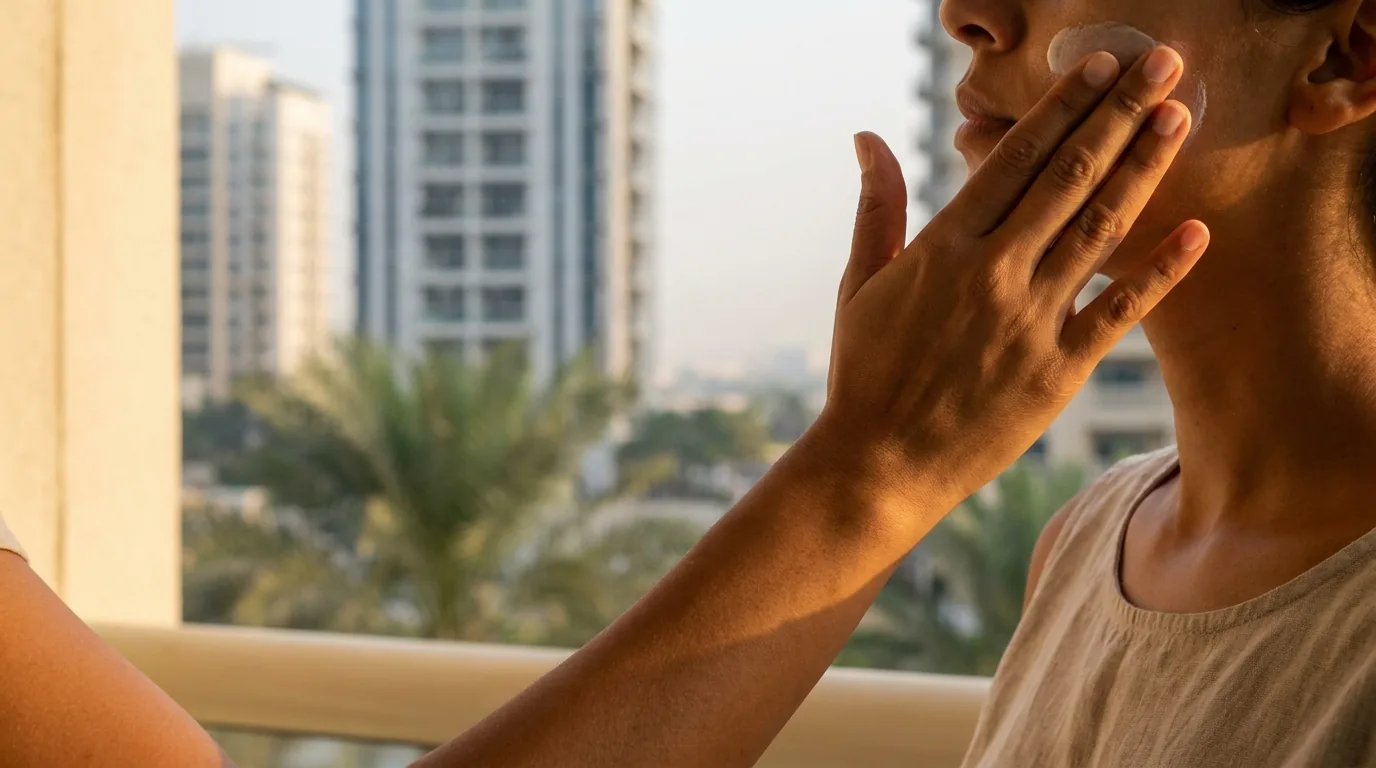
Freshly dermaplaned skin has lost its outer dead layer, which means less physical shielding and more sensitivity to ultraviolet light for a few days. In most cities that would be a footnote, but in Dubai, where the ultraviolet index sits near the top of the scale for much of the year, it becomes the single most useful thing to get right.
Broad spectrum sunscreen, reapplied properly, is the whole of the aftercare that matters most. Sun on a freshly exfoliated face is what turns a well executed session into weeks of uneven tone, and it is the mechanism behind most of the dark marks discussed above. Two more local details: chlorine from pool water stings a stripped barrier, and desert dust settles on skin that has lost its top layer more readily than usual. Allow both a couple of days of recovery.
Red flags worth walking out on
The most useful warning signs all show up before the treatment starts, which is exactly when noticing them still changes the outcome.
- Nobody asks about your medication, skin conditions or recent treatments.
- The blade is already unwrapped when you sit down, or you never see the packet.
- You are promised a result rather than told about the risks.
- The room has no clear hand washing setup, or the practitioner does not glove up.
- Your questions about training or licensing get a vague answer.
- You are pushed toward a package before a single session has been done.
Any one of these on its own is worth a question. Two together is worth leaving, and comparing options among the facial spas nearby costs nothing.
What to do when a session goes wrong
Most problems respond to doing less. Stop actives, stop exfoliating, and keep the routine to a gentle cleanser, a plain moisturiser and sunscreen for a full week. Skin recovering from over exfoliation does not need more products.
A nick needs clean hands, a clean plaster while it is still open, and absolutely no picking at the scab. A breakout that shows up two or three days later is usually the barrier reacting rather than an infection, and it clears as the barrier does. Skin that reacts badly more than once is telling you the format is wrong, which is where a gentler hydrafacial or one of the other best facial in Dubai formats does a similar job with less risk. Persistent redness past 48 hours, spreading spots, swelling or any sign of pus stops being a salon question. That one is a doctor’s.
Frequently asked questions
Browse all 56 Skin Care Salons providers on our directory.


