



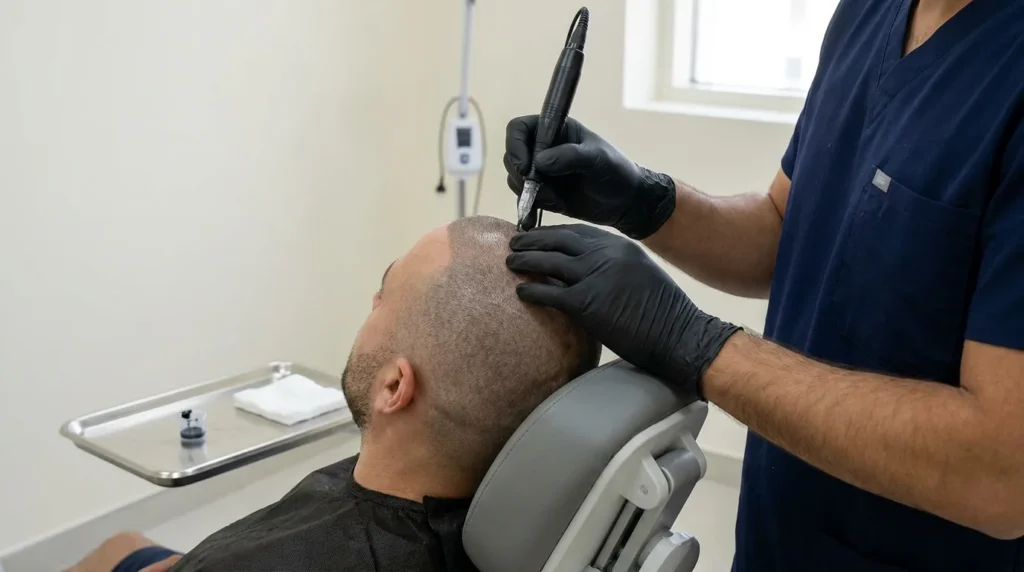
Is scalp micropigmentation permanent? Partly. The pigment particles stay in your skin for life, so nothing washes out. The visible result behaves differently: it lightens over roughly three to six years and needs a touch up to hold its edge. Dubai sun shortens that window, and 7 Dubai venues list the treatment.
This guide is general information, not medical advice. Scalp micropigmentation is a regulated cosmetic procedure in Dubai: consult a DHA-licensed clinic about your suitability and risks before booking.
Why the same question gets two different answers
Search the question and page one argues with itself. Cleveland Clinic says the treatment holds its appearance for four years or longer, and describes the inks as permanent cosmetic pigments. Scalp Micro USA calls the same treatment semi-permanent, with a working life of three to five years. Specialist clinics elsewhere quote four to eight. Forum threads then fill up with people trying to work out who is right.
Everyone is right, because two separate questions are hiding inside one sentence. The first is whether the pigment leaves your skin. The second is whether the result keeps looking the way it did in the mirror on day one. The question “is SMP permanent” therefore has two correct answers, and which one you get depends on who you ask. Sources answer whichever one they had in mind and skip the other, which is how a simple question ends up with a scattered answer set.
| Source | What it states | Question it is answering |
|---|---|---|
| Cleveland Clinic | Holds its appearance four years or longer; pigments are permanent cosmetic inks | Does the pigment stay in the skin |
| Scalp Micro USA | Semi-permanent; three to five years, then gradual lightening | How long the look holds at full strength |
| UK and US specialist clinics | Four to eight years, with a touch up every three to six | How long before a top up is worth booking |
Read that way, the disagreement disappears. The ink is permanent. The appearance is on a schedule.
How long does scalp micropigmentation last before a touch up
A full treatment is built across two to four sessions, most commonly three, spaced ten to fourteen days apart, so the practitioner can layer density and correct colour before anything is locked in. What you see at the end of the last session is the darkest the result will ever look.
From there it softens slowly. Most people reach the point of booking a touch up somewhere between year three and year six. That spread is wide because scalp micropigmentation longevity depends on things nobody can standardise: how oily your skin runs, how your immune system handles the healing weeks, how deep the practitioner placed each dot, and how much sun the scalp takes. Oily skin tends to disperse pigment a little faster. Shallow placement fades sooner, deep placement blurs. Neither extreme is what you want, and the difference between them is technique, which is the strongest argument for paying attention to who holds the machine. The same scrutiny applies whether the clinic sells it as SMP or as a hair tattoo in Dubai.
SMP touch ups are short. A single session of one to two hours usually restores the original density, and it costs a fraction of the first treatment because the framework is already there, which the scalp micropigmentation cost guide breaks down session by session. Some people book one every three years to keep the look sharp. Others let it fade and top up at five or six, which reads as a gradual softening rather than an obvious change.
What Dubai’s sun does to that timeline
Every source that explains fading names the same primary cause: ultraviolet light breaks pigment down. That matters more here than in the places those numbers came from. The three-to-six-year ranges published by clinics are drawn from UK and US client bases. A shaved scalp in Dubai spends eight months of the year under a much heavier UV load, with no hair to shade the skin underneath.
The practical read: treat the lower end of every published range as your default, and treat the upper end as what is available if you protect the area. Sunscreen on the scalp is the single highest-value habit, followed by a cap during the middle of the day. Salt water and chlorine are secondary but real, which is worth planning around if you swim most mornings. None of this stops fading. It changes the slope.
How SMP pigment differs from tattoo ink
The hair tattoo nickname causes half the confusion, because the two procedures only look similar from a distance. Scalp micropigmentation uses finer needles than a tattoo machine, a different technique called pointillism that builds thousands of individual follicle-sized dots, and a carbon-based pigment formulated to lighten cleanly instead of shifting colour as it ages. Tattoo inks contain a wider mix of pigments, some of which turn green or blue over decades.
Placement is the other difference, and it is the one that governs everything on this page. Tattoo ink is deposited deeper into the dermis. Micropigmentation sits higher, closer to the skin surface, which is what keeps the dots crisp enough to pass as stubble. That shallower placement is exactly why the result lightens on a schedule a body tattoo does not follow. The trade is deliberate: you give up permanence at full strength and get a result that ages softly and stays adjustable. Similar logic applies across non-surgical hair replacement options, where reversibility is usually the point.
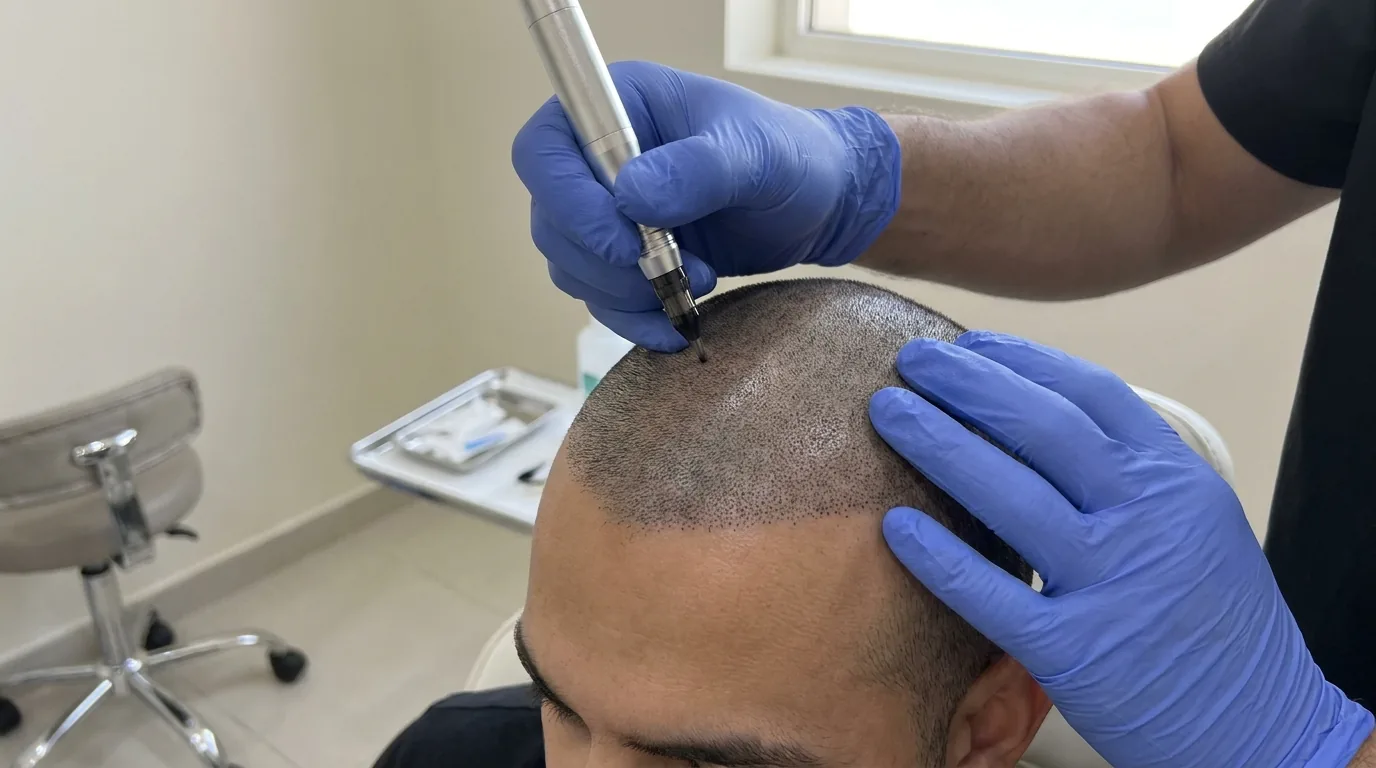
What scalp micropigmentation looks like after 5 years
At the five-year mark, expect a lighter version of what you started with rather than a different look. SMP after 5 years keeps the dot pattern in place. The hairline keeps the shape it was designed with. Density reads softer, the way a closer shave reads softer, and the overall tone lifts a shade or two. Carbon-based pigment lightens rather than changing hue, so the muddy colour shift people associate with old tattoos is not the failure mode here.
Two things do show at that stage if the original work was rushed. Dots placed too deep have spread slightly and read as smudges instead of points up close. A hairline drawn too hard for the client’s age looks less natural as the rest of the face changes. Both are technique problems that time reveals rather than causes, and both are the reason a consultation should include healed photographs at three months or more, and older work where the studio has it, rather than fresh results alone.
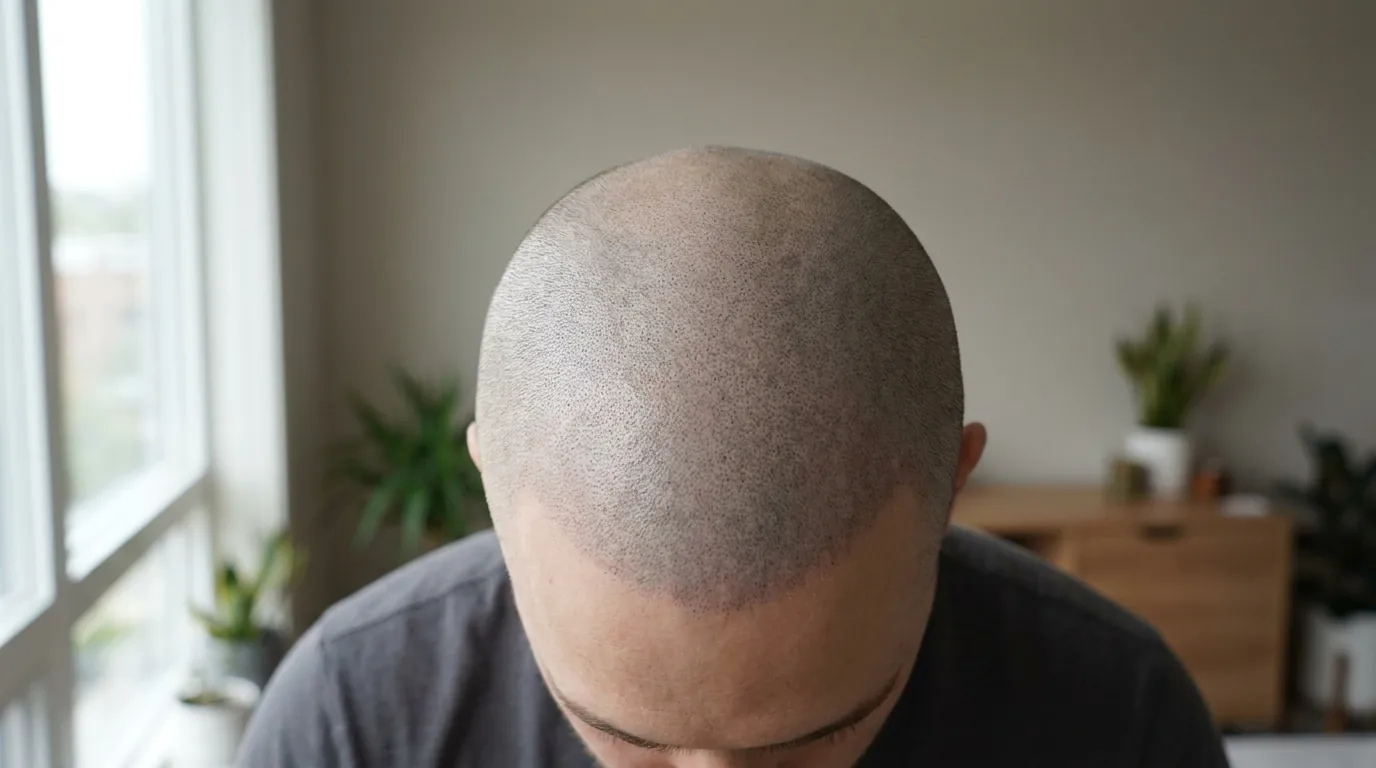
Removing it if you change your mind
This is the question underneath the permanence question, and it has a better answer than most people expect. Because the pigment sits closer to the surface than tattoo ink, laser removal is quicker than clearing a body tattoo. It still runs across several sessions on a scalp, and it costs more than the original work did, which is the argument for a conservative hairline on the first pass rather than a plan to undo one later.
Removal is rarely the route people take. Adjusting is cheaper and faster. A hairline can be softened or moved back, density can be lifted or reduced, and colour can be matched to hair that has since gone grey. Clinics that also perform surgical restoration will often discuss both paths in one consultation, so it is worth checking whether the venue handles both; the hair transplant clinics listed in Dubai and the wider hair replacement venues are the usual starting points for that conversation.
What makes SMP fade faster
Does SMP fade at the same rate for everyone? No, and the variables are mostly controllable. The table below covers what actually moves the timeline.
| Factor | Effect on the result | What helps |
|---|---|---|
| UV exposure | The largest single cause of lightening | Scalp sunscreen daily, a cap in peak hours |
| Oily skin | Pigment disperses slightly faster | A gentle cleanser, no heavy scalp oils |
| Harsh products | Exfoliants, high-alcohol and bleaching agents strip tone | Mild products only on the treated area |
| Healing period | Sweat, swimming and picking during week one cost density | Follow the aftercare window exactly |
| Placement depth | Too shallow fades early, too deep blurs | Check healed work before booking |
The first four rows are yours to manage after the appointment. The fifth is decided before it, which is where the choice of practitioner does most of its work. General scalp treatment services are a separate category and will not restore faded pigment.
Is scalp micropigmentation safe, and who is licensed to do it in Dubai
The procedure is minimally invasive but it does break the skin, so the risk profile is the one that comes with any needle work: infection, an allergic reaction to the pigment, and a result you are unhappy with. Cleveland Clinic lists those as the main complications and notes the needles used are thinner than tattoo needles, which is why most clients describe it as less painful than body work. Pigments themselves sit under cosmetics regulation rather than drug approval, and reactions, while uncommon, are documented.
Licensing in Dubai runs on two tracks and both are worth checking before you book. The venue needs a valid trade licence from the Department of Economy and Tourism, which is what makes it a legal business at that address. The health side is what covers the needle work, and two routes to it are legitimate here. Some providers operate as beauty or permanent-makeup salons on a DET trade licence with a health permit for the procedure. Others work inside a Dubai Health Authority licensed clinic, where the facility and the practitioner each hold a DHA licence. What is never optional is that the health side exists at all, so a venue that produces a trade licence and shrugs at the permit or the DHA licence behind the needle is not the place for this. DHA licences are searchable in the authority’s own Sheryan register, so verification takes a minute rather than a leap of faith, and the same public-record logic drives how listings are ranked on this directory.
Ask for a patch test if you have reacted to cosmetic pigments before, ask to see healed photographs rather than day-one results, and confirm which pigment line the clinic uses. Because scalp micropigmentation is popular with men managing hair loss, some general grooming venues have added it recently, and they vary widely in whether a licensed practitioner is on site, so ask directly rather than assuming.
Where to get scalp micropigmentation in Dubai
The treatment does not sit under one venue type here. It is offered by hair transplant and hair restoration clinics, by aesthetic and skin clinics, and by a small number of beauty venues that employ a permanent makeup practitioner. That spread is why a single category page will not show you everything, and why the service filter is the more reliable route.
The directory filter below returns the Dubai venues that record scalp micropigmentation as a service they provide, so you can compare them directly rather than working through venue categories. Verify licensing and healed work with any of them before booking, per the checks above. Browse every venue listing scalp micropigmentation to start.
Browse all 7 Scalp Micropigmentation providers on our directory.


