



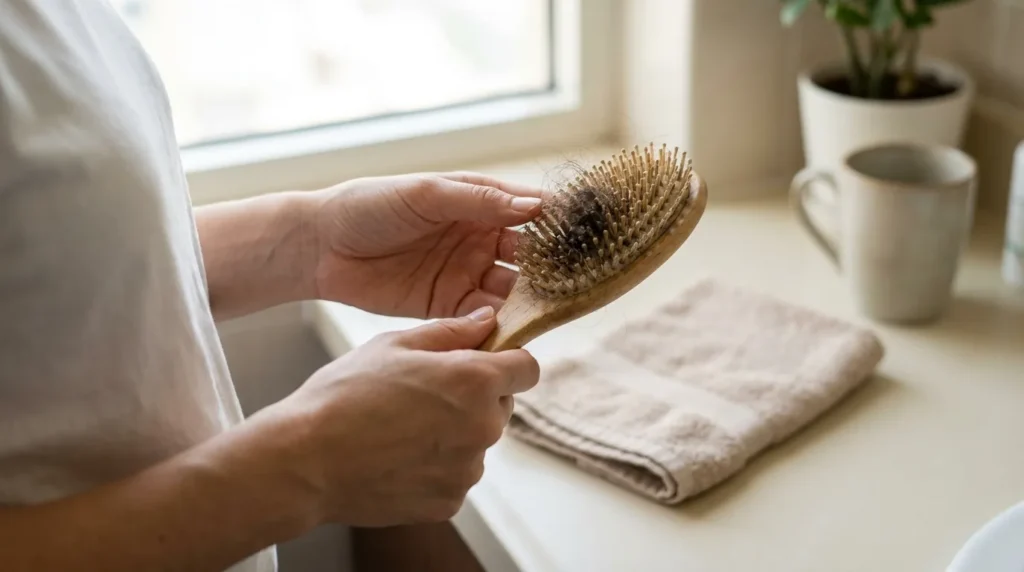
Pregnancy hair loss is usually telogen effluvium: a temporary shift that pushes more hair than normal into its resting phase. Most of the shedding starts after delivery rather than during pregnancy, peaks around three to four months postpartum, and settles within six to twelve months without any treatment at all.
This article is general information about pregnancy hair loss, not medical advice. Anything involving bloodwork, medication or a diagnosis belongs with a clinician licensed by the Dubai Health Authority.
Why pregnancy changes your hair before it changes back
Hair grows on a cycle. About 85 percent of the hair on a healthy scalp is in its growing phase at any moment, and roughly 15 percent sits in a resting phase called telogen before it releases, per the StatPearls clinical reference on telogen effluvium.
Pregnancy interrupts the clock. Rising estrogen holds hair in the growing phase longer than usual, so the normal daily release slows and fewer strands come out in the brush. That is why so many women describe pregnancy hair as thicker and glossier. Nothing extra has grown. The usual losses have simply been postponed.
After delivery, estrogen drops back toward its pre pregnancy level and the postponed losses arrive together. StatPearls lists that postpartum fall in estrogen among the recognised triggers of telogen effluvium, alongside iron deficiency, hypothyroidism and low protein intake. That single mechanism explains most cases of pregnancy hair loss, and it is why the shedding looks alarming in the shower while reading, on paper, as a normal hormonal correction.
Hair thinning during pregnancy, and why it starts early for some women
Shedding while still pregnant is less common than shedding after birth, though far from rare. When hair thinning during pregnancy shows up in the first or second trimester, the trigger is usually something other than the estrogen curve, because estrogen is still rising at that point rather than falling.
The usual suspects are low iron, thyroid disruption and physical stress. Iron demand climbs sharply in pregnancy, and a deficiency weakens the hair follicle before it shows anywhere else. Thyroid function can swing in either direction. Severe morning sickness that limits protein, zinc and general nutrition does the same from a different angle.
Any of these can produce hair thinning during pregnancy months before the postpartum shedding would have started, which is a reason to raise it at an antenatal appointment rather than wait it out. Pregnancy hair loss with a deficiency behind it responds to correcting the deficiency, and to nothing else. A salon scalp treatment can make the scalp more comfortable, but it will not fix low ferritin.
The postpartum shedding timeline, month by month
The most useful thing to know about pregnancy hair loss is that it runs to a fairly predictable schedule. Research published in the National Library of Medicine found that over 90 percent of the postpartum women studied reported some degree of shedding, so this is closer to a default than a complication. Knowing where you sit on the schedule turns a frightening handful of hair into a stage with an end date.
| Stage | What is happening | What you notice |
|---|---|---|
| Pregnancy, weeks 12 to 40 | Estrogen extends the growing phase | Thicker hair, very little in the brush |
| Birth to 6 weeks | Hormones begin returning to baseline | Usually no visible change yet |
| 2 to 3 months postpartum | Postponed hairs enter the resting phase | Shedding starts, often suddenly |
| 3 to 4 months postpartum | Peak release | Heaviest shedding, worst at the hairline |
| 4 to 6 months postpartum | Shedding slows, regrowth begins | Short new hairs along the parting and temples |
| 6 to 12 months postpartum | Cycle returns to its normal rhythm | Density recovers, regrowth reaches awkward mid lengths |
The American Academy of Dermatology puts full recovery inside the six to twelve month window, and does not describe bald patches as a normal feature of it. Regrowth announces itself as a fringe of short hairs along the hairline and parting, which is a good sign even though it is an inconvenient one to style. The site’s hair guides cover the styling side of that stage.
Baby hair fall means two different things
Searches for baby hair fall split cleanly into two groups, and confusing them wastes a lot of worry. The first group is parents watching an infant lose hair in the first months of life. Newborns run their own version of the same hormonal handover: hair grown in the womb releases once maternal hormones clear, often leaving a bald patch at the back of the head where the baby rests. It regrows, usually by the first birthday, sometimes in a different colour or texture.
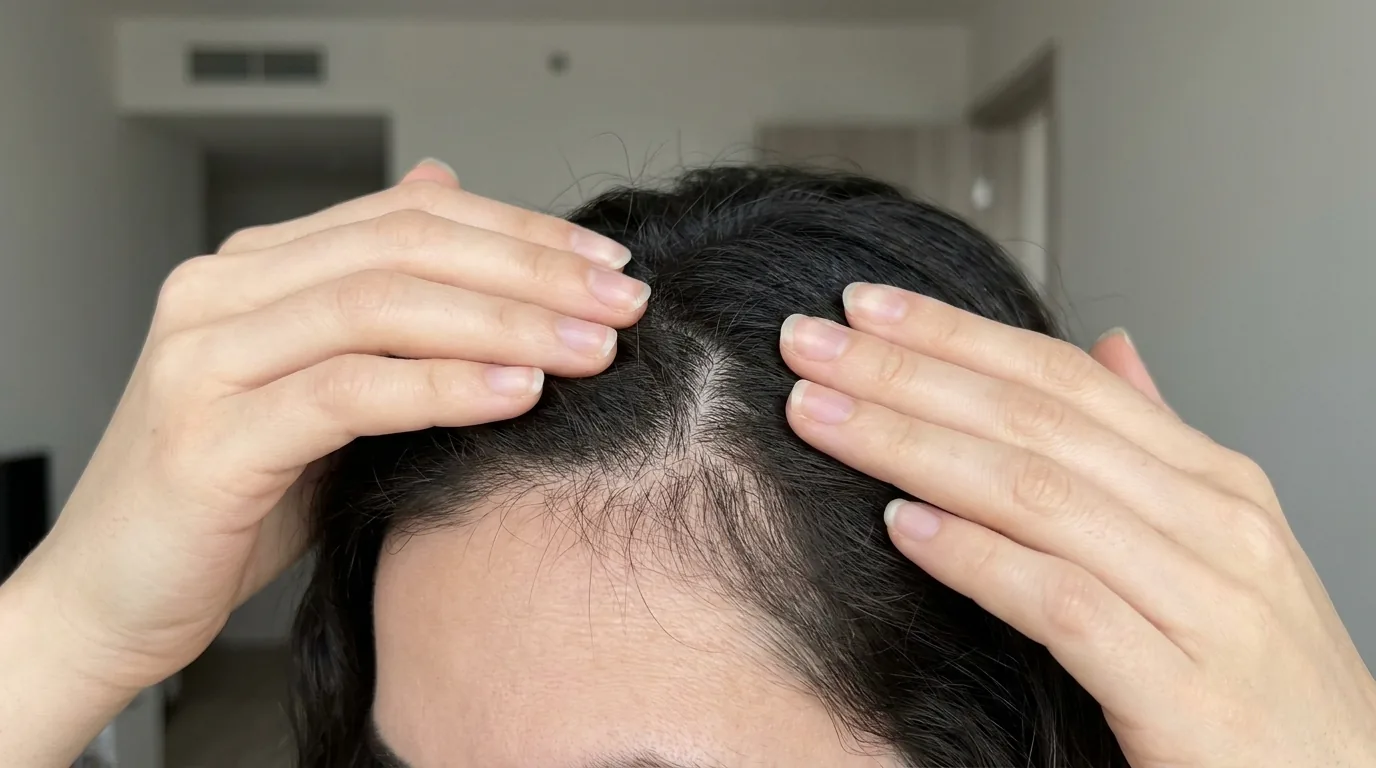
The second group is mothers using baby hair fall to describe their own regrowth. Those short, upright hairs around the hairline are new growth rather than breakage, and they behave differently from the rest of the head because they are months younger. Both meanings are ordinary, and neither is a sign that pregnancy hair loss has gone wrong.
What the postpartum hair loss Instagram feed leaves out
Search postpartum hair loss Instagram and the results skew heavily toward before and after grids, supplement affiliate links and hairline transformations with no stated timeline. Two things are missing. The first is the denominator: women who recovered on schedule with no intervention rarely post, so the feed over represents the severe cases and the paid recoveries.
The second is time. A recovery credited to a supplement at month nine is competing with a hair cycle that was going to correct itself anyway inside the same window, and no before and after grid separates the two. Postpartum hair loss Instagram content is therefore close to worthless as evidence for deciding what to buy. Practical scalp care and a decent cut do more during the shedding stage than most of what is advertised alongside it, which is the reasoning behind the site’s guide to hair spa treatments in Dubai.
Red flags that mean this is not ordinary shedding
Ordinary pregnancy hair loss is diffuse. It thins the whole head, concentrates a little at the temples and hairline, and improves. A pattern that departs from that description deserves a proper look rather than another month of waiting.
Worth escalating: shedding still heavy at six months, no return of fullness by twelve months, distinct bald patches or smooth circular gaps, a visibly widening parting rather than general thinning, scalp pain, burning, scaling or itching, or shedding alongside heavy fatigue, palpitations, unexplained weight change or a swollen neck. That last cluster points at the thyroid, and postpartum thyroiditis is common enough that the American Academy of Dermatology names it explicitly in its guidance for new mothers. Dubai has skin specialists listed across the city who handle scalp assessment as routine work.
Who to see in Dubai, and what they can legally do
The split between a salon and a clinic in Dubai is a licensing split, and it decides what anyone in front of you is allowed to do. A salon operates on a trade licence issued by Dubai’s Department of Economy and Tourism, which covers cosmetic services: cutting, colouring, styling, scalp and hair treatments. Diagnosing a cause, ordering blood tests or prescribing anything requires a Dubai Health Authority health facility licence and a DHA licensed practitioner working inside it. A venue holding only the DET trade licence cannot legally do the second list, whatever its treatment menu implies.
That distinction is what people are actually looking for when they search for a postpartum hair loss doctor. The realistic first stop is a general practitioner or an obstetrician who can order iron studies, ferritin, thyroid function and vitamin D. Those four results explain most cases of pregnancy hair loss that are not simple telogen effluvium, and they cost far less than a specialist consultation.
A postpartum hair loss dermatologist is the right referral when bloods come back clear and the shedding continues, when the pattern is patchy rather than diffuse, or when the scalp itself is symptomatic. A dermatologist can examine the scalp under magnification, separate telogen effluvium from androgenetic thinning or alopecia areata, and say which treatments are compatible with breastfeeding, since several standard hair loss medications are not. The site’s editorial policies set out how health claims here are sourced.
Dubai currently lists 24 skin specialists in the directory, and browsing by licence type is the fastest way to separate a clinic from a salon before booking.
Browse all 24 Skin Specialists providers on our directory.
What a salon can and cannot do while you are shedding
No stylist can stop pregnancy hair loss, and a salon promising to has told you something about itself. What a stylist can do is make the shedding stage easier to live with and avoid making it worse, which is a genuinely useful job for six to nine months.
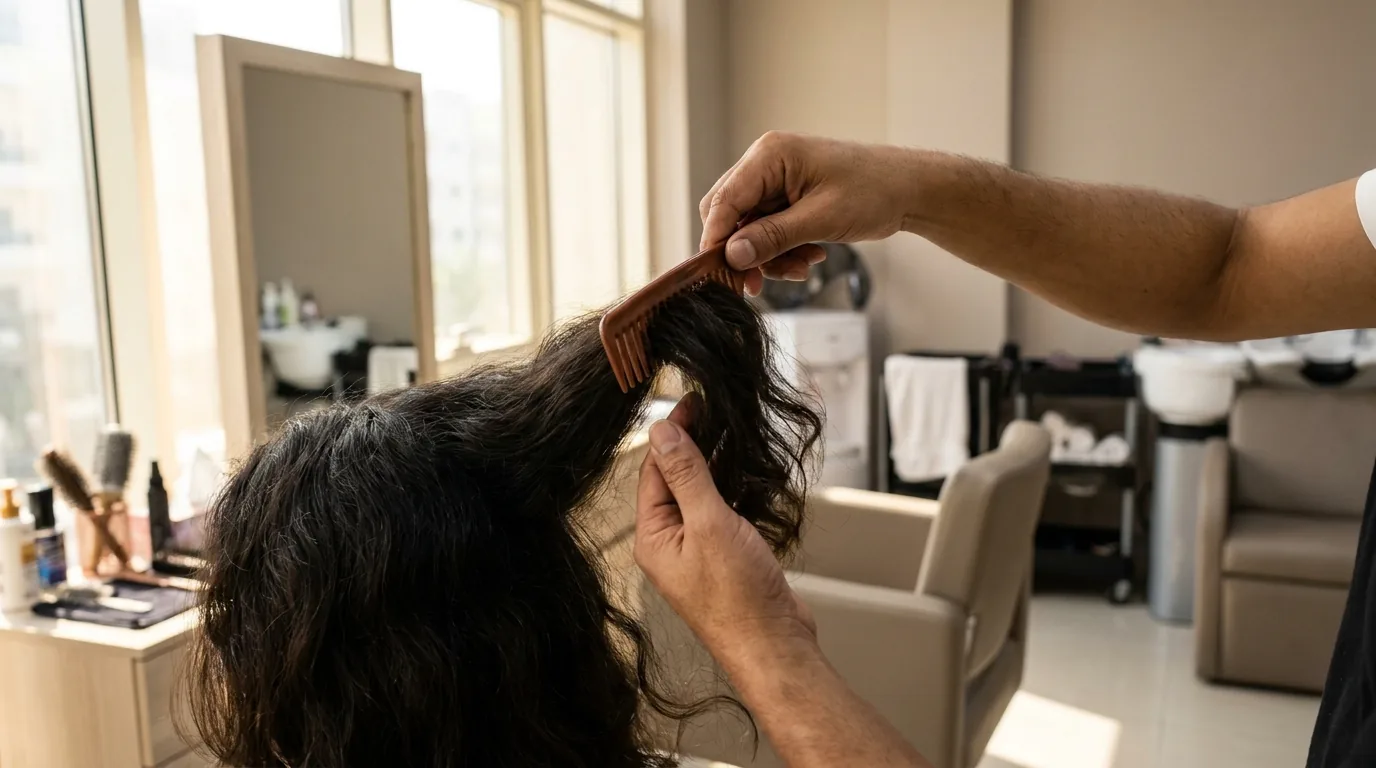
The practical asks: a cut with layers that adds visible body without removing length you want to keep, a colour plan that stays away from the fragile new regrowth at the hairline, and gentle handling at the basin. Ask for no tight blow dry tension, no rubber bands, and no traction styles while the hairline refills. Most hair salons in Dubai adjust all of this on request if you say what stage you are at.
Chemical services are a conversation with your own clinician rather than a rule with one answer. There is no strong evidence that salon colour harms a pregnancy or a breastfed infant, and the American Academy of Dermatology treats it as a personal decision. Practical timing usually matters more: colouring at peak shedding means retouching a hairline that changes weekly, so waiting until month six often produces a better result for the same money. If length is the goal meanwhile, the guide to extensions for thin hair covers which attachment methods strain a recovering hairline least.
One Dubai specific note. Desalinated tap water here is hard, air conditioning runs dry year round, and chlorine exposure is high. None of that causes pregnancy hair loss, but all three make regrowth feel coarser and look duller than it is, so a chelating wash every few weeks earns its place here. A ladies haircut every ten to twelve weeks keeps mid length regrowth from looking uneven while it catches up.


