


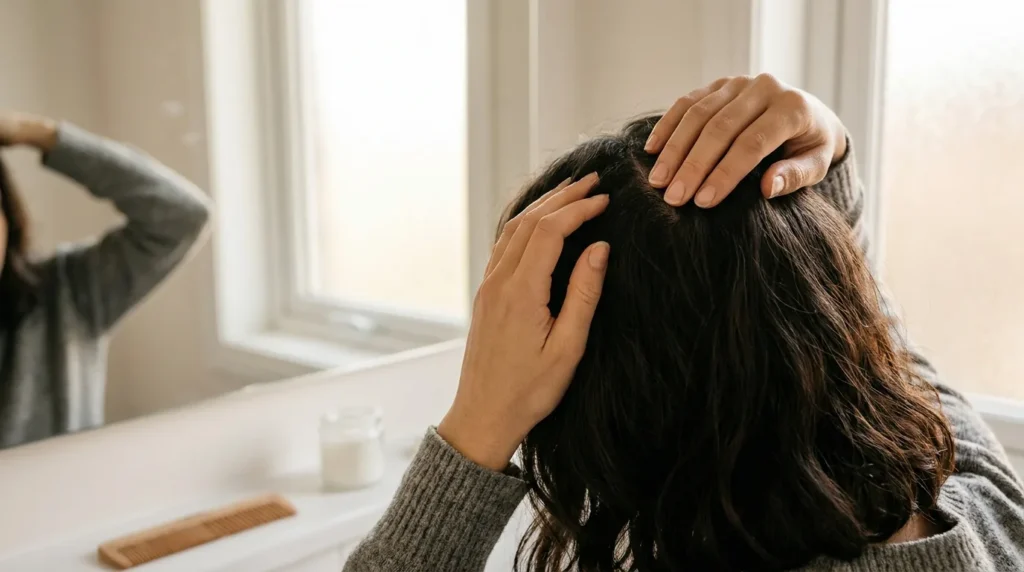
Dandruff is a common scalp condition where dead skin cells shed from the scalp fast enough to show as visible white or yellowish flakes, usually with an itchy scalp. It is a mild form of seborrheic dermatitis, it is not contagious, and most cases settle with the right medicated anti-dandruff shampoo. In Dubai, hard water, heavy air-conditioning, and strong sun can make flaking worse.
What is dandruff?
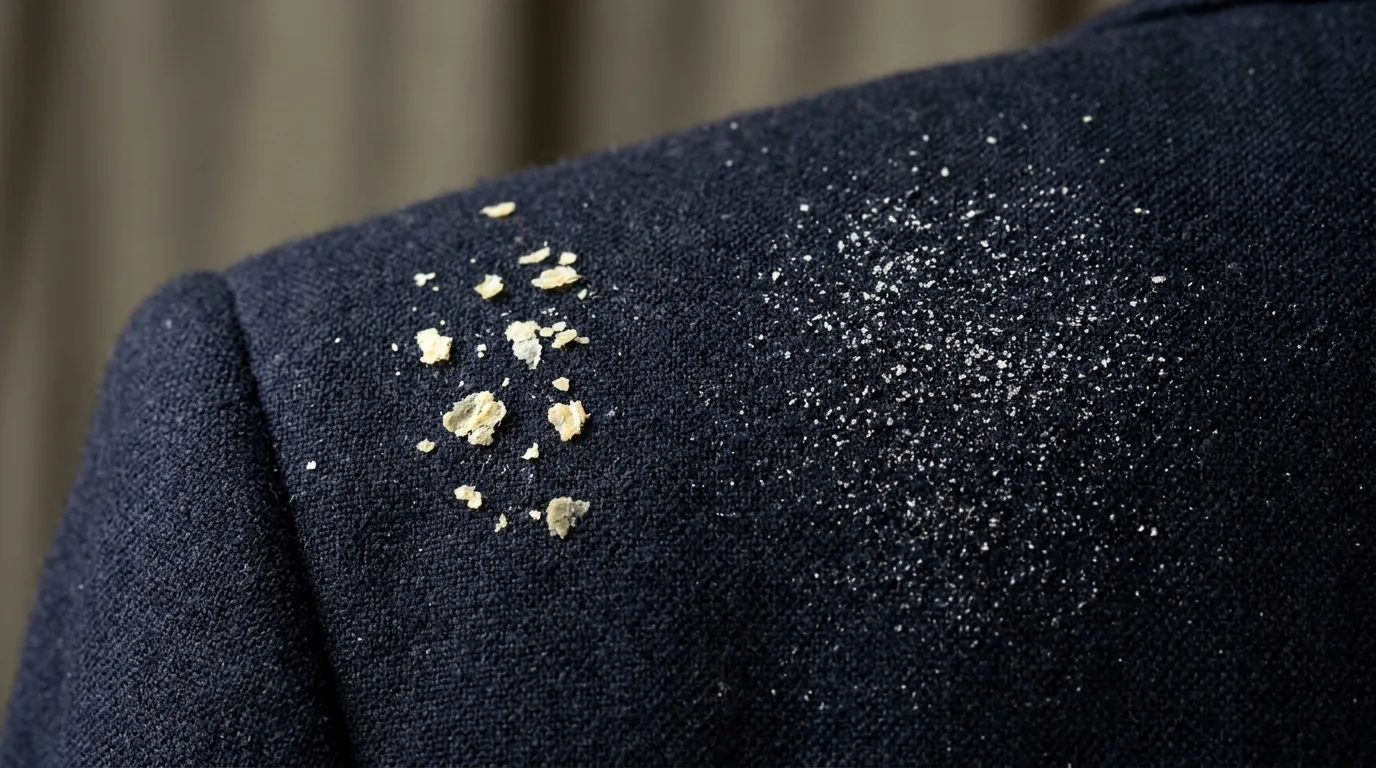
Dandruff is the everyday name for the visible flaking and itching that happens when the skin on your scalp renews itself too quickly. A healthy scalp sheds dead skin cells in pieces too small to notice. When that turnover speeds up, those cells clump together with scalp oil and surface debris, so they fall as flakes you can see on your hair, eyebrows, and shoulders.
Doctors classify it as the mildest form of seborrheic dermatitis, a skin condition that mainly affects oil-rich areas of the scalp. It is a cosmetic nuisance far more than a medical problem. It does not damage hair, it is not a sign of poor hygiene, and you can have it even with a careful hair-washing routine.
Two things separate it from a one-off dry day. The flaking tends to be persistent, coming and going over months or years. And it usually pairs with an itchy scalp rather than appearing alone.
What causes dandruff?
There is rarely a single cause. Most cases come from a mix of an oily scalp, a naturally present scalp organism, and individual sensitivity. The main drivers researchers point to are below.
- Excess oil on the scalp. When the scalp produces too much sebum, dead skin cells stick together and build up into visible scales that flake off.
- Malassezia. This is a yeast-like fungus that lives on almost every adult scalp and feeds on scalp oils. It does not cause flaking on its own, but studies link a higher density of Malassezia to more severe symptoms.
- Dry skin. Dry-skin flaking is usually smaller and less oily. It is one reason cold, low-humidity conditions can trigger a flare.
- Sensitivity to hair products. A reaction to ingredients, fragrances, or dyes in shampoo and styling products can irritate the scalp and cause flaking, a form of contact dermatitis.
- Other skin conditions. Psoriasis and eczema can both show up on the scalp and look like stubborn dandruff, which is one reason persistent cases are worth a professional check.
Stress and cold, dry weather do not start it, but both can make an existing case worse. It is more common in men, and it often begins in young adulthood and continues through middle age.
Dandruff vs dry scalp: how to tell the difference
Dandruff and a plain dry scalp get confused constantly because both flake and itch. They are different problems with different fixes, so reading the flakes matters before you buy a product. This is the dandruff vs dry scalp question most people get wrong.
| Signal | Dandruff | Dry scalp |
|---|---|---|
| Flake size and colour | Larger, oily, white or yellowish | Smaller, dry, white and powdery |
| Scalp feel | Often oily or greasy | Tight, with skin elsewhere often dry too |
| Root cause | Excess oil plus Malassezia yeast | Lack of moisture in the skin |
| What helps | Medicated antifungal shampoo | Gentle hydrating shampoo, less frequent washing |
A quick test: if your scalp is oily and the flakes are larger and yellow-tinged, it points to dandruff. If your scalp and the rest of your skin feel tight and dry, simple dryness is more likely. Getting this right decides which product actually helps.
What is dandruff made of?
Dandruff flakes are clusters of dead skin cells from the outer layer of the scalp, bound together by scalp oil. On a healthy scalp these cells fall away invisibly. With dandruff the shedding speeds up and the cells stick into larger, visible clumps mixed with sebum and everyday scalp debris.
So a flake is not dirt and it is not a living thing. It is your own skin, turned over faster than usual and held together by oil. That is also why washing alone does not solve it: the issue is the rate of shedding and the oil-and-fungus balance underneath, not surface grime.
Is dandruff a fungus, and is it contagious?
Is dandruff a fungus? Not exactly, but a fungus plays a part. The Malassezia yeast that lives on the scalp is involved in most cases, which is why antifungal shampoo ingredients work so well. The flaking and itching themselves result from oil, that organism, and your own skin’s response, rather than a fungal infection you caught.
Is dandruff contagious? No. It cannot pass from person to person through shared combs, pillows, towels, or hats. Because the Malassezia involved already lives on nearly everyone’s scalp, there is nothing to “catch.”
Is dandruff a sign of something serious?
For most people, no. It is a benign, manageable condition and not a warning sign of a deeper health problem, and it usually responds to an over-the-counter medicated shampoo within a few weeks.
A few situations are worth a closer look. See a doctor or dermatologist if your scalp is red, tender, swollen, or looks infected, if heavy flaking and itching do not improve after several weeks of correct shampoo use, or if the scaling spreads to your face or body. Persistent, thick, silvery scaling can point to scalp psoriasis, and stubborn greasy scaling can be more pronounced seborrheic dermatitis, both of which a professional can identify and treat.
How dandruff is treated
Mild cases often clear with regular washing using a gentle shampoo. When that is not enough, dandruff treatment usually means a medicated anti-dandruff shampoo, chosen by its active ingredient.
- Zinc pyrithione: an antifungal and antibacterial agent, the most common first choice.
- Ketoconazole: a stronger antifungal, useful when zinc pyrithione is not enough.
- Selenium sulfide: slows skin-cell turnover and reduces the scalp fungus.
- Salicylic acid: helps lift and clear existing scale.
- Coal tar: slows how fast scalp skin cells die and flake.
Most medicated shampoos work best left on the scalp for a few minutes before rinsing, then used a few times a week rather than daily. If one active ingredient stops working, alternating with a different one often helps. For a full step-by-step routine on how to get rid of dandruff, see our guide on how to remove dandruff. If weeks of correct use bring no change, a scalp treatment from a professional or a visit to a dermatologist is the right next move.
Does Dubai’s climate affect dandruff?
Yes, the local environment can tip a manageable scalp into a flaky one. Dubai’s conditions hit a flake-prone scalp from a few directions at once.
- Hard water. Dubai’s tap water is high in minerals, which can leave residue on the scalp, dry the skin, and make flaking and itching feel worse.
- Constant air-conditioning. Long hours in cooled, low-humidity indoor air pull moisture from the scalp, much like cold winter air does elsewhere.
- Strong sun and heat. Sun exposure and heavy sweating change the scalp’s oil balance and can aggravate irritation.
- Frequent washing. Heat and humidity push many residents to wash daily, and over-washing with a harsh shampoo can strip the scalp and worsen the cycle.
None of this means flaking is unavoidable here. It means a consistent routine, a gentler shampoo between medicated washes, and attention to scalp hydration matter more in this climate. The same dryness drivers also feed frizzy hair, so a scalp-and-hair routine that accounts for hard water and AC tends to help both.
When a salon scalp treatment helps
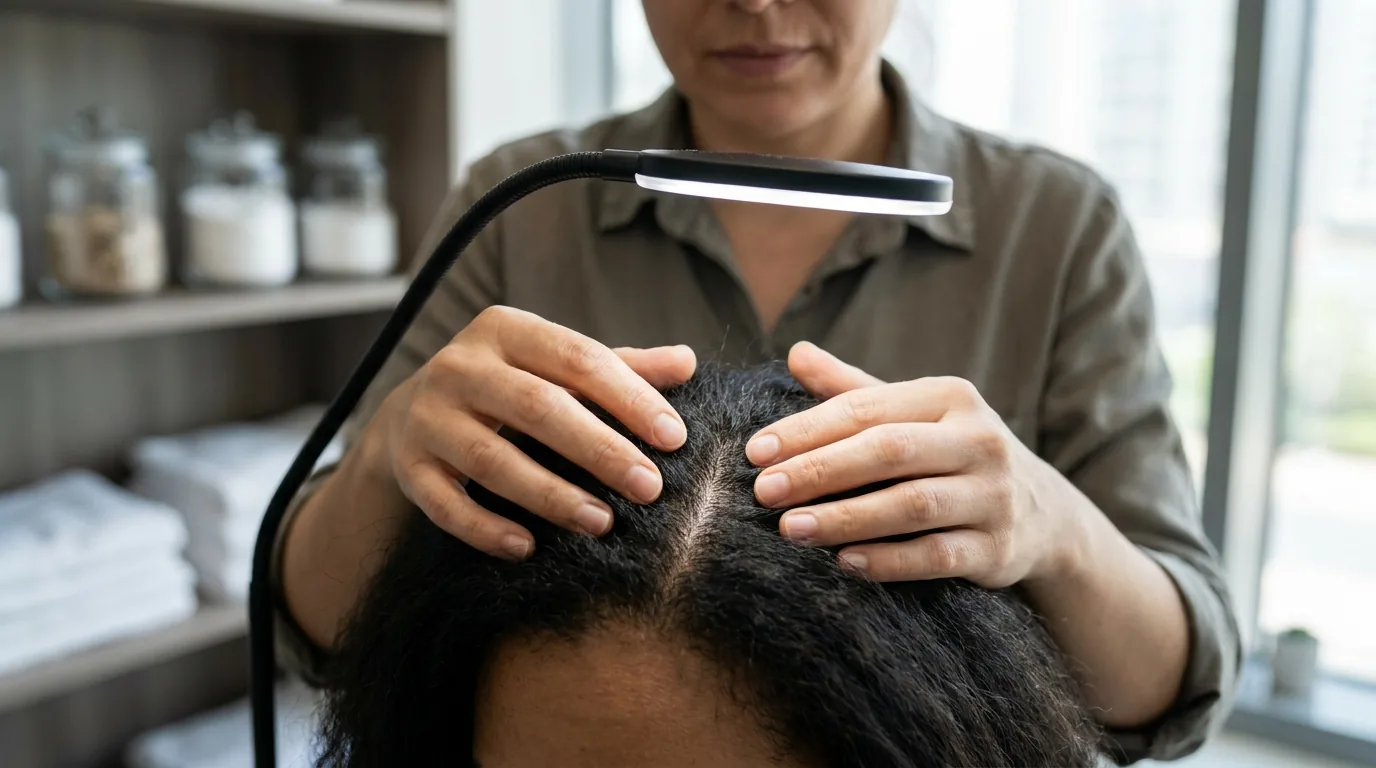
You do not need a salon for mild dandruff, but a professional scalp treatment can speed things up for stubborn or recurring cases, or when you simply want a deeper clean and an expert eye on your scalp. A trained therapist can assess whether you are dealing with oil buildup, dryness, or something closer to seborrheic dermatitis, and tailor the treatment. The same salons that handle scalp care often also offer related work like keratin treatment, so one visit can cover scalp and hair together.
Across Dubai, the directory lists 489 scalp-treatment providers at hair and scalp salons citywide. When you choose one, the same standards apply as for any treatment: check recent reviews, confirm the salon holds a current Department of Economy and Tourism trade licence, keep any medical scalp treatment to a Dubai Health Authority licensed clinic, and favour places that explain what they are doing and why. Our ranking method walks through how the listings here are assessed.

Popular hair and scalp salons in Dubai
Collective is a hair salon inside the MAG Warehouses complex in Al Quoz Industrial Area 2, rated from reviews. Services cover hair colouring, balayage, hair highlights, hair extensions, keratin treatment, ladies haircuts, blow dry, bridal makeup, manicures, gel pedicures and waxing services. Several reviewers like the modern, classy interior and mention stylists using Dyson equipment for finishing, with one client describing a playful, well judged cut from a stylist who listened closely to the brief. Feedback on colour work is more mixed, with one detailed report describing hair damage and billing disagreements after a balayage and toner service, so it makes sense to agree the full scope and price before any colour treatment begins. The salon has a toilet on site along with wheelchair-accessible parking and entrance.
Version Francaise is a hairdressing salon inside the Marriott Harbour Hotel and Suites in Dubai Marina, offering haircuts, hair colouring, highlights, hair extensions, keratin treatment, blow dry styling, threading, manicures and nail art. It is rated from reviews.Reviewers consistently describe the salon as welcoming, with several returning for years and calling it their regular salon for haircuts and colour treatments. The team is praised for professionalism, attention to detail and a warm welcome from arrival to the end of the appointment.The salon has free Wi-Fi, on-site services, a wheelchair-accessible entrance, car park and toilet, plus gender-neutral toilets. It suits residents and hotel guests in Dubai Marina after a haircut, colour service or hair treatment appointment, with appointments recommended given the salon's loyal following.
Locks By Lou Lou is a hair salon on Al Wasl Road in Jumeirah, rated from reviews. Reviewers consistently praise the colour work, from balayage and highlights to root touch ups, and several mention hair extensions that look natural rather than obviously fitted. Clients also note that stylists take time to understand what they want before starting and explain aftercare so hair stays in good condition afterwards.Beyond colour, the salon offers blow dry, keratin treatment, hair extensions, manicure, gel pedicure, microneedling and anti-aging facial treatments. The entrance is wheelchair accessible and there is an on-site toilet.Appointments are recommended, particularly for colour and extension work, and the salon suits clients looking for an ongoing colourist relationship rather than a single visit.
Version Francaise Pour Elle is a hairdresser and beauty salon on Al Wasl Road, Al Safa 2, rated from reviews. Services span hair colouring, balayage, highlights, extensions, keratin treatment and blow dry, ladies' haircuts, beard trim, manicure, gel nails, gel pedicure, eyelash extensions, anti-aging facials and waxing.Reviewers consistently praise the colour and highlight work, describing meticulous stylists who take the time to understand what a client wants even when it is hard to explain. The salon is also noted for its cleanliness, product quality and reasonable prices, with several reviewers mentioning the owner is regularly on site overseeing the team and the client experience.Free Wi-Fi and parking are available. Suits clients after precise colour work from a team that takes the time to get it right.
Trinity Hair Salon is a hair salon in Al Barsha South, based at Danube Resortz, rated from reviews.Colour work is what reviewers talk about most, with several describing years of trust in the stylists for balayage, highlights and full colour changes, including recovering from a previous bad dye job elsewhere. The salon also offers ladies haircuts, blow dries, hair treatment and a back massage, plus manicures and pedicures. More than one reviewer describes the atmosphere as warm and modern with a good energy, and says they would not trust anyone else with their hair colour.There is a toilet on site, the salon offers on-site services, and a wheelchair-accessible car park makes it an easy stop for residents around Al Barsha South.
How to keep dandruff under control in Dubai
Dandruff has no permanent cure, but it is very controllable. A few habits keep flares short.
- Match wash frequency to your hair type: oily scalps need more frequent washing, drier and coarser hair needs less.
- Use a medicated antifungal shampoo a couple of times a week, and leave it on for a few minutes before rinsing.
- Keep using the medicated shampoo occasionally even after flakes clear, to stop the cycle restarting.
- Switch to a gentle, hydrating shampoo for non-medicated washes, especially given hard water and AC.
- Avoid scratching, which irritates the scalp and worsens flaking.
- See a dermatologist if heavy flaking, redness, or itching lasts beyond a few weeks of correct treatment.
For related hair and scalp services across the city, browse the salon directory or read more from our editorial team.


