




Facial surgery is a group of surgical procedures that reshape, lift, or rebuild parts of the face. Common operations include a facelift, rhinoplasty (a nose reshaping operation), and eyelid surgery. A surgeon works on the skin, muscle, fat, cartilage, or bone under general or local anesthesia. In Dubai these operations are done only in licensed clinics and hospitals, never in a beauty salon.
This guide is general information, not medical advice. Facial surgery is a regulated cosmetic-medical treatment in Dubai. Consult a DHA-licensed clinic and a board-certified surgeon about your suitability, costs, and risks before booking any procedure.
What is facial surgery?
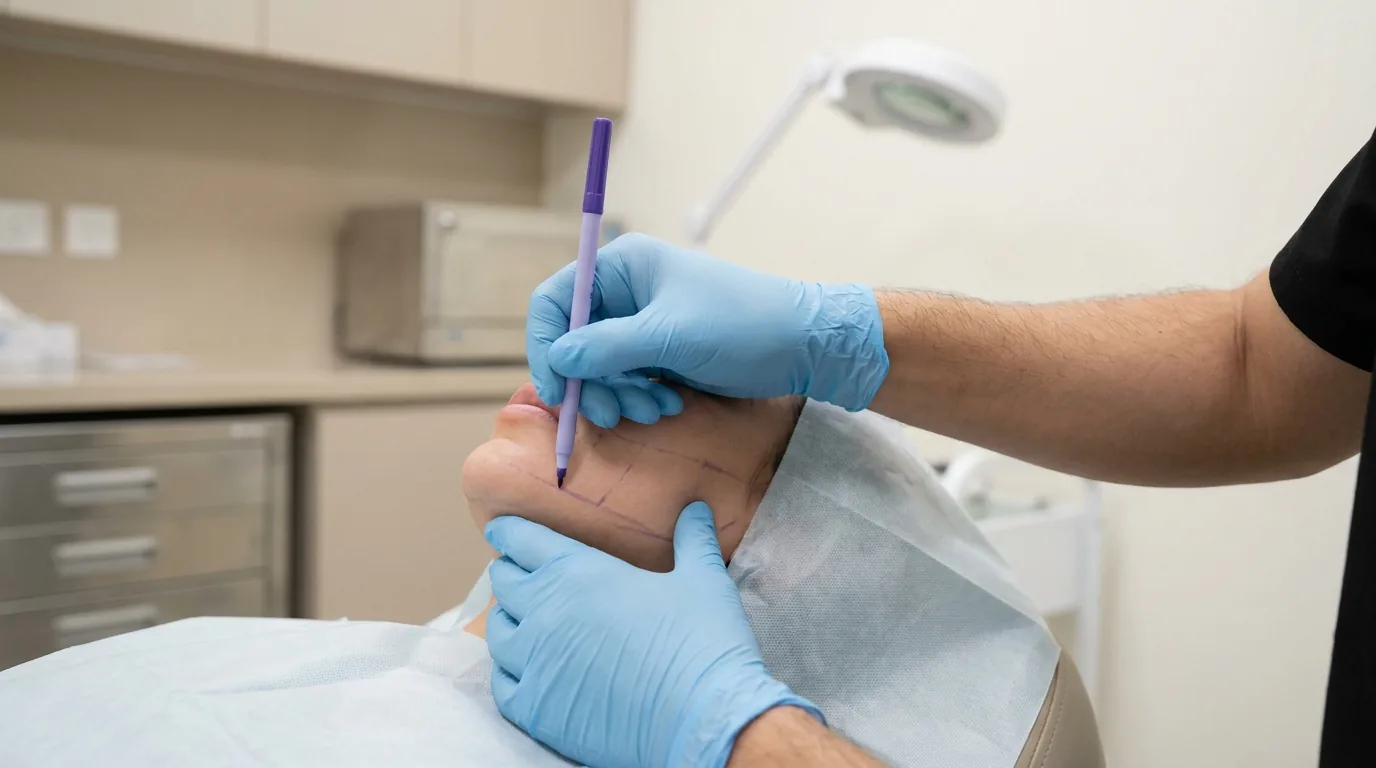
Facial surgery is any operation that changes the structure of the face through incisions. A surgeon repositions tissue, removes excess skin, adds or adjusts cartilage, or reshapes bone, then closes the incision with sutures. The aim is to change the appearance or, in some cases, restore function after an injury or a condition present from birth.
Doctors split these operations into two broad groups. Cosmetic facial surgery changes the look of a healthy face: a facelift to soften sagging skin, or a nose reshaping operation for better balance. Reconstructive facial surgery repairs damage from an accident, a tumour, or a birth difference. Both sit under the wider field of plastic surgery, and both need a qualified surgeon, an anesthesiologist, and a sterile operating room.
It helps to separate facial surgery from non-surgical facial treatments. A salon facial, a chemical peel, or a course of injectables works on the surface or just under the skin with no cuts and almost no downtime. Facial surgery involves incisions, anesthesia, and a real recovery period. The two often get searched together, so the distinction matters before you book anything. You can compare skin-side options at the skin care salons in Dubai on our directory.
How many types of facial procedures are there?
There is no single fixed number, because surgeons group operations by the area they treat. To answer the common question of how many types of facial procedures exist, the clearest way is by region of the face: the upper third (forehead and brows), the middle third (eyes, nose, cheeks), and the lower third (jaw, chin, and neck). Most named operations fall into one of these zones.
The most common facial surgery procedures are below. The American Society of Plastic Surgeons groups most of these under its Face and Neck category.
| Procedure | Medical name | What it changes |
|---|---|---|
| Facelift | Rhytidectomy | Lifts sagging skin and tissue in the lower face and neck |
| Eyelid surgery | Blepharoplasty | Removes excess skin or fat from upper or lower eyelids |
| Nose reshaping | Rhinoplasty | Changes the size, shape, or proportion of the nose |
| Brow lift | Forehead lift | Raises a heavy or low brow and smooths forehead lines |
| Chin surgery | Genioplasty | Reshapes or projects the chin for facial balance |
| Neck lift | Lower rhytidectomy | Tightens loose skin and muscle bands under the jaw |
| Facial implants | Cheek or jaw implants | Adds volume or definition to the cheeks, jaw, or chin |
A facelift on its own has several techniques, such as the SMAS facelift, which tightens a deep tissue layer, and the deep plane facelift, which repositions muscle and fat for a longer-lasting result. Many patients combine two procedures, for example a brow lift with eyelid surgery, so the face is treated as a whole. The right mix depends on facial structure and goals, which is what a consultation is for.
How facial surgery works
Every operation is different, but most cosmetic facial surgery follows the same path from consultation to recovery. Knowing the steps removes a lot of the worry that comes with searching the topic for the first time.
- Consultation: a board-certified surgeon reviews your medical history, examines your face, and explains realistic outcomes and risks.
- Preparation: you may need lab tests, and you will likely be asked to stop smoking and pause certain medications such as blood thinners.
- Anesthesia: the surgeon uses local anesthesia with sedation, or general anesthesia, depending on the procedure.
- The operation: incisions are placed in natural creases or the hairline, then tissue is lifted, reshaped, or removed and the incision is closed.
- Recovery: swelling and bruising are normal, sutures come out within five to ten days, and most people return to routine activity in two to three weeks.
Results from surgery settle over weeks to months as swelling fades. Unlike a salon treatment, a facelift or nose reshaping operation aims for a change that lasts years, which is why preparation and aftercare carry real weight.
Facial surgery vs non-surgical facial treatments
This is the line that trips up most first-time searchers. A beauty salon or day spa cannot perform facial surgery. Salons offer non-surgical facial treatments that work on the skin without incisions, while surgery happens in a clinic or hospital under a licensed surgeon. The table makes the split clear.
| Feature | Facial surgery | Non-surgical facial treatments |
|---|---|---|
| Where it is done | Licensed clinic or hospital | Salon, spa, or skin clinic |
| Who performs it | Board-certified surgeon | Aesthetician or skin therapist |
| Incisions | Yes | No |
| Downtime | Two to three weeks | None to a few days |
| How long results last | Years | Weeks to months, repeated |
| Examples | Facelift, rhinoplasty, eyelid surgery | Facials, chemical peels, microdermabrasion |
If your goal is brighter or smoother skin rather than a structural change, a non-surgical route is usually the starting point. Treatments such as anti-aging facials, chemical peels, and skin rejuvenation treatments address tone and texture with no operating room involved. A facelift, by contrast, addresses sagging that no cream or peel can lift. Many people try the non-surgical path first and consider surgery only later.
Between those two poles sits the thread lift, which repositions tissue with absorbable sutures and no incision: our guide to thread lift prices in Dubai explains what a full face actually costs.
Is facial surgery regulated in Dubai?
Yes. Cosmetic facial surgery in Dubai is tightly regulated, and the rules sit with two authorities. The clinic or hospital must hold a health facility licence from the Dubai Health Authority (DHA), and the individual surgeon must hold a DHA professional licence in the relevant specialty. On top of that, the business itself needs a trade licence from Dubai Economy and Tourism (DET) to operate legally.
This two-layer system is the practical reason a salon cannot offer surgery: a beauty salon holds a DET trade licence for grooming services, not a DHA health facility licence for surgical procedures. Before any operation, you can confirm a clinic on the DHA register and check that the surgeon is licensed for the specific procedure. You can also browse licensed medical centres and skin specialists through the directory as a starting point for your own checks.
What to expect: recovery and risks
Facial surgery is generally safe in qualified hands, but it is still surgery and carries real risks. Being honest with yourself about both sides is part of an informed decision.
On recovery, expect swelling and bruising for the first one to two weeks. Surgeons usually advise keeping your head elevated, avoiding strenuous activity, and staying out of the sun while incisions heal. Most patients feel ready to return to work within two weeks, though the final result keeps refining for several months.
On risks, every surgical procedure can involve infection, bleeding, scarring, a reaction to anesthesia, or temporary numbness around the incision. With a facelift there is a small risk of nerve injury, and with any procedure the cosmetic outcome can fall short of expectations. A good surgeon discusses these openly during the consultation rather than glossing over them. Cosmetic surgery is elective, so there is no pressure to rush the choice.

How to choose a provider for facial surgery in Dubai
The surgeon matters more than the marketing. Use a short checklist before you commit to any clinic.
- Check the surgeon’s licence: confirm a current DHA professional licence in plastic or facial plastic surgery, not a general practice permit.
- Confirm the facility licence: the clinic or hospital should hold a DHA health facility licence plus a DET trade licence.
- Review real before-and-after photos: ask to see the surgeon’s own patients for the exact procedure you want.
- Ask about board certification: a board-certified surgeon has formal, examined training in the specialty.
- Insist on a proper consultation: a careful surgeon examines you, explains risks, and never promises a guaranteed outcome.
- Be wary of unusually low prices: a surgical fee well below the market often signals corners being cut on safety.
If you are still at the research stage and weighing skin treatments before any surgical step, our team explains how we vet every listing, and you can browse verified salons across Dubai for non-surgical facial care.
Browse all 56 Skin Care Salons providers on our directory.


