


Damage hair care means removing the daily habits that break hair faster than it grows, then rebuilding what is left. Most damage in Dubai comes from heat styling, bleach, hard water and friction, rather than from washing or conditioning. Fix the habit first, and treatments work far better.
The habits that actually damage hair
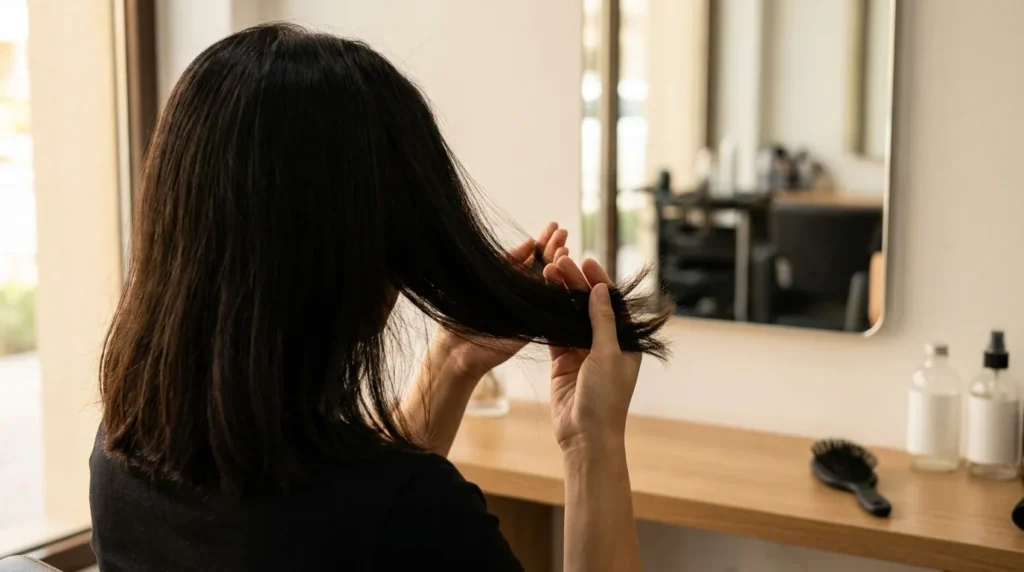
Hair is dead protein. The cuticle, its outer layer of overlapping scales, is the only armour it has, and once those scales lift or chip away the cortex underneath loses moisture and snaps. Nothing regrows a cuticle. So damage hair care is mostly prevention, with repair products buying time on what is already broken.
The American Academy of Dermatology lists ten everyday styling habits that cause visible damage, and most are mechanical rather than chemical. The table below ranks the common ones by how much structural harm they do.
| Habit | Real risk | What actually causes the damage |
|---|---|---|
| Bleach and lightening | High | Swells the cuticle open and breaks keratin bonds inside the cortex |
| Flat irons and tongs above 200C | High | Boils residual water inside the shaft and cracks the cuticle |
| Tight ponytails and buns worn daily | Medium to high | Constant tension on the follicle plus breakage at the tie line |
| Rough towel drying | Medium | Friction lifts the cuticle while hair is swollen and weakest |
| Blow drying with no heat protectant | Medium | Direct heat on an unshielded cuticle strips surface lipids |
| Daily washing in hard water | Medium | Mineral and chlorine deposits leave the surface rough and porous |
| Permanent colour | Medium | Alkaline agents lift the cuticle so pigment can reach the cortex |
| Conditioner and semi permanent tints | Low | Sit on the surface without forcing the shaft open |
Read that table as a hierarchy. Split ends and breakage almost always trace back to the top four rows, so cutting one high-risk habit does more than any bottle on the shelf. The same logic applies to attachments: whether extensions damage your natural hair depends far more on the fitting method and removal than on the hair itself.
Does hairdryer damage your hair? What the research says
Does hairdryer damage your hair? Less than most people assume, and in one respect less than air drying. A study published in Annals of Dermatology tested hair dried four ways: no dryer at all, then a dryer held at 15 cm, 10 cm and 5 cm.
Surface damage rose as the dryer got closer and hotter, reaching 95C at 5 cm. But the cell membrane complex, the glue holding cuticle cells to each other, was damaged only in the group left to dry naturally. Hair swells while wet, and the longer it stays saturated the more that internal glue degrades.
The practical reading is not that heat is harmless. It is that speed counts too. A dryer held at 15 cm and kept moving finished the job before the swelling did its own damage. Heat protectant still matters, an ionic hair dryer cuts drying time by breaking up water droplets, and a diffuser spreads airflow so curls dry without direct pressure on the cuticle. A dedicated guide breaks down whether blow drying damages hair, including what changes on the cool setting and how often you can dry before it shows.
How to dry hair without damage
Technique closes most of the gap between a salon blow dry and a home one. These six steps are the whole method.
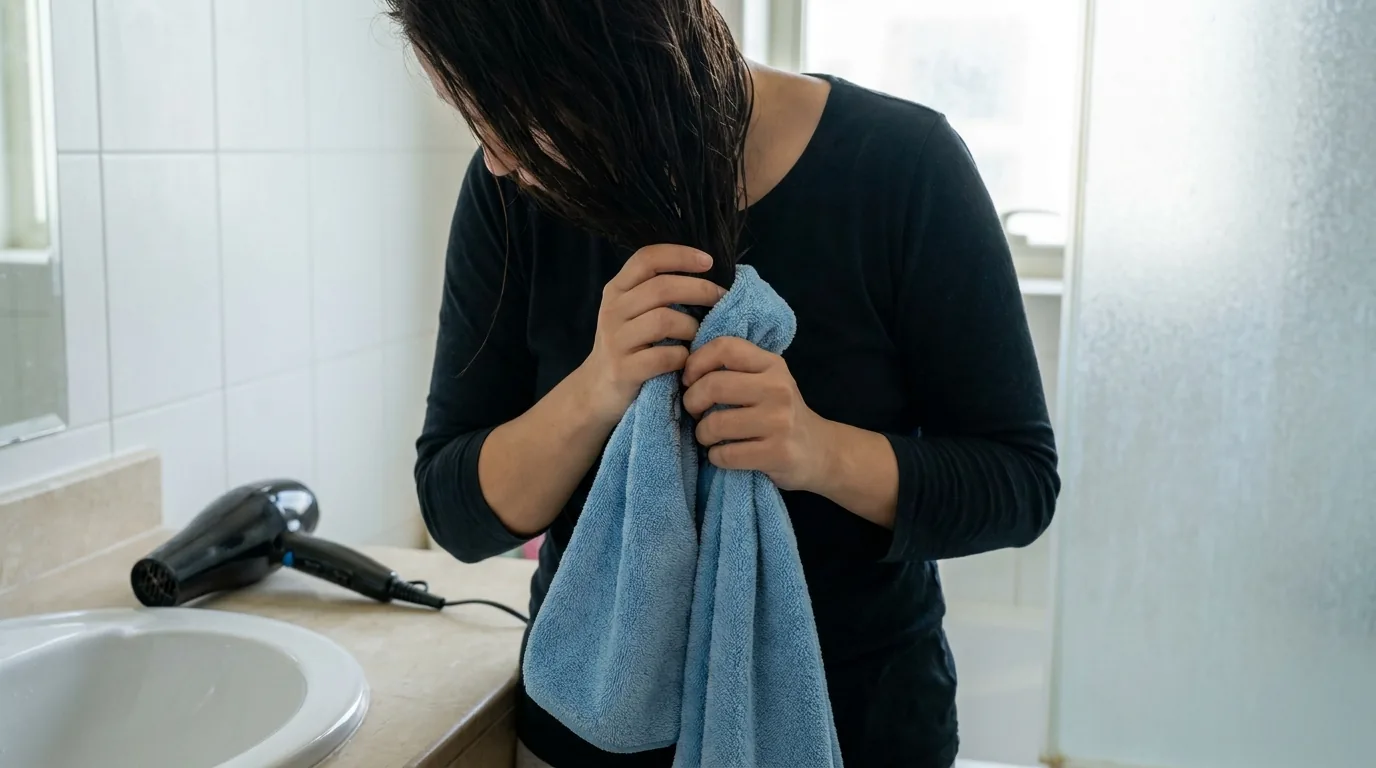
- Squeeze, never rub. Blot with a microfiber towel or an old cotton T-shirt.
- Detangle while conditioner is still in. A wide-tooth comb from ends upward, never a brush on soaking hair.
- Wait until roughly 70 percent dry before any heat touches it.
- Apply heat protectant through mid-lengths and ends, skipping the roots.
- Hold the dryer 15 cm away and keep it moving, on medium rather than maximum.
- Finish on the cool setting to close the cuticle and set shine.
Does conditioner damage hair?
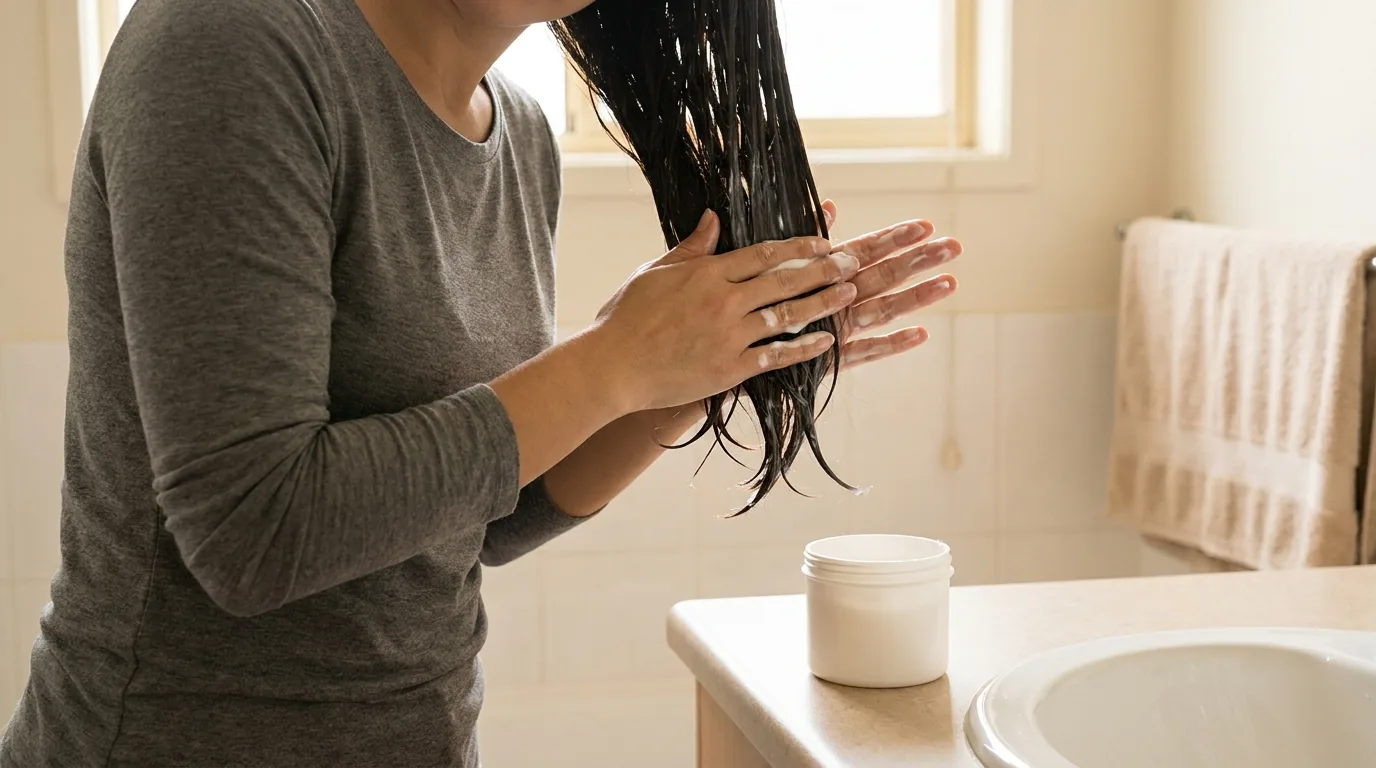
Does conditioner damage hair? No. It is one of the few products that measurably reduces damage, because it lays down a thin film that lowers friction so strands slide past each other instead of catching and tearing.
The confusion comes from build-up. Heavy silicone and butter formulas can coat fine hair until it hangs limp and looks greasy, which reads as unhealthy even though nothing is broken. The fix is a lighter formula and a clarifying wash every few weeks, not skipping conditioner.
Look for ceramides and light hydrolysed proteins, which sit in the gaps where cuticle scales have chipped away. Weekly deep conditioning treatments do the same job with more time under heat, and matter most for hair that is coloured or worn long.
Does colouring your hair damage it?
Does colouring your hair damage it? Yes, and how much depends entirely on the chemistry. Permanent colour and bleach both use an alkaline agent to swell the cuticle open so pigment can reach the cortex, and that swelling is what costs strength. Bleach goes further by breaking keratin bonds to strip existing pigment, which is why lightened hair stretches and snaps when wet.
Semi permanent formulas work differently. They deposit pigment on and just under the cuticle with no ammonia or peroxide, so the shaft is never forced open. Two questions come up in nearly every consultation for hair colouring services: does semi permanent dye damage hair, and how soon colour can be repeated.
A bond-building treatment mixed into the lightener reforms some broken links during the service, which is why the same lift leaves one client’s hair intact and another’s ruined. Smoothing services carry their own trade-off, so check whether a keratin treatment suits your porosity before booking one on already fragile hair.
Do gel and hairspray damage hair?
Can gel damage your hair? The gel itself does not. The way it comes out usually does. Strong-hold gel and wax dry into a rigid cast, and combing or picking that cast apart snaps hair at the exact point where the product stiffened it. Soften it with water or conditioner first, then comb.
Does hairspray damage your hair? Same answer with one extra factor. Most hairsprays are alcohol based, so repeated daily use dries the cuticle over time. Brushing sprayed hair before rinsing is the real damage step, not the spray sitting there.
Does showering everyday damage your hair?
Does showering everyday damage your hair? Showering does not, but washing hair every day can, and Dubai water makes it worse. The emirate runs largely on desalinated supply, and the mineral load plus chlorine leaves deposits that make hair feel rough, tangle more and turn colour brassy.
Wetting hair daily is mechanical too. Wet hair swells and loses roughly a third of its tensile strength, so every wash-and-dry cycle is another round of the cuticle lifting and settling. Two or three washes a week suits most hair types here, with a rinse-only day after the gym.
Pool swimmers need one extra step. Rinse before getting in so the shaft absorbs clean water rather than chlorinated water, and rinse again immediately after.
Building a damage hair care routine for Dubai
A damage hair care routine works best when it is dull and repeated. The climate adds three loads that milder countries do not: year-round UV, constant air conditioning pulling moisture out, and chlorine from pool use across the whole calendar.
Weekly structure that holds up here: two or three washes, one deep conditioning mask, one lightweight leave-in with UV filters for daytime, and a silk or satin pillowcase to cut overnight friction. Alternate moisture and protein, because too much of either goes wrong. Over-proteined hair turns brittle, and protein treatments should follow a gap rather than stack week on week. More seasonal guidance sits in our hair care guides.
Colour maintenance sits inside the same routine. For anyone topping up between salon visits, the short answer to does semi permanent hair dye damage hair is that it costs the shaft far less than a permanent tint, which makes it the safer way to stretch a colour appointment.
Keep how to dry hair without damage as the non-negotiable part. It is the habit repeated most often, so it compounds faster than any mask can repair.

Popular hair salons in Dubai
Collective is a hair salon inside the MAG Warehouses complex in Al Quoz Industrial Area 2, rated from reviews. Services cover hair colouring, balayage, hair highlights, hair extensions, keratin treatment, ladies haircuts, blow dry, bridal makeup, manicures, gel pedicures and waxing services. Several reviewers like the modern, classy interior and mention stylists using Dyson equipment for finishing, with one client describing a playful, well judged cut from a stylist who listened closely to the brief. Feedback on colour work is more mixed, with one detailed report describing hair damage and billing disagreements after a balayage and toner service, so it makes sense to agree the full scope and price before any colour treatment begins. The salon has a toilet on site along with wheelchair-accessible parking and entrance.
Version Francaise is a hairdressing salon inside the Marriott Harbour Hotel and Suites in Dubai Marina, offering haircuts, hair colouring, highlights, hair extensions, keratin treatment, blow dry styling, threading, manicures and nail art. It is rated from reviews.Reviewers consistently describe the salon as welcoming, with several returning for years and calling it their regular salon for haircuts and colour treatments. The team is praised for professionalism, attention to detail and a warm welcome from arrival to the end of the appointment.The salon has free Wi-Fi, on-site services, a wheelchair-accessible entrance, car park and toilet, plus gender-neutral toilets. It suits residents and hotel guests in Dubai Marina after a haircut, colour service or hair treatment appointment, with appointments recommended given the salon's loyal following.
Locks By Lou Lou is a hair salon on Al Wasl Road in Jumeirah, rated from reviews. Reviewers consistently praise the colour work, from balayage and highlights to root touch ups, and several mention hair extensions that look natural rather than obviously fitted. Clients also note that stylists take time to understand what they want before starting and explain aftercare so hair stays in good condition afterwards.Beyond colour, the salon offers blow dry, keratin treatment, hair extensions, manicure, gel pedicure, microneedling and anti-aging facial treatments. The entrance is wheelchair accessible and there is an on-site toilet.Appointments are recommended, particularly for colour and extension work, and the salon suits clients looking for an ongoing colourist relationship rather than a single visit.
Version Francaise Pour Elle is a hairdresser and beauty salon on Al Wasl Road, Al Safa 2, rated from reviews. Services span hair colouring, balayage, highlights, extensions, keratin treatment and blow dry, ladies' haircuts, beard trim, manicure, gel nails, gel pedicure, eyelash extensions, anti-aging facials and waxing.Reviewers consistently praise the colour and highlight work, describing meticulous stylists who take the time to understand what a client wants even when it is hard to explain. The salon is also noted for its cleanliness, product quality and reasonable prices, with several reviewers mentioning the owner is regularly on site overseeing the team and the client experience.Free Wi-Fi and parking are available. Suits clients after precise colour work from a team that takes the time to get it right.
Trinity Hair Salon is a hair salon in Al Barsha South, based at Danube Resortz, rated from reviews.Colour work is what reviewers talk about most, with several describing years of trust in the stylists for balayage, highlights and full colour changes, including recovering from a previous bad dye job elsewhere. The salon also offers ladies haircuts, blow dries, hair treatment and a back massage, plus manicures and pedicures. More than one reviewer describes the atmosphere as warm and modern with a good energy, and says they would not trust anyone else with their hair colour.There is a toilet on site, the salon offers on-site services, and a wheelchair-accessible car park makes it an easy stop for residents around Al Barsha South.
Browse all 167 Hair Salons providers on our directory.
When to stop treating damage at home
Home care manages damage. It does not rebuild a shaft that has already snapped. Book a professional when hair breaks at mid-length rather than at the ends, when colour grabs unevenly because porosity has gone patchy, or when the scalp itches and flakes alongside the shedding.
Vetting matters more than price. Our directory lists 167 hair salons across the city, and quality varies widely at every tier. Every legitimate venue displays a valid DET trade licence from Dubai’s Department of Economy and Tourism. Anything crossing into medical territory, including scalp injections, PRP or prescription hair loss treatment, belongs in a facility holding a DHA health licence from the Dubai Health Authority, never a salon chair. Browse verified hair salons in Dubai by area and rating.
Bring specific questions to the consultation: what strength of lightener is planned, whether a bond-builder is included in the price, and does semi permanent dye damage hair at your current porosity. A stylist who answers those precisely is worth paying more for, which is the same standard behind how we rank salons.


