


Do extensions ruin your hair? Not when they are fitted by a trained technician and maintained properly. Damage comes from the wrong method for your hair, too much tension, cheap product, or skipped aftercare. In Dubai, expect to pay AED 400 to AED 5,000 for a safe, professional fitting, depending on the method and hair grade.
What hair extensions actually do to your hair
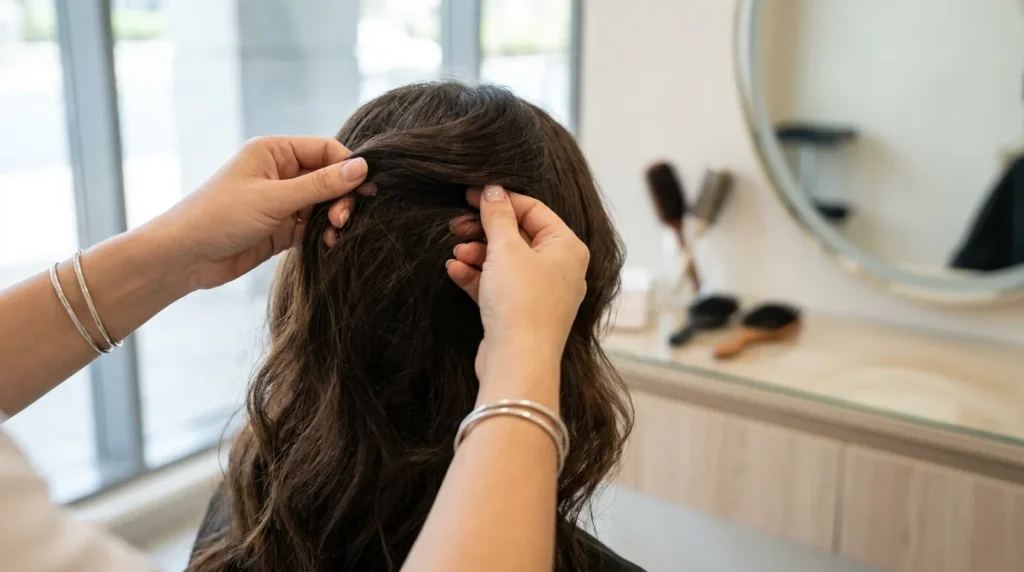
Hair extensions add length, volume, or colour by attaching extra hair to your own strands or weaving it into braided sections. The added hair carries weight, and that weight is the source of risk. When the load sits across a wide section of healthy hair, the strain is spread thin and your own hair copes. When it concentrates on a few fine strands, those strands snap.
So the honest answer to “are extensions bad for your hair” is that the method, the fitter, and the upkeep decide the outcome, not the extensions themselves. Clip-ins you remove every night sit at the safe end. A heavy bonded set left in for six months without a refit sits at the risky end. The same client can have a perfect experience with one method and lose hair with another.
Most extension damage traces back to four causes: a method that does not match your hair type, an incorrect fitting or a do-it-yourself removal, low-quality hair or adhesive, and gaps in aftercare and maintenance. Every one of them is preventable, which is why the question is less “do extensions ruin your hair” and more “who is fitting them and how are you looking after them”. The full range of hair extensions in Dubai sits across that risk spectrum.
Do extensions ruin your hair, or does the method?
The level of risk changes a lot by attachment type. Here is how the main methods compare on damage potential, drawn from how each one loads and holds your natural hair.
| Method | How it attaches | Damage risk | Typical wear |
|---|---|---|---|
| Clip-in extensions | Small combs clip on, removed daily | Low, unless worn heavy in one spot | Hours at a time |
| Halo extensions | A wire rests on the head, no direct bond | Very low, nothing pulls the root | Hours at a time |
| Tape-in extensions | Wefts taped around a section of hair | Low to moderate, weight spread wide | 6 to 8 weeks per fit |
| Micro ring extensions | Small beads clamp strands, no heat or glue | Moderate, depends on tightness | 2 to 4 months |
| Keratin bond and fusion extensions | Heated keratin tips fused near the root | Moderate to high if heat or weight is wrong | 3 to 6 months |
| Sew-in and weave extensions | Wefts sewn onto braided cornrows | Moderate to high if braids are too tight | 6 to 8 weeks |
The pattern is clear. The lighter and easier to remove a method is, the lower the risk to your own hair. Clip-in extensions you take out each night sit at the gentle end, while tape-in extensions are the lowest-risk permanent option when fitted well. The heavier and longer-worn a set is, the more the fitting skill matters.
How extensions cause damage when they go wrong
Damage almost never comes from the extension sitting in your hair. It comes from force. The British Association of Dermatologists lists hair extensions among the styling practices that can cause traction alopecia, a form of hair loss from sustained pulling on the root. The same pulling shows up in milder forms as breakage and shedding long before it reaches alopecia.
Three mechanical faults do most of the harm. Extensions fitted with too much tension strain the follicle from the first day. A bond placed on too little hair concentrates the weight on a handful of strands until they break. And a set left past its refit window starts to twist: as your hair grows, the attachment point sits further from the root, swings more freely, and tugs your hair from unnatural angles. That twisting is one of the most common causes of damage technicians see.
Pulling extensions out at home is the fastest route to losing your own hair with them. Removal needs the right solution for the bond and a steady hand, which is a job for the stylist who fitted them, never a late-night decision in front of the mirror.
What hair extensions cost in Dubai
Price tracks fitting quality more closely than most people expect. A cheap fitting often means a single technician, low-grade hair, and harsh adhesive, all of which raise the damage risk. Spending more usually buys a proper consultation, better hair, and a method matched to your strands.
| Tier | Typical price | Duration | Room | Products | Staff experience | Best for |
|---|---|---|---|---|---|---|
| Budget | AED 400 to 1,200 | 60 to 120 min | Shared salon floor | Clip-in sets, entry tape-in, synthetic or lower-grade hair | Junior to mid technician | Occasion volume, first trial, no standing commitment |
| Mid | AED 1,200 to 3,000 | 90 to 180 min | Dedicated extension station | Remy human hair, tape-in, micro ring and nano ring sets | Trained extension technician | Everyday volume, year-round wear, reusable ring hair |
| Premium | AED 3,000 to 5,000 plus | 3 to 5 hours | Private suite or specialist studio | Double-drawn Remy, keratin bond, strand-by-strand colour match | Senior or master specialist | Seamless full-head length, longest wear before refit |
Browse all 68 budget-tier Hair Salons providers on our directory.
What to expect at a safe extension appointment
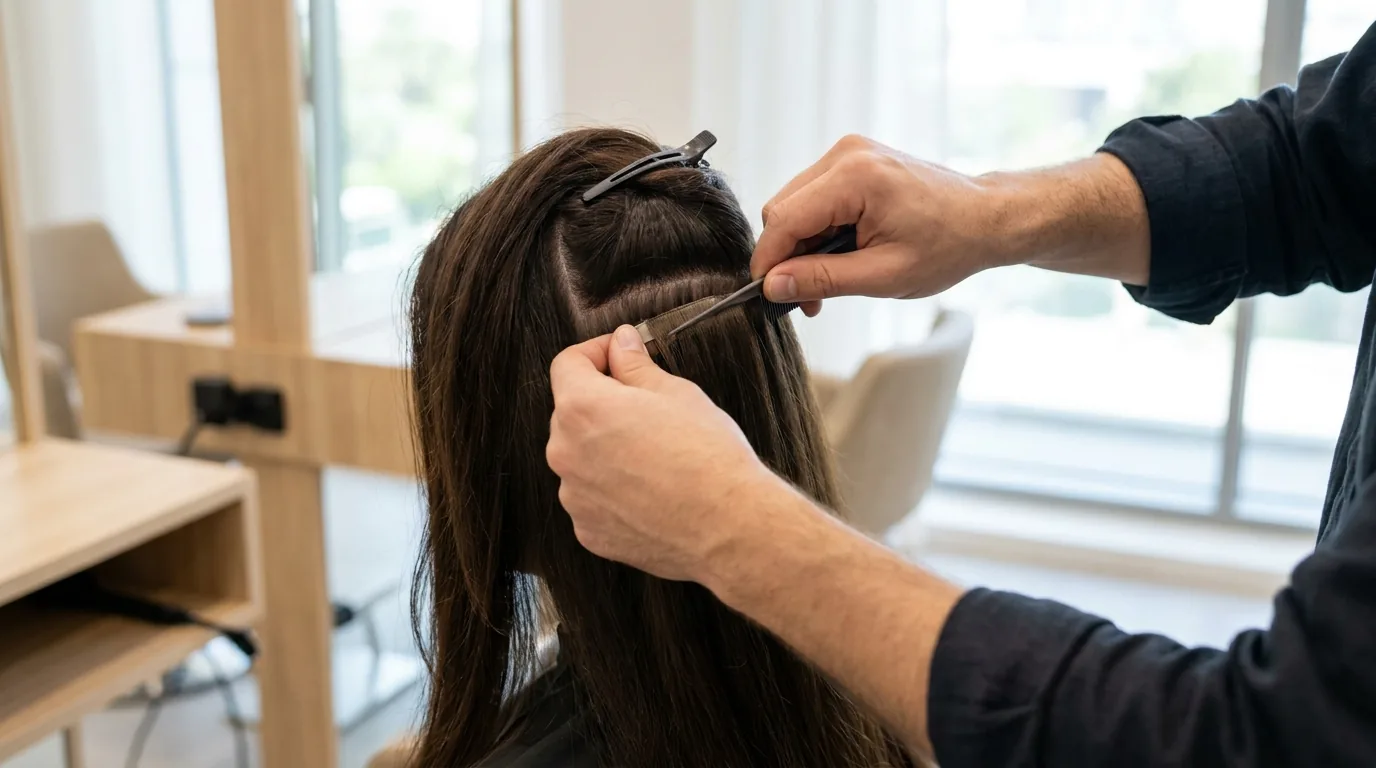
A good appointment starts before any hair is attached. The technician inspects your hair density, length, and condition, then recommends a method or, if your hair is too fine or fragile, advises against extensions altogether. Honest assessment up front is the single strongest signal you are in safe hands.
Fitting takes anywhere from 45 minutes for a clip-in styling session to three or four hours for a full head of bonds. You leave with aftercare instructions and a refit date, usually six to eight weeks out for tape and sew-in methods. Your scalp should never hurt afterwards. Pain on day one means the fitting is too tight and needs adjusting, not pushing through.
One Dubai-specific point: book your refit on schedule even when the city slows down over summer or Ramadan. Stretching the window to fit a quieter calendar is exactly when the twisting damage sets in.
Are extensions bad for your hair in Dubai’s climate?
Dubai adds pressure that the global guides skip. Heat and humidity swell the hair cuticle and loosen keratin bonds faster, so fusion and tape sets can slip earlier here than in a cooler climate. Strong sun dries both your own hair and the added hair, and dry hair at the attachment point is weaker hair. Chlorinated pool water and the hard tap water common across the Emirates strip moisture and can dull and tangle wefts.
None of this rules extensions out. It means aftercare carries more weight here. Rinse and condition after the pool, shield your hair from midday sun, and keep the attachment points moisturised so the join stays supple rather than brittle. The climate is the reason a Dubai fitting needs Dubai aftercare, not a London routine copied over.
How to choose a safe extension salon in Dubai
The fitter matters more than the brand of hair. Use this checklist before you book.
- Confirm the salon is licensed. Hair extension fitting is a cosmetic salon service, not a medical one, so a legitimate Dubai salon holds a DET trade licence that lists hair and beauty services in scope, and its premises fall under DHA salon health and hygiene rules covering sanitation and single-use tools. Ask to see the trade licence; a licensed venue will show it without hesitation.
- Insist on a consultation first. Any technician who quotes a method before looking at your hair is guessing. The assessment should cover density, condition, and whether extensions suit you at all.
- Ask about the hair. Human hair with attachment points designed to protect natural hair behaves better than synthetic hair on cheap tape, which irritates the scalp and twists more.
- Check the refit and removal policy. A safe salon books your maintenance and handles removal in-house. Walk away from anyone who shrugs off aftercare.
- Read recent reviews. Look for comments on fitting comfort and the state of clients’ hair after removal, not just how the extensions looked on day one. Our salon ranking method explains how the directory weighs these signals.
You can browse hair salons in Dubai on our directory, or open the full salon directory to filter by service and area, to start a shortlist.
These hair salons rank among the directory’s higher-rated venues for hair services, including extensions. Listings update as ratings and reviews change.

Popular hair salons in Dubai
Collective is a hair salon inside the MAG Warehouses complex in Al Quoz Industrial Area 2, rated from reviews. Services cover hair colouring, balayage, hair highlights, hair extensions, keratin treatment, ladies haircuts, blow dry, bridal makeup, manicures, gel pedicures and waxing services. Several reviewers like the modern, classy interior and mention stylists using Dyson equipment for finishing, with one client describing a playful, well judged cut from a stylist who listened closely to the brief. Feedback on colour work is more mixed, with one detailed report describing hair damage and billing disagreements after a balayage and toner service, so it makes sense to agree the full scope and price before any colour treatment begins. The salon has a toilet on site along with wheelchair-accessible parking and entrance.
Version Francaise is a hairdressing salon inside the Marriott Harbour Hotel and Suites in Dubai Marina, offering haircuts, hair colouring, highlights, hair extensions, keratin treatment, blow dry styling, threading, manicures and nail art. It is rated from reviews.Reviewers consistently describe the salon as welcoming, with several returning for years and calling it their regular salon for haircuts and colour treatments. The team is praised for professionalism, attention to detail and a warm welcome from arrival to the end of the appointment.The salon has free Wi-Fi, on-site services, a wheelchair-accessible entrance, car park and toilet, plus gender-neutral toilets. It suits residents and hotel guests in Dubai Marina after a haircut, colour service or hair treatment appointment, with appointments recommended given the salon's loyal following.
Locks By Lou Lou is a hair salon on Al Wasl Road in Jumeirah, rated from reviews. Reviewers consistently praise the colour work, from balayage and highlights to root touch ups, and several mention hair extensions that look natural rather than obviously fitted. Clients also note that stylists take time to understand what they want before starting and explain aftercare so hair stays in good condition afterwards.Beyond colour, the salon offers blow dry, keratin treatment, hair extensions, manicure, gel pedicure, microneedling and anti-aging facial treatments. The entrance is wheelchair accessible and there is an on-site toilet.Appointments are recommended, particularly for colour and extension work, and the salon suits clients looking for an ongoing colourist relationship rather than a single visit.
Version Francaise Pour Elle is a hairdresser and beauty salon on Al Wasl Road, Al Safa 2, rated from reviews. Services span hair colouring, balayage, highlights, extensions, keratin treatment and blow dry, ladies' haircuts, beard trim, manicure, gel nails, gel pedicure, eyelash extensions, anti-aging facials and waxing.Reviewers consistently praise the colour and highlight work, describing meticulous stylists who take the time to understand what a client wants even when it is hard to explain. The salon is also noted for its cleanliness, product quality and reasonable prices, with several reviewers mentioning the owner is regularly on site overseeing the team and the client experience.Free Wi-Fi and parking are available. Suits clients after precise colour work from a team that takes the time to get it right.
Trinity Hair Salon is a hair salon in Al Barsha South, based at Danube Resortz, rated from reviews.Colour work is what reviewers talk about most, with several describing years of trust in the stylists for balayage, highlights and full colour changes, including recovering from a previous bad dye job elsewhere. The salon also offers ladies haircuts, blow dries, hair treatment and a back massage, plus manicures and pedicures. More than one reviewer describes the atmosphere as warm and modern with a good energy, and says they would not trust anyone else with their hair colour.There is a toilet on site, the salon offers on-site services, and a wheelchair-accessible car park makes it an easy stop for residents around Al Barsha South.
Extensions versus alternatives for length and volume
Extensions are not the only route to fuller hair, and the alternatives carry different trade-offs. A keratin treatment smooths and adds shine without any added weight, which suits anyone whose main concern is frizz rather than length. A volumising cut and the right styling products can build the appearance of thickness with zero tension on the root. For thin or fragile hair, these gentler options often beat extensions outright, because no attachment means no traction risk.
Choose extensions when you want real added length or density and your hair is strong enough to carry it. A keratin treatment or a colour service like balayage suits you better when your hair is fine, recovering, or you simply want healthier-looking hair without the maintenance commitment of attachments.
Aftercare that protects your natural hair
Aftercare is where most preventable damage is won or lost. Keep these habits through the wear period.
- Detangle from the ends upward with a soft-bristle or loop brush, never yank from the root.
- Shampoo regularly with a sulphate-free formula, and condition the lengths so they do not dry out and snag.
- Never sleep on wet extensions; tie hair in a loose braid to stop overnight tangling and tension.
- Keep the attachment points moisturised, which matters more in Dubai’s dry heat than in cooler climates.
- Skip harsh heat tools near the bonds, and avoid dragging lengths when you style.
- Book every refit on time, every six to eight weeks for tape and sew-in sets, to stop the twisting that breaks hair.
The same logic applies well beyond extensions. Our guide to damage hair care ranks the everyday habits that cause the most breakage, from heat styling to daily washing in hard water.
Frequently asked questions
The same tension question comes up after pregnancy, when regrowth at the hairline is at its most fragile and extensions are the worst possible timing. See how to prevent postpartum hair loss for what to do instead while the shed runs.


