



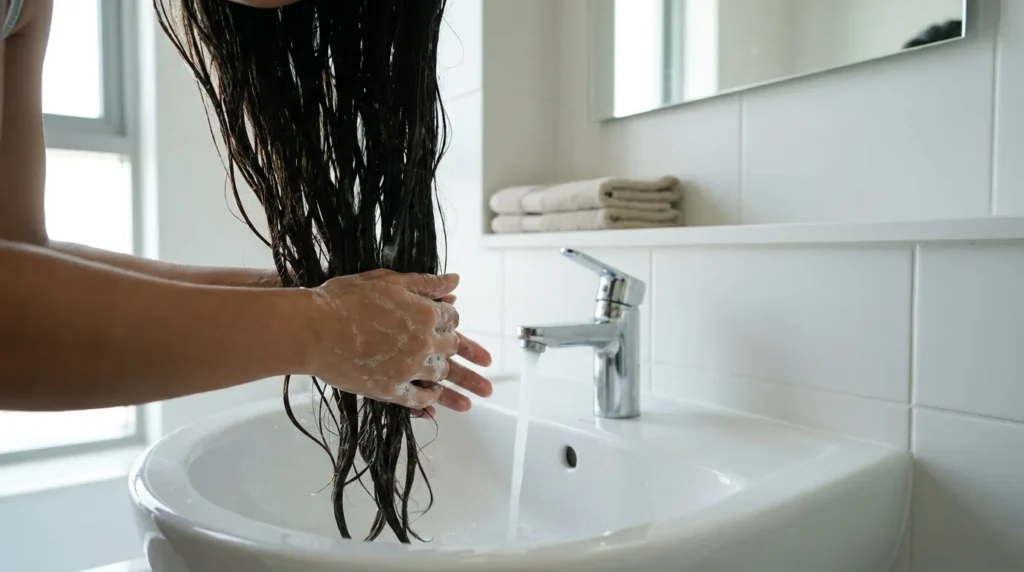
To remove keratin treatment from hair at home, you speed up its natural fade rather than dissolve it: wash every one to two days with a clarifying or sulfate shampoo, swim in chlorinated or salt water, and skip heat styling. A salon keratin treatment lasts three to five months, and gentle methods soften it within two to four weeks.
What removing a keratin treatment actually means
A keratin treatment, including the popular Brazilian keratin or Brazilian blowout, coats and seals the hair cuticle with a protein layer, then locks it in with heat. Because it is semi-permanent, nothing you do at home strips it off in one wash the way a clarifying rinse lifts ordinary product buildup.
What you can do is accelerate the fade. People search for how to wash keratin treatment out of hair expecting a single rinse, but the keratin layer wears away gradually as the cuticle sheds and as washing, friction, water minerals, and sun break the seal down. Every method below works by speeding that process, not by chemically melting the protein. Set the expectation now: this takes weeks, not a single afternoon.
This matters for two reasons. First, anyone promising an overnight fix is either selling a harsh product or risking your hair. Second, the treatment was designed to resist water, so patience plus consistency beats one aggressive session every time.
Why people want to remove keratin treatment
Most reasons fall into a few buckets. Knowing yours points you to the right method and tells you whether home removal is even the safe choice.
- The result looks wrong. Hair came out flatter, greasier, or straighter than expected, often from the wrong formula for the hair type.
- You miss your natural texture. Curls and volume feel worth more than the smoothness after a few weeks.
- The hair feels coated or heavy. A formula too strong for fine hair can sit like a weight and cause breakage.
- You had a reaction. Itching, a tender scalp, or watering eyes can signal sensitivity, common with formaldehyde-based formulas. This is a stop sign, covered below.
If the reason is a reaction or sudden shedding, treat it as a health issue first and a styling issue second. Persistent shedding is a scalp-health question that a clinic, not a kitchen remedy, should assess, and our Dubai hair-loss guide covers when to get it checked. Speak to a doctor or a licensed clinic before you put anything else on your scalp.
How to remove keratin treatment from hair at home, gentlest first
Work down this ladder in order. Start at the top, give each step a week or two, and only move down if you need to. The lower you go, the faster the fade and the higher the risk of dryness, so stop as soon as the texture you want comes back. Because keratin is a protein treatment, these same clarifying methods also work to remove protein treatment from hair more broadly.
| Method | How it works | Speed | Damage risk |
|---|---|---|---|
| Frequent washing | Wash daily or every other day to wear the seal down | Slow | Low |
| Clarifying or sulfate shampoo | Lifts the coating faster than a gentle wash | Medium | Low to medium |
| Chlorine or salt water | Pool and sea water break the keratin bond | Medium | Medium |
| Deep-cleansing or anti-residue wash | A stronger detox wash, once a week maximum | Faster | Medium |
| Baking soda rinse | A high-pH rinse that opens the cuticle | Fast | High |
The table is the short version. The detail on each method follows.
1. Wash more often
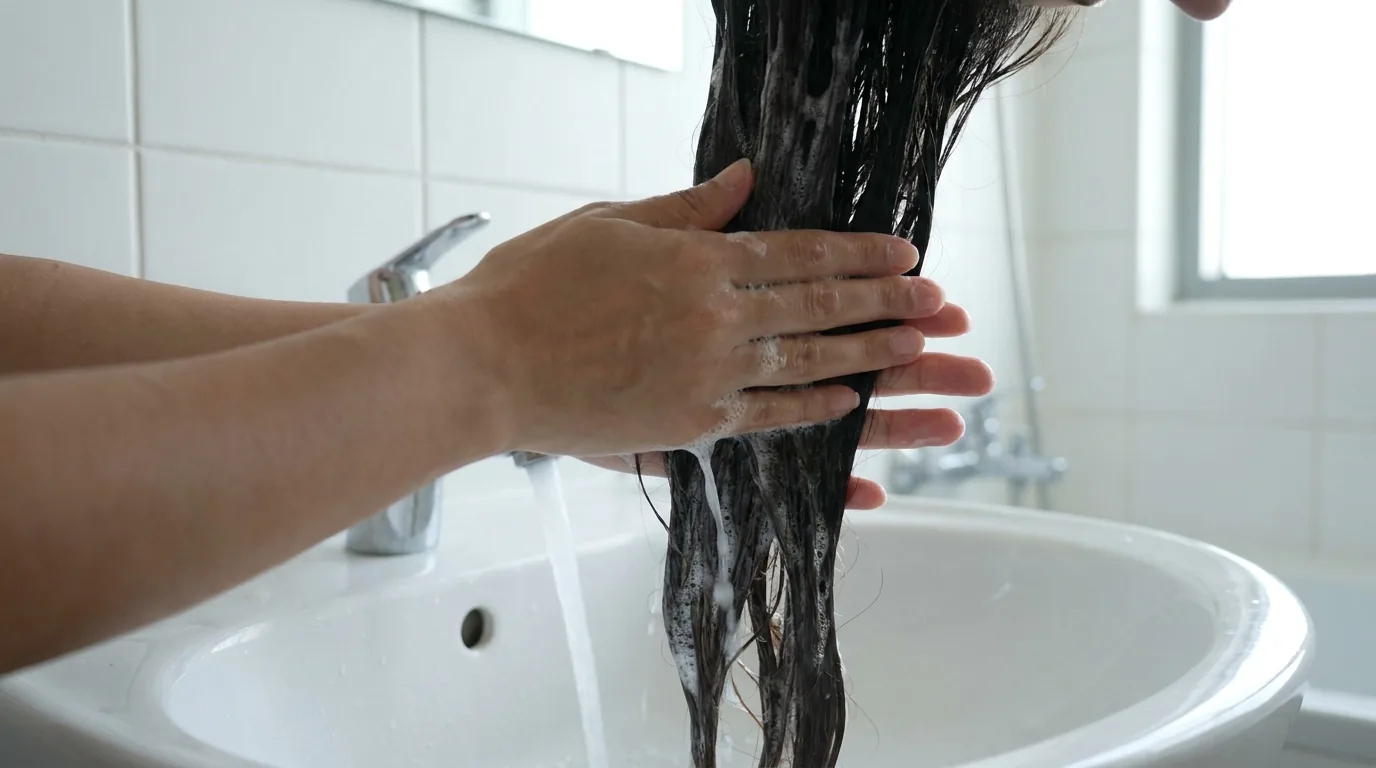
This is the simplest method of all. Move from twice a week to daily or every other day with a normal shampoo. Each wash, plus the friction of towel-drying and brushing, chips away at the seal. It is the slowest route and the kindest to your hair, so it suits anyone who only wants to soften the result rather than erase it.
2. Switch to a clarifying or sulfate shampoo
Sulfates are the same ingredient keratin aftercare tells you to avoid, which is exactly why they help here. Using a clarifying shampoo to remove keratin treatment, or a standard sulfate formula, lifts the coating faster than a gentle wash. Use it two to three times a week and watch for dryness. Follow each wash with a rich conditioner or a hair mask, because a clarifying shampoo strips natural oils along with the keratin.
3. Use chlorine or salt water
Pool chlorine and sea salt both break down the keratin bond, which is why salons warn you to stay out of the water after a treatment. To remove it, do the opposite. A few sessions in a chlorinated pool or the sea will visibly loosen the result. Rinse with fresh water afterward and condition well, since both chlorine and salt are drying on their own.
4. Try a deep-cleansing wash, sparingly
Deep-cleansing and anti-residue shampoos are stronger than everyday clarifying ones. They work, but they are aggressive. Use one no more than once a week. More than that risks a dry, flaky scalp and brittle lengths. This is the strongest method most people should reach for at home.
5. Baking soda, only with caution
A baking soda rinse, sometimes mixed with a little honey to offset the harshness, raises the hair pH and opens the cuticle so the keratin fades quickly. The method is effective, but it is also genuinely risky, because the high pH leaves hair dry, rough, and prone to breakage. If you try it, use it once, condition heavily afterward, and do not repeat it on already fragile hair.
Methods to avoid
Some tips that circulate online do more harm than good. The methods below can wreck hair faster than they fade keratin, so skip them.
- Bleach or highlights to break it down. Bleach does disrupt keratin, but it is a permanent chemical process that damages hair on its own. Using it to remove a hair smoothing treatment stacks one harsh process on another.
- Strong acid or color removers. Marketed as fixes, these are unpredictable on keratin-coated hair and can leave it dry and porous. They also stain skin at the hairline, and the safe way to lift that is covered in our guide on how to remove hair color from skin.
- Daily baking soda or salt rinses. Once is a calculated risk. Repeated high-pH or high-salt washing strips the hair and irritates the scalp.
- Anything on a formaldehyde reaction. If a treatment triggered a reaction, do not layer home chemistry on top. Get it assessed.
What to expect at home in Dubai’s climate
Dubai’s environment is on your side when you want to remove keratin from hair naturally. The same conditions that shorten how long a treatment lasts also help when you want it gone.
Tap water across much of the city is hard, and the mineral content wears at the keratin seal with every wash. Year-round sun does the same to the protein layer over time. From June to September, high humidity works against the smoothing effect, which is why frizz tends to return sooner in summer. If frizz is what you are left with once the keratin fades, our guide to frizzy hair treatment in Dubai covers the causes, the fixes and what they cost.
The pools and the sea matter most. Regular swimming in a chlorinated pool or the Gulf is one of the faster gentle routes, and in Dubai both are within easy reach for most of the year. Rinse with fresh water and condition after every swim so the drying effect does not outrun the fade you want.
One caution that is specific to the climate: do not let aggressive removal collide with constant sun and chlorine. Stripping hair with a deep-cleansing wash and then exposing it to a full day at the beach is how a manageable fade turns into real damage.
Aftercare while the keratin fades
Removing keratin, by any method, leaves hair drier and more porous as the protective layer lifts. Treat the weeks of fading as a repair window, not just a stripping one.
- Deep-condition or use a hair mask once or twice a week to replace lost moisture.
- Lower the heat. Air-dry where you can, and keep the flat iron and blow dryer on a cooler setting.
- Rinse and condition after every pool or beach session to limit the drying hit.
- Trim the ends if they turn dry or split. Damaged ends do not recover, and a trim stops splits travelling up.
- Consider a gentle protein treatment or a hair mask if the lengths start to feel weak.
When to see a professional instead
Home removal suits a fade you simply want to speed along. Some situations need a salon or a clinic, not a kitchen remedy.
See a professional if you reacted to the treatment, if hair is shedding or breaking, if the original formula was a strong formaldehyde-based one, or if your hair is already bleached or color-treated and you do not want to risk stacking damage. A stylist at a hair salon can use a controlled clarifying or correction treatment and judge how much your hair can take, which is safer than guessing at home. If breakage is severe, a gentler in-salon option like hair botox can smooth without the chemistry of a fresh keratin treatment.
In Dubai, any salon offering hair treatments needs a DET trade licence to operate and a DHA health licence for services that affect skin and scalp health. Booking a correction with a licensed salon means trained hands and accountable standards, rather than an unregulated home experiment on hair that is already stressed. You can compare every licensed salon in the Dubai directory below.
Browse all 167 Hair Salons providers on our directory.
How to choose a salon if you need a correction
If you decide a professional should handle it, pick on skill signals, not price alone. Our guide to the best hair salons in Dubai walks through the same checks, and you can see how we weigh them on the ranking methodology page. The right questions before you book:
- Ask whether they have corrected or removed keratin before, not only applied it.
- Check that the salon is DET-licensed and that any scalp-affecting service runs under DHA health standards.
- Look for recent reviews that mention damaged-hair recovery, not just fresh treatments.
- Ask what they will use and why, and whether they will assess your hair’s condition first.
- Avoid anyone who promises to remove a keratin treatment in a single session with no caveats.
Keratin removal versus letting it grow out
You have two honest paths: speed the fade with the methods above, or do nothing and let it grow out. Growing it out is the zero-risk option. The treated hair stays smooth and simply moves down the shaft as new, untreated hair grows in, and a few trims tidy the line over three to five months.
Active removal makes sense when you cannot wait that long, when the result genuinely bothers you, or when the hair feels coated and heavy. If it is only mild impatience, growing out spares your hair the drying that every removal method causes. Match the effort to how much the result actually troubles you.


