


Yes, highlights damage hair. Lightener opens the cuticle and strips pigment out of the cortex, which leaves the strand more porous and weaker than before. How much weaker depends on the lift level, how much of the head is treated, and how often the roots are retouched, typically every 6 to 8 weeks on a full head.
What lightening actually does to a strand
A hair strand has an outer cuticle of overlapping scales and a cortex underneath carrying the melanin that gives hair its colour. Lightener swells the cuticle open so an alkaline agent reaches the cortex and breaks the melanin down. Nothing puts the melanin back.
Two chemistries do this job, and bleach powder mixed with peroxide developer gives the biggest lift, which is why salons reach for it on foils. A high lift tint deposits colour while it lifts, in one step, and is gentler because it cannot go as pale. So do hair highlights damage hair less when a colourist skips the powder? Slightly, yes, though a tint stalls after three or four shades of lift and the colourist has to switch to powder anyway.
Developer strength is the variable most clients never hear about. A 20 volume developer lifts slowly; a 30 or 40 volume developer lifts faster, saving chair time and costing the strand elasticity. A colourist on a tight slot has an obvious reason to reach for the higher number.
The damage is structural: peroxide breaks the disulphide bonds inside the cortex, and those bonds are what let hair stretch and spring back. Break enough of them and the hair stops recovering: it stretches, then snaps. That is where dryness turns into breakage.
Damage by coverage: full head, half head, babylights
Treating highlights as one thing is the mistake behind most of the panic. A face framing piece and a full head of platinum foils are the same chemistry on very different amounts of hair, and strand count decides the risk. The table below maps the Dubai salon menu against how much gets lifted.
| Type | Roughly how much is lifted | Typical retouch gap | Damage load |
|---|---|---|---|
| Money piece or face framing | 6 to 12 strands at the hairline | 8 to 12 weeks | Low. Small surface, easy to grow out |
| Babylights | Many very fine strands, low lift each | 10 to 14 weeks | Low to moderate. Fine sections process fast |
| Half head foils | Top and sides, roughly half the canopy | 8 to 10 weeks | Moderate |
| Full head foils | Crown, sides, back and underneath | 6 to 8 weeks | High. Most strands see lightener |
| Foilayage | Painted then wrapped, mid lengths and ends | 12 to 16 weeks | Moderate, concentrated on older hair |
Read down the retouch column rather than the damage column. The types needing the shortest gap put lightener near the scalp most often, and frequency turns one manageable session into a pattern.
Where highlights damage hair most: the retouch
One appointment rarely wrecks hair. The tenth one does. Highlights start at or very close to the root, so once 2 or 3 centimetres of natural colour grows in, the line shows and the client books again. That regrowth cycle is the real difference between this service and a freehand technique.
The specific risk is overlap. When a colourist paints lightener onto new growth, the product creeps a few millimetres onto hair already lifted last time. That band gets processed twice, then three times, then four. It is the most common cause of mid shaft breakage in highlighted hair, and why breakage shows as a ragged shelf a few centimetres from the scalp rather than at the ends.
This is where balayage behaves differently. A painted technique leaves the root untouched and starts partway down, so there is no regrowth line to chase and no overlap band to build. The tradeoff is that balayage concentrates its lift on the oldest hair, already the most fragile part of the strand.
So do highlights damage your hair permanently? The lightened hair, yes. What a colourist controls is whether the same centimetre gets lightened repeatedly. A root only retouch, with previously lifted hair protected by barrier cream or left alone, removes most of the cumulative load. It takes longer in the chair, so name it at booking.
Do foils make highlights worse?
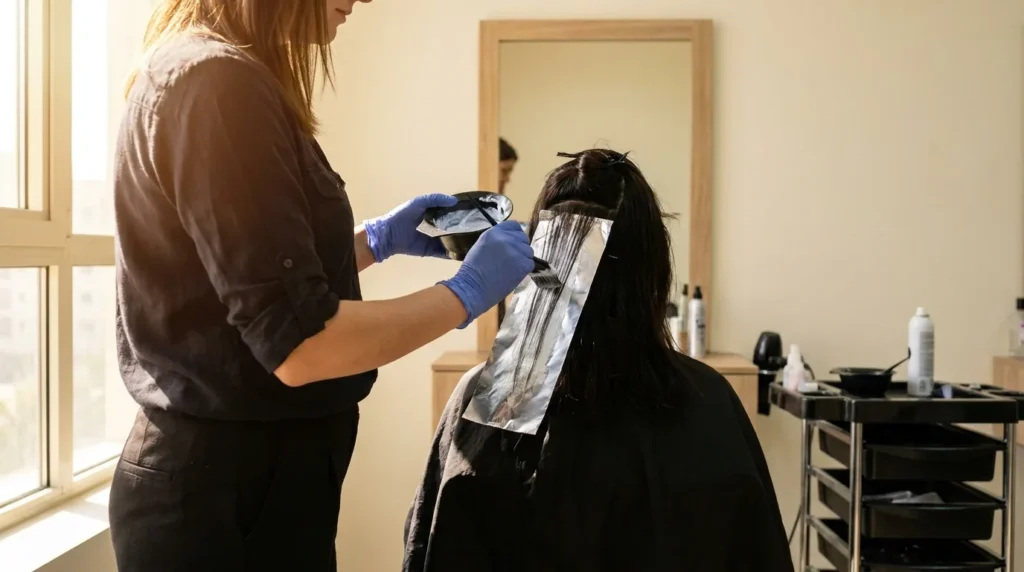
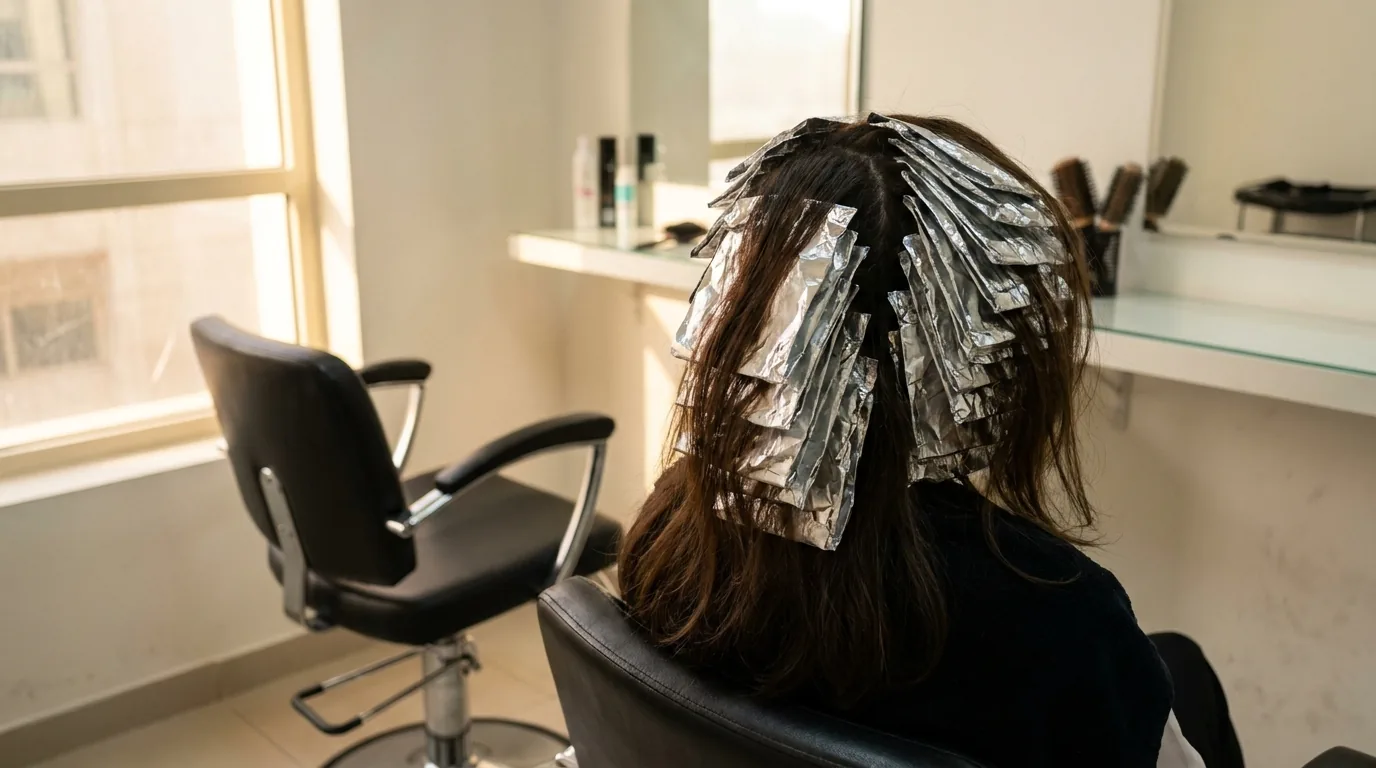
Foil does three things at once and only one is cosmetic: it isolates a section so lightener does not touch the hair around it, it holds the product wet so processing continues, and it traps heat. That last property is why foil lifts further than the same mix in open air.
Trapped heat speeds the reaction, which is useful and unforgiving. A packet left five minutes past its check point on fine hair can go from a clean lift to a section feeling like wet cotton wool. Thick sections process unevenly, so the outer hair overcooks while the middle underprocesses.
There is mechanical stress too. A full head of foils is heavy and pulls at the roots for the whole processing time. On fine or shedding hair that tension matters, though it causes soreness far more often than lasting loss.
Highlights against all-over colour
Search results treat this as a close call. Lifting is harder on hair than depositing, every time.
A tint going darker or matching the natural level mostly deposits pigment and does minimal structural work. A permanent tint going one or two levels lighter does some lifting, so it sits in the middle. Highlights go furthest, because the point is pulling pigment out to reach a pale result. So are highlights bad for your hair next to a box of brown dye? On the lightened strands, meaningfully worse.
Coverage flips the comparison. All-over hair colour touches every strand, while a half head of foils touches maybe half. Someone lifting a full head every six weeks is treating their hair worse than someone getting a demi permanent gloss every eight. Someone with four face framing pieces twice a year is not.
Does hair go back to normal after highlights?
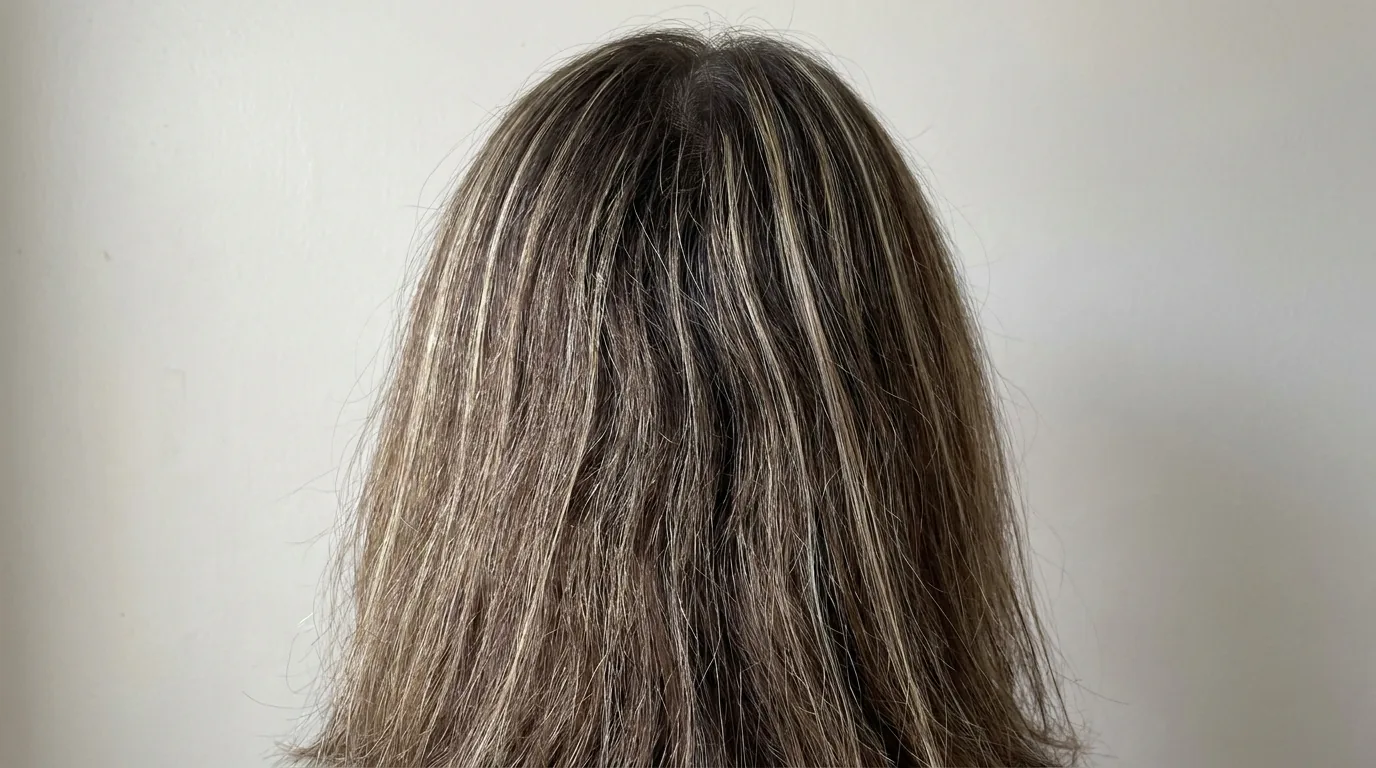
No, and any answer saying otherwise is selling something. Bleached hair does not repair itself, because the melanin is gone, broken bonds in the cortex do not reform, and no conditioner reverses that. What changes is the proportion of virgin hair on the head.
Hair grows roughly 1 centimetre a month. Shoulder length hair sits around 30 centimetres, so growing out a full head of highlights takes about two and a half years without trims. Most people cut their way out faster than they grow out, removing the most processed ends every eight to ten weeks.
So do highlights ruin your hair in any final sense? Only when damage outruns growth. A strand snapping at 10 centimetres never reaches shoulder length, which is why repeatedly overlapped hair seems to stop growing. It is growing normally at the follicle and losing length at the damaged band.
Reading a Dubai price as a damage signal
Highlights in Dubai run from about AED 350 to AED 2,500, and the spread is not only postcode. Three line items sit behind that number, and each maps onto the strand.
The first is time. A cheap full head usually means fewer, fatter foils and a stronger developer to finish inside the slot. The second is the bond builder, which protects the disulphide bonds during processing; mid range and premium colourists build it in, budget menus often charge separately or skip it. The third is the toner, which closes the cuticle down and neutralises brass after the lift. Rushing it leaves hair both more orange and more porous.
| Tier | Typical price | Duration | Room | Products | Staff experience | Best for |
|---|---|---|---|---|---|---|
| Budget | AED 120 to 350 | 45 to 120 min | Shared salon floor | Standard ammonia colour lines, packaged root and gloss deals | Junior to mid colourist | Root touch-ups, single global colour, short hair, deal bookings |
| Mid | AED 350 to 750 | 90 to 180 min | Dedicated colour and wash station | Professional ammonia-free lines, bond builders on request | Experienced colourist | Highlights, partial balayage, gloss and toner, regular maintenance |
| Premium | AED 750 to 1800 plus | 150 to 300 min | Private suite or hotel salon | Imported colour systems, integrated bond builders, colour correction kits | Senior or master colourist | Full balayage, ombre, colour correction, long or previously coloured hair |
A money piece at AED 350 from a careful colourist beats a rushed full head at AED 1,400. Price becomes a damage signal when the coverage is large and the number is low.
Browse all 167 Hair Salons providers on our directory.

Popular hair salons in Dubai
Collective is a hair salon inside the MAG Warehouses complex in Al Quoz Industrial Area 2, rated from reviews. Services cover hair colouring, balayage, hair highlights, hair extensions, keratin treatment, ladies haircuts, blow dry, bridal makeup, manicures, gel pedicures and waxing services. Several reviewers like the modern, classy interior and mention stylists using Dyson equipment for finishing, with one client describing a playful, well judged cut from a stylist who listened closely to the brief. Feedback on colour work is more mixed, with one detailed report describing hair damage and billing disagreements after a balayage and toner service, so it makes sense to agree the full scope and price before any colour treatment begins. The salon has a toilet on site along with wheelchair-accessible parking and entrance.
Version Francaise is a hairdressing salon inside the Marriott Harbour Hotel and Suites in Dubai Marina, offering haircuts, hair colouring, highlights, hair extensions, keratin treatment, blow dry styling, threading, manicures and nail art. It is rated from reviews.Reviewers consistently describe the salon as welcoming, with several returning for years and calling it their regular salon for haircuts and colour treatments. The team is praised for professionalism, attention to detail and a warm welcome from arrival to the end of the appointment.The salon has free Wi-Fi, on-site services, a wheelchair-accessible entrance, car park and toilet, plus gender-neutral toilets. It suits residents and hotel guests in Dubai Marina after a haircut, colour service or hair treatment appointment, with appointments recommended given the salon's loyal following.
Locks By Lou Lou is a hair salon on Al Wasl Road in Jumeirah, rated from reviews. Reviewers consistently praise the colour work, from balayage and highlights to root touch ups, and several mention hair extensions that look natural rather than obviously fitted. Clients also note that stylists take time to understand what they want before starting and explain aftercare so hair stays in good condition afterwards.Beyond colour, the salon offers blow dry, keratin treatment, hair extensions, manicure, gel pedicure, microneedling and anti-aging facial treatments. The entrance is wheelchair accessible and there is an on-site toilet.Appointments are recommended, particularly for colour and extension work, and the salon suits clients looking for an ongoing colourist relationship rather than a single visit.
Version Francaise Pour Elle is a hairdresser and beauty salon on Al Wasl Road, Al Safa 2, rated from reviews. Services span hair colouring, balayage, highlights, extensions, keratin treatment and blow dry, ladies' haircuts, beard trim, manicure, gel nails, gel pedicure, eyelash extensions, anti-aging facials and waxing.Reviewers consistently praise the colour and highlight work, describing meticulous stylists who take the time to understand what a client wants even when it is hard to explain. The salon is also noted for its cleanliness, product quality and reasonable prices, with several reviewers mentioning the owner is regularly on site overseeing the team and the client experience.Free Wi-Fi and parking are available. Suits clients after precise colour work from a team that takes the time to get it right.
Trinity Hair Salon is a hair salon in Al Barsha South, based at Danube Resortz, rated from reviews.Colour work is what reviewers talk about most, with several describing years of trust in the stylists for balayage, highlights and full colour changes, including recovering from a previous bad dye job elsewhere. The salon also offers ladies haircuts, blow dries, hair treatment and a back massage, plus manicures and pedicures. More than one reviewer describes the atmosphere as warm and modern with a good energy, and says they would not trust anyone else with their hair colour.There is a toilet on site, the salon offers on-site services, and a wheelchair-accessible car park makes it an easy stop for residents around Al Barsha South.
What repairs highlighted hair, and what only coats it
The aftercare aisle blurs two different jobs. Some products rebuild structure inside the strand and some sit on the outside making damaged hair behave better. Both are useful, but only one actually changes the hair.
| Product | What it does | Repairs structure |
|---|---|---|
| Bond builder (Olaplex and similar) | Reconnects broken disulphide bonds in the cortex | Yes, partially and only while used |
| Protein treatment | Fills gaps in a porous cuticle with hydrolysed protein | Temporarily. Overuse makes hair brittle |
| Deep conditioner or mask | Restores moisture and slip | No, though it prevents further mechanical damage |
| Silicone serum or oil | Coats the strand, adds shine, reduces friction | No. Cosmetic only |
| Purple shampoo | Deposits violet pigment to cancel brass | No. Colour correction, and drying if overused |
| A trim | Removes the split ends and the damaged band | The only permanent fix |
Dubai adds one variable. Chlorine and hard water bind to porous hair faster than to virgin hair, so lightened lengths pick up mineral buildup and pool tint readily. Rinsing with fresh water before a swim and a monthly chelating wash does more here than another mask. Strong year round sun oxidises lifted hair towards brass, so the toner fades long before the colour grows out.
Heat is the other multiplier. Lightened hair holds less water, so a straightener at 200 degrees costs it more than untreated hair at the same setting. Dropping the tool temperature and running a bonding or protein treatment on a schedule is the practical version of aftercare. A keratin treatment smooths heavily lifted hair, though it manages the symptom rather than the structure.
What a Dubai colour salon’s licence covers
Two authorities sit behind a legitimate colour service. The Department of Economy and Tourism issues the trade licence letting a salon operate commercially in Dubai, and the Dubai Health Authority issues the health licence covering the premises, hygiene standards and the practitioners working there. A salon offering colour should hold both, and both are reasonable to ask about.
The practical value is not paperwork. A DHA licensed premises has been inspected on sanitation, patch testing practice and product storage, and licensed staff carry documented training. That correlates with the boring things protecting a strand: a colourist who runs a strand test before a full head, who checks a foil at four minutes instead of twelve, and who declines a client whose hair cannot take another round.
Listings for Dubai hair salons and the wider salon directory record area, rating and review volume, and the ranking method explains what those signals prove. The American Academy of Dermatology publishes dermatologist guidance on colouring with less damage, and licence status can be checked through the Dubai Health Authority.


