



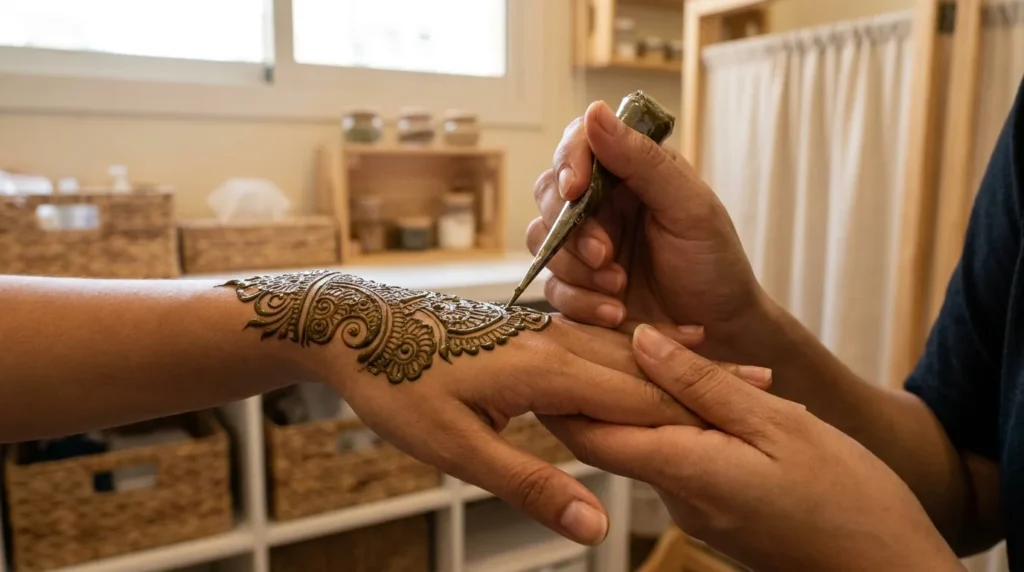
What is henna made of? Henna is made of the dried, powdered leaves of the Lawsonia inermis plant, mixed into a paste with a mild acid like lemon juice plus a little sugar and essential oil. The leaves carry a natural dye molecule called lawsone, which binds to keratin in skin and hair and leaves a reddish-brown stain that lasts one to three weeks.
What is henna?
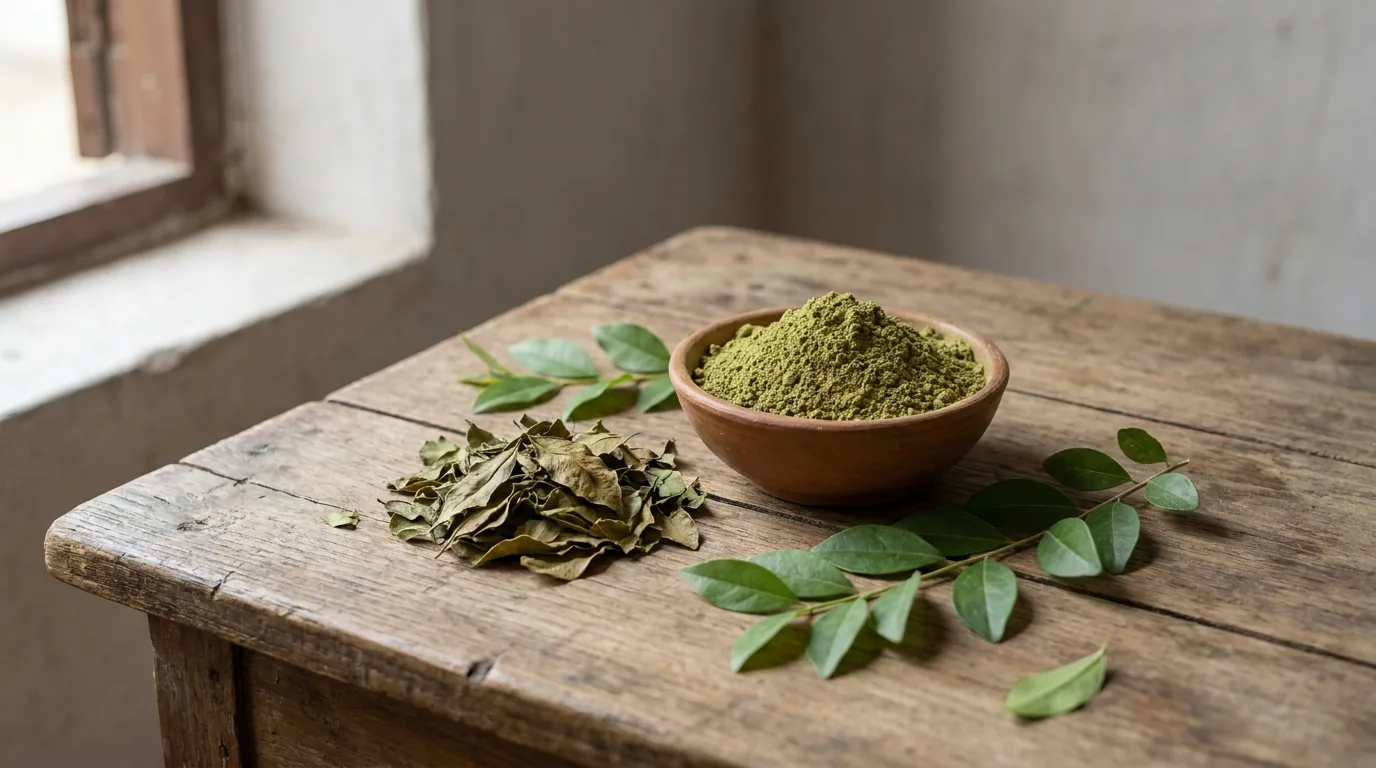
Henna is a plant-based dye used for body art, hair colour, and traditional ceremonies. It comes from a flowering shrub, Lawsonia inermis, also called the mignonette tree or Egyptian privet. The shrub grows in hot, dry regions across North Africa, the Middle East, and India, which is why henna sits so deeply inside Gulf and South Asian culture.
The dye itself is natural, because pure henna is vegan, contains no synthetic colourant, and stains through a chemical reaction rather than a coating. That sets it apart from a marker or a temporary transfer tattoo, which only sits on the surface, since henna actually bonds to the top layers of skin and to the hair shaft.
People often confuse a few products that share the henna name. The next section breaks down what henna is made of when it is genuine, and what gets added to the cones sold in some shops.
What henna is made of: the core ingredients
Authentic henna is made of four simple ingredients. A traditional cone or bowl uses these, and nothing that needs a chemistry degree to pronounce.
| Ingredient | What it is | Why it is there |
|---|---|---|
| Henna powder | Dried, crushed, sifted leaves of Lawsonia inermis | Carries lawsone, the dye that creates the stain |
| Mild acid | Lemon juice, tea, or another acidic liquid | Lowers the pH so lawsone releases from the leaf |
| Sugar | White sugar or molasses | Keeps the paste sticky so it clings to skin while it develops |
| Essential oil | Cajeput, lavender, or tea tree oil (high in terpenes) | Deepens and darkens the final colour |
Lawsone is the part that matters. It is a reddish-orange pigment, and it is the only thing in the leaf that stains. The fresher the powder, the more lawsone it holds, so quality henna gives a richer colour. So while the full answer to what henna is made of lists four ingredients, the dye comes from just one of them.
What gives henna its colour
Pure henna stains in one colour family only: orange through deep reddish-brown. It cannot produce black on its own, and it cannot lighten hair. Body chemistry, skin thickness, and how long the paste stays on all shift the final shade, which is why palms and soles stain darkest, where the skin is thickest.
What about black and other henna colours
Two named products are sold as henna but are not pure henna. Knowing the difference protects your skin.
- Neutral henna is not henna at all. It is usually cassia powder, from the Cassia plant. It conditions hair without changing colour much.
- “Black henna” is the one to watch. To force a near-black stain, some sellers add a coal-tar hair dye called para-phenylenediamine, or PPD. Indigo, a separate plant dye, is the safe way to reach brown and black tones, often blended with henna for hair. PPD is the dangerous shortcut, not indigo.
How henna stains your skin and hair
The staining process is a slow chemical reaction, not a quick wash of pigment. Here is what happens from mixing to final colour.
- Mixing: henna powder meets a mild acid and rests for several hours so lawsone releases from the dried leaf.
- Application: the paste is piped onto skin or worked through hair and left in place.
- Binding: lawsone migrates into the outer skin layers or the hair cuticle and bonds with keratin, the protein both are built from.
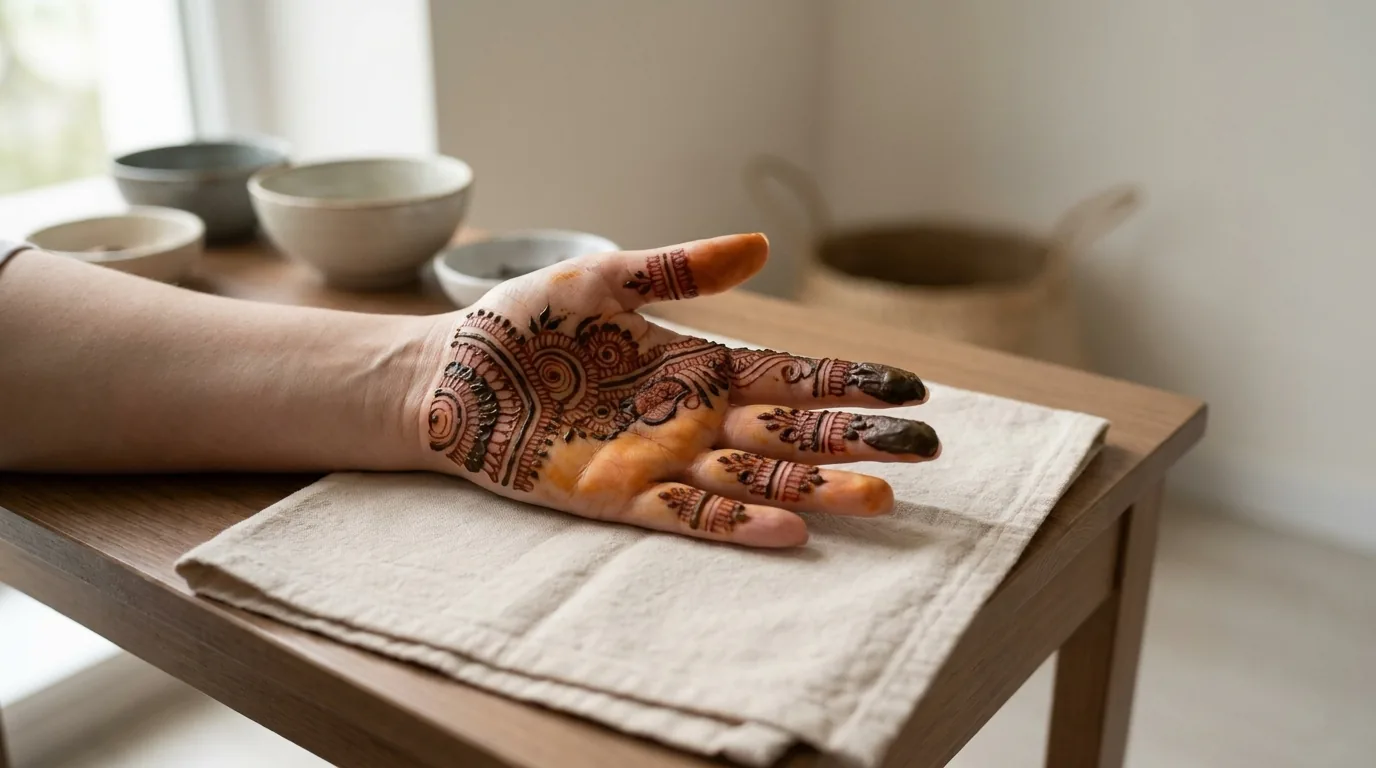
- Oxidation: after the paste comes off, the stain darkens over 24 to 48 hours as it reacts with air.
- Fade: on skin the colour lifts as the outer cells shed, usually within one to three weeks. On hair it lasts far longer because the dye sits inside the shaft.
This is also why a fresh henna stain looks pale orange at first and only reaches its true reddish-brown a day or two later.
Is henna safe?
Pure henna is generally safe on skin, and serious reactions are rare. Health authorities including the U.S. Food and Drug Administration treat natural henna as low risk for body art when it is genuinely pure. The risk almost always comes from additives, not from the plant.
Two cautions matter. First, “black henna” with PPD can cause severe allergic reactions: itching, redness, blistering, and sometimes lasting scarring. Reactions can appear anywhere from 24 hours to a few weeks after application. Second, people with G6PD deficiency, a genetic condition, should avoid henna on skin because it can trigger a harmful blood reaction, especially in young children. If you are unsure, speak to a doctor before booking.
The practical rule for any salon henna in Dubai: if the cone promises a jet-black stain in an hour, treat it as a warning sign, not a feature. Genuine henna takes time and starts orange.
Henna in Dubai and Gulf culture
Henna is woven through life in the UAE. A henna night, laylat al-henna, is a core part of an Emirati and wider Gulf wedding, where the bride and her guests wear detailed designs before the celebration. Henna also appears at Eid, at family gatherings, and across the large South Asian community in Dubai.
Because it carries cultural and religious weight, the composition question matters here. Henna is widely considered halal when it is made from pure, halal ingredients, which is another reason adulterated “black henna” sits uneasily with many residents. Knowing what is in the cone is part of choosing well, whether you book a bridal makeup artist for a wedding or a beauty salon for a simpler design. Detailed henna designs are a celebration in their own right.
Where to get henna in Dubai
Once you know what henna is made of, the next question is where to get it done well. Henna in Dubai is offered through several routes, and the safest results come from places that use pure, freshly mixed paste rather than pre-made cones of unknown origin. This is information on where the service is found, not an endorsement of any single venue for it.
- Beauty salons: many ladies’ beauty salons across Dubai offer henna application, often alongside threading and other services. Quality varies, so the ingredient question is worth asking.
- Bridal and makeup specialists: for a wedding or a henna night, a dedicated makeup artist usually delivers the most detailed work. Areas like Jumeirah have a dense cluster of options.
- Home-service providers: mobile artists travel to homes for events, which suits group bookings before a celebration.
Use the directory to browse licensed providers and check each one before booking.
Browse all 1,325 Beauty Salons providers on our directory.
Dubai currently lists 1,325 verified beauty salons, a useful starting point when you want to compare options and read reviews.
How to check a henna provider before you book
A few quick checks separate a safe, licensed henna service from a risky one. Run through these before you sit down.
- Ask what is in the paste. A good artist will name natural henna powder, a mild acid, and an essential oil, and will not promise instant black.
- Confirm the colour timeline. Real henna starts orange and darkens over a day or two. An hour-to-black claim points to PPD.
- Check the licence. Licensed salons hold a Department of Economy and Tourism (DET) trade licence to operate and a Dubai Health Authority (DHA) health licence covering treatments and hygiene standards. Every venue in our Dubai salon directory is vetted this way; skip anyone operating without either licence.
- Read recent reviews. Look for comments on skin reactions, hygiene, and how long the stain actually lasted. Our ranking method explains the signals worth weighing.
- Patch test if you have sensitive skin. A small test spot a day before reveals an allergy before it covers your hands.
Henna for hair vs henna for skin
The plant is the same, but what the henna is made of shifts a little between uses, and so does the result. The table below shows how henna behaves in each use.
| Factor | Henna for skin | Henna for hair |
|---|---|---|
| Main ingredient | Henna powder, acid, sugar, oil | Henna powder, sometimes blended with indigo or cassia |
| Colour | Orange to reddish-brown stain | Red to auburn; brown or black only with indigo added |
| How long it lasts | One to three weeks | Until the hair grows out or is cut |
| Best for | Body art, weddings, festivals | Natural colour, grey coverage, conditioning |
If you want a brown or black hair result from a plant base, the safe path is henna plus indigo, never a PPD “black henna” mix. This is the part of what henna is made of that buyers most often get wrong.
Aftercare for a henna stain
Once the paste is on, a few habits give a darker, longer-lasting result, and Dubai’s climate adds one extra consideration.
- Leave the paste on as long as comfortable, ideally several hours, so the lawsone develops fully.
- Scrape the dried paste off rather than washing it, and keep the area dry for the first few hours.
- Avoid chlorinated pools and long sun exposure for a day or two; both fade a fresh stain faster.
- Skip harsh scrubbing and exfoliation on the design, since the stain lives in the outer skin cells.


