



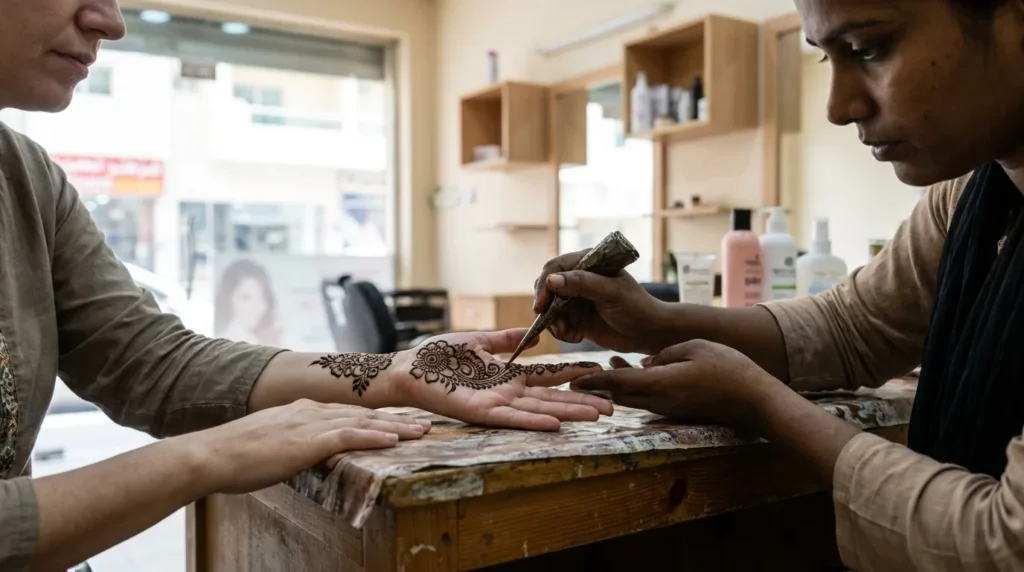
How to make henna darker comes down to four things you control: a fresh, good-quality paste, long contact time with clean skin, gentle warmth, and patient aftercare. A natural stain starts orange and deepens to a rich reddish-brown over 24 to 48 hours. Real henna never turns true black, so skip any paste that promises instant black colour.
Why henna starts orange and then darkens
Henna leaves a stain because of one pigment: lawsone. When you apply the paste, lawsone binds to keratin in the top layers of your skin. That bond is pale at first, which is why a fresh mehndi design looks orange the moment you scrape off the paste.
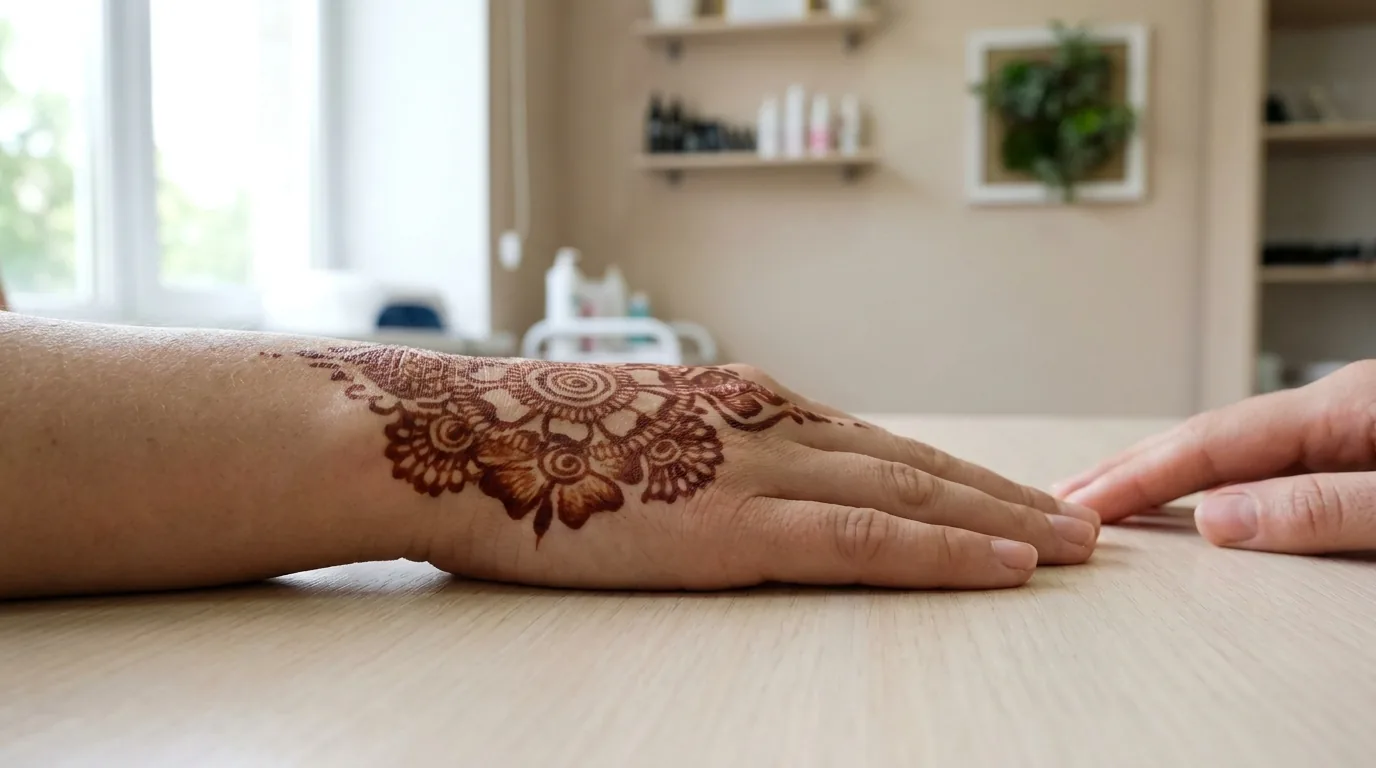
The colour then deepens through oxidation. As the stained skin meets air and warmth over the next day or two, the lawsone darkens to its final reddish-brown. This is why your design looks richer on the morning after, not on the night you got it done.
Where you place the design matters too. Palms, fingertips, and the soles of the feet have the thickest keratin, so they soak up the most pigment and stain the darkest. The same paste on a forearm or shoulder lands lighter because the skin there is thinner. If a deep colour is the goal, hands and feet give you the best result, which is also why the most detailed henna designs tend to sit on the palms.
How to make henna darker: the levers that actually work
A dark stain is built, not lucky. The same rules apply whether you are darkening a hand design or learning how to darken mehndi for a full bridal set. These are the levers that move the colour, in the order they matter:
- Start with a fresh, natural henna paste. Quality decides the ceiling. A freshly mixed paste from pure henna powder holds far more dye than a shelf-stable cone full of additives. If you are visiting a salon, ask whether the henna is mixed fresh and whether it is natural only.
- Prep clean, bare skin. Wash the area and skip lotion, oil, makeup, and self-tanner beforehand. A light exfoliation a day or two earlier clears dead cells so the pigment reaches living skin. Do not over-scrub, since raw skin stains unevenly.
- Leave it on as long as you can. Contact time is the single biggest lever. Aim for at least six hours, and overnight if the design sits somewhere you can protect. The longer the paste stays in contact, the more pigment transfers.
- Seal it with lemon and sugar. A light dab of lemon juice mixed with sugar keeps the dried paste stuck to the skin so it does not crumble off early. Apply it sparingly once the design has dried, not while it is still wet.
- Keep the skin warm. Warmth speeds the reaction, so a warm room helps the colour build.
- Add essential oils to the mix. A few drops of an essential oil such as eucalyptus or clove in the paste raise the level of terpenes that help release more dye. Some people also work coconut oil into the design after the paste comes off to lock in moisture while the stain develops.
A few extras from the henna-artist world are worth knowing. Brewing the powder with strong coffee or black tea instead of plain water adds tannins that can deepen the base tone. Adhesive medical tape or a breathable wrap over a dried design lets you sleep without smudging it. None of these replace the basics above; they fine-tune a result the contact time already earned. If you would rather have a professional handle the paste and the timing, the salon directory lets you compare options across the city.
Does heat make henna darker? Using warmth and steam
Yes, gentle heat makes henna darker because the colour develops through a chemical reaction, and reactions run faster when they are warm. Keeping the stained skin warm while the paste is on, and again after it comes off, helps the reddish-brown deepen.
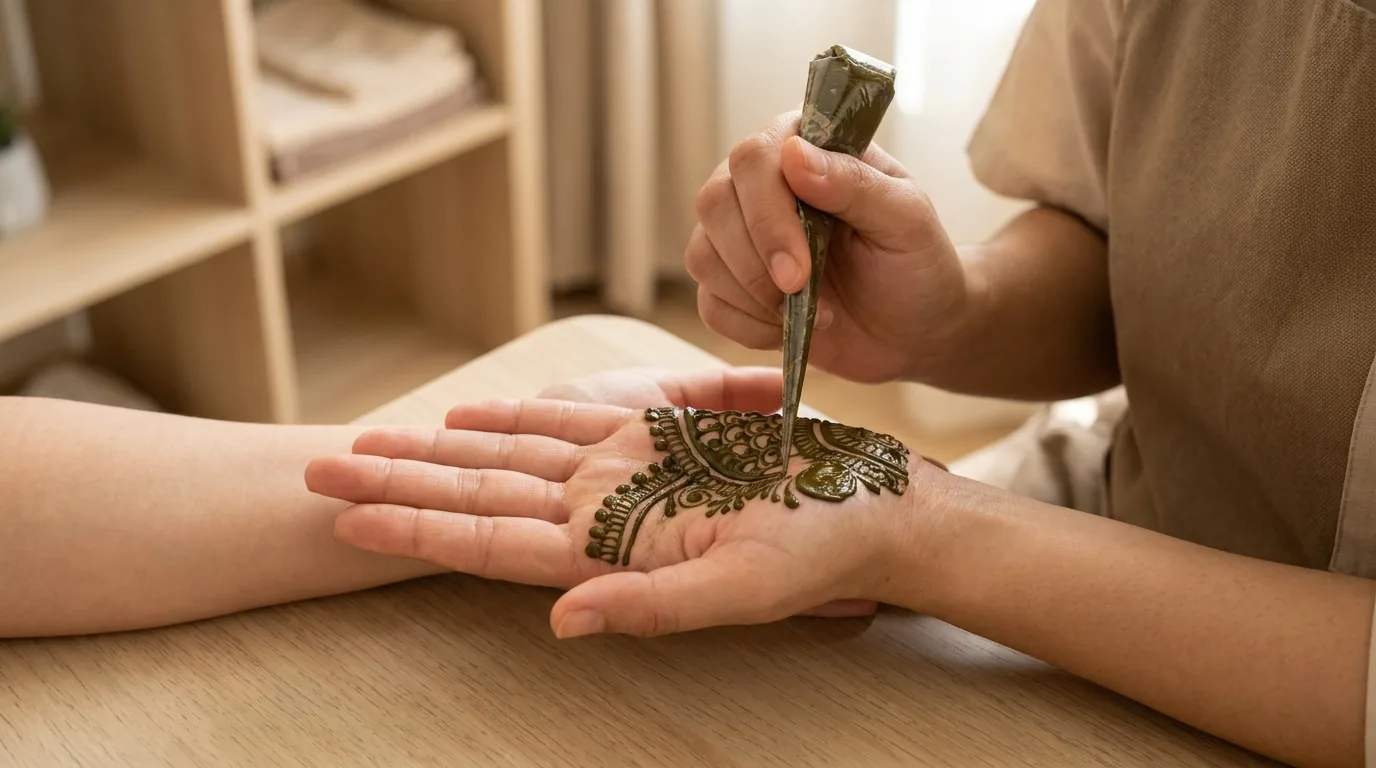
The traditional method is clove steam. Warm a few clove buds in a dry pan, then hold your hands a safe distance above the rising heat for a minute or two. The warmth and the clove vapour together encourage a darker finish. Keep your skin well back from the source, since the aim is gentle warmth, never a burn.
Dubai’s climate quietly works in your favour here. The natural heat helps the stain cure, so a design done before a summer event often darkens faster than the same design would in a cold room. The trade-off is dryness from air conditioning and the risk of sweating, both of which can disturb a fresh design, so keep the area covered and out of direct chilled airflow while it sets.
What to expect: your henna darkening timeline
Knowing the timeline stops you from washing off a “weak” stain that simply has not finished developing. Here is the honest sequence for a natural design on the hands:
- Hours 0 to 6: the paste is on and working. Leave it. This is when contact time does its job.
- On removal: scrape the dried paste off gently with a blunt edge, no water. The stain underneath looks orange. This is normal, not a failure.
- First 24 hours: the colour oxidises from orange toward brown. Avoid water on the area for as long as you reasonably can, since early water exposure lightens the result.
- 24 to 48 hours: the stain reaches its peak reddish-brown. This is the true colour, so judge the depth now, not on night one.
- After day two: the stain begins its slow fade. Skip exfoliation and harsh soaps on the area to keep it for longer.
If the colour still looks light at the 48-hour mark, the cause is almost always one of the basics: the paste was old, contact time was short, or water reached it early. The fix is in the next design, not in scrubbing this one.
How to make henna darker on hair (and cover grey)
Henna on hair follows the same pigment, but the goal shifts from a crisp design to even, lasting colour. On its own, henna gives hair a warm reddish or auburn tone, not a deep brown or black. To go darker, you pair it with indigo.
The reliable route for a dark result is a two-step process: apply henna first for the red base, rinse and dry, then apply indigo over it for the brown-to-black depth. Doing both in one mixed batch tends to give a muddier, less predictable colour, so most people who want a true dark shade keep the steps separate.
Grey hair takes henna differently because it has no melanin to work with, so greys often grab a brighter copper on the first pass. A follow-up indigo layer tones that copper down into a natural brown and improves coverage. As with skin, warmth and a longer processing time deepen the colour, and a little coffee in the henna step can take the edge off the initial brightness. For a wedding, many brides pair henna colour with a salon visit for wedding hair styling on the same day.
Avoid “black henna”: the dark shortcut that can burn you
When a stall or salon offers henna that stains jet black in an hour, that is not henna. It is “black henna,” and the shortcut can seriously hurt you.
The black colour comes from para-phenylenediamine, a hair-dye chemical known as PPD that is added to the paste. PPD is not approved for use directly on skin. On skin it can trigger severe allergic contact dermatitis: blistering, chemical burns, and scarring that can outlast the design by months, sometimes permanently. A reaction can also leave you sensitised to hair dye for life.
Natural henna is never true black, and it never stains in under an hour. If a paste promises instant black colour, walk away. Ask for natural henna only, request a small patch test on your inner arm a day before any large design, and stop immediately if you feel burning or itching rather than the normal cool tingle.
The honest version of “darker” is a deep reddish-brown earned through good paste and patience, or a henna-then-indigo process on hair. Neither needs a chemical that risks a burn. The same caution applies when you book henna with party makeup for an event: confirm the paste is natural before anything goes on your skin.
Henna darkening myths, settled
Plenty of advice circulates about darkening henna. Some helps, some wastes your time, and one is dangerous. Here is where the common claims actually land:
| The claim | Verdict | What actually works |
|---|---|---|
| Brush lemon juice on after the stain appears to darken it | Myth | Lemon helps inside the paste by releasing dye; once the pigment is in your skin, lemon on top does little and can lighten it |
| Does vaseline make henna darker | Partly | A balm seals in warmth and blocks water after the paste comes off, which protects the stain; it adds no pigment of its own, so the gain is indirect |
| A black paste means a stronger, darker henna | Dangerous | Black usually means added PPD; choose natural henna and accept a reddish-brown peak instead |
| “The darker the henna, the deeper the love” | Folklore | A charming wedding saying with no bearing on chemistry; depth depends on paste, contact time, and aftercare |
Where to get henna in Dubai
Dubai has a deep henna culture, so finding it is easy: demand peaks around Eid, weddings, and Emirati henna nights, when brides and guests book detailed designs days ahead. Many beauty salons across the city offer mehndi alongside their other services, and the quality of the stain depends heavily on whether the paste is fresh and natural.
Vetting matters more than for most beauty bookings, because the black-henna risk is real. A few checks before you sit down: confirm the salon holds a valid Dubai Economy and Tourism (DET) trade licence and the Dubai Health Authority (DHA) health licence that licensed beauty premises carry, ask directly whether the henna is natural only with no added dye, and request a patch test if you have sensitive skin. You can compare licensed beauty salons and read reviews before you book, and our ranking method explains how the listings are ordered.
For a darker design specifically, tell the artist up front. A good one will use a fresh mix, keep the paste on longer, and brief you on the warmth-and-no-water aftercare that earns the depth. Specialist makeup artists often offer mehndi too, and if the henna is for your wedding, a bridal makeup booking is the natural place to ask about it.
Browse all 1,325 Beauty Salons providers on our directory.
Across Dubai, salonsindubai.ae lists 1,325 beauty salons you can filter by area and rating to find one for your mehndi.


