



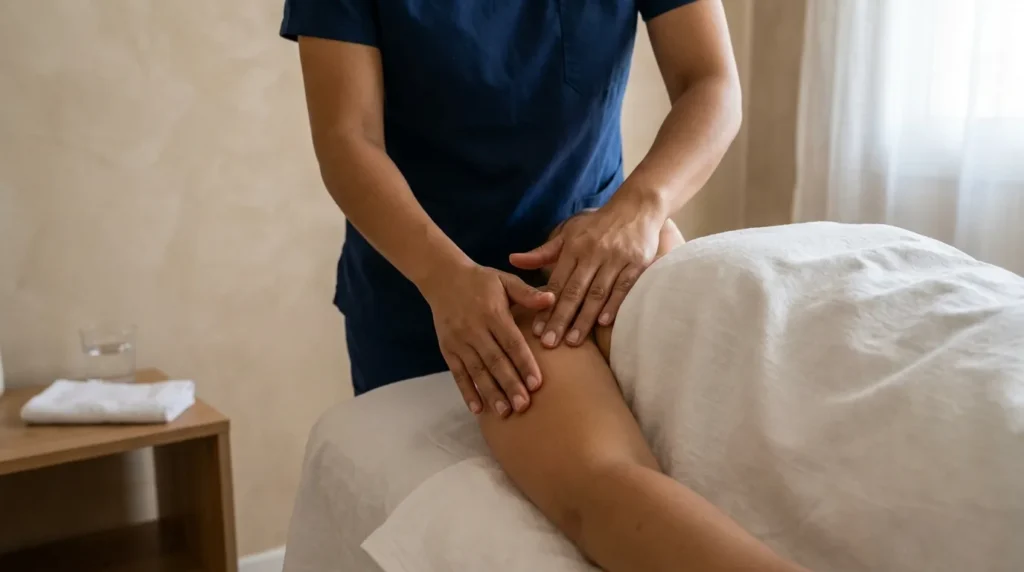
How often lymphatic drainage massage is worth booking depends on what it is being used for. General maintenance sits at one session every three to four weeks. Recovery after cosmetic surgery starts at two to three sessions a week. Diagnosed lymphedema follows a course set by a clinic. Most Dubai spa sessions cost AED 200 to 550.
How often lymphatic drainage massage is recommended, by goal
There is no single schedule, because the interval tracks the reason for the treatment. The gap between a wellness booking and a post-operative one is wide: one is monthly, the other can be every second day for a fortnight. Dubai therapists work to roughly the same rhythms used elsewhere, with a little more frequency through the hot months when swelling comes back faster.
The table below sets out the pattern most commonly recommended for each goal, the number of sessions that implies in the first month, and what that first month costs at mid-range Dubai rates of AED 300 to 550 a session.
| Goal | Typical rhythm | Sessions in month one | Month-one cost at mid rates |
|---|---|---|---|
| General maintenance and de-puffing | Every 3 to 4 weeks | 1 | AED 300 to 550 |
| Water retention, bloating, heavy legs | 1 to 2 a week for 4 to 6 weeks, then taper | 4 to 8 | AED 1,200 to 4,400 |
| After cosmetic surgery, with surgeon clearance | 2 to 3 a week for 2 to 3 weeks, then weekly | 8 to 12 | AED 2,400 to 6,600 |
| Diagnosed lymphedema | Intensive phase set by the clinic, then long-term maintenance | Clinic-directed | AED 550 upward a session |
| Training and sport recovery | Every 1 to 2 weeks | 2 to 4 | AED 600 to 2,200 |
The pattern across every row is the same shape: front-load, then taper. Month one is the expensive one for everything except plain maintenance.
So how often should you get a lymphatic drainage massage when nothing medical is going on? Once every three to four weeks covers most people, and the Dubai lymphatic massage guide walks through what a single session involves before committing to a run of them.
What actually sets the interval
Five things decide the interval more than anything a price list will tell you. Two of them are medical, three are ordinary daily-life factors that most schedules ignore.
- What is being treated. Manual lymphatic drainage for a diagnosed condition is a clinical course. The same technique booked for puffiness is a comfort treatment, and the schedules are not comparable.
- Whether a doctor is directing it. Post-surgical and lymphedema care come with an interval already prescribed. Nothing on a spa menu overrides it.
- How long the effect lasts on you. For most people the lighter feeling holds for two to five days, then fluid gradually returns. Track your own number and set the interval from it.
- How much you move. The lymphatic system has no pump of its own and relies on muscle movement and breathing. A desk job with a car commute both slows lymph flow and shortens the gap you can comfortably leave.
- Hydration and salt. Sessions do less when the body is dehydrated, which is easy to be in Dubai year round, and puffiness returns faster after salt-heavy meals.
Someone new to the treatment usually books two sessions a fortnight apart and compares them. If the second one felt unnecessary, the interval is too short. Reading what the technique actually does to lymph fluid makes that comparison easier to judge.
Frequency after cosmetic surgery, and who may deliver it
Post-operative drainage is the one use where frequency is genuinely high. After liposuction, a tummy tuck or fat transfer, surgeons commonly ask for two to three sessions a week through the first two to three weeks, dropping to weekly as swelling settles, then monthly during the months the result is still changing. Compression garments carry on through all of it.
The prescription belongs to the surgeon, not the therapist. Sessions usually start once drains are out and incisions have closed, and the therapist works around the operated area rather than over it. Dubai has a large cosmetic-surgery market, and clinics with post-op trained staff appear in the directory alongside independent massage therapists who handle wellness work only.
Licensing is worth checking before a course rather than after. Treatment delivered as health care sits under Dubai Health Authority licensing, which covers both the facility and the practitioner. A spa or wellness centre separately holds a Department of Economy and Tourism trade licence to operate as a business. A DET trade licence alone does not make a venue a health facility, so for post-surgical work, ask which licence covers the session and who is supervising it.
Long flights, summer heat and the Dubai puffiness cycle
Three local factors push the interval shorter, and none appear in guidance written for cooler climates.
Long-haul travel is the obvious one. Hours seated with limited movement leave many residents with swollen ankles and feet for a day or two after landing, which is why bookings cluster around return flights rather than departures.
Summer is the second. From May to September, outdoor heat and heavily air-conditioned interiors make fluid retention and dehydration more noticeable, and people who book every four weeks in winter often shift to every two or three. Restaurant-heavy weeks are the third, since salt drives short-term water retention faster than any massage undoes it. For muscular tightness rather than fluid, deep tissue massage is the better booking.
Book the session for one to two days after a long flight rather than the morning of departure. Fluid pools during the flight itself, so draining beforehand does little, and the post-landing session is the one that shifts the swelling.
What a full schedule costs in Dubai
Single-session prices are easy to find. The number that decides whether a plan is realistic is the annual one, and almost nobody publishes it.
Maintenance at one session every three to four weeks works out at 13 to 17 sessions a year. At mid-range spa rates that is roughly AED 3,900 to 9,350 across twelve months. Budget rates from a mobile therapist bring it closer to AED 2,600 to 5,100, and clinic rates push it past AED 7,000.
A six-week course of weekly sessions for water retention lands at AED 1,800 to 3,300 at mid rates, paid inside six weeks rather than spread across the year. Home massage in Dubai is usually the cheapest way to run a long maintenance schedule, since there is no venue overhead in the price.
Packages are the standard way venues discount a course, and they are worth taking on frequency-heavy plans. Ask for the per-session rate rather than the headline package price, check the expiry date, and confirm whether the sessions are transferable if a course is cut short. Across Dubai, 82 venues list lymphatic drainage on their service menu, which is enough spread for prices to vary widely between areas.
Can you overdo it, and how long to wait between sessions
Manual lymphatic drainage uses very light pressure, so the usual cost of going too often is money spent on sessions that duplicate each other rather than harm. Twenty-four to forty-eight hours is the normal minimum gap in an intensive phase, which is why clinical protocols say two to three times a week and not daily.
Mild after-effects are common and expected: more frequent urination for a day, tiredness, and occasional headaches. Dizziness or nausea is worth reporting to whoever is treating you, and to a doctor if it repeats. The signals below tell you which direction to move the interval.
| What you notice | What it usually means |
|---|---|
| The lighter feeling still holds when the next session comes round | The gap can stretch further |
| Swelling or heaviness returns within a day or two | Sessions are too far apart, or something else is driving it |
| Sessions feel identical with no cumulative change after four to six | The schedule is not the problem; reassess the goal |
| Persistent fatigue or headaches after every session | Reduce the frequency and raise it with a doctor |
Intensive blocks exist to bring swelling down, and maintenance exists to hold it there. General wellness rarely justifies a permanent weekly booking.
When to skip a session entirely
Some situations rule the treatment out until they are resolved, regardless of what the schedule says. Cleveland Clinic lists blood clots, cellulitis, deep vein thrombosis, fever, heart disease, infection, kidney failure and stroke among the reasons to avoid lymphatic massage.
Discomfort during the session itself is a separate question: what lymphatic drainage massage should feel like covers the pressure a trained therapist uses.
Alongside that clinical list, cancel and get advice when a limb turns newly red, hot or painful, when a fever appears, or when swelling increases sharply between sessions. During pregnancy or active cancer treatment, the care team sets the frequency and a spa should be asking for that clearance before booking a course. Conditions such as lipedema, fibromyalgia and chronic venous insufficiency are usually managed rather than cured, so any schedule for them belongs to the treating clinician.
Signs the schedule is working
Duration is the most useful metric and the one people forget to track. Note how many days the lighter feeling lasts after each session, and let that number set the next interval rather than a rule copied from a website.
Measure at the same time of day, since limbs swell as the day goes on. How rings and shoes fit is a reasonable everyday proxy, and clinics treating lymphedema take limb-volume measurements at each visit, which is the objective version.
Set expectations against the evidence as well. Manual lymphatic drainage is best supported as an addition to compression therapy for lymphedema, and the wellness and beauty uses are far less studied. Sessions move lymph fluid, so the temporary drop on the scale afterwards is fluid rather than fat.
What to do between sessions
Everything that helps lymph move between appointments is free, and doing it consistently is what stretches the gap between bookings.
Walk. Ten minutes an hour breaks up desk-bound stillness, and a mall or a corridor works fine when it is 45 degrees outside. Drink water through the day rather than in bursts. Keep wearing compression garments if they were prescribed, since they do the holding work between sessions.
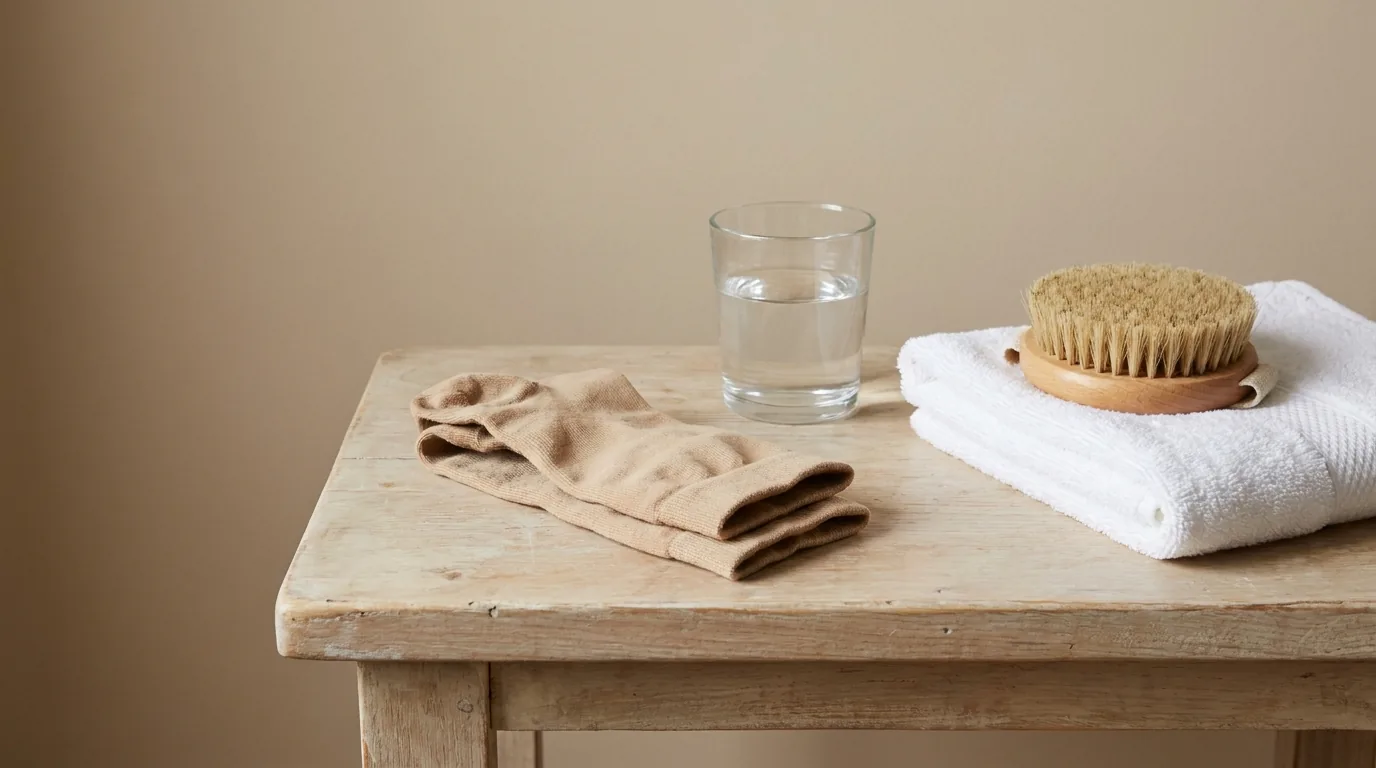
Slow diaphragmatic breathing helps the deeper lymphatic vessels near the trunk. Gentle self-massage toward the lymph nodes at the neck, armpits and groin is a reasonable supplement, and dry brushing is popular in Dubai spas, though neither replaces a trained pair of hands.
Venue choice matters more than the exact interval. The full list of Dubai venues listing lymphatic drainage is filterable by area, the wider massage and spa listings include venues that run the technique without advertising it, and every listed venue is checked for an active licence. Listing order follows the same ranking rules used everywhere on the site.

Popular massage and spa venues in Dubai
On the first floor of Dubai Festival City Mall, Heal Spa runs aromatherapy, deep tissue, hot stone and sports massage alongside couples massage, reflexology, a Moroccan bath and IPL hair removal. It's rated from reviews.Reviewers describe some of the best massages they've had in Dubai here, with the therapists praised for reading pressure correctly and adjusting through the session rather than working to a fixed routine. The space itself comes up as clean and calm, and the team is described as consistently friendly across a large number of reviews.Booking ahead is worth it, and outdoor and on-site services are available. The venue has gender-neutral toilets and wheelchair-accessible parking, entrance, seating and toilet facilities throughout.
Sweet Violet Beauty Salon LLC is a massage spa in Business Bay, at The Prism, rated from reviews. Treatments include deep tissue, Swedish, sports, hot stone and traditional Thai massage, aromatherapy massage, couples massage, therapeutic massage, reflexology, the Moroccan bath, plus threading, eyebrow threading, waxing and facials.Reviewers consistently describe the massage therapists as highly skilled, singling out deep tissue and sports massage for genuinely relieving tension rather than a generic rubdown. Several clients book the team for events and repeat visits, and the overall experience is described as relaxing and professional from start to finish.The salon offers on-site services and wheelchair-accessible parking. Appointments are recommended.
On the HC floor of the Grand Excelsior Hotel on Kuwait Street in Al Mankhool, Lavana Spa Bur Dubai offers Swedish massage, deep tissue massage, Moroccan bath and reflexology, rated from reviews. Swedish massage comes up repeatedly as a highlight, with reviewers describing sessions as deeply relaxing against a calm, soothing atmosphere throughout the spa. Front-desk staff are also praised for recommending the right treatment based on what a client is looking for, rather than defaulting to a standard package. The spa is wheelchair accessible, including parking, entrance and toilet, and appointments are recommended ahead of a visit, opening from 10am. Good for anyone in Al Mankhool after a proper unwind rather than a rushed treatment.
Al Rashaqa Spa is near Lamcy Plaza in Al Karama, rated from reviews for traditional Thai massage, Moroccan bath, hot stone massage, reflexology and aromatherapy treatments. Feedback on the spa is mixed. Some reviewers describe the space as clean with a good, professional massage, while others report a less consistent experience with staff on the day of their visit. Given that spread of feedback, confirming treatment details directly with the spa before booking is a sensible precaution. The venue operates 24 hours and offers on-site services, making it an option outside typical salon hours. Best booked in advance for a specific treatment, given the mixed feedback on consistency, and requesting the same therapist on a return visit is a reasonable way to get a result closer to what you expect.
Touch Life Spa sits inside TIME Oak Hotel & Suites in Barsha Heights, rated from reviews. Reviewers consistently describe a calm, clean and welcoming atmosphere, with attentive, professional staff who take time over every detail. Several guests single out the massage treatments and Turkish hammam for easing tension and back pain, and describe the whole visit as well organised and hygienic from start to finish. The treatment menu runs from deep tissue, hot stone, Swedish and Thai reflexology massage to aromatherapy, back, scalp and sports massage, alongside gel pedicures, manicures and yoga classes. The spa is wheelchair accessible throughout, with an accessible car park, entrance, seating and toilet, and appointments are recommended given its popularity in the Barsha Heights hotel district.
Browse all 82 Lymphatic Drainage providers on our directory.


