



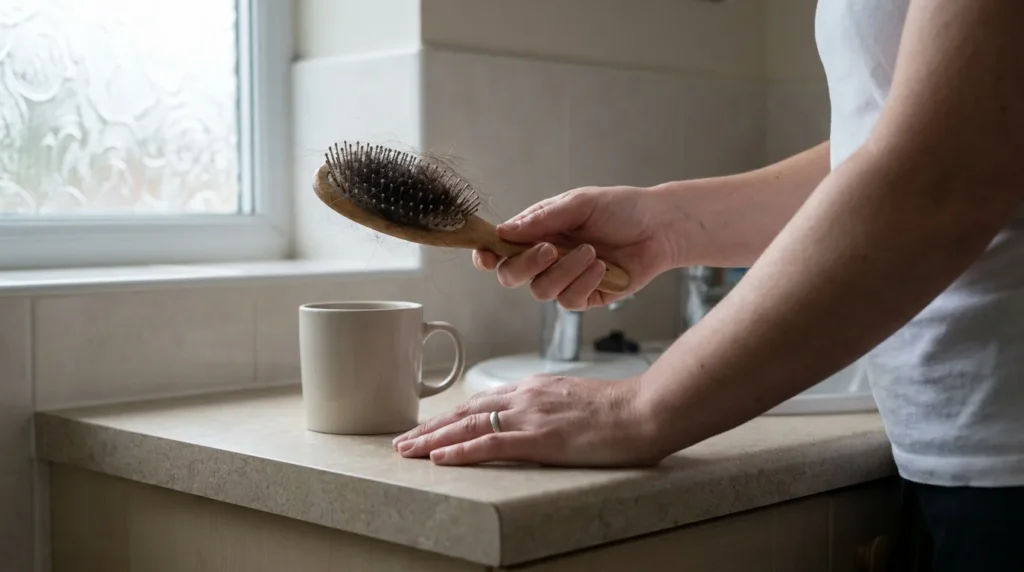
How to prevent postpartum hair loss starts with an honest split. The shedding itself is hormonal and runs its own course, so no shampoo, serum or supplement will stop it. What responds to effort is everything stacked on top: breakage, tension styles, and a nutritional shortfall while feeding a baby.
This guide is general information, not medical advice. Sudden loss, bald patches, a widening parting, or heavy shedding still running at six months belongs with a DHA-licensed doctor rather than a salon.
What you can prevent, and what you cannot
Postpartum hair loss has a medical name: telogen effluvium, an excess shedding phase rather than true hair loss. Pregnancy holds a large share of hairs in their growing phase for longer than usual. When estrogen drops after birth, those hairs move into their resting phase together and release together, which is why the loss looks so sudden at the brush and in the shower drain.
Follicles are not damaged by this. The American Academy of Dermatology is direct about the outlook: the shedding is temporary and nothing has to be done to remedy it, with most women back to normal fullness by their child’s first birthday. Understanding why the shed peaks when it does makes the next few months easier to plan around.
That leaves a narrower and more useful question than the one most guides answer. Four things sit under this experience, and only one of them is fixed.
| What is happening | Can you change it | What to do about it |
|---|---|---|
| The hormonal shed itself | No | Plan around the timeline instead of fighting it |
| Breakage on top of the shed | Yes | Gentler washing, detangling and heat habits |
| Traction from tight styles | Yes | Loosen the bun; sustained pulling causes a separate loss |
| Low iron, thyroid or vitamin D | Yes, with a doctor | Ask for bloodwork at the postnatal check |
Three of those four rows are within reach, which is where the effort belongs.
The window where prevention actually pays
Most advice on postpartum hair loss is timeless, and that is its weakness. Shedding usually becomes obvious a couple of months after birth, which means there is a quiet stretch beforehand when changes are easy to make and nobody is panicking yet.
The third trimester through the first six weeks is the practical window. Habits set then are already running when the shed arrives, and a newborn leaves very little room to start new routines. It also helps to know how long postpartum hair loss lasts before it begins, so the first heavy week at the shower drain is not a shock.
Four things are worth setting up early:
- Book the cut before the birth if the plan is to go shorter. A shorter length carries less weight on fragile regrowth and takes less handling every day.
- Switch the shampoo and conditioner then, not later, so the routine is settled.
- Raise iron and thyroid at the antenatal or postnatal appointment, while bloodwork is already being discussed.
- Sort out the eating pattern for the feeding months, because that is the part which quietly slips.
Feeding a baby without starving your scalp
Hair sits low on the body’s priority list. When intake drops, follicles are among the first structures to lose their share, and breastfeeding raises daily energy and protein needs at exactly the moment cooking becomes difficult. This is the most common answer to how to prevent hair loss during breastfeeding, and it has nothing to do with a bottle of gummies.
Anyone searching how to prevent postpartum hair loss naturally is usually looking for a product, and the answer is duller than that. Protein at every meal, a genuine calorie floor, and no crash dieting in the first six months. Postpartum weight-loss pressure runs high in Dubai, and an aggressive deficit while feeding is one of the few genuinely self-inflicted contributors to hair fall after delivery.
Bloodwork is the other half. Iron stores fall with blood loss at delivery and fall further with breastfeeding, and ferritin is the number that shows it, not haemoglobin alone. Thyroid function shifts after birth in a meaningful minority of women. Vitamin D deficiency is widespread across the Gulf, where sun exposure is mostly avoided rather than sought. Each of these is a blood test and a treatable finding, which is a better use of a morning than any product.
One research finding needs careful handling. A questionnaire study of postpartum women found longer breastfeeding associated with a longer shed, most likely through estrogen staying suppressed. That is an association reported by its authors as needing more work, and it is not a reason to change how anyone feeds their baby. It is a reason to expect a longer runway and to keep intake up across it.
The handling that costs hair you did not have to lose
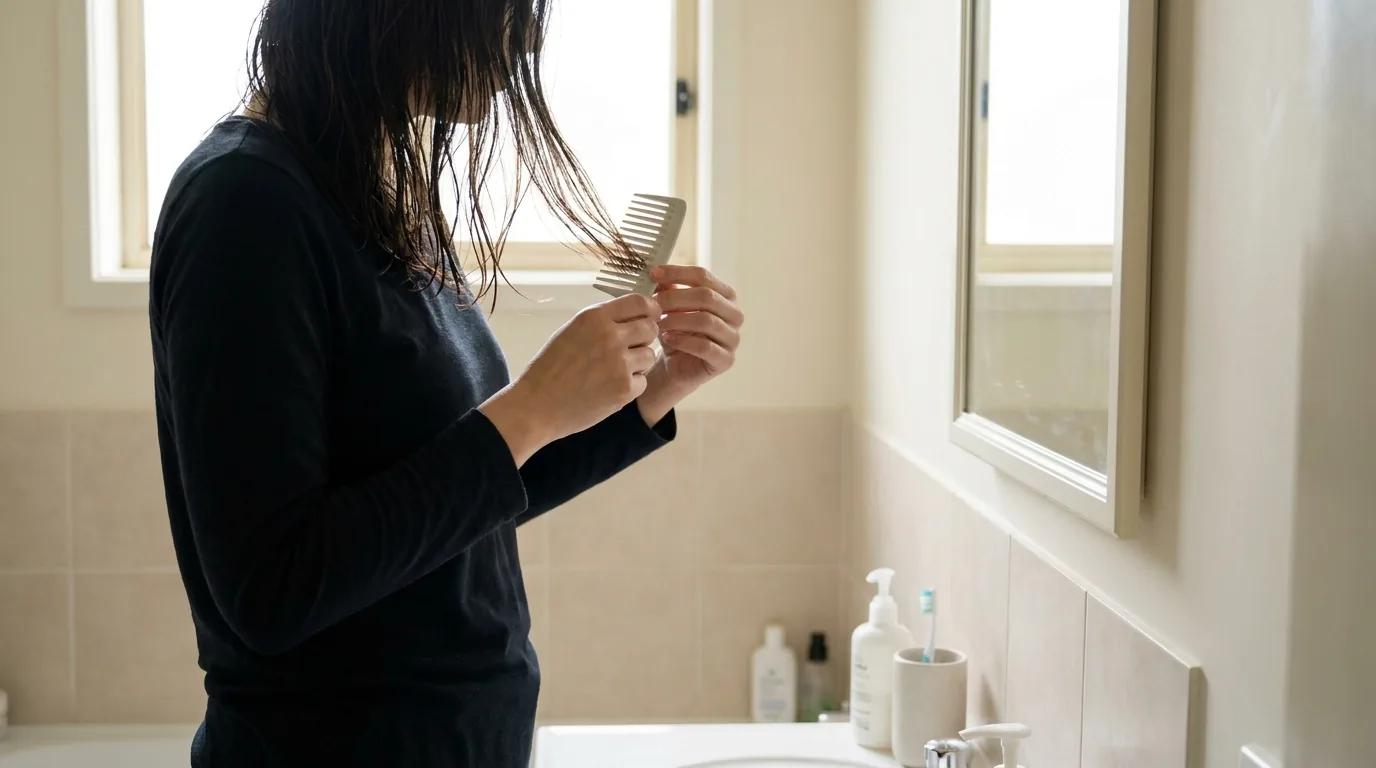
Most women notice postpartum hair loss while washing, and the instinct is to wash less. That backfires. Longer gaps between washes mean more tangling, more shed hair woven through the length, and a harder detangle when the comb finally comes out. Wash on the normal schedule and let the loose hairs leave at the shower drain rather than in a knot later.
The dermatology guidance on styling through this phase is unglamorous and works. Use a volumizing shampoo, since protein-based formulas coat the strand and read as fuller. Keep conditioner on the ends and skip anything labelled intensive, which weighs fine hair flat. Detangle damp hair with a wide-tooth comb, working from the ends upward.
Tension is the one that causes lasting damage. The postpartum bun, pulled tight and worn all day, sits on the exact regrowth that is trying to come back, and sustained pulling causes traction alopecia, which does not resolve on its own the way the hormonal shed does. A claw clip or a loose low tie costs nothing and removes the risk.
Dubai adds its own load. Hard water leaves mineral deposits which make hair feel rough and tangle more, chlorine and sea salt do the same, and strong sun weakens the strand over months. Rinse with plain water straight after the pool or the beach, and keep heat styling low while regrowth is short. A professional blow dry at a controlled temperature is gentler than a rushed one at home with a hot dryer held close.
Shed hair and your baby: the tourniquet check
This is the part almost no guide on the topic mentions, and it matters more than any product decision. A shed hair can wrap around a baby’s toe, finger or other body part and pull tight enough to cut off circulation. Dermatologists call it a hair tourniquet. It is rare, and it is the one genuine hazard of shedding this heavily.
Check fingers and toes during nappy changes while the shedding is at its heaviest. If a hair is wound around something, look for a loose end and gently unwind it, or cut it carefully. If it will not come free or the skin has closed over it, that is a doctor or an emergency room, not a home job. Tying hair back loosely while holding the baby cuts down how many strands end up in the cot in the first place.
Your first salon appointment after the baby
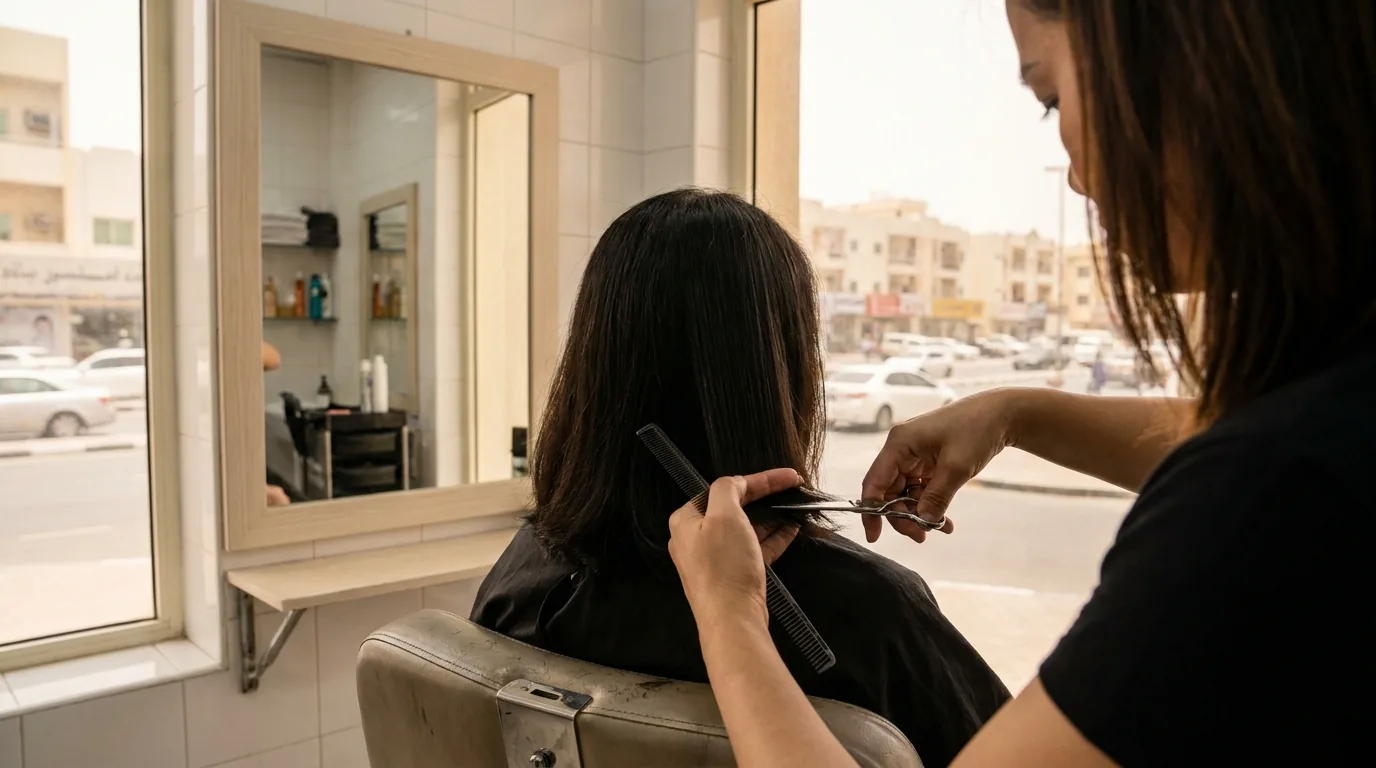
Two jobs matter at this appointment: reduce the daily handling, and avoid anything which adds tension or damage while regrowth is short. A shape which works with less styling beats a shape which needs twenty minutes and a hot tool. Nothing a stylist does will shorten postpartum hair loss, though the right cut changes how visible it is while the shed runs.
Ask for a cut with layers built to sit around the short regrowth at the hairline rather than fighting it. A ladies haircut that removes weight makes the same amount of hair read as thicker. A scalp treatment will not shorten the shed, though it does help with the flaking and buildup that come with washing less and sleeping badly.
What to decline for now: tight braids, sew-ins, glued or clipped extensions, and anything which anchors weight to fragile roots. Chemical services are a judgement call and better discussed with the stylist than booked online, since a scalp-contact service on top of heavy shedding is worth a conversation first.
It also helps to know what a salon is licensed to do. A salon holds a DET trade licence, which covers cutting, colouring, styling and cosmetic scalp care. Diagnosing a deficiency, ordering blood tests or prescribing anything requires a DHA health licence, and no salon can cross that line. Both of those come up in how we rank salons, alongside the rest of the vetting.
There are 167 hair salons in Dubai on the directory, so location and timing matter more than reputation alone when leaving the house is the hard part. Look for somewhere close, quiet and quick, and book the first appointment of the day when the salon is calmest.

Popular hair salons in Dubai
Collective is a hair salon inside the MAG Warehouses complex in Al Quoz Industrial Area 2, rated from reviews. Services cover hair colouring, balayage, hair highlights, hair extensions, keratin treatment, ladies haircuts, blow dry, bridal makeup, manicures, gel pedicures and waxing services. Several reviewers like the modern, classy interior and mention stylists using Dyson equipment for finishing, with one client describing a playful, well judged cut from a stylist who listened closely to the brief. Feedback on colour work is more mixed, with one detailed report describing hair damage and billing disagreements after a balayage and toner service, so it makes sense to agree the full scope and price before any colour treatment begins. The salon has a toilet on site along with wheelchair-accessible parking and entrance.
Version Francaise is a hairdressing salon inside the Marriott Harbour Hotel and Suites in Dubai Marina, offering haircuts, hair colouring, highlights, hair extensions, keratin treatment, blow dry styling, threading, manicures and nail art. It is rated from reviews.Reviewers consistently describe the salon as welcoming, with several returning for years and calling it their regular salon for haircuts and colour treatments. The team is praised for professionalism, attention to detail and a warm welcome from arrival to the end of the appointment.The salon has free Wi-Fi, on-site services, a wheelchair-accessible entrance, car park and toilet, plus gender-neutral toilets. It suits residents and hotel guests in Dubai Marina after a haircut, colour service or hair treatment appointment, with appointments recommended given the salon's loyal following.
Locks By Lou Lou is a hair salon on Al Wasl Road in Jumeirah, rated from reviews. Reviewers consistently praise the colour work, from balayage and highlights to root touch ups, and several mention hair extensions that look natural rather than obviously fitted. Clients also note that stylists take time to understand what they want before starting and explain aftercare so hair stays in good condition afterwards.Beyond colour, the salon offers blow dry, keratin treatment, hair extensions, manicure, gel pedicure, microneedling and anti-aging facial treatments. The entrance is wheelchair accessible and there is an on-site toilet.Appointments are recommended, particularly for colour and extension work, and the salon suits clients looking for an ongoing colourist relationship rather than a single visit.
Version Francaise Pour Elle is a hairdresser and beauty salon on Al Wasl Road, Al Safa 2, rated from reviews. Services span hair colouring, balayage, highlights, extensions, keratin treatment and blow dry, ladies' haircuts, beard trim, manicure, gel nails, gel pedicure, eyelash extensions, anti-aging facials and waxing.Reviewers consistently praise the colour and highlight work, describing meticulous stylists who take the time to understand what a client wants even when it is hard to explain. The salon is also noted for its cleanliness, product quality and reasonable prices, with several reviewers mentioning the owner is regularly on site overseeing the team and the client experience.Free Wi-Fi and parking are available. Suits clients after precise colour work from a team that takes the time to get it right.
Trinity Hair Salon is a hair salon in Al Barsha South, based at Danube Resortz, rated from reviews.Colour work is what reviewers talk about most, with several describing years of trust in the stylists for balayage, highlights and full colour changes, including recovering from a previous bad dye job elsewhere. The salon also offers ladies haircuts, blow dries, hair treatment and a back massage, plus manicures and pedicures. More than one reviewer describes the atmosphere as warm and modern with a good energy, and says they would not trust anyone else with their hair colour.There is a toilet on site, the salon offers on-site services, and a wheelchair-accessible car park makes it an easy stop for residents around Al Barsha South.
What to skip while you wait
Postpartum hair loss vitamins are the biggest spend with the least return. A supplement corrects a deficiency; it does nothing about postpartum hair loss in a woman whose bloods are normal. Where a deficiency does exist, the test comes first and the dose follows it, chosen by a clinician rather than a shelf.
High-dose biotin deserves a specific warning. It is the headline ingredient in most hair gummies, and the US Food and Drug Administration has flagged that biotin can interfere with laboratory immunoassays and skew results, including thyroid tests. Taking hair vitamins while trying to diagnose the cause of shedding can distort the very test meant to explain it. Tell the lab about any supplement before bloods are drawn.
Thickening serums and postpartum hair loss treatment marketed as regrowth are cosmetic. They coat, they add grip, they photograph well, and they do not move the timeline. Postpartum hair loss home remedies sit in the same bracket: a scalp massage with coconut or argan oil is pleasant and improves nothing about the shed, though it does make detangling easier, which is a small real benefit. Medicated regrowth products are a different category and a conversation with a doctor while breastfeeding, never a self-serve purchase.
The last thing to skip is early panic. Before the six-month mark, heavy shedding is usually the shed doing exactly what it does, and a low-maintenance cut from all salons will do more for the mirror than another bottle. After it, a widening parting, patches of visible scalp, or loss still running at full speed is worth a clinician’s eye, and iron deficiency and thyroid disease are the two findings that most often turn up. Put the effort into the bloods, the bun and the cut, then let the shed finish on its own schedule.
Frequently asked questions
Browse all 167 Hair Salons providers on our directory.


