



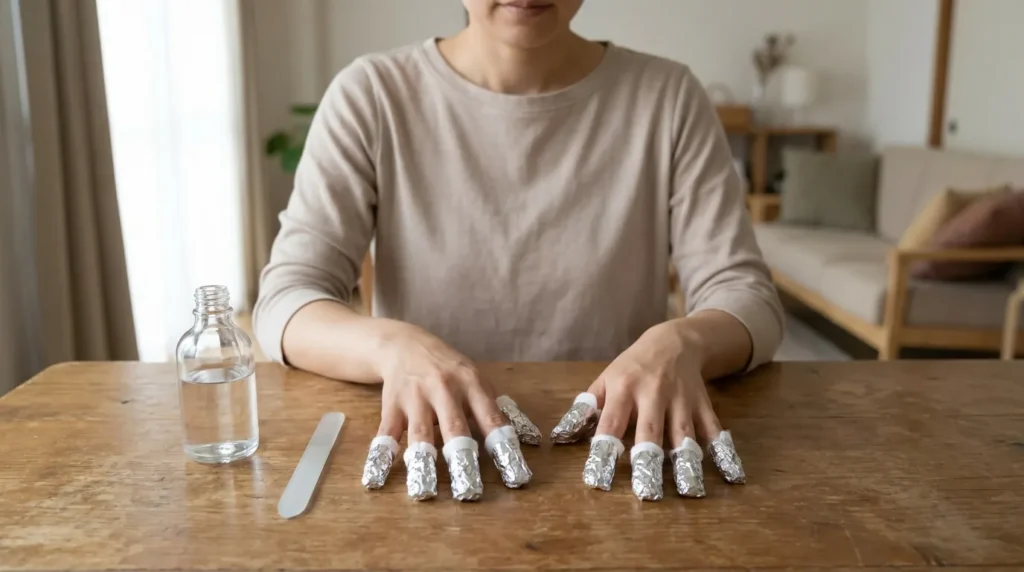
To remove gel nail polish at home, file off the shiny top coat, soak a cotton pad in pure acetone, wrap each nail in foil for 10 to 15 minutes, then gently push the softened gel away. Done patiently, it costs almost nothing. A professional removal in Dubai runs AED 30 to AED 60.
The safest way to remove gel nail polish at home is the acetone soak below. The methods that ruin nails are peeling and scraping, so the rest of this guide is really about avoiding those two.
What gel nail polish actually is
Gel polish, sometimes called gel nail paint, is a coloured coating cured hard under a UV or LED lamp. That curing step is what makes it last two to three weeks without chipping, and it is also why you cannot wipe it off with a normal cotton pad the way you would regular lacquer. The cured layer has to be broken down or buffed away first. If you searched how to remove gel nail paint and landed here, it is the same job: cured gel needs a soak or a file, not a wipe.
There are three families worth knowing before you start, because they come off differently. Standard soak-off gel nails dissolve in acetone. Hard gel, builder gel, and acrylic nails do not fully dissolve and usually need filing down rather than soaking, and that repeated filing is one reason people ask whether acrylic nails are bad for your nails. If your set was applied as a thick sculpted overlay, an at-home acetone soak alone will not shift it cleanly.
Knowing how to remove gel nail polish starts with identifying which of these you are wearing. A thin colour coat over your natural nail is the easy case covered below. A built-up structure is the one to leave to a technician.
How to remove gel nail polish at home with acetone
The acetone soak is the method nearly every brand and technician recommends, and it is the safest DIY route for soft gel. Here is the full process for how to remove gel nails at home without wrecking the nail underneath.
- Gather your kit. You need 100% pure acetone, a coarse nail file, a buffer, ten small squares of cotton ball or cotton pad, ten strips of aluminium foil, a cuticle pusher, and cuticle oil.
- File the top coat. Use the nail file to scuff off the shiny seal on each nail. You are not filing down to the natural nail, only breaking the glossy top coat so acetone can soak in.
- Protect your skin. Rub a thick hand cream or a little oil into the skin around each nail. Acetone is drying, and this barrier keeps it off your cuticles.
- Soak and wrap. Saturate a cotton square in pure acetone, press it onto the nail, and wrap the fingertip tightly in foil to hold it and trap heat. Repeat on all ten.
- Wait 10 to 15 minutes. Leave the wraps on. The gel should look lifted and flaky when you unwrap the first nail. If it still feels stuck, rewrap for another 5 minutes.
- Push, do not scrape. Use the cuticle pusher to ease the softened gel off in the direction of growth. Anything that resists goes back for a short re-soak. Forcing it tears the nail surface.
- Buff and oil. Lightly buff away any residue, then flood the nails and cuticles with cuticle oil to put moisture back.
The whole removal takes about 30 minutes for both hands. The single biggest mistake people make is unwrapping too early and then scraping at gel that has not softened. Follow the steps in order and you can remove gel nail polish at home with no damage to the nail underneath.
How to remove gel nail polish without acetone
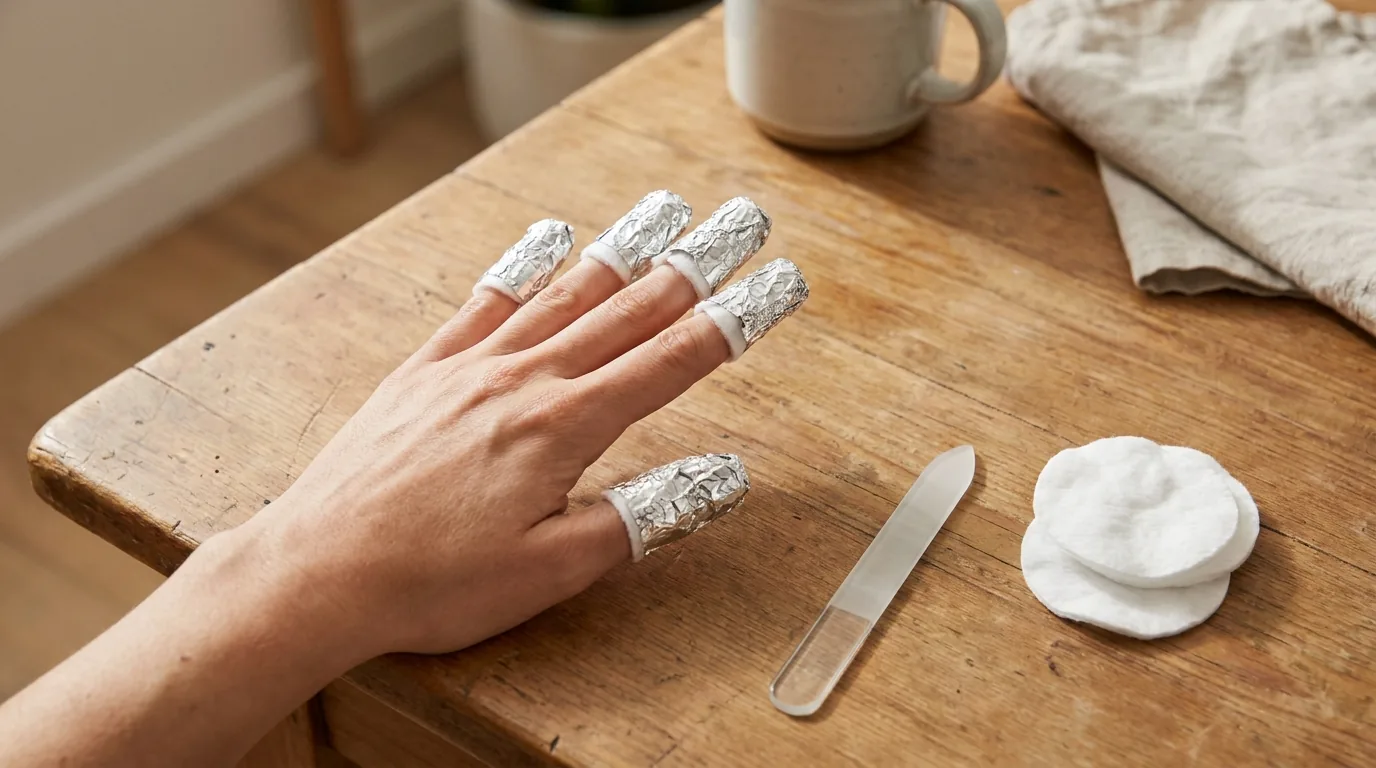
Acetone is the reliable solvent, so any acetone-free route is slower and gentler rather than faster. These work best on thin, already-lifting gel, and they are the answer when you have run out of remover or your skin reacts badly to acetone.
- Warm soapy water with a pinch of salt. File the top coat first, then soak your fingertips in warm water with a little dish soap and salt for 20 to 30 minutes. The gel edges soften enough to ease off with a cuticle pusher. Slow, but kind to the nail.
- Oil soak. Warm olive oil or coconut oil works on the same principle as the soapy soak. File first, soak the nails, and lift gently. Expect 30 minutes and some patience.
- Cuticle oil and a buffer. For one stubborn nail, oil the edge, then carefully buff the gel down. This thins the layer rather than dissolving it, so keep checking you are not reaching the natural nail.
Knowing how to remove gel nail polish without acetone is useful, but be honest about the trade. None of these dissolve cured gel the way acetone does, so the temptation to peel rises. Peeling is what does the real damage, covered next.
Why peeling gel polish damages your nails
When you peel or pick a gel set off, you do not just remove the polish. You pull away the top layers of the natural nail plate fused to it. That is what leaves nails looking thin, white, and rough, sometimes with visible ridges that take weeks to grow out.
The nail plate is made of stacked keratin layers. Peeling strips several at once, and they do not regenerate instantly, so the nail underneath is weaker and more prone to splitting until fresh nail grows from the base. A careful acetone soak avoids this because the gel releases on its own instead of taking nail with it.
If your nails are already thin from past peeling, the soak-off method matters even more. Give them a break between sets and keep cuticle oil on daily while they recover.
What professional gel removal costs in Dubai
Sometimes the smart move is to skip the DIY entirely, especially for hard gel, builder gel, or a set you cannot identify. A standalone gel removal at a Dubai nail salon typically costs AED 30 to AED 60, and it is often free or discounted when you book a fresh set in the same visit. Premium salons in areas like Dubai Marina and Downtown sit at the upper end, while neighbourhood studios in Deira and Al Karama sit lower.
The case for paying is simple. A technician removes a thick or sculpted overlay with an e-file in minutes without thinning your natural nail, which is hard to judge at home. If you are between sets and want the gel off cleanly before a fresh application, professional removal is cheap insurance for the nail. The best nail salons in Dubai handle removal as a quick add-on to a new set.
Browse all 92 Nail Salons providers on our directory.
How to choose where to get gel removed in Dubai
If you decide on a salon rather than a home soak, a few signals separate a careful nail studio from one that will file your nails raw to save time.
- Check the licence. A legitimate Dubai salon holds a DET trade licence and, for any treatment touching the skin, a DHA health licence. Both should be visible or available on request. Every salon in our Dubai directory is checked against these.
- Watch the removal method. A good technician soaks or files patiently and checks the nail as they go. Aggressive scraping at half-soaked gel is the red flag.
- Look at hygiene. Tools should be sterilised or single-use, and the station clean between clients. Our ranking method weights hygiene and recent reviews heavily.
- Read recent reviews. Ratings from the last few months tell you more than an old average. You can filter nail salons in Dubai by area and rating to find one near you.
Aftercare and recovery for Dubai’s climate
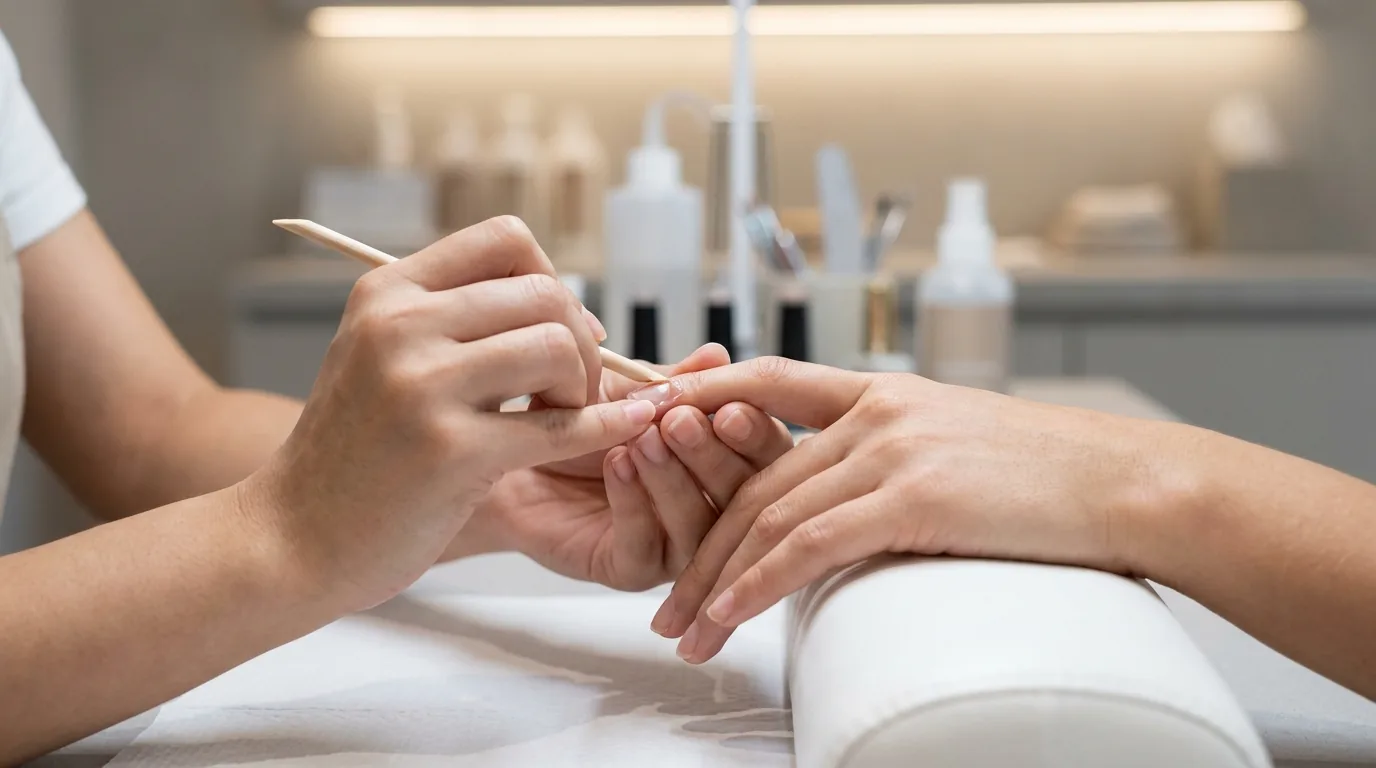
Removal is only half the job. Once you remove gel nail polish at home, bare nails are dehydrated, and Dubai’s heat and dry air make that worse, while the swing between outdoor heat and heavy indoor air conditioning pulls moisture from the nail and skin.
- Oil daily. Work cuticle oil into the nail and surrounding skin every day, more often in summer. This is the single most useful habit for recovery.
- Wait before the next set. Give the nail a week or two between gel applications so it can rehydrate and harden. The same break helps your toes between gel pedicure visits.
- Use a strengthener. A keratin or protein nail strengthener helps if your nails are thin or peeling after removal.
- Protect from chlorine. Pool and beach days are constant here, and chlorine and salt water both dry the nail further, so rinse and re-oil afterwards. A relaxing add-on like a home massage in Dubai often pairs with at-home nail care on a self-care day.
Common mistakes to avoid
- Peeling or biting the gel off instead of soaking it, which strips the nail plate.
- Unwrapping the foil too early, then scraping at gel that has not softened.
- Skipping the skin barrier, so acetone dries out the cuticles badly.
- Using a metal tool to dig under the gel rather than pushing softened gel away.
- Trying to acetone-soak hard gel or a thick builder overlay that needs filing instead.
- Going straight into a new gel set with no recovery time for the natural nail.


