



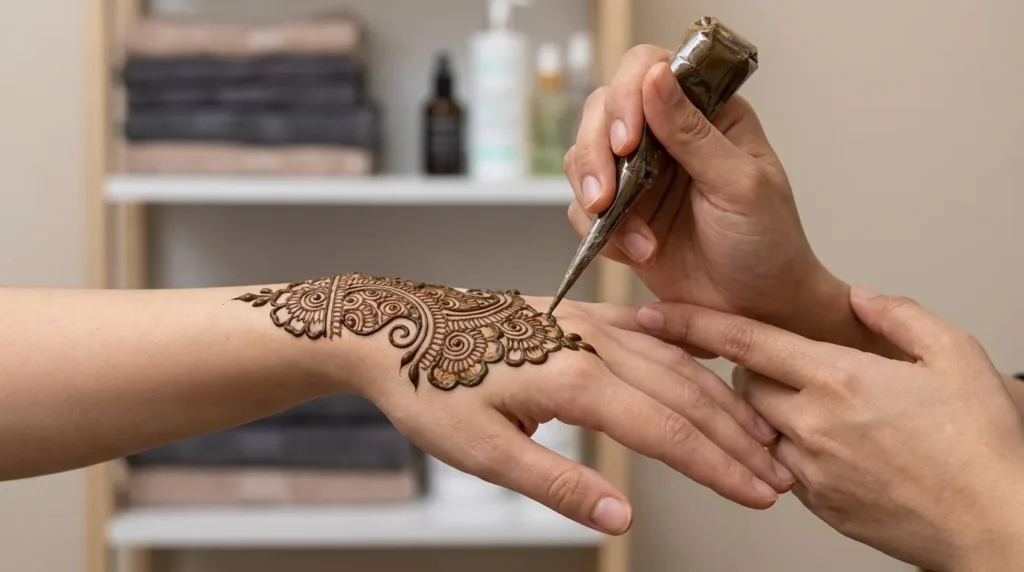
How long does henna last comes down to where it sits: a skin stain lasts one to three weeks, hair henna holds for four to six weeks before it grows out, and the paste itself dries on the skin in 20 to 30 minutes. Most designs read clearly for one to two weeks, and the thick skin of the palms and soles holds colour closer to three. Natural plant henna fades on its own. Dubai’s heat, sweat, and frequent washing pull those timelines toward the shorter end.
How long does henna last on skin?
A natural henna stain lasts one to three weeks on skin, with one to two weeks the norm for most designs and the palms and soles holding colour closest to three. The colour peaks 24 to 48 hours after the paste comes off, then fades gradually as the stained top layer of skin sheds. Most people see a clear design for the first week and a faint shadow into the second.
The plant pigment, called lawsone, binds to the keratin in the outer skin layer rather than the deeper layers a permanent tattoo reaches. That is why a henna design is temporary and why it lifts as your skin renews itself. The same question follows the artwork everywhere it travels: how long does henna last once the initial stain has set, and the honest answer is that it depends mostly on the body zone and how often that zone gets wet. If you are choosing a design first, our guide to henna designs in Dubai covers the styles and where the craft fits into local celebrations.
Why henna lasts longer on hands and feet
The same paste stains darker and holds longer on palms and soles than anywhere else on the body. Skin there is thicker and richer in keratin, so the lawsone has more to bind to. A bridal mehndi design on the hands can read clearly for two weeks, while a forearm or back design starts fading after five or six days.
Use the zone guide below to set expectations before you book.
| Body zone | Typical lifespan | Why |
|---|---|---|
| Palms and soles | Up to 2 to 3 weeks | Thickest skin, most keratin, deepest stain |
| Tops of hands and feet | 1 to 2 weeks | Thinner skin, frequent washing |
| Forearms and lower legs | 5 to 10 days | Thinner skin, clothing friction |
| Face, back, and torso | 3 to 7 days | Thinnest skin, oils, and sweat |
The takeaway: place a design where you want it to last, and treat the timeline as a range, not a fixed date.
How long do henna tattoos last compared to real tattoos?
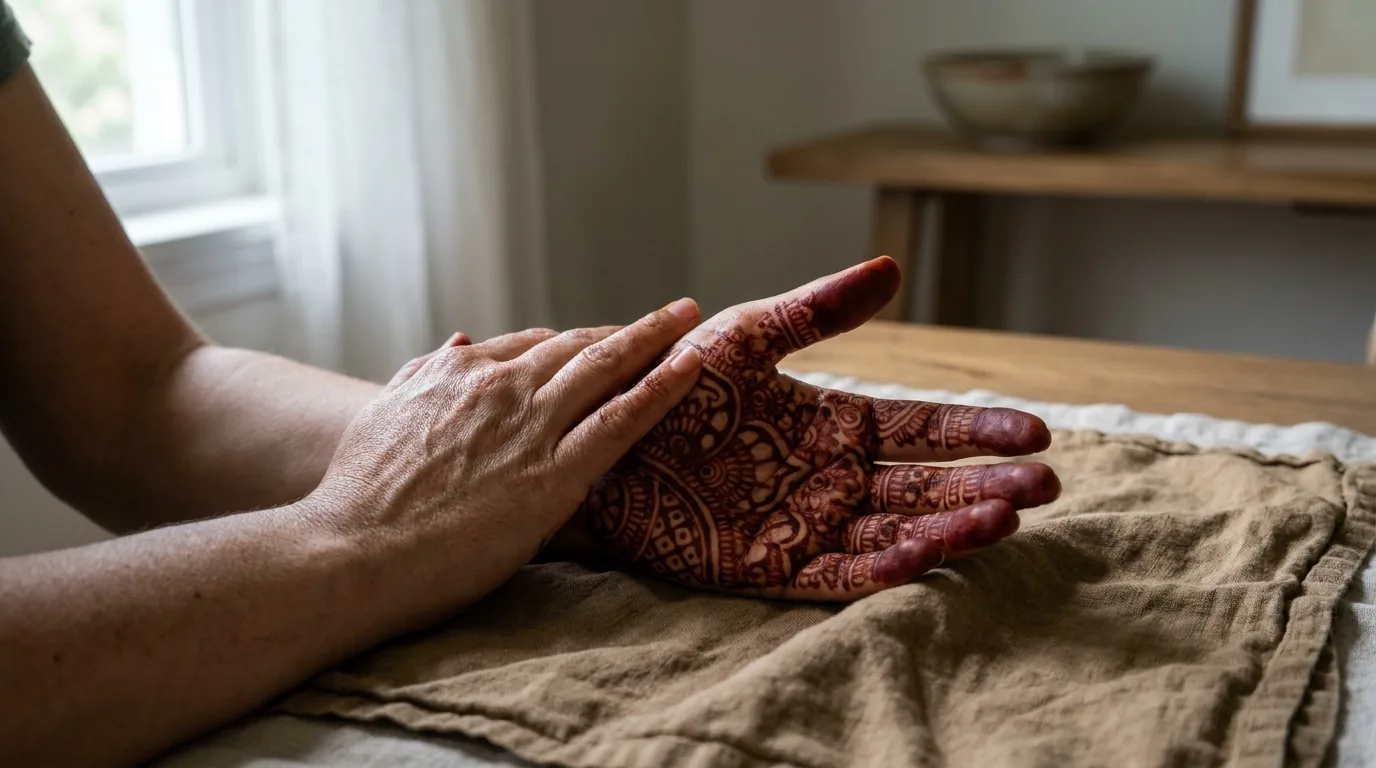
How long do henna tattoos last next to a permanent tattoo? A henna tattoo is a temporary stain that lives in the surface skin for one to three weeks, while a real tattoo deposits ink in the dermis for life. Henna gives the look of body art with none of the permanence, which is exactly why it suits weddings, Eid, and travel.
You cannot make a natural henna tattoo permanent. The only way to keep a design going is to reapply fresh paste every week or two. Be cautious of any artist who promises a “long-lasting black” henna tattoo, because that darkening usually comes from an additive rather than the plant, and that additive is where the real risk sits (covered below).
How long does henna take to dry?
How long does henna take to dry on the skin? The paste surface dries to the touch in 20 to 30 minutes, but the stain keeps developing underneath for several hours. Leaving the dried paste on longer deepens the colour, so most artists ask you to keep it on for at least four to six hours, and many recommend overnight for the darkest result.
Two habits answer how long does henna take to dry into a stain you can actually keep:
- Do not rush. Peeling the paste off after 30 minutes gives a pale orange stain that fades within days.
- Keep it warm and still. A dab of lemon and sugar sealant holds the paste in place and helps the colour set deeper.
How long does hair henna last?
How long does hair henna last on coloured hair? Henna hair dye lasts four to six weeks and does not wash out like semi-permanent box colour. It coats the hair shaft and grows out rather than fading evenly, so you see roots before you see a colour change along the length.
Because henna stains the hair permanently until it grows out, the colour does not lift cleanly. Anyone planning to switch to a chemical colour later should know that henna and some salon dyes interact unpredictably, so always flag previous henna use to your colourist. How long does hair henna last in practice depends on how fast your hair grows and how often you wash it, with frequent washing dulling the tone faster than it shortens the lifespan. The same care applies to other semi-permanent treatments such as eyebrow tinting, where colour also fades on its own schedule.
What makes henna fade faster in Dubai
Dubai’s climate is hard on a henna stain. Heat and humidity drive sweat, sweat lifts the stained skin cells faster, and the city’s swim-and-shower routine speeds the fade. A design that might last two weeks in a dry, cool climate often reads as one week here.
The biggest accelerators to manage:
- Water and washing. Every soak, shower, and pool session loosens the top skin layer. Chlorinated pool water is the fastest fader of all.
- Sweat. Summer heat and gym sessions both pull moisture through the skin and shorten the stain.
- Exfoliation and friction. Scrubs, tight sleeves, and seatbelts rub the design thin at the edges.
- Sunscreen and oils. Heavy lotions soften the surface and speed shedding, though a light moisturiser actually helps (see aftercare below).
How to make henna last longer
The stain develops over the first 48 hours, so the way you treat it in that window decides most of the lifespan. None of this needs special products.
- Leave the paste on as long as you comfortably can, ideally six hours or overnight.
- Avoid water for the first 12 to 24 hours after the paste comes off.
- Seal the design with a balm or natural oil before showering, so water beads off instead of soaking in.
- Skip the pool, the gym, and long sun exposure for the first two days.
- Moisturise daily once the stain has set, since dry skin flakes and takes the colour with it.
- Pat the area dry, never rub.
Is henna safe, and what about black henna?
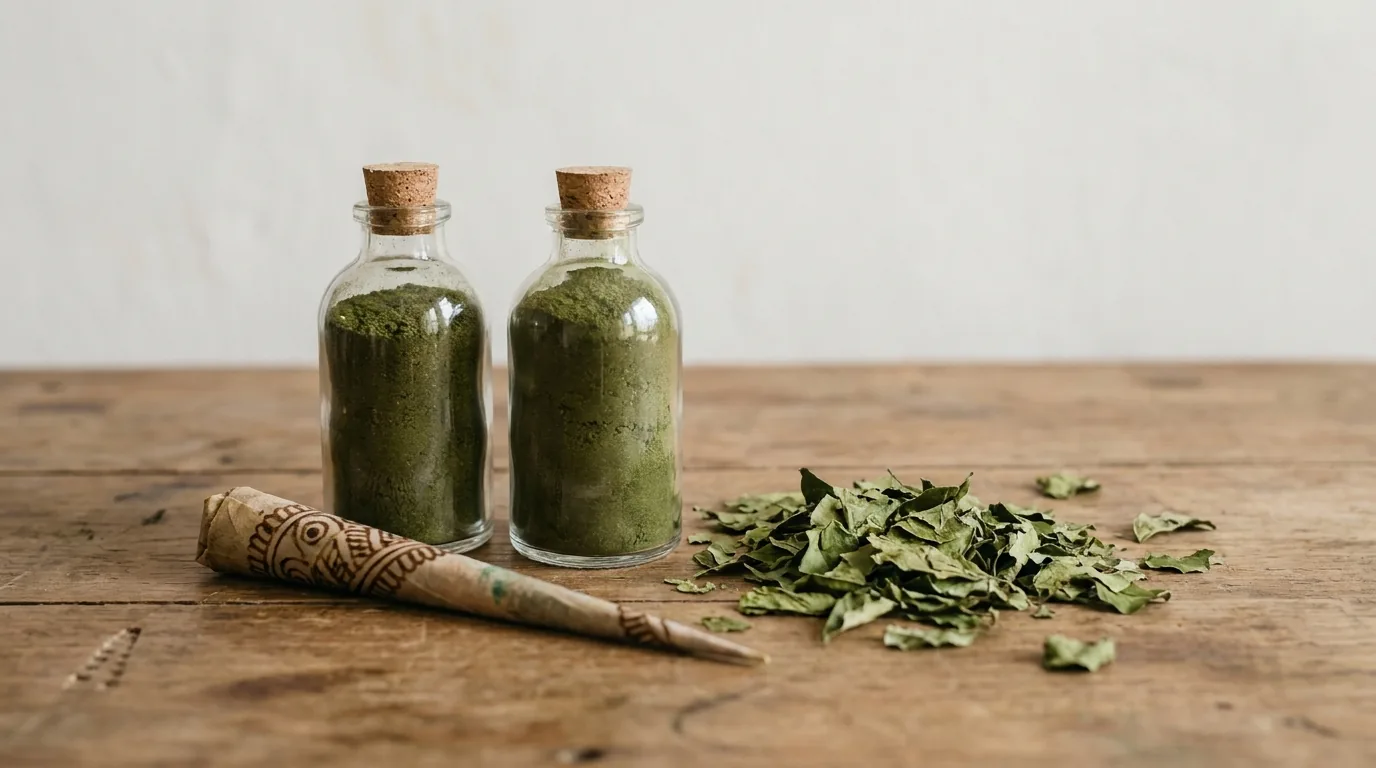
Natural brown or red henna, made from dried and ground henna leaves worked into a paste, is widely considered safe and rarely causes a reaction. Henna on the brows behaves differently again, sitting on the surface for days rather than the months a pigment implant holds, as the guide to how long microblading eyebrows last sets out. The problem is “black henna,” which is not pure henna at all. It is mixed with paraphenylenediamine, known as PPD, a hair-dye chemical that darkens the stain and speeds it up.
PPD on skin is the real hazard. The US Food and Drug Administration warns that black henna can trigger redness, oozing blisters, raised lesions, contact dermatitis, loss of pigmentation, lasting sensitivity to sunlight, and permanent scarring. The Cleveland Clinic notes that the henna itself is rarely the issue: the harm comes from the additives used to make it darker or set faster. A simple field test from dermatologists: if the paste smells of chemicals or fuel, walk away.
Two rules keep you safe. Insist on natural brown henna and ask the artist directly what is in the paste. And if any reaction appears, see a healthcare professional rather than waiting it out, since PPD reactions can outlast the design itself. Our editorial team cross-checks every safety claim against named health authorities before it goes live.
Where to get henna in Dubai
Henna is woven into life in Dubai, from bridal mehndi and Eid celebrations to tourist designs at malls and markets. It is a specialist craft rather than a standard salon service, so the right place to start is a verified beauty salon that lists henna or mehndi among its services, or a dedicated mehndi artist.
When you choose where to book, the same vetting checks that protect you anywhere in the UAE apply here. A legitimate salon holds a DET trade licence from Dubai Economy and Tourism to operate, and a DHA health licence from the Dubai Health Authority covering its treatments and hygiene standards. You can browse the full salon directory or narrow to a single area such as Jumeirah. Ask to see both licences, confirm the artist uses natural henna, and check recent reviews for the actual colour and longevity clients report.
1,325 beauty salons are listed across Dubai. Use the browse filter to find verified, licensed venues, then confirm henna availability and the paste type with the salon directly before you book.
Browse all 454 mid-tier Beauty Salons providers on our directory.


