


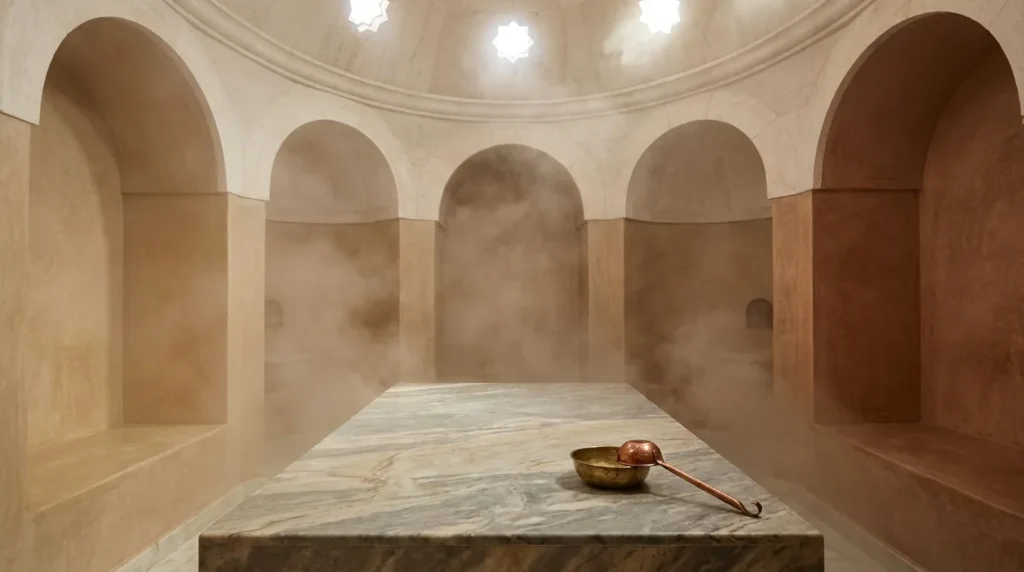
A hammam is a steam bathhouse and the cleansing ritual performed inside it, a tradition that runs across the Muslim world from Turkey to Morocco. You sit in heat, get washed and scrubbed by an attendant, and rinse off in a sequence of warm and cool rooms. In Dubai it appears on spa menus as a hammam, a Moroccan bath, or a Turkish bath.
The word comes from the Arabic for bathhouse. So the term means two things at once: the building, and the wash-and-scrub ritual that happens in it. Modern spas use it for the treatment alone, even when there is no historic bathhouse attached.
What is a hammam?
At its simplest, it is a public steam bath, so the first thing to settle is what is hammam bath as a question. It uses radiant heat and humidity rather than a pool, so the room itself does most of the work: warm air opens the pores, softens the skin, and prepares the body for a deep cleanse. The classic layout moves you through a warm room, a hot steam room, and a cooler room to finish.
The other side of the word is the service itself, which is where what is hammam treatment comes in. Across the Dubai salon directory the same service shows up under several names: a hammam, a Moroccan bath, or a Turkish bath, depending on the venue.
The treatment side is what most people now mean by the word, so the natural follow-up is what is a hammam treatment. It is a guided wash: an attendant cleanses you, scrubs away dead skin, and rinses you down. Some spas frame the same service as a hammam spa treatment with added massage or a clay mask. Whether it is called a bath, a ritual, or a treatment, the core sequence is the same.
One distinction worth setting early. A sauna or a spa day is something you do largely to yourself. The ritual here is done to you by an attendant. That hands-on element is the heart of what makes it a bathhouse experience rather than a sit-in steam room.
Where the hammam comes from
The bathhouse descends directly from the Roman thermae, the grand public baths of the ancient world. When Islam spread across the Middle East and North Africa, the form was inherited and reshaped around a religious need: ritual purification before prayer. Washing was already part of daily worship, so the public bath became civic infrastructure as much as a place to relax.
That dual role, hygiene and faith, made the bathhouse central to community life for centuries. Archaeological remains place Islamic bathhouses as early as the seventh and eighth centuries, and the form persisted long after private plumbing arrived. The architecture kept the Roman bones: a sequence of undressing room, cold room, warm room, and hot room, with heat carried under the floor from a furnace.
The bathhouse also worked as a gendered social space. Men and women attended at separate times or in separate sections, and for women in particular it was one of the few public places to gather, talk, and mark life events. That segregation by gender is still standard in traditional hammams today.
What happens during a hammam (step by step)
The hammam ritual follows a clear order. The exact extras vary by venue, but the spine below is consistent across a Turkish bath and a Moroccan version alike. This is the part people mean when they ask what is a hammam ritual, or simply what is hammam ritual when they type it into a search box.
- Warm up and steam. You start in a heated room, often lying on a warm marble slab known as a gobektasi. Ten to fifteen minutes in the steam room opens the pores and softens the skin before any scrubbing begins.
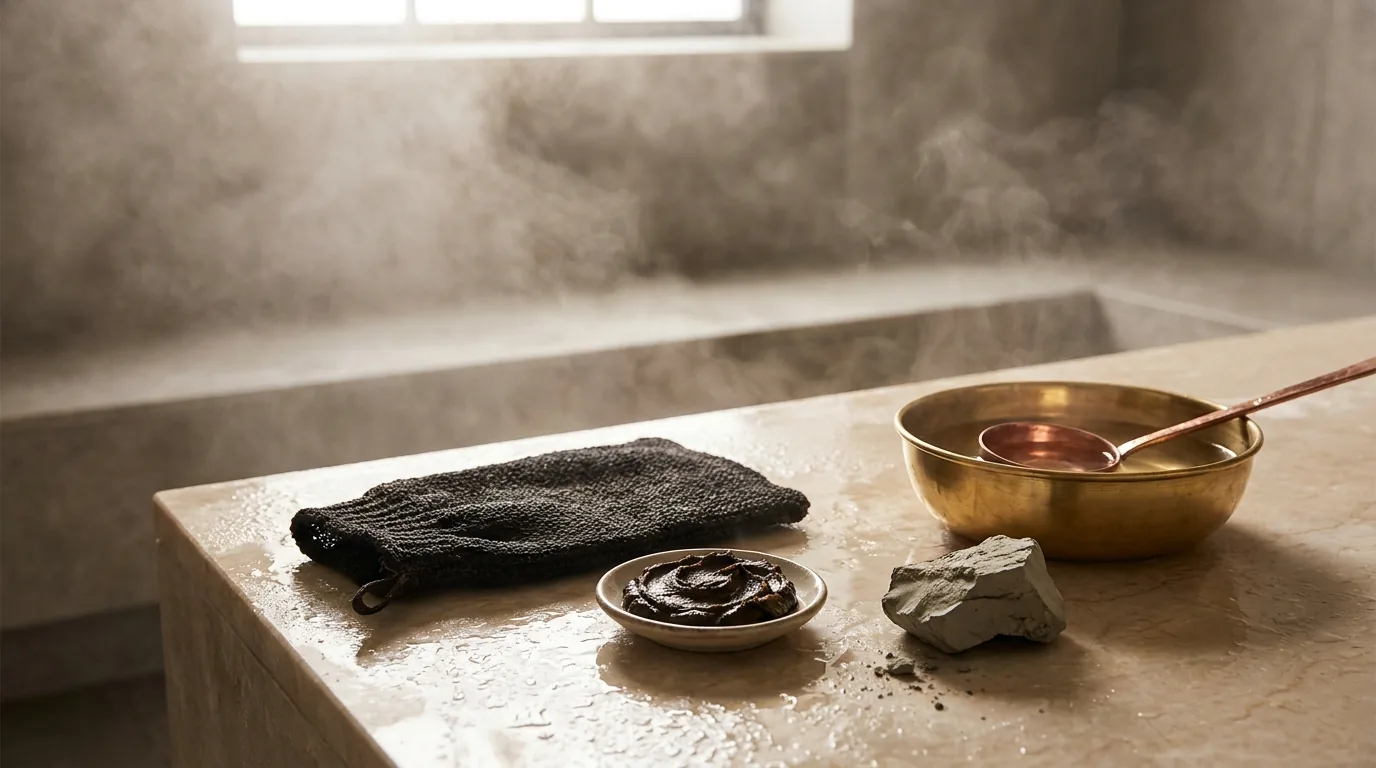
- Cleanse with soap. The attendant washes you down with soap. In the Moroccan tradition this is beldi, a soft black soap made from olive oil, left to sit so it can loosen dead skin.
- The scrub. Using a coarse mitt called a kese, the attendant scrubs the body firmly to slough off dead skin. This exfoliation, sometimes called a gommage, is the signature step and the reason skin feels so smooth afterwards.
- Mask and rinse. Some rituals add a mineral clay mask, often ghassoul from Morocco’s Atlas Mountains, before a thorough rinse with warm and cool water.
- Massage and rest. Many venues finish with a short massage, then a quiet period with water or tea to cool down and rehydrate.
People often ask what is a hammam massage, or what is hammam massage for short. It is not a standalone deep-tissue session. It is the rub-down and kneading the attendant gives as part of the wash, usually after the scrub, to relax the muscles the heat has already loosened. If you want a full bodywork session instead, book a dedicated deep tissue treatment.
Types of hammam: Turkish, Moroccan and Levantine
Hammam is the umbrella term. Underneath it sit regional styles that share the same bones but differ in heat, products, and emphasis. Knowing the difference helps you read a Dubai spa menu, where all three turn up.
The most common question here is what is a moroccan hammam. The Moroccan style, also sold as a Moroccan bath, leans on two signature products: beldi black soap and ghassoul clay. The experience centres on a deep exfoliating scrub. If you are weighing what is moroccan hammam against the Turkish version, the short answer is that Morocco makes the scrub and the clay the main event.
Our explainer on what a Moroccan bath is breaks down the four stages, the beldi soap and ghassoul clay in detail, and how the body reacts afterwards.
| Style | Heat | Signature step | Key products |
|---|---|---|---|
| Turkish bath | Hot steam room plus marble slab | Foam wash and vigorous kese scrub | Olive-oil soap, kese mitt |
| Moroccan hammam | Warm steam, less intense heat | Black-soap soak then deep scrub | Beldi soap, ghassoul clay |
| Levantine / Arabic | Warm and humid | Wash, scrub, and social bathing | Local soaps, often rosewater |
The takeaway: same family, different accent. A Turkish bath is the hottest and most theatrical, the Moroccan style is the most scrub-and-clay focused, and the Levantine or Arabic style sits closer to a communal wash. For the Dubai market specifically, the Moroccan version is the one most spas build their menu around, though you will also find venues listed under Turkish hammam for the Istanbul-style experience.
Hammam vs sauna, steam room and a Moroccan bath
Because the ritual mixes heat, water, and washing, it gets confused with other treatments. Two comparisons clear most of it up. First, how it sits against the dry and wet heat rooms you already know.
| Feature | Hammam | Sauna | Steam room |
|---|---|---|---|
| Heat type | Humid heat plus washing | Dry heat from rocks or a stove | Wet heat from boiling water |
| What you do | Attendant washes and scrubs you | Sit and sweat by yourself | Sit and breathe the vapour |
| Main benefit | Exfoliation and deep cleanse | Relaxation and a sweat | Open sinuses and pores |
The difference that matters: a sauna and a steam room are passive, while this ritual is an active, hands-on cleanse. That is also why people ask what is hammam spa versus an ordinary spa day. It centres the whole visit on the wash-and-scrub ritual, where a general spa day is a pick-and-mix of separate treatments. So when readers wonder what is a hammam spa treatment, the answer is that it is a complete sequence, not a single add-on.
The other common mix-up is hammam versus Moroccan bath. They are not opposites. The first is the broad bathing tradition; a Moroccan bath is one regional version of it. If you want the Dubai pricing, areas, and what to book, read our full guide to the Moroccan bath in Dubai.
What a hammam is like in Dubai
In Dubai it is firmly a spa treatment rather than a neighbourhood bathhouse. Hotels and day spas across the city offer the service, usually under the Moroccan-bath banner, with private or semi-private rooms instead of a large communal hall. You can browse massage and spa venues in Dubai to see the range.

Popular hammam and spa venues in Dubai
On the first floor of Dubai Festival City Mall, Heal Spa runs aromatherapy, deep tissue, hot stone and sports massage alongside couples massage, reflexology, a Moroccan bath and IPL hair removal. It's rated from reviews.Reviewers describe some of the best massages they've had in Dubai here, with the therapists praised for reading pressure correctly and adjusting through the session rather than working to a fixed routine. The space itself comes up as clean and calm, and the team is described as consistently friendly across a large number of reviews.Booking ahead is worth it, and outdoor and on-site services are available. The venue has gender-neutral toilets and wheelchair-accessible parking, entrance, seating and toilet facilities throughout.
Sweet Violet Beauty Salon LLC is a massage spa in Business Bay, at The Prism, rated from reviews. Treatments include deep tissue, Swedish, sports, hot stone and traditional Thai massage, aromatherapy massage, couples massage, therapeutic massage, reflexology, the Moroccan bath, plus threading, eyebrow threading, waxing and facials.Reviewers consistently describe the massage therapists as highly skilled, singling out deep tissue and sports massage for genuinely relieving tension rather than a generic rubdown. Several clients book the team for events and repeat visits, and the overall experience is described as relaxing and professional from start to finish.The salon offers on-site services and wheelchair-accessible parking. Appointments are recommended.
On the HC floor of the Grand Excelsior Hotel on Kuwait Street in Al Mankhool, Lavana Spa Bur Dubai offers Swedish massage, deep tissue massage, Moroccan bath and reflexology, rated from reviews. Swedish massage comes up repeatedly as a highlight, with reviewers describing sessions as deeply relaxing against a calm, soothing atmosphere throughout the spa. Front-desk staff are also praised for recommending the right treatment based on what a client is looking for, rather than defaulting to a standard package. The spa is wheelchair accessible, including parking, entrance and toilet, and appointments are recommended ahead of a visit, opening from 10am. Good for anyone in Al Mankhool after a proper unwind rather than a rushed treatment.
Al Rashaqa Spa is near Lamcy Plaza in Al Karama, rated from reviews for traditional Thai massage, Moroccan bath, hot stone massage, reflexology and aromatherapy treatments. Feedback on the spa is mixed. Some reviewers describe the space as clean with a good, professional massage, while others report a less consistent experience with staff on the day of their visit. Given that spread of feedback, confirming treatment details directly with the spa before booking is a sensible precaution. The venue operates 24 hours and offers on-site services, making it an option outside typical salon hours. Best booked in advance for a specific treatment, given the mixed feedback on consistency, and requesting the same therapist on a return visit is a reasonable way to get a result closer to what you expect.
Touch Life Spa sits inside TIME Oak Hotel & Suites in Barsha Heights, rated from reviews. Reviewers consistently describe a calm, clean and welcoming atmosphere, with attentive, professional staff who take time over every detail. Several guests single out the massage treatments and Turkish hammam for easing tension and back pain, and describe the whole visit as well organised and hygienic from start to finish. The treatment menu runs from deep tissue, hot stone, Swedish and Thai reflexology massage to aromatherapy, back, scalp and sports massage, alongside gel pedicures, manicures and yoga classes. The spa is wheelchair accessible throughout, with an accessible car park, entrance, seating and toilet, and appointments are recommended given its popularity in the Barsha Heights hotel district.
Two Dubai-specific points are worth knowing. First, ladies-only sessions and female attendants are widely available, which matters for a treatment done with little or no clothing. Second, any spa offering this service should hold both a Department of Economy and Tourism (DET) trade licence to operate and a Dubai Health Authority (DHA) licence for the wellness treatments it provides.
Checking that a venue is properly licensed is the single best filter for safety and hygiene. Our directory only lists licensed providers, and you can see how we vet and rank salons before any listing goes live. The standards behind every listing are set by our editorial team.
Dubai also lists more Moroccan-bath providers than most cities its size. There are 454 venues offering the ritual across the city, so you are rarely far from one. To compare options yourself,
Browse all 145 Massage Spas providers on our directory.
What to wear and how to prepare
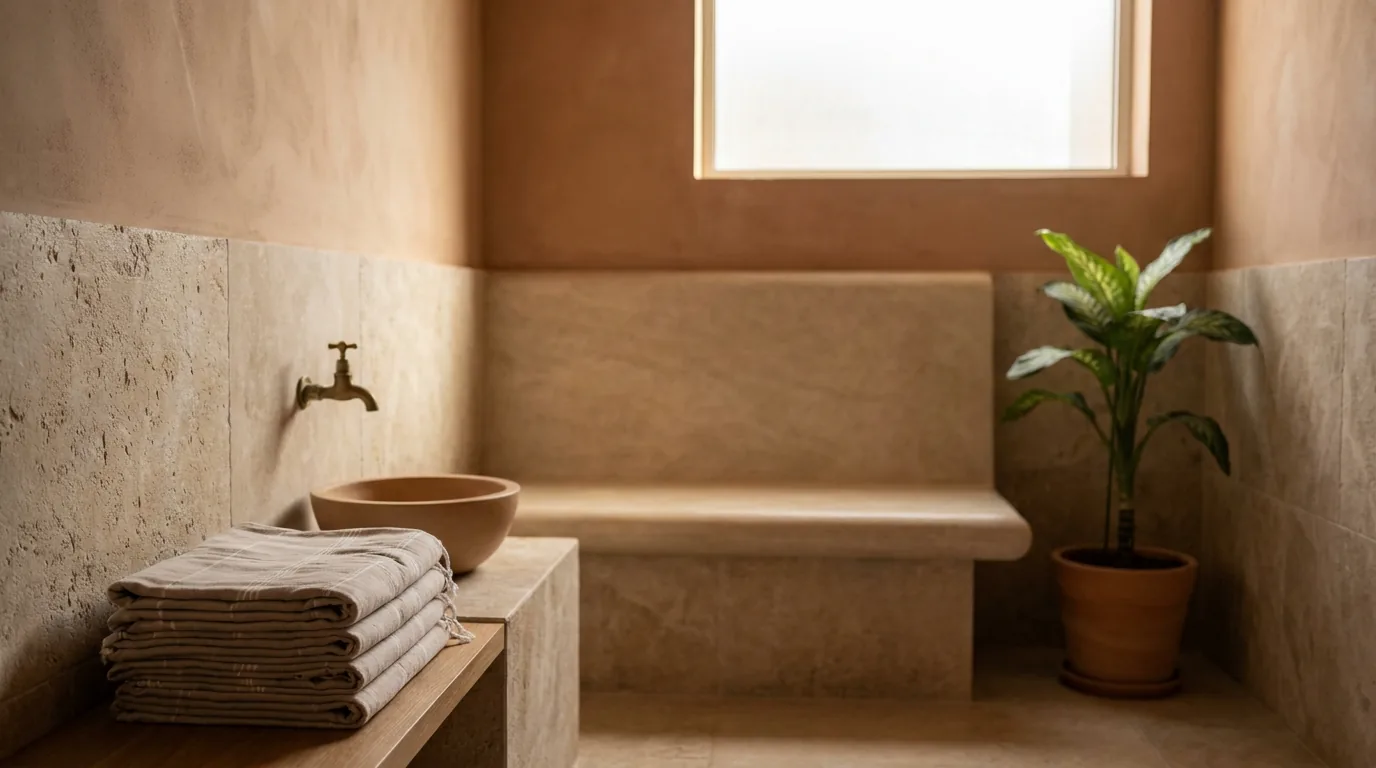
The honest answer to what people are nervous about: a traditional bathhouse visit is done nude or near-nude, with a cotton wrap called a peshtemal for modesty. In Dubai, most spas provide disposable underwear and the experience is more private, so you keep more cover than you would in Istanbul or Marrakech. If full undressing is a concern, ask for a private room when you book.
Preparation is light. Arrive with clean skin and no makeup, since the steam will move it anyway. Hydrate before and after, because you will sweat. Avoid shaving or waxing in the day or two beforehand, as the kese scrub on freshly shaved skin can sting. Leave time afterwards to cool down rather than rushing back into the heat outside.
Is a hammam good for you?
The benefits are real but worth framing honestly. The steam improves circulation and helps the skin shed dead cells, the scrub leaves skin noticeably smoother, and the warmth plus the closing massage relax muscles and ease stress. Practitioners describe the deep relaxation as shifting the body into a calmer, parasympathetic state.
What a hammam will not do is deliver permanent change. The circulation boost and that fresh-skin feeling are temporary, and claims that a single session removes cellulite or detoxifies the body do not hold up. Treat it as regular skin maintenance and genuine stress relief, not a medical fix.
A few people should be cautious. If you are pregnant, have a heart condition, very sensitive skin, eczema, or any open wound, check with a doctor before booking, since the heat and the firm scrub may not suit you. For everyone else, an occasional visit is a low-risk, high-comfort ritual.


