



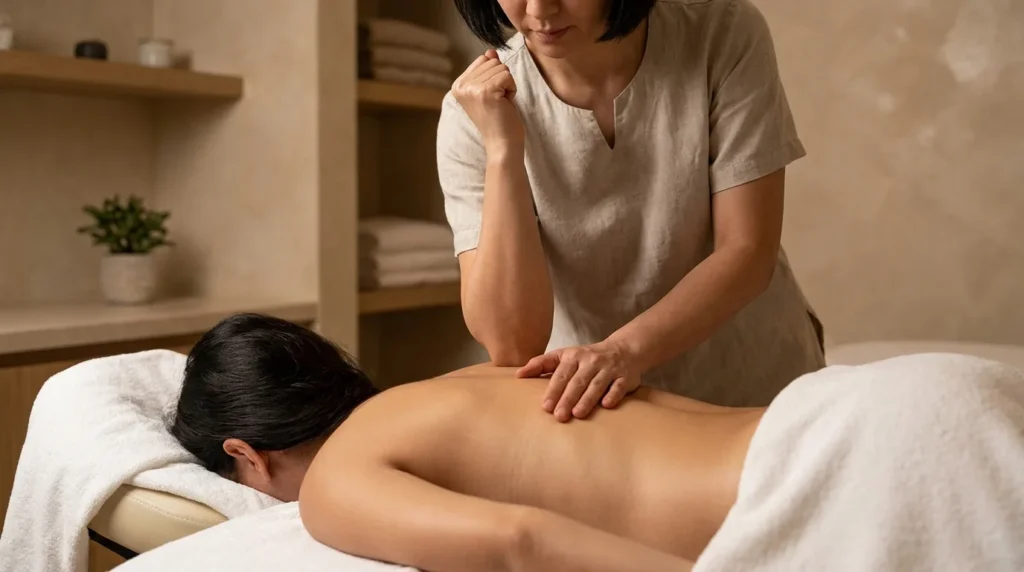
Is deep tissue massage good? For most people with chronic muscle tension, stubborn knots, or sports-related stiffness, yes. Slow, firm strokes reach the deeper muscle layers to ease pain and restore movement. It is not relaxation-first like a Swedish massage, and a few medical conditions rule it out. In Dubai, a session runs roughly AED 250 to AED 800.
What is deep tissue massage?
Deep tissue massage works the lower layers of muscle and the connective tissue, or fascia, that wraps them. The therapist uses slow strokes and sustained, firm pressure with fingers, thumbs, knuckles, and elbows. The goal is a specific problem: chronic pain, stiffness, limited movement, or recovery from an old injury.
When muscles stay tense, bands of rigid tissue called adhesions form. These adhesions restrict blood flow, limit range of motion, and keep pain switched on. A deep tissue session works to break down those bands so the muscle can lengthen and move freely again. That is the core difference from a spa-style rubdown: this is treatment aimed at a problem, not an hour of pampering.
Is deep tissue massage good for you? What the evidence shows
Most of the demand comes down to one question: is deep tissue massage good for you, or is it just a harder version of an ordinary massage? The research points to real, measurable benefits, with the caveat that more high-quality studies are still needed.
- Pain and muscle tension relief. This is the number one reason people book. The American College of Physicians lists massage therapy as an option for short-term lower back pain. By working the deeper layers, the treatment targets chronic tension in the neck, lower back, and shoulders.
- Lower stress hormones. Studies have linked regular massage to lower cortisol, the stress hormone, and higher serotonin and dopamine, which steady mood. One review reported cortisol drops near 31% on average.
- Better range of motion. Breaking down scar tissue and adhesions frees up stiff joints. A meta-analysis of seven studies found massage therapy improved shoulder range of motion, especially flexion and abduction.
- Lower blood pressure. In one study of more than 200 people with muscle spasms, sessions of 45 to 60 minutes lowered systolic pressure by about 10 mm Hg and reduced heart rate.
- Faster recovery for active people. Increased blood flow carries more oxygen to muscles and joints, which helps athletes and gym-goers rebound from training and reduces stiffness.
One honest note on a common myth: deep pressure does not flush toxins out of your body. What it can do is move lymphatic fluid and ease the soreness tied to lactic acid that lingers after hard exercise.
Deep tissue massage vs Swedish massage
There are more than 80 styles of massage, and the two most people compare are Swedish and deep tissue. They share some strokes but aim at different outcomes.
| Factor | Deep tissue massage | Swedish massage |
|---|---|---|
| Main goal | Pain relief, chronic tension, injury recovery | Relaxation, stress relief, circulation |
| Pressure | Firm and sustained, on deeper layers | Light to moderate, on the surface |
| Strokes | Slow, concentrated on knots | Long, gliding, with kneading and tapping |
| Best for | Desk workers, athletes, long-term pain | First-timers, stress, general wellbeing |
If your aim is to switch off and relax, a Swedish massage fits better. If a specific knot or recurring ache is the problem, deep tissue is the targeted choice. Athletes often pick a sports massage, which applies the same deep pressure to the muscles used most in their sport.
What happens during a deep tissue session
A typical appointment runs 60 to 90 minutes. The therapist starts lighter to warm the muscle, then works deeper into the areas that hold tension, usually the neck, shoulders, and lower back. Some pressure is normal and can feel intense, but it should never cross into sharp or unbearable pain. Where that line sits, and what to say when a therapist crosses it, is covered in what a deep tissue massage should feel like.
Speak up during the session. The single most useful thing you can do is tell the therapist when the pressure is too much, because they adjust to your feedback, not a fixed script. Slow breathing through the firmer moments sends more oxygen to the worked area, and a focused neck and shoulder massage often follows if those areas hold the most strain.
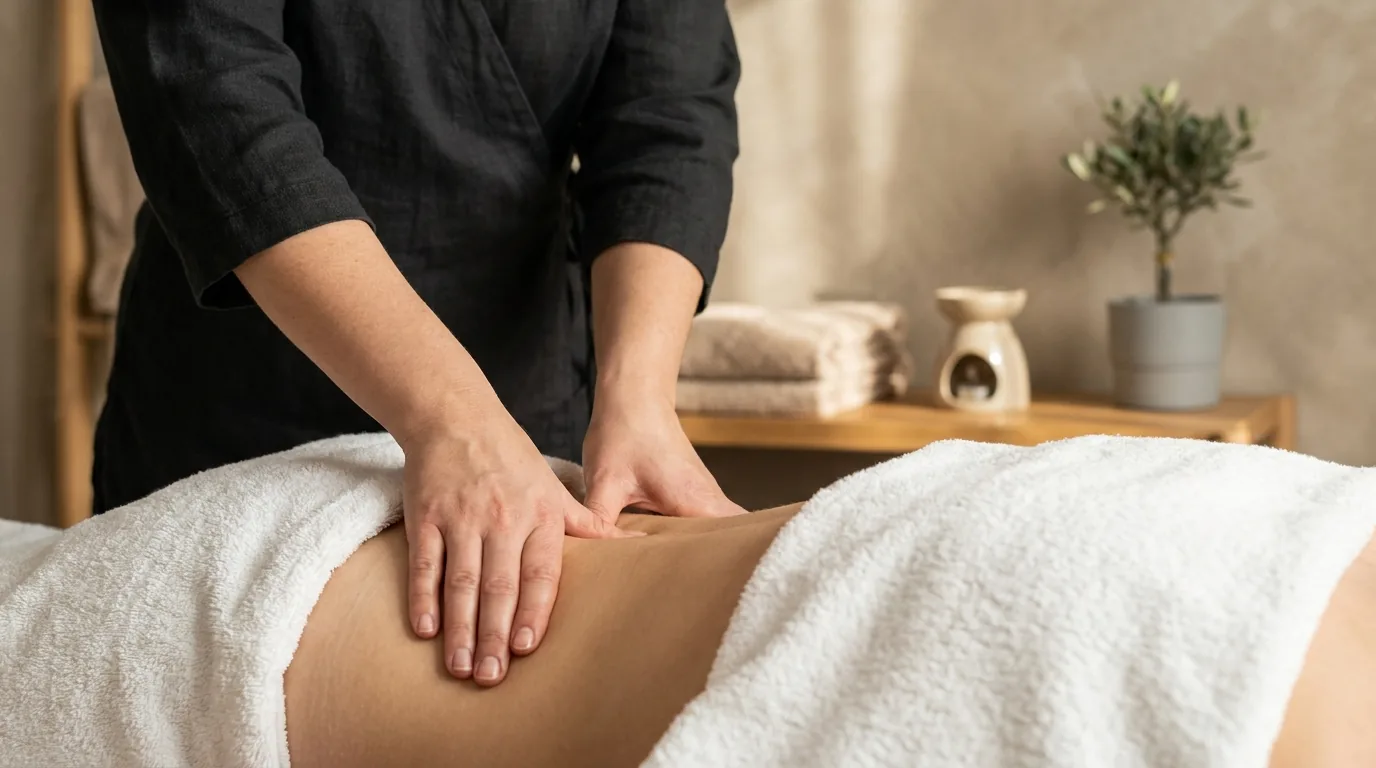
What deep tissue massage costs in Dubai
Pricing tracks the area, the venue, and the therapist’s experience. Budget venues in districts like Deira and Al Karama start lower, while hotel and beachfront spas in Downtown and the Palm sit at the top. The table below shows the typical range across Dubai.
| Tier | Typical price | Duration | Room | Products | Staff experience | Best for |
|---|---|---|---|---|---|---|
| Budget | AED 170 to 280 | 30 to 60 min | Mobile, single therapist | Generic oil set, basic linens | Independent or smaller home-service brands | Price-conscious bookers |
| Mid | AED 280 to 450 | 60 to 90 min | Mobile, established brand | Branded oils, fresh linens, music setup | Trained therapists, fixed treatment menu | Most regular bookings |
| Premium | AED 450 to 800+ | 90 min+ | Mobile, hotel-caliber setup | Imported oils, ambient lighting, candle and speaker setup | Certified specialists, 5+ years tenure | Anniversaries, post-flight, specialty |
Browse all 59 mid-tier Massage Spas providers on our directory.
The directory lists massage and spa venues across the city that offer deep tissue and related treatments. The picks below rank by rating and verified review volume, not by who paid.

Popular massage and spa venues in Dubai
On the first floor of Dubai Festival City Mall, Heal Spa runs aromatherapy, deep tissue, hot stone and sports massage alongside couples massage, reflexology, a Moroccan bath and IPL hair removal. It's rated from reviews.Reviewers describe some of the best massages they've had in Dubai here, with the therapists praised for reading pressure correctly and adjusting through the session rather than working to a fixed routine. The space itself comes up as clean and calm, and the team is described as consistently friendly across a large number of reviews.Booking ahead is worth it, and outdoor and on-site services are available. The venue has gender-neutral toilets and wheelchair-accessible parking, entrance, seating and toilet facilities throughout.
Sweet Violet Beauty Salon LLC is a massage spa in Business Bay, at The Prism, rated from reviews. Treatments include deep tissue, Swedish, sports, hot stone and traditional Thai massage, aromatherapy massage, couples massage, therapeutic massage, reflexology, the Moroccan bath, plus threading, eyebrow threading, waxing and facials.Reviewers consistently describe the massage therapists as highly skilled, singling out deep tissue and sports massage for genuinely relieving tension rather than a generic rubdown. Several clients book the team for events and repeat visits, and the overall experience is described as relaxing and professional from start to finish.The salon offers on-site services and wheelchair-accessible parking. Appointments are recommended.
On the HC floor of the Grand Excelsior Hotel on Kuwait Street in Al Mankhool, Lavana Spa Bur Dubai offers Swedish massage, deep tissue massage, Moroccan bath and reflexology, rated from reviews. Swedish massage comes up repeatedly as a highlight, with reviewers describing sessions as deeply relaxing against a calm, soothing atmosphere throughout the spa. Front-desk staff are also praised for recommending the right treatment based on what a client is looking for, rather than defaulting to a standard package. The spa is wheelchair accessible, including parking, entrance and toilet, and appointments are recommended ahead of a visit, opening from 10am. Good for anyone in Al Mankhool after a proper unwind rather than a rushed treatment.
Al Rashaqa Spa is near Lamcy Plaza in Al Karama, rated from reviews for traditional Thai massage, Moroccan bath, hot stone massage, reflexology and aromatherapy treatments. Feedback on the spa is mixed. Some reviewers describe the space as clean with a good, professional massage, while others report a less consistent experience with staff on the day of their visit. Given that spread of feedback, confirming treatment details directly with the spa before booking is a sensible precaution. The venue operates 24 hours and offers on-site services, making it an option outside typical salon hours. Best booked in advance for a specific treatment, given the mixed feedback on consistency, and requesting the same therapist on a return visit is a reasonable way to get a result closer to what you expect.
Touch Life Spa sits inside TIME Oak Hotel & Suites in Barsha Heights, rated from reviews. Reviewers consistently describe a calm, clean and welcoming atmosphere, with attentive, professional staff who take time over every detail. Several guests single out the massage treatments and Turkish hammam for easing tension and back pain, and describe the whole visit as well organised and hygienic from start to finish. The treatment menu runs from deep tissue, hot stone, Swedish and Thai reflexology massage to aromatherapy, back, scalp and sports massage, alongside gel pedicures, manicures and yoga classes. The spa is wheelchair accessible throughout, with an accessible car park, entrance, seating and toilet, and appointments are recommended given its popularity in the Barsha Heights hotel district.
Who should not get a deep tissue massage
Deep tissue massage is generally safe when a trained therapist performs it, but the firm pressure makes it the wrong choice for some people. The conditions below are common contraindications, so check with your doctor first if any of them applies to you.
- Osteoporosis or fragile bones, where pressure raises the risk of a fracture
- Blood clots, a clotting disorder, or you take blood thinners
- Heart conditions or high blood pressure that is not controlled
- Open wounds, recent surgery, fractures, or skin that bruises easily
- Some types of cancer; ask your oncology team before booking
- Pregnancy, where a pregnancy massage with a trained therapist is the safer option
This guide is general information, not medical advice. If you have a health condition or take prescription medication, clear it with your doctor before your first session.
What to expect afterward
Mild soreness for a day or two is normal, much like the ache after a hard workout. This is delayed onset muscle soreness, or DOMS, and it tends to be stronger if it has been a while since your last massage or if you arrived dehydrated. It is a sign the deeper layers were worked, not a sign something went wrong.
A few simple steps keep the benefit and limit the ache:
- Drink plenty of water before and after, which matters more in Dubai’s heat where dehydration creeps up fast
- Do some light stretching, but skip heavy exercise for the rest of the day
- Use heat for stiffness or cold for any inflammation
- Avoid alcohol just before and after the session
- Rest and give the muscle time to recover

How to choose a deep tissue therapist in Dubai
The quality of a deep tissue massage depends almost entirely on the therapist’s skill, so the venue you pick matters. A few checks separate a genuine therapeutic session from a generic rubdown.
- Licensing. A legitimate Dubai venue holds a DET trade licence to operate and a Dubai Health Authority (DHA) licence for the therapists who deliver treatments. Both protect you; ask if it is not displayed.
- Therapist training. Look for therapists trained specifically in deep tissue or therapeutic work, not only relaxation styles. A therapeutic massage background is a good signal.
- Recent reviews. Read reviews from the last few months and look for mentions of pressure control and pain relief, not just ambience.
- A real consultation. A good therapist asks about your pain, medical history, and target areas before starting.
- Clear pressure communication. Strong venues invite feedback and adjust pressure throughout the session.
For more on how the directory checks venues, see how we rank salons. If you want to compare every option, the full massage and spa directory filters by area and tier, and you can browse the complete salon listings across Dubai.
Finding the best deep tissue massage in Dubai
Searching for the best deep tissue massage Dubai offers is less about chasing the priciest spa and more about matching the therapist to your need. For a recurring neck or back problem, a mid-tier venue with a trained specialist often beats a luxury spa where the focus is relaxation. For a one-off treat, a premium hotel spa adds the setting.
Use rating, area, and price together rather than any one signal alone. The directory’s filters help you weigh all three side by side, including specialist providers citywide.


