



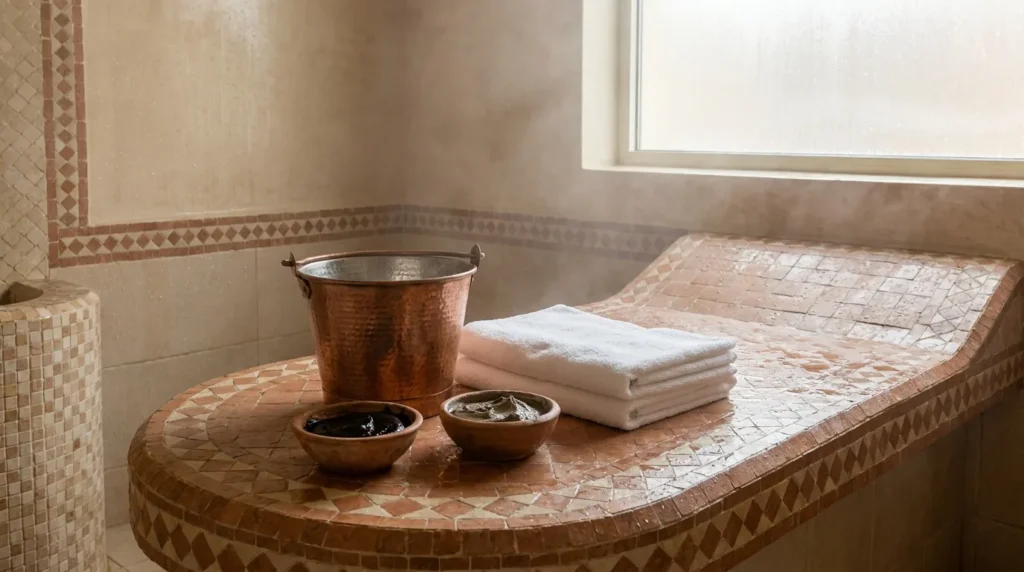
Is Moroccan bath good for skin? For most healthy skin, yes: steam softens the surface, the kessa glove lifts away dead skin cells, and the barrier is left primed to take up oil. For eczema, rosacea or psoriasis skin the picture reverses, and a Tangier hospital survey found 75% of hammam users reported irritation right after the scrub.

Popular massage and spa venues in Dubai
On the first floor of Dubai Festival City Mall, Heal Spa runs aromatherapy, deep tissue, hot stone and sports massage alongside couples massage, reflexology, a Moroccan bath and IPL hair removal. It's rated from reviews.Reviewers describe some of the best massages they've had in Dubai here, with the therapists praised for reading pressure correctly and adjusting through the session rather than working to a fixed routine. The space itself comes up as clean and calm, and the team is described as consistently friendly across a large number of reviews.Booking ahead is worth it, and outdoor and on-site services are available. The venue has gender-neutral toilets and wheelchair-accessible parking, entrance, seating and toilet facilities throughout.
Sweet Violet Beauty Salon LLC is a massage spa in Business Bay, at The Prism, rated from reviews. Treatments include deep tissue, Swedish, sports, hot stone and traditional Thai massage, aromatherapy massage, couples massage, therapeutic massage, reflexology, the Moroccan bath, plus threading, eyebrow threading, waxing and facials.Reviewers consistently describe the massage therapists as highly skilled, singling out deep tissue and sports massage for genuinely relieving tension rather than a generic rubdown. Several clients book the team for events and repeat visits, and the overall experience is described as relaxing and professional from start to finish.The salon offers on-site services and wheelchair-accessible parking. Appointments are recommended.
On the HC floor of the Grand Excelsior Hotel on Kuwait Street in Al Mankhool, Lavana Spa Bur Dubai offers Swedish massage, deep tissue massage, Moroccan bath and reflexology, rated from reviews. Swedish massage comes up repeatedly as a highlight, with reviewers describing sessions as deeply relaxing against a calm, soothing atmosphere throughout the spa. Front-desk staff are also praised for recommending the right treatment based on what a client is looking for, rather than defaulting to a standard package. The spa is wheelchair accessible, including parking, entrance and toilet, and appointments are recommended ahead of a visit, opening from 10am. Good for anyone in Al Mankhool after a proper unwind rather than a rushed treatment.
Al Rashaqa Spa is near Lamcy Plaza in Al Karama, rated from reviews for traditional Thai massage, Moroccan bath, hot stone massage, reflexology and aromatherapy treatments. Feedback on the spa is mixed. Some reviewers describe the space as clean with a good, professional massage, while others report a less consistent experience with staff on the day of their visit. Given that spread of feedback, confirming treatment details directly with the spa before booking is a sensible precaution. The venue operates 24 hours and offers on-site services, making it an option outside typical salon hours. Best booked in advance for a specific treatment, given the mixed feedback on consistency, and requesting the same therapist on a return visit is a reasonable way to get a result closer to what you expect.
Touch Life Spa sits inside TIME Oak Hotel & Suites in Barsha Heights, rated from reviews. Reviewers consistently describe a calm, clean and welcoming atmosphere, with attentive, professional staff who take time over every detail. Several guests single out the massage treatments and Turkish hammam for easing tension and back pain, and describe the whole visit as well organised and hygienic from start to finish. The treatment menu runs from deep tissue, hot stone, Swedish and Thai reflexology massage to aromatherapy, back, scalp and sports massage, alongside gel pedicures, manicures and yoga classes. The spa is wheelchair accessible throughout, with an accessible car park, entrance, seating and toilet, and appointments are recommended given its popularity in the Barsha Heights hotel district.
The skin benefits of a Moroccan bath that hold up
The ritual is four steps in a fixed order, and each one does a different job. Ten to fifteen minutes of steam softens the outer skin layer. Moroccan black soap, the olive-based savon beldi, sits on that softened surface and loosens it further. The kessa glove then removes it by friction. Ghassoul clay draws oil from open pores, and argan oil goes on at the end while the skin is still damp.
Two of those effects are physical and immediate. Exfoliation genuinely clears the buildup that body washes leave behind, which is why skin feels smoother the same evening. Warmth raises surface circulation, which is where the flushed post-session look comes from. The full Moroccan bath guide for Dubai covers the pricing and booking side; this page stays on what happens to skin.
- Smoother texture. One session removes weeks of surface buildup that a shower does not shift.
- Better product absorption. Oil and cream applied to freshly exfoliated damp skin penetrate further than they do through a dead-cell layer.
- Cleaner pores. Steam plus clay draws out sebum on the back, chest and shoulders, where body acne tends to sit.
- Fewer ingrown hairs. Regular exfoliation reduces the trapped-hair problem on legs and underarms.
What the ritual does not do is change skin from the inside. Tone, pigmentation and elasticity are unaffected by a scrub. Anything sold as whitening or anti-ageing from a single session is a marketing claim, not a skin one.
The skin risks nobody puts on the spa menu
Every benefit above comes from controlled damage. The kessa glove works by abrasion, and the line between useful exfoliation and a stripped skin barrier is thinner than most menus suggest. Skin that stings, stays red for hours or feels tight the next morning was over-scrubbed.
Pressure is the variable, and it is set by a therapist who cannot feel your skin. That is why the same 45-minute session leaves one person glowing and another flaking. Anyone who already exfoliates at home with acids or a body scrub treatment is stacking two rounds of the same thing.
- Barrier damage. Hot water plus friction strips the lipids that hold moisture in, and Dubai’s air-conditioned indoor air does not help them recover.
- Post-inflammatory marks. On deeper skin tones, aggressive friction can leave darker patches that outlast the smoothness by months.
- Heat reactions. Prolonged steam triggers cholinergic urticaria, the itchy hives some people get from sweating, in those already prone to it.
- Product reactions. Savon beldi is alkaline and frequently scented with eucalyptus. Both are common irritants for sensitive skin.
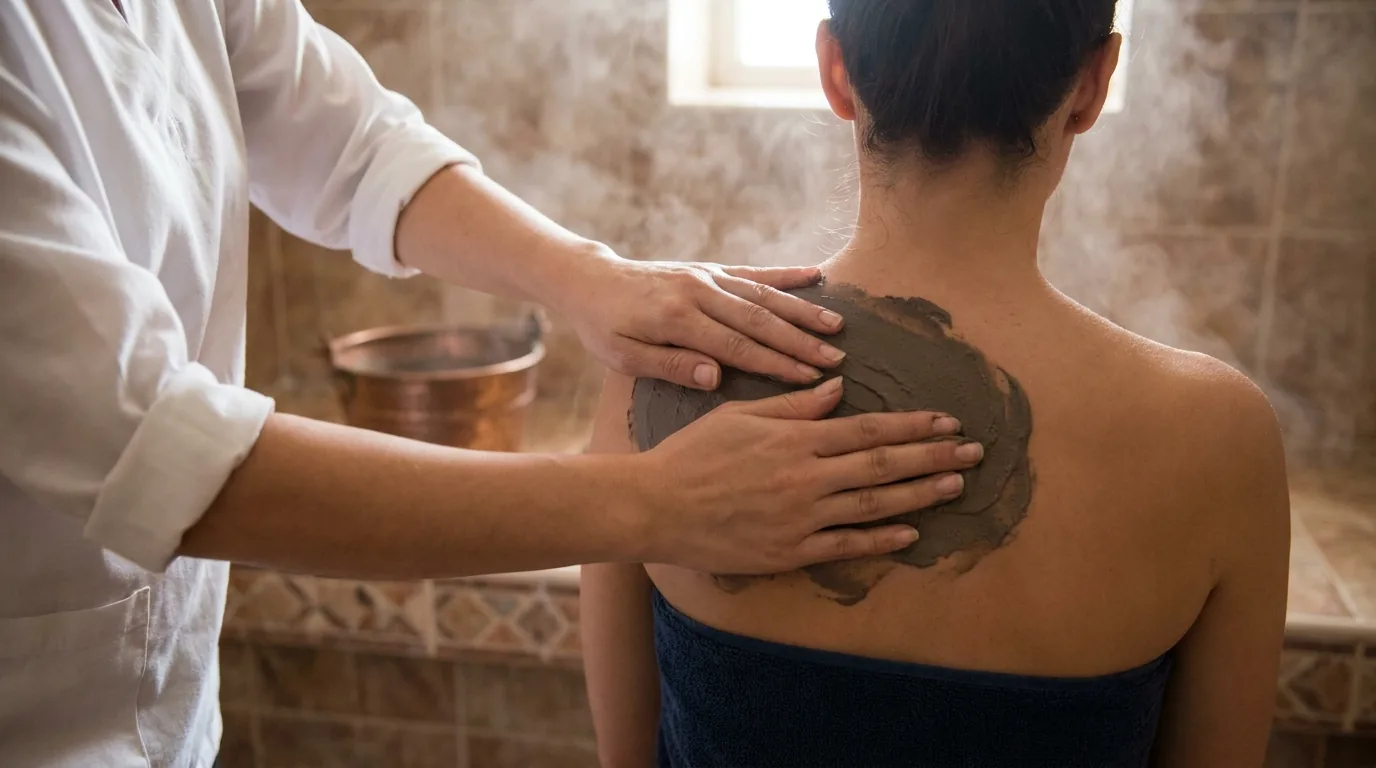
What a dermatology survey of 160 hammam users found
Most Moroccan bath content is written by spas and soap brands. One piece of published clinical work looks at the ritual directly: a cross-sectional study run at the dermatology department of Mohammed VI University Hospital in Tangier between March and July 2023, published in Our Dermatology Online in 2025.
Researchers surveyed 160 hammam users, 70% of whom had a history of a skin condition. Over 90% used a scrubbing glove and 80% applied black soap before the friction step, which matches the standard Dubai salon protocol closely. The results are worth reading before booking.
| What the study measured | Result |
|---|---|
| Reported skin irritation after the friction step | 75% of participants |
| Developed some skin problem after a hammam visit | Over 55% of participants |
| Said the hammam made an existing condition worse | Over 50%, led by rosacea (30%), psoriasis (25%), atopic dermatitis (16%) and eczema (12%) |
| Applied moisturiser or oil afterwards | 80% used some aftercare product |
Read the numbers carefully. The infections the study logged, fungal cases in 42.5% of affected respondents plus warts and bacterial infections, come from Morocco’s communal public bathhouses, where many people share the same wet floors and benches. That is a venue problem, not a ritual problem, and it does not transfer to Dubai unchanged. The irritation and flare-up figures do transfer, because those come from the steam, the soap and the glove.
Is Moroccan bath good for eczema, or does it make it worse?
For active eczema, the answer is no. The ritual contradicts standard eczema bathing advice on three of its four steps, which is a firmer answer than the “maybe, be careful” most spa pages settle for. The question behind the search, is Moroccan bath good for eczema, usually comes from someone hoping the exfoliation will clear the scaling. It can, briefly, at the cost of a barrier that is already leaking moisture.
Set the four steps against the bathing guidance published by the National Eczema Association and the conflict is specific rather than vague.
| Eczema bathing guidance | What a Moroccan bath does |
|---|---|
| Use lukewarm water, never hot | Runs on hot steam for 10 to 15 minutes |
| Do not rub or scrub with a washcloth or loofah | Friction with a kessa glove is the central step |
| Use a fragrance-free, gentle cleanser | Savon beldi is alkaline and usually scented |
| Moisturise while the skin is still damp | Argan oil goes on damp skin, which matches the advice |
Only one step out of four lines up with the guidance. Between flares, some people with mild, stable eczema tolerate a heavily softened version: shorter steam, no glove on affected patches, unscented oil instead of savon beldi. During a flare, on broken skin, or with moderate to severe eczema, skip it and ask a DHA-licensed dermatologist what belongs in your routine instead.
Which skin types gain, and which pay for it
Skin type decides whether the same session reads as a reset or a setback. The variables that matter are barrier strength, oil production and how reactive the skin is to heat.
Anyone unsure which category they fall into can get an assessment first: Dubai’s skin care salons will look at barrier condition before recommending any exfoliating treatment.
| Skin type | Verdict | What to change |
|---|---|---|
| Normal to oily | Good fit | Nothing. This is who the ritual was built for. |
| Dry, no condition | Works with care | Shorter steam, lighter glove pressure, oil twice afterwards. |
| Sensitive or reactive | Risky | Ask for unscented soap and a patch test on the forearm first. |
| Acne-prone body skin | Usually helpful | Skip active breakouts. Clay on the back, no glove over inflamed spots. |
| Eczema, psoriasis, rosacea | Not suitable while active | Get medical clearance first. Broken skin rules it out entirely. |
How often your skin can take it in Dubai
Moroccan households traditionally go weekly. That cadence assumes a different climate and a different water supply. Dubai adds two stressors: months of dry conditioned indoor air, and hard tap water that leaves a mineral residue on skin already stripped of its lipids.
A fortnightly rhythm suits most residents better than a weekly one. Between salon visits, a gentler at-home routine covers the gap, and the guide to how to use a body scrub at home sets out the pressure and timing. Browsing Moroccan bath listings across Dubai shows how widely the treatment is offered, and the directory currently lists 454 venues offering it.
| Situation | Sensible interval |
|---|---|
| Normal or oily skin, no home exfoliation | Every 2 to 3 weeks |
| Dry skin, or using acids at home | Every 4 to 6 weeks |
| Sensitive skin | Every 6 to 8 weeks, softened protocol |
| Before a wedding or event | Book 5 to 7 days ahead, never the day before |
The event rule catches people out. Redness settles within a day or two, but the barrier itself takes closer to a week to rebuild, and that is the point at which skin looks its best under makeup.
Private room or public bathhouse: why the venue changes the risk
The Moroccan bath sold in Dubai and the hammam in a Moroccan medina share a name and little else in hygiene terms. A traditional hammam is a shared public space with communal wet rooms. A Dubai version is almost always a private treatment room used by one client at a time, with linens changed between bookings.
That difference removes most of the infection risk the Tangier study recorded. What it does not remove is the need to check the venue. Any salon operating legally holds a Dubai Department of Economy and Tourism trade licence, and any clinic-side treatment or medically supervised service needs Dubai Health Authority licensing on top of it. Both should be visible on request. The massage and spa venues directory records licensing status, and how we rank salons explains what gets checked.
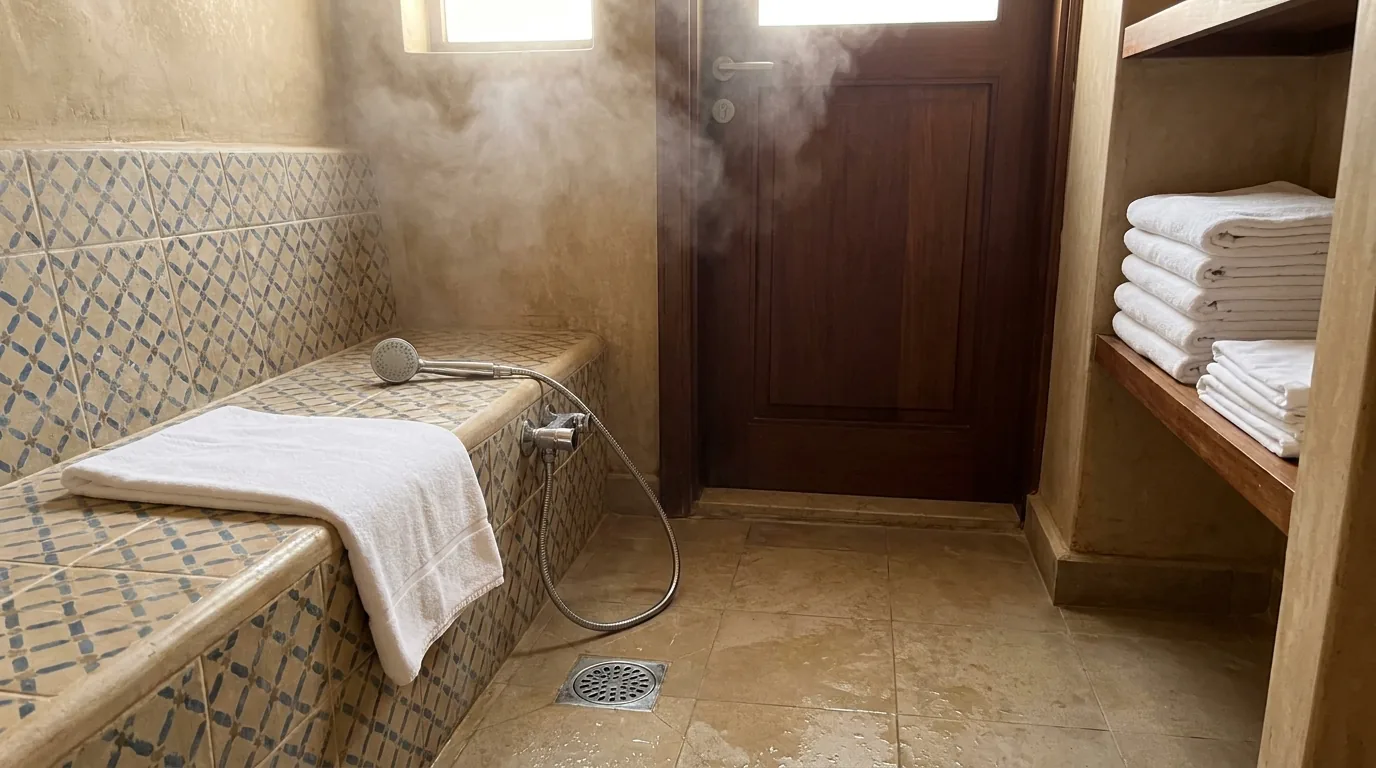
Three things to look at in the room itself: whether the kessa glove is new or freshly laundered, whether the bench is rinsed between clients, and whether the steam room or wet area drains properly. Standing water on a warm tiled floor is where fungal problems start, in Dubai as much as in Marrakech.
How to make the session safer for your skin
Most bad outcomes trace back to one thing: nobody asked the therapist to adjust anything. The protocol runs the same for everyone unless a client speaks up.
- Say what your skin does. Flag eczema, rosacea, recent sunburn, retinoid use or any active breakout before the session, not during it.
- Ask for a patch test. Savon beldi on the inner forearm for five minutes tells you enough, and any reputable venue will do it without being pushed.
- Set the pressure early. The first pass of the glove is the moment to ask for lighter pressure, because skin should feel warm afterwards rather than raw.
- Keep the steam short. Ten minutes is enough to soften the surface, and twenty is where heat reactions and dehydration start.
- Protect the sensitive zones. Neck, chest and inner arms take less friction than legs and back.
- Moisturise within three minutes. Damp skin absorbs considerably more than dry skin does, and that window closes fast. Other massage and spa guides cover the aftercare in more depth.
- Stay out of the sun for 24 hours. Freshly exfoliated skin burns faster, which matters between May and September.
Book the appointment for late afternoon or evening. Walking out into 40C sun on newly exfoliated skin undoes half the benefit, and the sweat that follows can irritate the treated areas.
Browse all 454 Moroccan Bath providers on our directory.


